
Kamal Shah
The aircraft are the obvious headline. The United States’ F-35 is set to take part in an Indian multinational air exercise for the first time; French Rafales and other advanced aircraft will also be present.
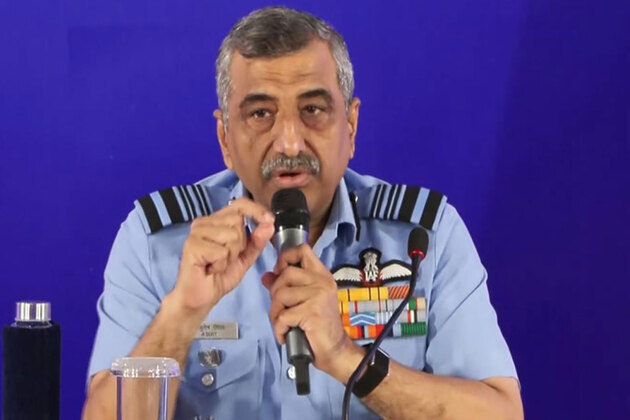
Air Marshal Ashutosh Dixit, Vice Chief of the Air Staff, in his briefing on Tarang Shakti 2026, argued that the event should be understood through a wider lens. He said its purpose is not simply to assemble aircraft for display. It is to help air forces learn to plan, operate and assess missions together and to build relationships that might matter in a crisis.
That framing gives the exercise three connected dimensions: military training, international engagement and a public demonstration of India’s ambitions for its own aerospace industry. The briefing also exposed a tension at the heart of those ambitions. India wants to learn from advanced foreign partners while developing the capabilities to rely less on imports and eventually offer more of its own technology to the world. Tarang Shakti is presented as a venue where those aims can reinforce one another.
From aircraft on display to forces learning together
Tarang Shakti 2026 is scheduled to run from 26 September to 12 October at Air Force Station Jodhpur and adjoining bases. The Air Force described it as the second edition of its multinational exercise and said the programme would include missions such as counter-air operations, air defence, combat, reconnaissance, airlift, and air-to-air refuelling. Eight foreign air forces are expected to participate with aircraft, while other countries will attend as observers.
The exercise builds on the first Tarang Shakti, held in 2024. The IAF described that edition as a step beyond exercises conducted mainly on a bilateral basis. It reported that 11 countries participated with air assets, and that the exercise involved 45 foreign aircraft, 76 missions, 867 sorties and more than 1,180 flying hours. Those figures show scale, but the more meaningful measure of progress in 2026 will be whether participating forces can coordinate effectively across the different stages of a mission.
The Vice Chief returned repeatedly to the practical work behind that coordination. Forces will receive common briefings, plan in separate groups and later compare what happened in the air. The debrief matters because it allows participants to examine differences in planning, execution and interpretation—not simply to record that aircraft flew together. In this sense, interoperability is something to practise and assess, rather than a quality guaranteed by attendance.
The distinction matters. Different forces may use different platforms, procedures, communications systems and assumptions about how an air operation should unfold. A multinational exercise can expose those differences in a controlled setting. Participants can compare methods and identify where information-sharing or coordination becomes difficult. The briefing did not provide operational details about the scenarios, and Air Marshal Dixit said some specifics would not be disclosed. But his description of opposing teams, shared planning and post-mission debriefing makes clear that the intended work goes beyond a formation flight or static display.
A multinational exercise with limits by design
The list of countries and aircraft is still consequential. Public reports ahead of the exercise identified the United States, France, Germany, Australia, Bangladesh, Sri Lanka and the United Arab Emirates among the countries participating with air assets; Greece was also named in the Air Force’s reported list. The F-35’s first participation in an Indian exercise has drawn particular attention.
The Vice Chief acknowledged the interest in the F-35 but cautioned against expecting a detailed account of what it would do. He said that the exercise would be the first time Indian forces exercise with the aircraft, while pointing to operational-security concerns as a reason not to discuss every detail. This is more than a matter of withholding spectacle. The exercise is intended to create a training environment, but the public cannot assume that every tactic, capability or result will be disclosed.
That limit is worth keeping in view when interpreting the event. The presence of a sophisticated aircraft does not, by itself, reveal what the host air force learned from it, how closely the platforms will interact or what lessons can be applied outside the exercise. The briefing establishes the significance of the F-35’s participation; it does not supply the evidence needed to judge its operational outcomes in advance.
Nor is the roster meant to include every country with which India has defence relations. Asked about invitations to countries including Russia and Israel, Air Marshal said invitations had been selected according to the exercise’s intended construct and the scope for interoperability among those participating. He added that India conducts other exercises with countries outside this particular grouping. He likewise indicated that some countries or regions would be handled through separate arrangements, rather than this multilateral format.
This is an important qualification to the language of partnership. Tarang Shakti is not a universal forum, nor does participation in it imply a common alliance or a uniform strategic outlook. It is a curated exercise. Countries can cooperate on training while maintaining separate relationships, and the exercise’s invitation list reflects choices about its design as well as practical scheduling constraints.
He rejected the suggestion that fewer countries flying aircraft in 2026, compared with the 2024 edition, necessarily signalled a geopolitical shift. He said the scheduling process begins well in advance and that other exercises can affect whether a country is available at the right time. The core point is plausible: participation figures cannot be interpreted in isolation. They need context about calendars, aircraft availability, logistics and the roles assigned to observers and flying participants.
Lessons from recent wars & the caution in applying them
The briefing situated the exercise within a changing air-warfare environment. Air Marshal named precision, integrated air defence, unmanned systems, information dominance, space-enabled capabilities and the coordination of operations across domains as areas of growing importance. He also said that the IAF was studying conflicts around the world and incorporating lessons into its internal exercises and capability development.
That emphasis reflects an expanded view of air power. A mission may depend on information gathered before take-off, the systems used to plan it, the networks that connect aircraft and ground units, and the maintenance and support required to keep forces operating. In describing multi-domain operations, he sketched a chain from satellite imagery and mission planning through execution and debriefing, with cyber, space, air and ground elements contributing. The aircraft is visible; much of the system that makes its mission possible is not.
He referred to lessons from Operation Sindoor, saying it had reinforced the importance of intelligence-led operations, precision, integrated air and missile defence and jointness. Yet he was careful to distinguish between drawing lessons from a conflict and replicating it literally in an exercise. Tarang Shakti’s value, in his account, lies in bringing Indian experience together with partner-force experience, then using a realistic training environment to test assumptions and challenge procedures.
That is a sound standard for learning. Recent combat can show which problems deserve attention, but one operation cannot automatically provide a complete template for future campaigns. Conditions differ, and observations made in one conflict may not transfer directly to another. The exercise can provide a setting to examine assumptions; whether that examination produces durable changes in doctrine, training, or capability is a separate question that will require evidence beyond the briefing.
The design described by the Vice Chief reflects this distinction. He said opposing teams could develop plans within broad guidelines and that scenarios could include air-to-air and air-to-ground activity. He also said he would not confirm which specific systems would be validated. The exercise’s open-ended elements may encourage adaptation, but the public account offers only a general outline. It does not reveal how the scenarios will measure success or which lessons the IAF will consider most important afterwards.
The people & processes behind interoperability
Vice Chief’s most deliberate effort at reframing came when he asked journalists not to make the story only about the number of countries or the aircraft involved. He identified the people behind the exercise—aircrew, airmen, women in the armed forces and technicians—as its central human element. Participants, he said, would work and plan together, share experience, learn one another’s strengths and limitations, and build confidence in operating as a group. Cultural ties and enduring friendships, he added, are part of how military partnerships mature.
That argument is both practical and diplomatic. Operational familiarity develops through repeated contact among people who must understand how others communicate, plan and respond under pressure. The exercise’s formal flying programme is one part of that process; briefings, planning sessions and debriefs are others. Social and cultural exchange cannot substitute for compatible equipment or procedures, but it can make cooperation easier by building trust and familiarity among the people responsible for it.
He gave three stated objectives for Tarang Shakti 2026: operational learning, greater interoperability and stronger partnerships. These objectives overlap, but they are not identical. An exercise might offer useful technical lessons without producing a lasting diplomatic relationship. It might deepen personal ties without resolving practical barriers to coordination. Assessing the event therefore requires more than a count of participating flags: it requires asking what was learned, what participants can now do together and whether the engagement is sustained afterwards.
The exercise is also being used to bring senior officials together. In the briefing, Vice Chief anticipated that around 10 air chiefs or equivalent officers, along with other senior figures, could attend a distinguished visitors’ programme, while noting that numbers were still being confirmed. The Air Force also planned a seminar in Delhi. These events broaden the exercise’s diplomatic reach, but they should be understood as one layer of engagement rather than proof of a formal alignment among participants.
Self-reliance as an outward-facing claim
The briefing’s other major theme was India’s defence-industrial ambition. Air Marshal said India was increasingly looking not only at what it could buy from other countries, but also at what it could develop, manufacture and offer. He named indigenous platforms, sensors, weapons, unmanned systems and other technologies as part of the ecosystem the exercise could showcase to partners.
He rejected the idea that domestic capability and international cooperation are competing goals. In his formulation, stronger indigenous capability makes international engagement more meaningful. That is the strategic logic behind presenting Tarang Shakti as both a training exercise and an opportunity to display India’s aerospace sector.
The claim is ambitious, and the briefing offers it as a direction of travel rather than a completed result. Showing a capability during an exercise can introduce it to foreign partners and signal industrial intent. It does not, by itself, establish the capability’s maturity, scale of production, reliability or suitability for export. The most consequential test of self-reliance will be whether systems can be delivered, maintained and upgraded consistently, and whether they perform under operational demands.
India’s fighter-development programmes illustrate the distance between ambition and delivery. Asked about the Light Combat Aircraft Mk-1A, Dixit said early delays had been linked to engine availability, that engines had since been installed on aircraft, and that testing was continuing. He said two or three points remained to be proven and expressed the expectation that the remaining technical issues could be overcome within a month or two, clearing the way for induction.
That was a forecast made at the briefing, not a confirmation that induction had occurred. Air Marshal Dixit did not give a complete technical account of the remaining issues. In response to follow-up questions, he mentioned radar or integration matters in general terms and declined to elaborate further. His remarks communicate confidence and the IAF’s desire to receive the aircraft; they also underline why timelines should be checked against subsequent announcements and actual acceptance milestones.
On the Advanced Medium Combat Aircraft, or AMCA, Dixit said the IAF was backing development efforts and also developing capabilities to detect fifth-generation aircraft. His comments indicate that India’s response to more advanced fighters is not framed solely around acquiring a comparable platform. It includes both developing future aircraft and addressing the operational challenge posed by stealth aircraft. The briefing did not provide technical details or a schedule for those efforts.
Aircraft generations & the importance of the system around them
The Vice Chief argued that an aircraft’s generation is not the sole determinant of combat performance. Training, the people operating the aircraft, the network connecting forces and the weapons carried all matter. He suggested that exercise settings could test assumptions about how aircraft with different levels of technology might perform against one another.
This is a useful corrective to platform-centred analysis, provided it is not taken to mean that technology is unimportant. Advanced sensors, stealth and weapons can confer real advantages. But their effects depend on how well an entire force can detect, communicate, coordinate and act. Training and doctrine influence whether a platform’s strengths can be used effectively—and whether an opponent can counter them.
An exercise can help explore that relationship. It cannot settle it through a simple contest or a publicised result. Scenario design, rules, information available to each side and the degree to which systems are simulated all shape what can be learned.
What the briefing tells us & what remains to be seen
It is a multinational training environment, a way to learn from recent operational experience, a setting for building cooperation among air forces, and a stage for India to present its growing aerospace ambitions. It also provides specific, though carefully qualified, updates about expected participants, the F-35’s first exercise participation in India and the projected status of the LCA Mk-1A.
The most substantive argument in the briefing is that readiness depends on relationships and procedures as well as platforms. Aircraft may draw public attention, but shared planning, data, communication, support and candid debriefs determine how well different forces can work together. Tarang Shakti’s stated emphasis on those processes gives the event a more operational purpose than a simple aircraft showcase.
The briefing also leaves important questions open. It does not disclose the detailed scenarios, the systems to be validated, or the results that will count as successful learning. It gives an expected timeline for the LCA Mk-1A rather than confirmation of induction. And while it presents the exercise as an opportunity to showcase India’s aerospace industry, it cannot, by itself, establish how quickly that industry can translate visibility into reliable production or international partnerships.
Those limits do not diminish the event’s significance; they define what can responsibly be concluded from the briefing. Tarang Shakti 2026 is a test of the IAF’s ability to host and learn from complex multinational activity, and a statement of how India wants to position itself: confident in its own capabilities, open to learning and intent on building stronger partnerships. Whether that statement is matched by operational gains and industrial delivery will be clearer after the exercise—when the participants have flown, debriefed and had time to turn experience into practice.