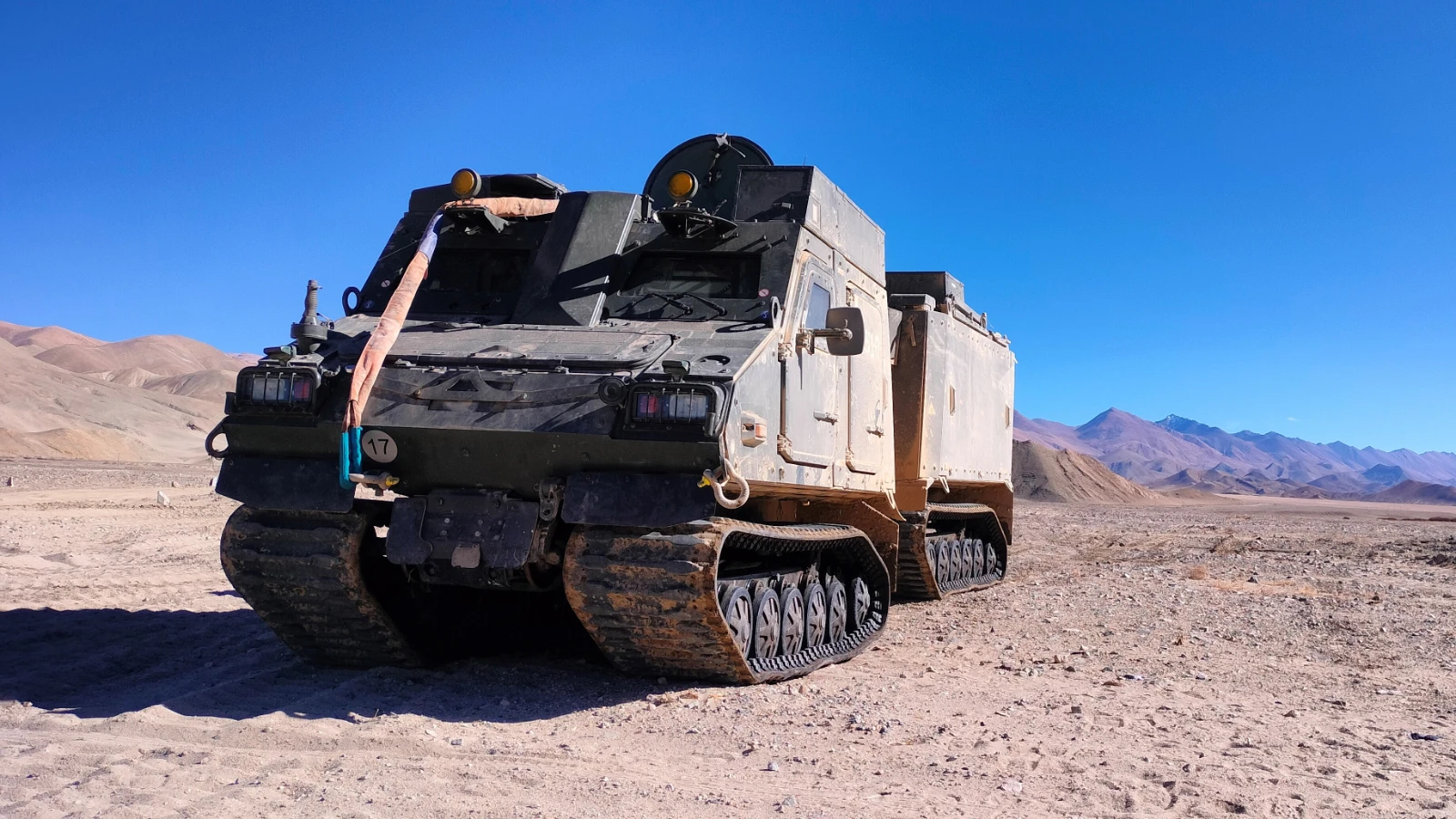
BvS10 Sindhu brings extreme-terrain mobility to indigenous engineering and global supply chains; BAE Systems Hägglunds’ partnership with Larsen & Toubro could mark a significant evolution in India’s approach to defence manufacturing.
Kamal Shah & Chaitali Bag
India’s geography puts extraordinary demands on military mobility. The Himalayas rise into thin air and severe cold; glaciers and snowbound passes can make movement treacherous; and remote border regions, marshlands and poorly connected areas often lie beyond the reach of conventional transport. Across such terrain, wheeled and tracked vehicles may struggle to keep pace with operational needs. Mobility is therefore far more than a logistical concern: it shapes the Army’s reach, the safety of its personnel and its ability to maintain a lasting presence in difficult-to-access areas.
In this context, the BvS10 Sindhu takes on strategic importance. An articulated all-terrain vehicle, it is being manufactured in India by Larsen & Toubro (L&T) under licence from Sweden’s BAE Systems Hägglunds. The programme brings together a proven European platform, Indian engineering expertise and a partnership with ambitions that reach beyond straightforward assembly.
The first contract calls for 18 vehicles for the Indian Army, with deliveries expected by December 2027. L&T has set an earlier near-term milestone: delivery of the first batch in the second quarter of 2027. These initial vehicles will be an important step towards giving the Army a specialised mobility capability suited to some of the country’s most demanding operating environments.
But the programme’s potential cannot be measured by its opening order alone. BAE Systems Hägglunds has supplied L&T with the complete technical data package needed to reproduce the vehicle. That transfer gives the Indian partner a stronger foundation for mastering the platform, while L&T has already carried out engineering work to adapt it to India’s high-altitude requirements. The result is a programme that can build expertise and vehicles.
The partnership also offers value on both sides. BAE Systems Hägglunds can qualify Indian suppliers for possible participation in its wider international manufacturing network. For India, the programme provides a practical test of whether licensed production can develop into something deeper: co-development, stronger indigenous industrial capabilities and, potentially, export opportunities.
That evolution will take sustained effort. The promise of a manufacturing partnership must be matched by the hard work of developing suppliers, building technical skills and ensuring the vehicles meet the Army’s operational needs. If those pieces come together, the BvS10 Sindhu programme could become more than a solution to a specialised mobility challenge. It could help establish a durable industrial ecosystem—one that delivers immediate value to the Indian Army while creating capabilities with a much wider future.
A Vehicle Built for the Most Demanding Terrain
The BvS10 is part of a class of military vehicles designed to address a fundamental challenge: operating in places where conventional platforms struggle to move.
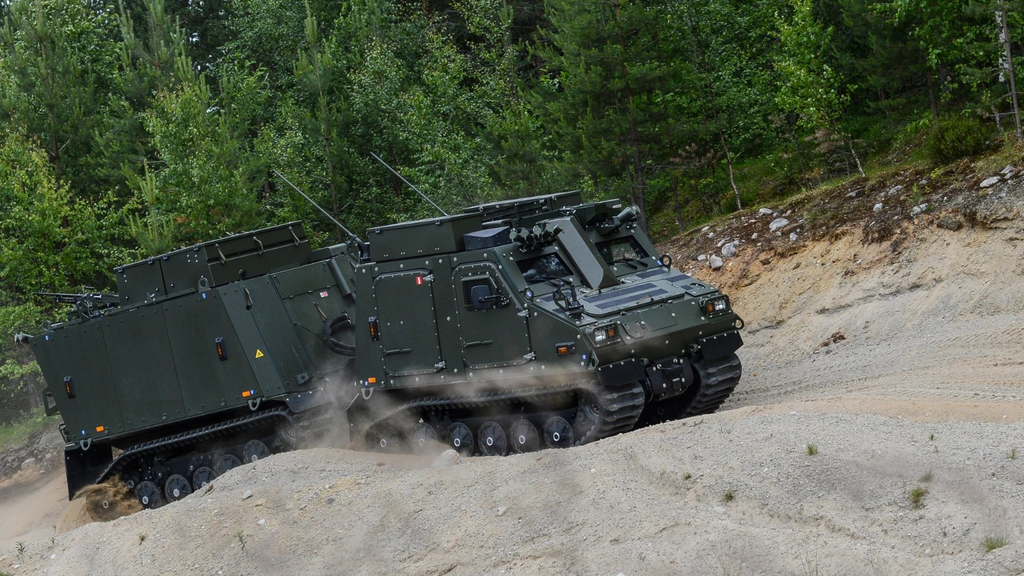
Developed by BAE Systems Hägglunds, the vehicle uses an articulated, two-section design to navigate challenging terrain. Its low ground pressure, articulated steering and capacity to carry a range of payloads make it well suited to snow, soft ground and remote environments.
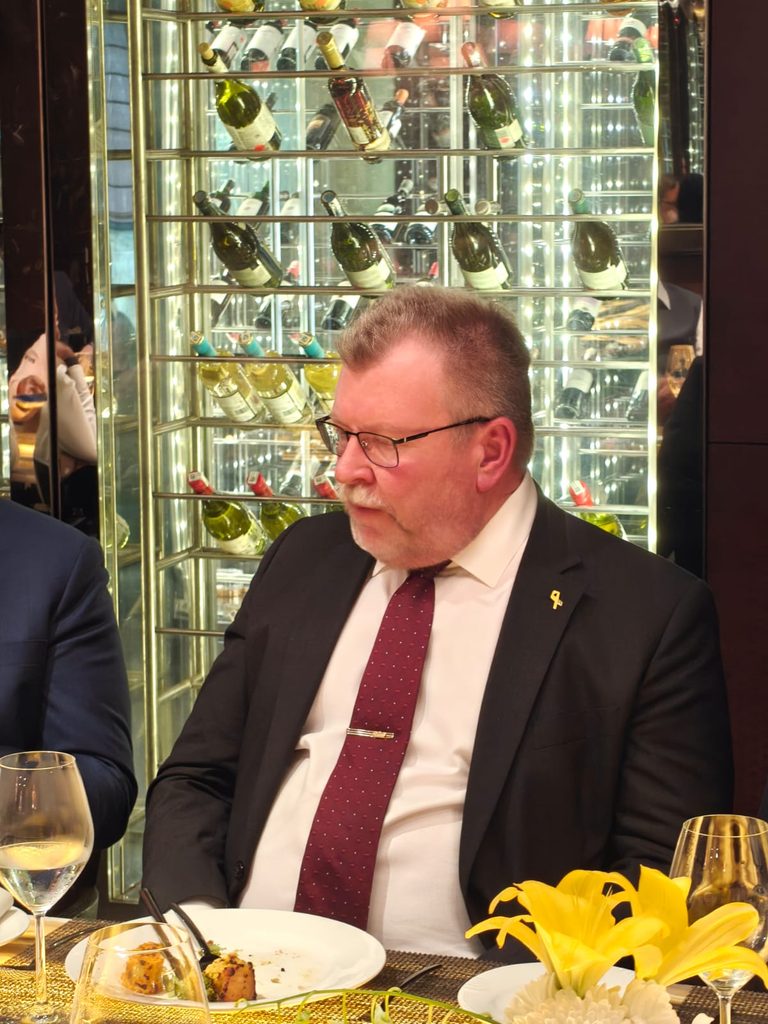
Tommy Gustafsson-Rask, President of BAE Systems Hägglunds AB, highlighted the BvS10’s mobility and versatility. The vehicle can be configured for around 20 roles, including troop transport, logistics, ambulance duties and the carriage of specialised equipment such as radar systems.
Its potential applications extend beyond the army. Depending on its configuration and the user’s needs, the platform could support other military services and selected civilian operations, including disaster relief, rescue missions, and work in remote industrial areas.
This adaptability may matter for India, where varied terrain and widely dispersed operational requirements can make acquiring and maintaining specialised vehicles costly and complex. A multi-task platform could support force sustainment, standardise equipment, and bring specialist capabilities to remote locations.
Yet versatility alone is not enough. Each role entails specific requirements for payload, protection, communications and logistical support. The BvS10’s multi-role potential would therefore need to be developed into clearly defined configurations suited to the Indian Army’s operational doctrine.
High-Altitude Mobility: Meeting India’s Requirements
A central part of the Sindhu programme is adapting the BvS10 to the conditions in which the Indian Army may operate it. High-altitude terrain poses demanding mechanical and physiological challenges. Thin air can reduce engine performance, while severe cold can affect hydraulic systems, pumps, lubricants and other components. Snow, ice, steep slopes and soft ground further test a vehicle’s mobility and reliability.
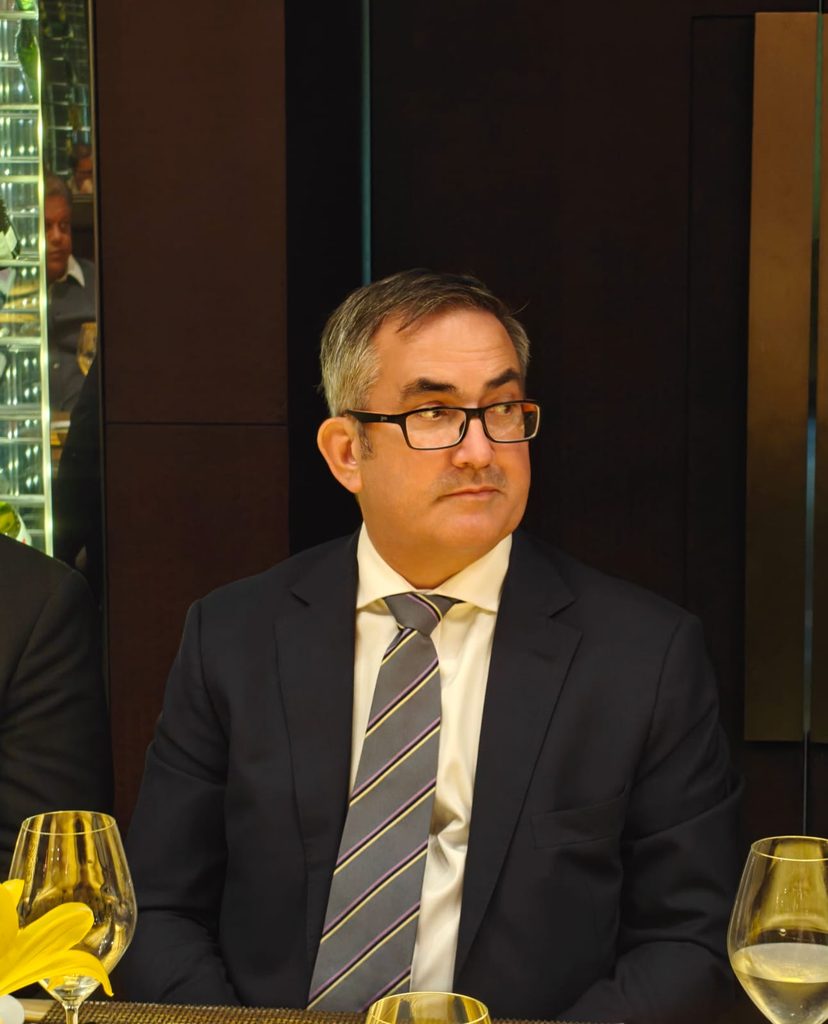
Darren Restarick, Regional Director of BAE Systems Hägglunds, said the BvS10 is designed to operate in a broad range of environments—from sea level to around 5,500 metres—and in both extreme cold and heat. But the Indian programme involves more than relying on the platform’s existing capabilities.
Anthony Walton, Managing Director–India of BAE Systems India, said Larsen & Toubro had developed a new power pack to address the demands of high-altitude operation. That contribution highlights the programme’s engineering dimension: the Indian partner is helping shape a solution for the customer’s requirements, rather than simply assembling an imported vehicle.
Restarick also described work on hydraulic performance and cold-weather pumps. Reduced air density limits the power available from an engine, while hydraulic systems need to sustain suitable pressure to function reliably. Components such as pumps for diesel heaters may also need adjustment to operate effectively in the conditions the vehicle will face.
The effectiveness of these adaptations will ultimately be judged in representative trials and service. Key measures will include mobility across snow and soft ground, reliability at altitude, payload capacity, ease of maintenance in remote locations and performance during extended deployments. The BvS10’s articulated design and low ground pressure offer potential advantages, but testing must show how these translate into practical gains over alternatives available to the Army.
The programme may also have implications beyond the initial contract. If the engineering experience gained through Sindhu can support the development of other vehicles for extreme terrain, the partnership could contribute more broadly to India’s specialised defence-mobility capabilities.
From Licensed Production to Genuine Co-Development
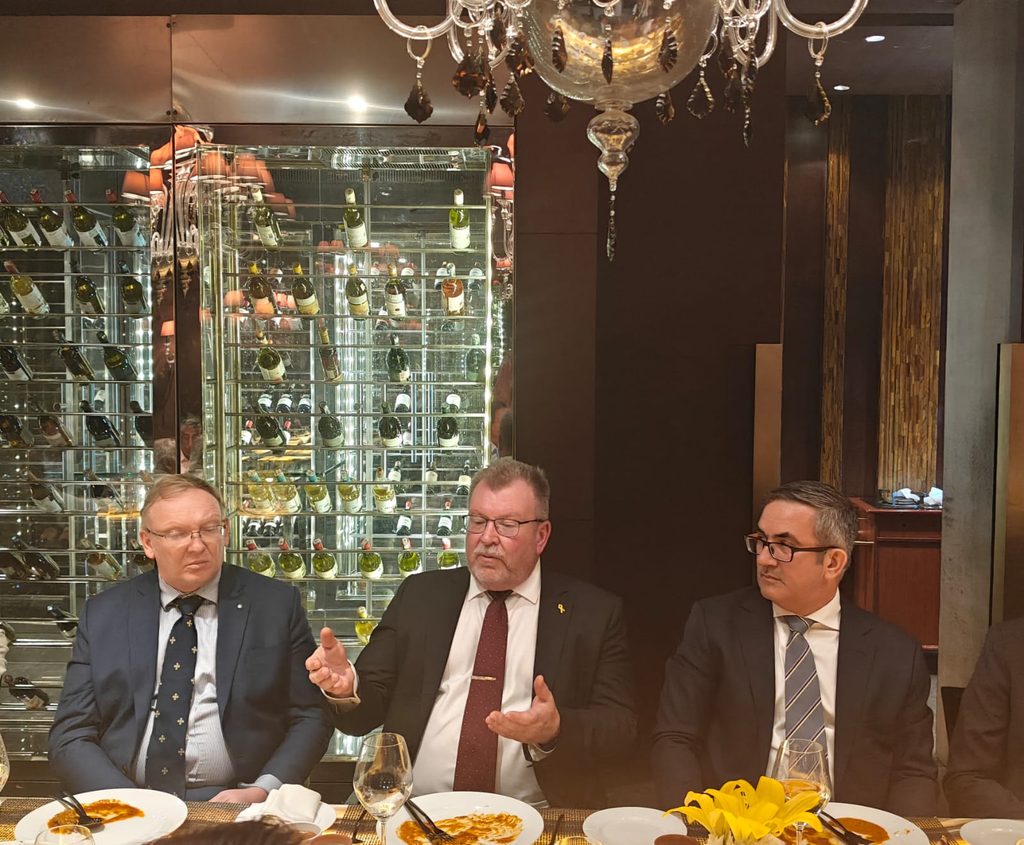
The Sindhu programme’s most consequential industrial feature is the depth of technology transfer involved. BAE Systems Hägglunds executive Gustafsson-Rask described the arrangement as the company’s first full licensing agreement for one of its products. Under the agreement, L&T has received the complete technical data package required to reproduce the BvS10, providing a basis for manufacturing the vehicle in India.
The extent of technology transfer distinguishes one licensed-production arrangement from another. Some partnerships focus mainly on assembly, while the original manufacturer retains key components, production methods, and engineering decisions. Others give the local partner greater scope to develop manufacturing capabilities, adapt designs and take on engineering responsibilities. The Sindhu programme appears to be moving towards this more collaborative model.
Anthony Walton cited two examples of L&T’s contribution. The company developed a new power pack to meet India’s high-altitude requirements and designed indigenous manufacturing jigs for the production process, rather than relying solely on imported equipment. These examples show L&T applying its own engineering and industrial capabilities to the programme.
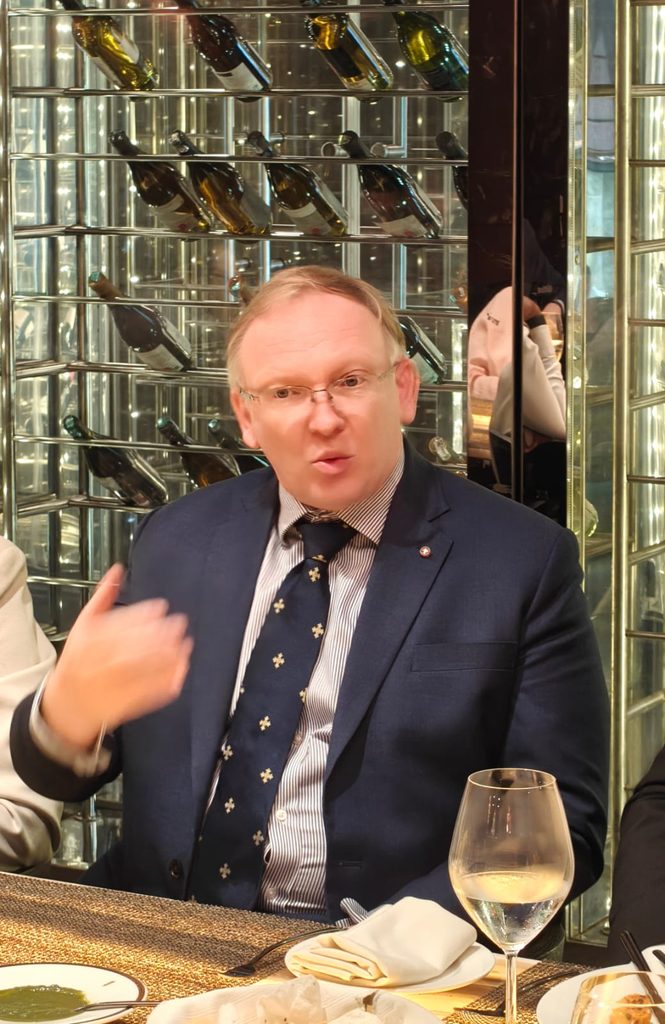
After visiting L&T’s Hazira facility, Gustafsson-Rask praised its manufacturing capabilities, engineering expertise and focus on industrial safety. He also noted how seriously the company was preparing to produce the initial order of 18 vehicles.
That preparation matters beyond the order size. Establishing a production line involves investment in tooling, processes, quality assurance, workforce training and supplier qualification. Such investments are more valuable when they support an ongoing programme rather than a single production run.
The immediate task is to establish a reliable process, meet the delivery schedule and demonstrate that the vehicles can be manufactured in India to the required standards. With those foundations in place, the partners could pursue further design adaptations, increase local sourcing and develop additional components domestically. Progress in these areas would deepen the collaboration and strengthen the case for future work between BAE Systems and Indian industry.
Indigenous Content: Beyond the Percentage
The programme aims to exceed the Indian government’s 60 per cent indigenous-content requirement. Restarick said the partnership is exploring further opportunities for domestic sourcing, while noting that L&T’s programme work will determine the final level. The ambition is clear—but it is not yet a verified percentage.
The bigger opportunity is building lasting industrial capability. BvS10 production could help strengthen Indian expertise in manufacturing, engineering, quality control, maintenance and supplier development. Indian micro, small and medium enterprises may also join the supply network if they can meet demanding standards for quality, traceability, delivery and cost.
That progress will take investment in equipment, training, certification and capacity. But the payoff could extend well beyond this programme: suppliers that meet defence-industry requirements will be better positioned for future aerospace and defence opportunities.
The best measure of success, then, will be more than a high indigenous-content figure. It will be a sustainable network of Indian suppliers ready to support Sindhu—and compete for business beyond it.
India’s Place in BAE Systems Hägglunds’ Global Industrial Strategy
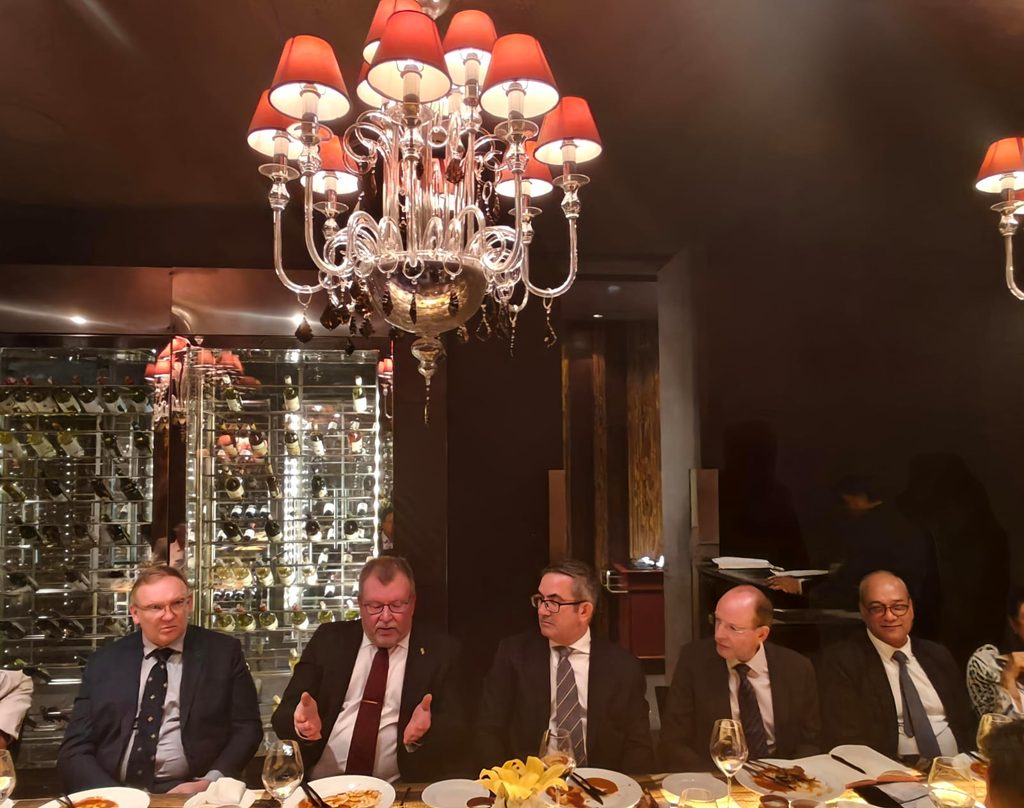
The timing of the partnership reflects a period of rapid growth for BAE Systems Hägglunds, as Europe’s changing security environment drives increased demand for military equipment. Gustafsson-Rask said the company had expanded from about 750 employees to 2,800 in five years. Annual turnover was expected to reach approximately US$1.5 billion, up from around US$250 million, while the order book—then about US$8 billion—could grow to nearly US$15 billion. The company has also invested significantly in production capacity.
This expansion helps explain Hägglunds’ interest in broadening its industrial partnerships and diversifying its supply chain. Rising demand creates opportunities, but it also strains production facilities, suppliers and delivery schedules.
Hägglunds’ two principal product families are the BvS10 all-terrain vehicle and the CV90 infantry fighting vehicle. Gustafsson-Rask described an expanding European production base for the CV90, supported by industrial participation in several countries. The BvS10 programme in India represents a different arrangement: instead of relying solely on production at its Swedish facility, Hägglunds is transferring the technical package needed for L&T to manufacture the vehicle under licence.
The arrangement offers potential benefits to both companies. L&T gains access to a specialised defence platform and its technical information, while building domestic manufacturing expertise. Hägglunds, in turn, gains a partner able to produce vehicles for the Indian customer and potentially contribute to its wider industrial network.
The opportunity is significant because global defence production increasingly depends on qualified suppliers, resilient logistics and the capacity to raise output as demand grows. Yet a licensing agreement alone does not make an Indian facility part of the global supply chain. Components must meet technical requirements, suppliers must be qualified, and international sourcing must make economic sense.
The next step will be to identify components and processes that India can supply competitively. If that effort succeeds, the Sindhu programme could model Indian manufacturing to support domestic needs while also contributing to selected international production programmes.
Could India Become a Regional Production and Export Hub?
The idea of developing L&T’s facility into a regional export hub surfaced during the briefing, and it’s an exciting prospect. Gustafsson-Rask recognised the potential, while stressing that the priority is to prove the partnership can deliver successfully for the Indian Army. Export plans should follow once the initial programme builds confidence and the domestic customer’s requirements are clear.
That’s a sensible path. Defence exports depend on far more than manufacturing capacity. They require confirmed demand, export approvals, clear contracts and intellectual-property arrangements, reliable configuration management, after-sales support and a steady supply of spare parts. The partners would also need to agree how responsibilities are shared between the Swedish manufacturer and the Indian licensee.
There may already be a promising international application for work developed in India. High-altitude modifications designed for the Indian requirement could benefit other operators in mountainous regions. Gustafsson-Rask indicated that this engineering work was already being offered to some existing customers—an encouraging sign that India-specific development may have value beyond India.
How much L&T might contribute to producing or supplying vehicles for other markets, however, remains to be decided. The partners would need to determine what could be exported, under which arrangements and with what level of Indian industrial participation.
An earlier opportunity may lie in developing Indian suppliers whose components can join Hägglunds’ existing production programmes. This could connect Indian industry to international business without requiring an immediate export market for the complete Sindhu vehicle.
Over time, a successful domestic programme could build the manufacturing expertise and support network needed to assess exports to suitable markets across Asia and beyond. For India, the goal should be clear: ensure that any export success brings substantial domestic value, technical learning and lasting industrial participation.
Building Maintenance Capability in India
A defence vehicle is only as valuable as its availability—and keeping specialised vehicles running in remote terrain takes skilled people, reliable spares and strong support.
The Sindhu programme aims to build that capability at home. According to Restarick, L&T personnel will receive train-the-trainer instruction in Sweden on vehicle operation and maintenance, then develop the skills needed to support the Indian Army. Walton stressed that the programme’s maintenance capability will be based in India.
The next challenge is turning training into a complete support system, with parts, documentation, trained technicians and procedures for complex repairs. If L&T succeeds, the partnership could strengthen long-term availability and show how local expertise can support a vehicle throughout its service life.
The Broader BAE Systems India Opportunity
While the Sindhu programme was the main focus of the briefing, the discussions pointed to several other areas where BAE Systems and Indian industry could potentially cooperate.
One is ground-based air defence, particularly BAE Systems’ Tridon Mk2 system and its 40mm 3P programmable ammunition. Walton said the system could suit Indian requirements for protecting against drones, missiles and other aerial threats. He also indicated that BAE Systems was interested in exploring an industry partnership in India along lines similar to the Sindhu arrangement.
The opportunity reflects a broader shift towards integrated air defence. Using expensive interceptors against relatively low-cost drones can place a disproportionate burden on defenders. Gun-based systems with programmable ammunition may provide another layer of protection, depending on the threat and engagement conditions. Their effectiveness, however, depends on more than the weapon itself: sensors, command-and-control, communications, electronic warfare where appropriate, and other effectors must work together as a coherent system.
Gustafsson-Rask described Hägglunds as a systems integrator in the counter-drone field, rather than a developer of every component. He said the company had seen Indian counter-drone technologies that could be of interest. This points to a model in which Indian-developed subsystems could contribute to broader solutions, subject to technical evaluation and qualification—not just importing complete foreign systems.
A second potential area is ammunition production. Walton said BAE Systems was assessing whether selected ammunition products could be manufactured in India, serving domestic customers while potentially creating a second source for international markets. The proposal remains under consideration. Its prospects will depend on product selection, demand, technology-transfer arrangements, investment needs and commercial viability.
The briefing also touched on maritime cooperation, including work with an Indian partner on autonomous underwater vehicle capabilities. Kaushik said the effort was progressing towards a prospective initial product entering the water, but no confirmed delivery or induction date was provided.
Together, these discussions suggest that BAE Systems sees India as a potential partner across several parts of its portfolio, not merely as a buyer of finished equipment. The Sindhu programme could offer a practical starting point for testing that broader approach.
Lessons from the M777: From Qualified Supplier to Global Partner
India’s industrial relationship with BAE Systems offers a useful precedent for the Sindhu programme. Walton cited PTC Industries, which supplies titanium castings for the M777 lightweight howitzer. The company was identified and qualified for the programme, then became part of the howitzer’s global supply chain.
The example shows how participation in a defence programme can develop beyond an initial contract. Suppliers must first demonstrate that they can produce components consistently, meet quality standards and deliver reliably over time. Walton described this as a phased process: initial qualification, smaller opportunities to prove performance, and eventually larger orders or a broader range of components.
A similar pathway could emerge under Sindhu. An Indian company might begin by manufacturing components for the domestic contract. If it meets the programme’s quality, cost and delivery requirements, it could later be considered for other components or programmes. That would create a more lasting industrial benefit than participation in a single production run.
The opportunity comes as Hägglunds expands production capacity and seeks dependable supply chains. But entry into a global network is not automatic: Indian suppliers will need to meet technical and commercial requirements and compete with established international manufacturers.
The M777 experience suggests that progression is possible. Sindhu could provide a new opportunity to pursue it in a different category of defence equipment.
The CV90 Question: A More Selective Approach to Technology Transfer
The briefing drew a clear boundary around Hägglunds’ near-term plans in India: the company is not offering its CV90 infantry fighting vehicle for the country’s Future Infantry Combat Vehicle programme.
Gustafsson-Rask referred to the company’s earlier experience in India and recognised how much the country’s defence industry has developed since then. Hägglunds is open to discussing technologies or subsystems that could support Indian programmes, but a broader CV90 proposal is not currently planned.
That distinction reflects a more selective approach to technology transfer. Indian manufacturers increasingly aim to develop their own platforms and maintain greater control over design, production and future upgrades. Foreign suppliers seeking a role in the market may therefore need to show how their capabilities complement domestic industry, rather than compete with it.
The Sindhu programme presents a different kind of opportunity from a major infantry fighting vehicle competition. It addresses a specialised mobility requirement using a defined platform and a manufacturing arrangement that gives the Indian partner substantial technical information. Licensed production still brings challenges, but this framework offers a more specific basis for cooperation.
The broader lesson is that technology partnerships are most likely to succeed when they align the customer’s requirements, the domestic partner’s capabilities and the foreign supplier’s willingness to share relevant technology.
A Changing European Perspective on India
Gustafsson-Rask said interest in cooperation with India is growing in Sweden and across Europe’s defence-industrial community. One factor is the search for more secure, long-term supply chains. European manufacturers are looking to expand production capacity and diversify their sources, making India’s industrial base increasingly relevant.
But earlier attempts by international defence companies to establish a presence in India have faced difficulties. Gustafsson-Rask argues that companies need to understand how they can contribute to India’s industrial strategy. India should not be treated simply as a market for imported equipment: lasting partnerships require collaboration with domestic manufacturers and arrangements that create practical value for both sides.
India has a broad industrial base, a growing defence-manufacturing sector and a substantial pool of engineering talent. These strengths could make it an important partner, provided international companies are prepared to build meaningful industrial relationships and Indian suppliers can meet demanding production standards.
The Sindhu programme could test this approach in practice. For India, success would mean more than increasing domestic assembly. The greater opportunity is to develop capabilities that can be sustained, improved and applied to future programmes. For BAE Systems, working with Indian industry could diversify its manufacturing network and support wider production ambitions.
Ultimately, the partnership’s credibility will depend on demonstrated results—not strategic declarations alone.
The Road Ahead: Five Tests of Success
The Sindhu programme could become much more than a vehicle delivery effort. Its lasting success will depend on whether it meets five connected tests—turning firm commitments into reliable performance, meaningful industrial participation and enduring value for India.
1. Deliver on time—and prove the vehicle in Indian conditions.
The first test is the clearest: deliver the 18 contracted vehicles, with the first batch targeted for the second quarter of 2027 and completion expected by December 2027. Meeting these milestones will be essential. Just as important will be demonstrating that the vehicle can perform effectively in the varied and demanding conditions in which the Indian Army operates. Timely delivery and convincing operational validation can build the confidence needed for the programme’s next phase.
2. Make indigenous participation meaningful and sustainable.
The partners have committed to exceed the applicable indigenous-content requirement. The real measure of success, however, will be the strength of the industrial capability built behind that commitment. A competitive, dependable network of Indian manufacturers and engineers would offer far more lasting value than a headline percentage alone. The deeper and more sustainable the domestic contribution, the stronger the programme’s potential benefit to India’s industrial base.
3. Build maintenance and lifecycle support into the programme.
A vehicle’s value is measured not only by its delivery, but by how reliably it can serve throughout its operational life. Training, readily available spare parts, capable repair facilities and access to the technical information needed for maintenance will all be vital. Domestic production can deliver its full promise only when the Army is well equipped to support and maintain the platform over time.
4. Help Indian suppliers compete in global supply chains.
The programme could open a valuable route for Indian suppliers to contribute beyond the initial vehicles. That opportunity will need to be earned: suppliers must be identified, qualified and given a fair chance to demonstrate what they can deliver. Participation in international programmes could create lasting commercial benefits, provided Indian companies can meet demanding expectations for price, quality and consistent delivery.
5. Establish a credible path for future growth.
Additional Indian orders, export opportunities and potential expansion into other BAE Systems product lines may all be possibilities. But they are not guaranteed outcomes. Each will depend on customer requirements, commercial considerations and the results of the initial partnership. Treating them as opportunities to be developed—rather than promises already secured—will help keep expectations both ambitious and realistic.
Together, these five tests offer a practical way to judge the Sindhu programme’s progress. If it delivers on time, builds genuine domestic capability, supports reliable service, enables Indian suppliers to compete internationally and creates a sound basis for future opportunities, it could grow into a significant long-term industrial success.
A Small Order with Big Strategic Potential
The BvS10 Sindhu programme starts with an order for just 18 vehicles—but its impact could reach far beyond that. For the Indian Army, the vehicles offer a specialised mobility option for high-altitude and other extreme environments. Their articulated design, low ground pressure and adaptable configurations make them a promising platform to assess against demanding operational needs.
For L&T, the programme is a chance to show that Indian industry can contribute more than licensed manufacturing. Work on a high-altitude power pack and indigenous manufacturing jigs already points to meaningful engineering involvement. BAE Systems Hägglunds, meanwhile, gains an opportunity to deepen its ties with Indian industry as resilient supply chains and production capacity become ever more important.
The bigger question is what industrial model the partnership can build. Delivering on time, establishing dependable local support and qualifying competitive Indian suppliers could lay the groundwork for broader cooperation—and potentially connect Indian suppliers to international programmes.
That approach may offer lessons for future opportunities in ammunition, air defence, maritime systems and more, though each will need its own careful assessment.
Ultimately, success will be measured not by the agreement alone, but by the vehicles delivered, capabilities developed, suppliers qualified and partnerships sustained.
The BvS10 Sindhu could therefore become more than a new addition to the Indian Army’s mobility inventory. It could serve as a practical demonstration of how India’s defence manufacturing ambitions and Europe’s search for resilient industrial partnerships can converge in a relationship built on technology transfer, engineering collaboration and measurable results.