Chaitali Bag
As India accelerates defence modernization and strengthens its commitment to Atmanirbhar Bharat, tactical airlift is becoming an increasingly vital pillar of military readiness, strategic mobility, and humanitarian response. From high-altitude airfields to austere landing strips, the demands are clear: aircraft must deliver proven performance, flexibility and reliability—and adapt as mission needs evolve.
In this exclusive interaction with Indian Aerospace & Defence (IA&D), Rob Toth, Vice President of Strategy & Business Development for Air Mobility and Maritime Missions at Lockheed Martin, discusses the C-130J-30 Super Hercules and its relevance to the Indian Air Force’s Medium Transport Aircraft (MTA) programme. Drawing on the aircraft’s service with the IAF, he highlights its multi-mission capabilities, performance in challenging environments and versatility in supporting both military operations and humanitarian assistance and disaster relief.
The conversation also looks beyond the aircraft to the industrial opportunities surrounding India’s tactical airlift ambitions. Toth discusses indigenous manufacturing, supply-chain integration, maintenance, repair and overhaul, and ways to deepen India’s role in Lockheed Martin’s global aerospace ecosystem. With established partnerships with Tata Advanced Systems and a focus on expanding domestic production capabilities, the company sees the MTA programme as an opportunity to support both IAF operational needs and India’s broader aerospace manufacturing and sustainment goals.
As India strengthens its defence-industrial base while maintaining readiness and interoperability with international partners, Toth shares Lockheed Martin’s perspective that proven platforms, close industrial collaboration, and continuous technological evolution can help shape the future of tactical air mobility.
Q. Considering the multifaceted challenges inherent in modern military and humanitarian operations, what specific operational missions within the context of the MTA programme warrant the most immediate strategic focus and resource allocation, particularly among areas such as enhancing tactical airlift capabilities, optimizing performance for operations from shorter or austere runways, improving high-altitude operational efficiency, or bolstering capacity for humanitarian relief missions?
A. In an ever-changing defence climate, it is important to have an aircraft certified across 20 unique missions. That’s the C-130J-30 Super Hercules and it is unique to this aircraft. The Indian Air Force (IAF) is amongst the world’s most accomplished aerial warfare arms. Given the air force’s capabilities and modernization aspirations, India needs a versatile and reliable airlifter that can operate across diverse mission sets over vast geographies, topographies and extreme environments. The Indian Air Force requires an airlifter with the best short-field takeoff and landing performance and proven across the most challenging operational environments. The IAF requires considerable range, high pallet and passenger capacity, and an aircraft tested and mission-capable in harsh, demanding conditions, including high-altitude regions. Above all, it must be a proven and capable aircraft that can reliably perform humanitarian and military missions.
The C-130J-30 also has unrivalled capability to accomplish India’s range of mission sets. The C-130J carries 60% more passengers, 44% more paratroopers, 31% more litter patients and 14% more standard pallets than the closest competition. With a payload of 22,000 kilograms, the C-130J-30’s ability to transport more personnel and equipment in fewer sorties enables faster delivery of forces for contingency and humanitarian operations while reducing overall operational costs.
The Indian Air Force’s C-130J-30 Super Hercules has logged over 58,000 flight hours, reinforcing its status as a dependable workhorse. The C-130J-30’s achievements span urgent rescue missions and delivering critical supplies to miners stranded on a remote Uttarakhand airstrip, executing precision night evacuations of civilians in Afghanistan and Sudan, and humanitarian aid missions in the Pacific and beyond.
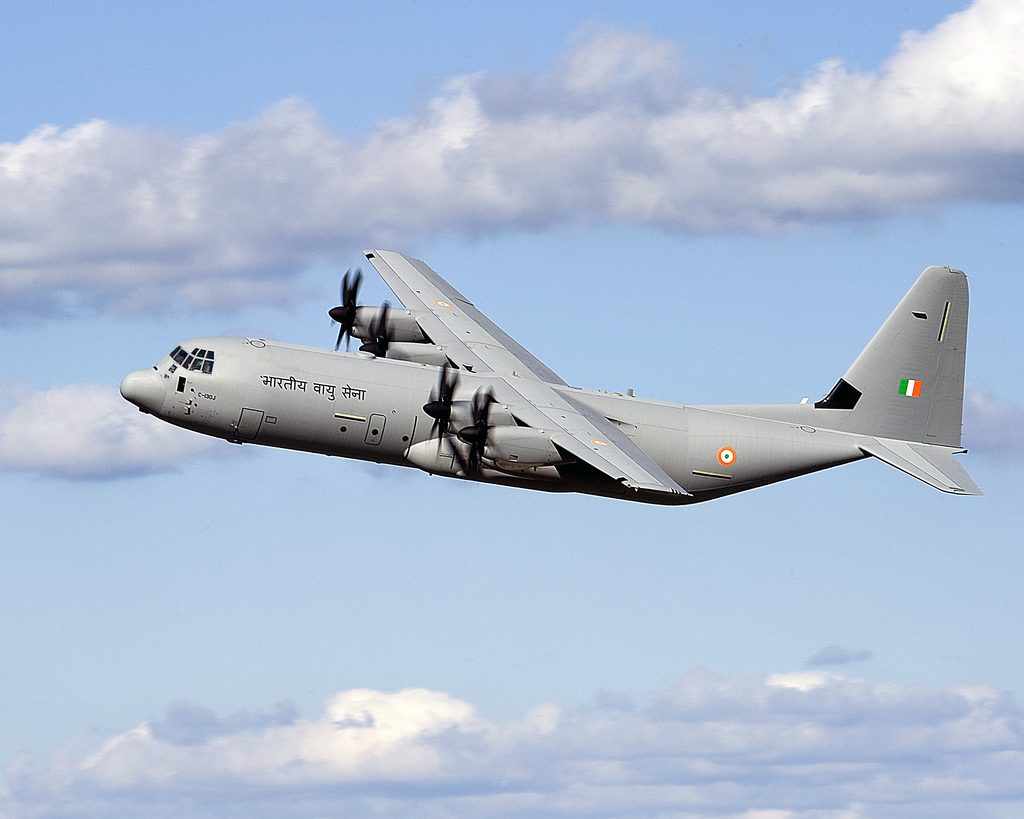
Reflecting trust in the C-130J-30, the aircraft touched down on the Purvanchal Expressway with the Prime Minister aboard. They achieved historic milestones like landing at Daulat Beg Oldie, the world’s highest airfield. More recently, C-130J-30s conducted daring night operations to rescue Indian nationals from Sudan, delivered engineering gear to a mountain tunnel in Uttarakhand, and performed the first-ever night landing at Kargil’s high-altitude advanced landing ground.
More recently, IAF C-130J-30s served as rapid first responders, airlifting crucial humanitarian assistance and disaster relief supplies to Kathmandu during the severe Nepal flash floods in late August and early September 2026.
These accomplishments underscore a legacy of reliability and capability, proving that with the IAF, what seems impossible is merely another mission.
Lockheed Martin’s C-130J-30 is ideally suited to meet the requirements as outlined in the Request for Proposal. As the world’s first choice in tactical airlift, the C-130J-30 exemplifies unmatched total value, innovation, interoperability with a network of global partners, versatility, performance, capability and reliability for 27 nations, including the Indian Air Force. We remain committed to supporting the “Make in India” guidelines, and the MTA program would allow us to expand our existing in-country manufacturing capabilities in India greatly. Lockheed Martin has also pledged to open a second C-130J-30 final assembly line upon award of the MTA contract.
Q. Considering the strategic imperatives of national security and the long-term operational readiness of the Indian Air Force (IAF), what specific advancements in indigenous manufacturing capabilities, along with enhanced capacities for maintenance, repair, and overhaul (MRO) and a resilient supply chain, would yield the most significant and transformative benefits for the IAF’s self-reliance, technological superiority, and sustained operational effectiveness?
A. As rightly pointed out, India’s quest for the next tactical airlifter combines not only the proven performance of the C-130J but also the continued development of industrial production and sustainment capabilities.
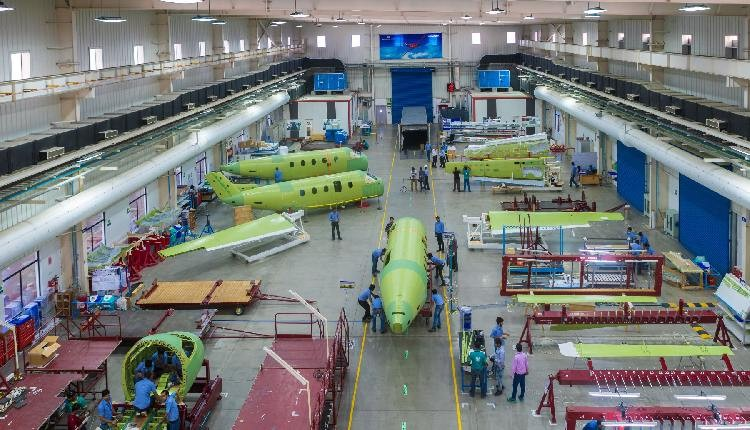
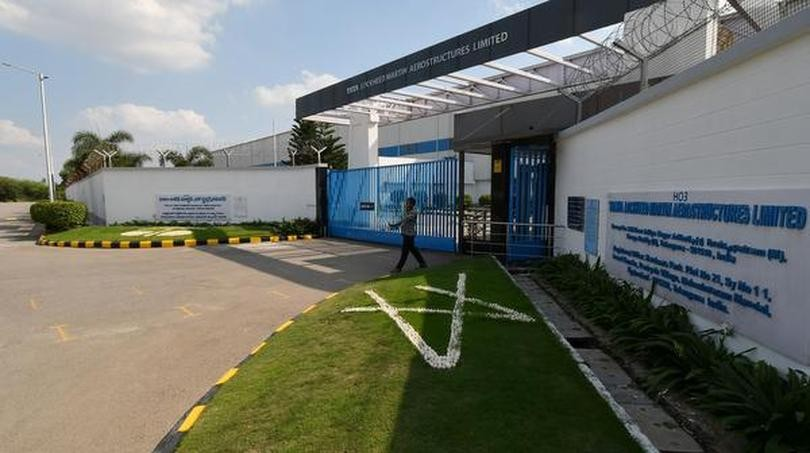
Lockheed Martin is well positioned to meet the IAF’s needs, as it already has in-country partnerships and assets in place. The company’s two state-of-the-art manufacturing Joint Venture (JV) investments in India with Tata Advanced Systems, Tata Lockheed Martin Aerostructures Limited (TLMAL) and Tata Sikorsky Aerospace Limited (TSAL), embody Lockheed Martin’s commitment to Indian industry. The centres have facilitated Indian industry’s participation in Lockheed Martin’s global supply chain by actively contributing to C-130 aircraft, fighter aircraft, and S-92 helicopters delivered in the global market.
Since December 2013, India has built every empennage for the C-130J Super Hercules at TLMAL, with more than 265 empennages delivered and 95% of empennage components sourced from Indian suppliers. TLMAL is also under contract to produce 40 F-16 fighter wing shipsets (74% of the detailed parts are already being produced in India), with an option for additional shipsets. Shipset deliveries began in 2026.
Through its 15-plus years of partnership with the Tatas, Lockheed Martin has consistently invested in manufacturing equipment and tooling across the Indian supply base and in upskilling the workforce.
About 500 suppliers, including more than 140 MSMEs, feed into both JVs, with more than 90 Indian suppliers integrated into Lockheed Martin’s global supply chain. These exports have generated more than $700 million, providing hundreds of millions of U.S. dollars in revenue for Indian industry. Having built over 2,700 Hercules aircraft, Lockheed Martin is well positioned to partner with India as it looks to scale its aerospace supply chain and production capabilities.
Having resiliency in the defence supply chain benefits both countries, particularly maintenance, repair, and overhaul activities. By leveraging India’s manufacturing capabilities, the U.S. can diversify logistics, reduce life-cycle costs, and enhance operational readiness across the Indo-Pacific while fostering deeper industrial collaboration to mutual strategic benefit. This has global and regional defence benefits.
Increase reliability by addressing DMS through stronger supply chains; evolve to address DMS more affordably over time.
Establishing a Maintenance, Repair and Overhaul (MRO) facility in India to support the IAF’s existing fleet of 12 C-130J-30s as well as other global Super Hercules fleets is a key priority. In December 2025, Tata Advanced Systems and Lockheed Martin announced the groundbreaking of a new Defence Maintenance, Repair and Overhaul (MRO) facility in India for the C-130J-30 Super Hercules aircraft. This capability will significantly enhance in-country sustainment for the Indian Air Force and create opportunities for broader regional and global support.
The state‑of‑the‑art C‑130J-30 MRO facility will provide depot‑level and heavy maintenance, component repair, overhaul, and structural checks and testing, structural restoration and avionics upgrades, and expanded training for Indian engineers and maintainers. It will also provide new opportunities for Indian suppliers across the C‑130J-30 supply chain.
Q. What capabilities does Lockheed Martin’s offering bring to the MTA program?
A. We are honoured to serve India through the C-130J-30 and welcome the opportunity to expand our service to India through the MTA program. With 27 countries invested in the C-130J, the C-130J network of partners and allies facilitates true interoperability, force amplification, additional training opportunities, knowledge transfer and continued platform innovation. Our capabilities are not conceptual or projected; they are proven. Proven in every challenging operational environment, the C-130J-30’s certification, versatility across 20 mission sets, and structural durability set the standard for reliability, safety, and excellence. The C-130J-30 Super Hercules is the only tactical-by-design medium-sized airlifter that meets all the complex and challenging requirements of the tactical airlift mission. The C-130J-30 is also a bridge to the future, where enhanced connectivity, modern avionics architectures, and efficient propulsion capabilities can be integrated across allied fleets.
Superior short-field take-off and landing performance, lower fuel consumption, reduced carbon footprint, increased range, and the most pallet and passenger capacity make it the first choice for operators. The IAF’s Super Hercules has a highly integrated, sophisticated configuration designed primarily to support India’s special operations requirements.
India’s C-130J-30 fleet is versatile and reliable. The Super Hercules can accomplish 20 different missions across vast geography, varied topography, and extreme environments. From humanitarian aid, airlift, natural disaster support, and search and rescue operations to military requirements, the IAF’s diverse needs are best met by an aircraft with proven capabilities.
Lockheed Martin enjoys unmatched airlift production scale compared to the competition: 2,700 aircraft vs fewer than two dozen. Lockheed Martin and TASL are performing today and ready to scale toward the future.
To maintain high availability rates at low standup/operational costs, the IAF benefits from a stabilized production line, worldwide support system, global supply chain and training resources.
As previously mentioned, the C-130J carries 60% more passengers, 44% more paratroopers, 31% more litter patients and 14% more standard pallets than the closest competition. With a payload of 22,000 kilograms, the C-130J-30’s ability to transport more personnel and equipment with fewer sorties allows faster delivery of capability for humanitarian and contingency operations.
Further, the C-130 has an unmatched history of multi-mission versatility, technological upgrades, and continuous innovation by 70 global operators across 70-plus years. Lockheed Martin continues to incorporate state-of-the-art technology to keep pace with the evolving nature of conflict.
The C-130J-30’s existing technology reduces manpower requirements, lowers operating and support costs, and provides life-cycle cost savings over earlier C-130 models. Advanced flight deck avionics provide outstanding situational awareness, reduced crew workload, increased efficiency and modern safety features to protect and guide flight crews through challenging conditions.
A partnership with Lockheed Martin delivers innovative solutions that customers won’t get with any other competitor! You buy the C-130J, you buy the Lockheed Martin enterprise! A key differentiator is access to Lockheed Martin’s innovation powerhouse, Skunk Works®, enabling customers to be part of future enhancements and collaborations. The C-130 platform is designed to constantly evolve and innovate, adapting to new mission requirements as they arise. It is the ideal conduit. Open architecture systems allow upgrades and integration of new sensors, software, and weapons without redesign. Conflicts in Ukraine and the Middle East have demonstrated the need to build and deploy capabilities in months, not years.
Q. To what extent does integration with existing IAF systems, procedures, and transport fleets mitigate training and transition demands and what other benefits does the C-130J-30 offer India?
A. As mentioned, the IAF has already clocked more than 58,000 hours on the 12 C-130J-30 Super Hercules aircraft that it currently operates. The IAF’s C-130J-30 fleet has proven its versatility and reliability, demonstrating unmatched performance across India’s vast geography, topography, and extreme environments. The Indian Air Force’s reliability has been dramatically enhanced by our joint‑teaming philosophy, which emphasizes reach‑back support, resilient and rapid parts provisioning, and a shared commitment to fleet readiness. It also offers interoperability and access to a global network of training possibilities.
The battlefield of tomorrow requires expertise, the ability to up-skill and the need to rapidly produce products and services. Our ability to manufacture and scale aircraft production and meet India’s specific requirements is proven over 70 years. With India seeking to scale its industrial base, Lockheed Martin is best positioned to scale the Indian aerospace supply chain and production right now. We’ve produced more than 2,700 C-130s and 570+ C-130Js when lives are on the line; proven matters. Untested is unacceptable.
The cross-section of Lockheed Martin capabilities and what the entire Lockheed Martin enterprise delivers provides innovative solutions that our customers won’t get with any other competitor. You buy the C-130J, you buy the Lockheed Martin enterprise.
Additionally, through our deep partnership, we have already consistently demonstrated a commitment to leading India from Self-Reliance India to Advanced India or Atmanirbhar Bharat to Viksit Bharat. Trust cannot be rushed. We have a deep-rooted trust created by our shared commitment to developing a product that is built to deliver and built to last.
Given the IAF’s existing knowledge of the aircraft, its known capabilities and its peerless global interoperability with key allies, the C-130J-30 provides the most relevant and compelling offering. We are proud to serve India through the C-130J-30 and would be honoured to expand our service to India through the MTA opportunity.
The C-130 platform is designed to constantly evolve and innovate, adapting to new mission requirements as they arise. With over 3 million flying hours, validated data makes the C-130J the lowest-risk choice for customers versus untested competitor platforms.
All responses are attributed to Rob Toth, Vice President of Strategy & Business Development for Air Mobility and Maritime Missions at Lockheed Martin.