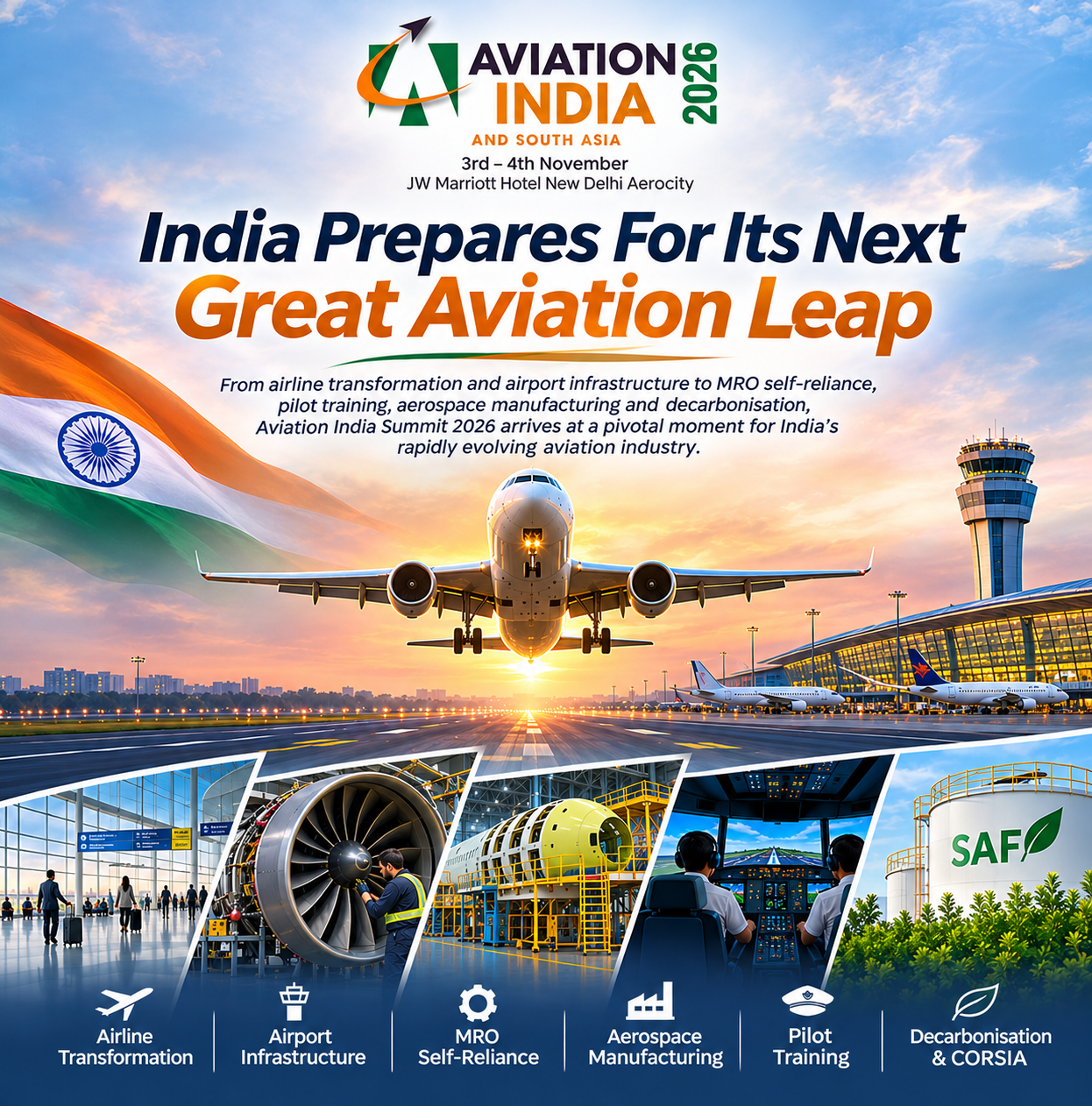
From airline transformation and airport infrastructure to MRO self-reliance, pilot training, aerospace manufacturing and decarbonisation, Aviation India Summit 2026 arrives at a pivotal moment for India’s rapidly evolving aviation industry.
Chaitali Bag
India’s aviation industry is approaching a defining inflection point. What was once primarily a market characterised by growing passenger demand and expanding airline networks is steadily becoming a major global aviation ecosystem, supported by ambitious aircraft acquisition programmes, large-scale airport infrastructure development, increasing private-sector participation, and an expanding aerospace manufacturing base.
Yet, the next phase of this transformation will demand considerably more than adding aircraft, building terminals and opening new routes. It will require a robust aviation ecosystem capable of supporting unprecedented growth through operational excellence, engineering capabilities, skilled manpower, technological innovation, financial sustainability, and environmental responsibility.
Against this backdrop, the Aviation India and South Asia Exhibition & Summit 2026, scheduled for 3–4 November at the JW Marriott Hotel, Aerocity, New Delhi, assumes particular significance. Now in its third year, the summit brings together some of the most influential names in global and Indian aviation to deliberate on the opportunities, challenges, and solutions that will shape the industry’s next chapter.
With its central theme of Opportunities / Challenges / Solutions: Finding the Right Growth Formula for Indian Aviation, the summit seeks to move beyond conventional discussions on market expansion and address the structural requirements of building a globally competitive aviation industry.
The gathering comes at a time when India’s aviation ambitions are increasingly interconnected with global airline strategies, international aerospace supply chains, airport development models, maintenance ecosystems and the emerging global sustainability framework.
A Leadership Convergence at a Defining Moment
One of the principal attractions of Aviation India 2026 will be its distinguished line-up of airline leaders, including executives with extensive experience in managing some of the world’s most complex aviation businesses.
The presence of Willie Walsh, who assumed the role of Chief Executive Officer of IndiGo in early August, is particularly noteworthy. With more than four decades of experience in the global aviation industry, Walsh brings an exceptional perspective on airline management, business transformation, international strategy and aviation policy.
His career began as a cadet pilot with Aer Lingus in 1979, followed by senior leadership positions at the airline, British Airways and International Airlines Group (IAG), where he served as founding CEO. More recently, as Director General of the International Air Transport Association (IATA), he guided the global airline industry’s principal association through the unprecedented challenges of the COVID-19 pandemic.
His on-stage conversation with Aviation India Conference Director Mark Pilling will offer an opportunity to examine his early priorities at IndiGo, the strategic direction of India’s largest carrier and the challenges confronting airlines in an increasingly competitive global marketplace.
The timing is particularly relevant. IndiGo’s expansion ambitions, evolving international strategy, and growing operational requirements make its leadership decisions important indicators of the direction Indian commercial aviation is heading.
Another major highlight will be the participation of Tewolde Gebremariam, Air India’s new Chief Executive Officer and Managing Director. His appointment brings to the Indian aviation landscape an executive with an impressive record of airline transformation.
During his decade-plus tenure as Group CEO of Ethiopian Airlines, Gebremariam oversaw a multi-billion-dollar expansion that transformed the airline into Africa’s largest and most profitable airline group. Under his leadership, its revenues increased more than fourfold while its fleet nearly tripled.
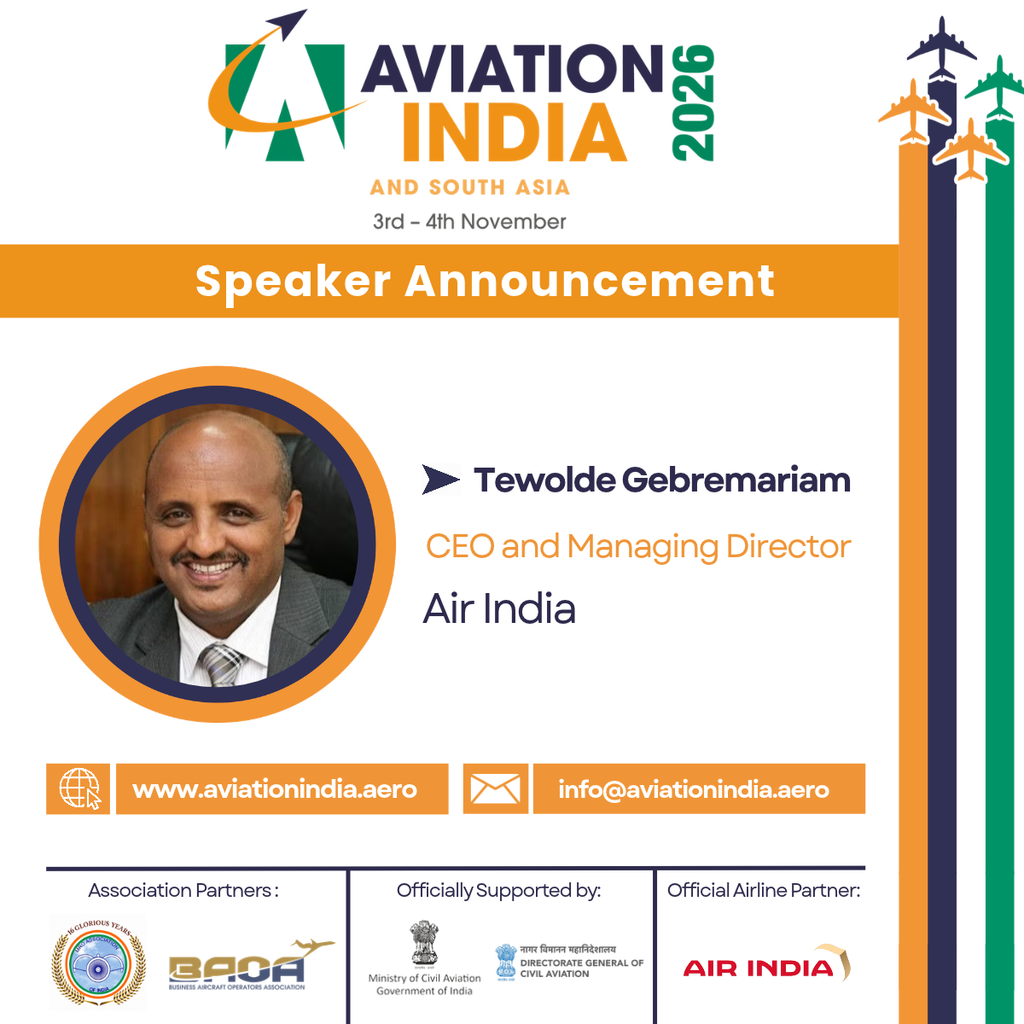
His experience in expanding international networks, developing competitive hubs, improving operational reliability and building a strong organisational culture could prove particularly relevant to Air India’s ongoing transformation.
For Air India, the challenge is no longer limited to completing a foundational turnaround. The next stage involves translating restructuring and investment into sustainable growth, profitability, customer experience and international competitiveness.
Developing long-haul connectivity, world-class hub operations, engineering infrastructure, maintenance capabilities, and aviation training will be central to this journey.
Gebremariam’s participation is therefore expected to generate considerable interest, particularly regarding how global airline management practices can be adapted to India’s rapidly changing aviation environment.
Airbus and India’s Growing Aerospace Manufacturing Ambitions
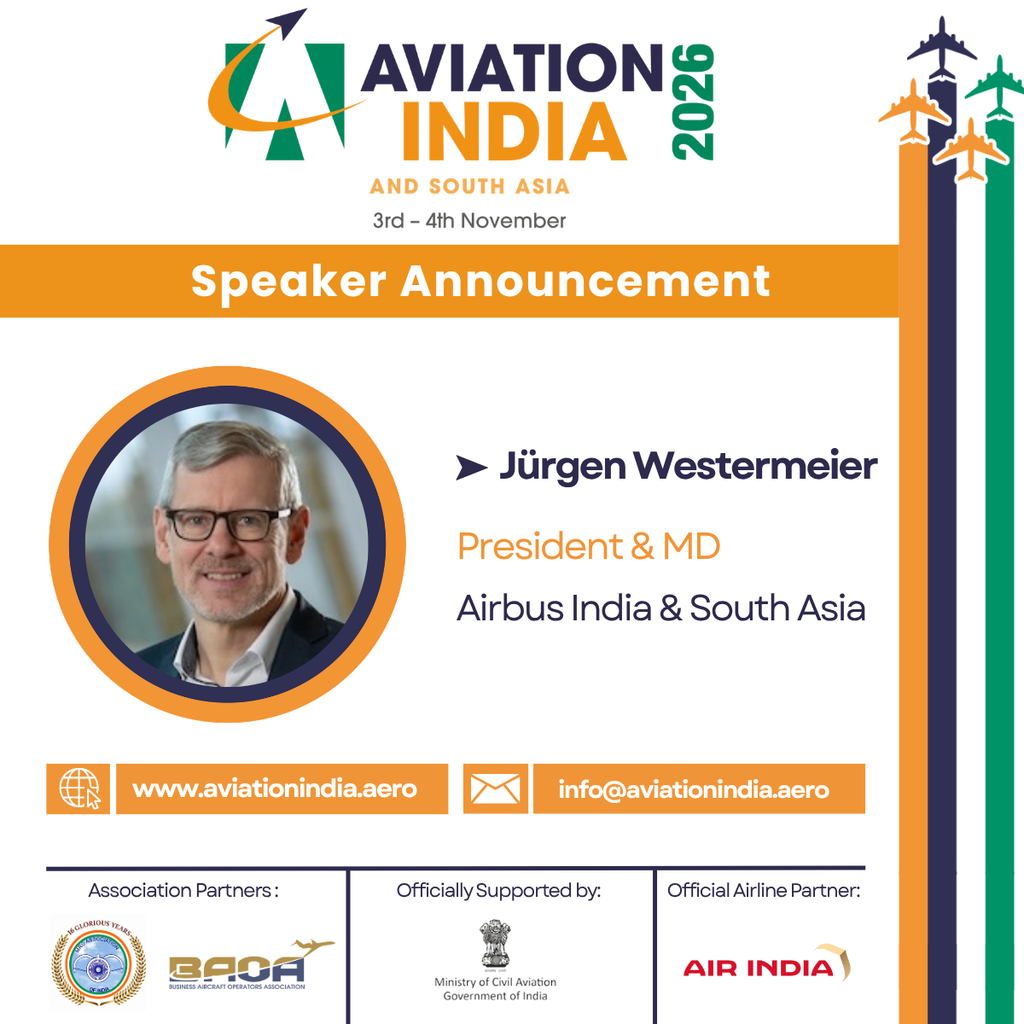
The summit will offer a valuable opportunity to explore India’s fast-growing role in the global aerospace manufacturing landscape. Jürgen Westermeier, President and Managing Director of Airbus in India and South Asia, will share insights from one of the world’s leading aerospace companies.
Airbus’s view of India has expanded well beyond its importance as a commercial aircraft market. The company’s growing presence spans commercial aviation, helicopters, defence, space, engineering, procurement, maintenance and training. As Westermeier has emphasized, India is no longer just a vital market—it is a cornerstone of Airbus’s global strategy and innovation network.
That commitment is reflected in Airbus’s expanding operations: more than 3,800 employees in India, over 15,000 jobs supported across its supply chain, and more than US$1.6 billion in components and services sourced annually for global exports. These impressive figures highlight the increasing contribution of Indian suppliers and engineering talent to aerospace production worldwide.
India’s aerospace industry has a remarkable opportunity to move up the value chain and play a more strategic role in global programmes. Indian companies can expand their contributions across precision manufacturing, aerostructures, advanced materials, electronics, software engineering, component production and lifecycle support.
Realising this potential will depend on building suppliers that can meet demanding international requirements—consistently delivering the quality, reliability, certification and production efficiency the industry expects.
The next milestone is clear: India can evolve from an important sourcing destination into a strategic hub for aerospace engineering, innovation and manufacturing. Westermeier’s participation offers a valuable opportunity to explore how international OEMs and Indian industry can deepen their collaboration and strengthen India’s position in global aerospace supply chains.
Airports: Building the Next Generation of Global Aviation Hubs
India’s aviation growth story also depends on transforming its airports.
Passenger growth, increasing aircraft movements and the expansion of international connectivity are placing enormous demands on airport infrastructure. The requirement is not simply for additional terminal capacity but for integrated, technology-driven aviation hubs that can deliver seamless passenger movement, operational efficiency and competitive international connectivity.
Pradeep Panicker, Chief Executive Officer of Delhi International Airport, will highlight the airport’s role in India’s aviation ambitions. According to the summit announcement, Delhi Airport handled more than 78 million passengers in 2025, making it the country’s largest airport and the world’s 11th busiest.
Recent developments include a fourth runway, expanded international passenger-processing facilities and the conversion of Terminal 3’s Pier C from domestic to international operations. These improvements support Delhi’s ambition to become a leading hub-and-spoke gateway, connecting travellers from across India with international destinations.
Achieving that goal will take more than infrastructure. It depends on coordinated airline schedules, competitive transit facilities, efficient baggage handling, smooth immigration, reliable ground services and a broad network of international routes.
Delhi Aerocity points to another dimension of airport development: the growth of airport cities. Its expanding mix of hotels, offices, retail, healthcare, convention facilities and mixed-use projects shows how airports can develop into wider commercial and economic centres.
Another important voice in this discussion will be SGK Kishore, Executive Director (Airports) at GMR Airports Limited and Chief Innovation Officer at GMR Group.
His experience spans airport management, urban infrastructure, technology and public administration. Since January 2025, he has also served as President of Airports Council International (ACI) Asia Pacific & Middle East, representing 132 member organisations operating 617 airports across 46 countries and territories.
His earlier leadership at Hyderabad International Airport included developing end-to-end digital passenger processing and helping the airport achieve Carbon Neutral status, a first in its category in Asia Pacific.
The participation of these airport leaders is especially important as India considers how to develop infrastructure that is not only larger but smarter, more resilient, commercially sustainable and internationally competitive.
The MRO Imperative: Turning Fleet Expansion into Engineering Self-Reliance
Perhaps one of the most consequential discussions at Aviation India 2026 will revolve around Maintenance, Repair and Overhaul (MRO).
India’s expanding commercial aircraft fleet creates a substantial opportunity for the domestic MRO industry. However, the ability to maintain, repair and service this growing fleet efficiently will determine how much of the economic value generated by aviation expansion remains within the country.
Historically, Indian airlines have depended significantly on overseas facilities for several specialised maintenance requirements. This has implications for costs, aircraft turnaround times, logistics and operational flexibility.
The situation is changing as airlines and independent MRO providers invest in new hangars, infrastructure, technical capabilities and skilled manpower.
IndiGo’s Senior Vice President, Engineering & Maintenance, Parichay Datta, will discuss the airline’s growing emphasis on maintenance self-sufficiency.
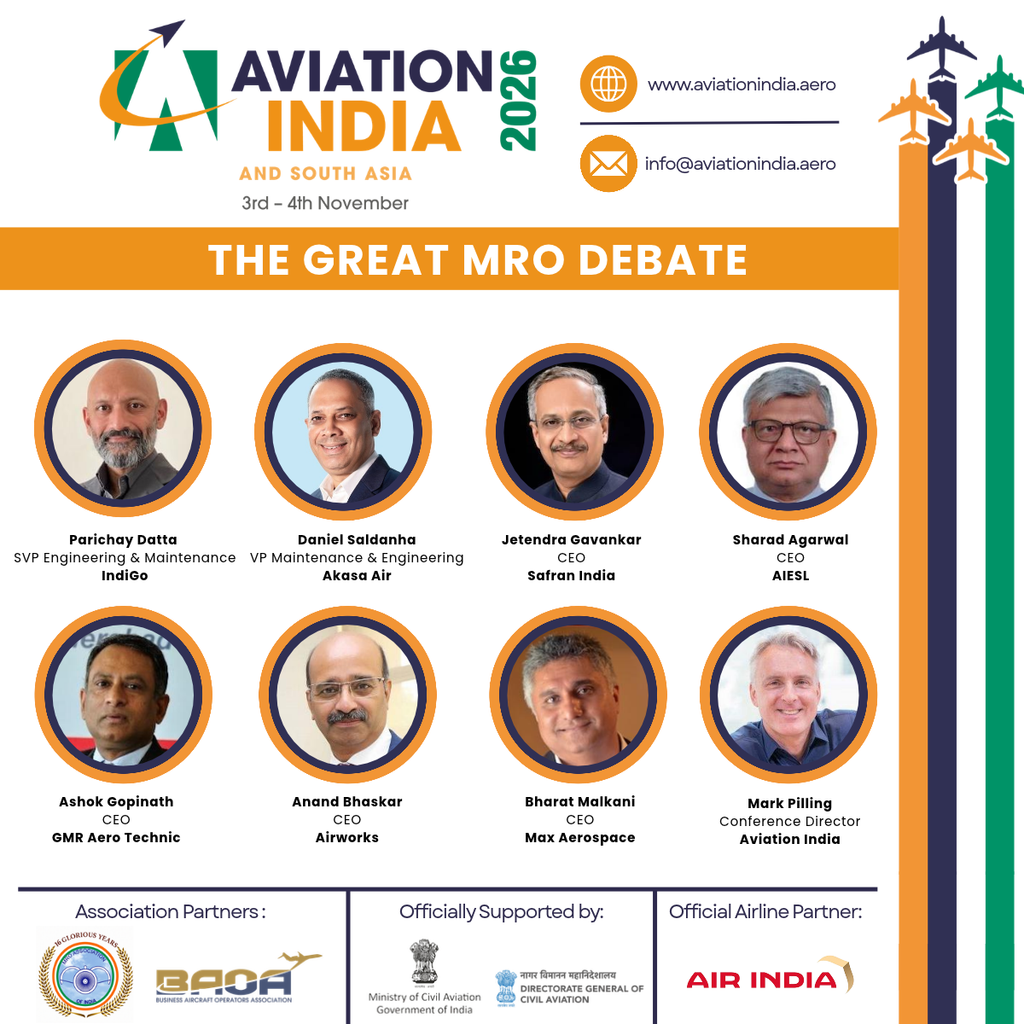
A third-generation aviator with more than 25 years of aviation experience, Datta has been associated with IndiGo since its inception in 2006. His responsibilities include technical operations supporting more than 2,000 flights daily.
IndiGo’s in-service fleet exceeds 420 aircraft, including Airbus A320neo, A321XLR and ATR 72 aircraft. Its substantial aircraft order book, comprising more than 800 additional single-aisle A320-family aircraft and 60 A350-900s scheduled to arrive from 2028, further underscores the scale of its future engineering requirements.
The airline’s growing investment in digitalisation, automation and an increasingly self-reliant maintenance ecosystem reflects a broader industry trend.
Akasa Air will also contribute to this debate through Daniel Saldanha, Vice-President, Maintenance & Engineering. As a rapidly expanding Boeing 737 operator, Akasa’s MRO strategy will provide another perspective on the investments required to support fleet growth.
Representatives from AIESL, GMR Aero Technic, Max Aerospace, Safran India and Airworks will complement the airline perspective.
Their discussions are expected to address several critical questions:
– What investments are required to expand India’s airframe and engine MRO capabilities?
– How can airlines reduce dependence on overseas maintenance facilities?
– What policy and regulatory reforms are necessary to encourage domestic MRO investment?
– How can India attract international MRO business and become a regional maintenance hub?
– What is required to develop a globally competitive aviation engineering workforce?
The opportunity is considerable. However, realising it will require more than infrastructure investment. Access to technology, OEM support, regulatory predictability, certification capabilities, component availability and specialised technical manpower will be equally important.
Developing a strong MRO ecosystem would also strengthen India’s broader aerospace industrial base, creating opportunities for component manufacturers, engineering companies, technology providers, and specialised service organisations.
Regional Connectivity: Connecting the Real India
While international aviation and major metropolitan airports dominate much of the industry narrative, regional connectivity remains a crucial element of India’s aviation development.
Captain Simran Singh Tiwana, founding CEO of Star Air, will bring a regional airline perspective to the summit. Since taking charge in 2017, when the airline was still in the planning phase, he has played a key role in developing Star Air into one of India’s leading regional carriers.
Star Air has carried more than three million passengers across 32 destinations. Its growing fleet comprises eight Embraer E175 aircraft and four helicopters. The airline’s mission, “Connect Real India,” reflects a broader commitment to making air travel more accessible and convenient beyond the country’s established metropolitan markets.
Regional airlines help connect smaller cities, stimulate economic activity and bring emerging commercial centres into the national transport network. Yet the sector faces specific challenges, including route economics, airport infrastructure, aircraft utilisation, operating costs and access to appropriately sized aircraft.
The long-term success of regional connectivity will depend on sustainable business models, reliable infrastructure and close coordination among airlines, airports and policymakers.
Pilot Training: Preparing for the Next Generation of Aviation Growth
India’s rapid aviation expansion is creating an urgent need for a larger, more capable workforce. New aircraft and growing airline operations will require more qualified pilots, engineers, technicians, air traffic management professionals and other specialists. Pilot supply is a particular concern: estimates cited by the summit organisers suggest that India may need more than 30,000 additional pilots over the next two decades.
Building domestic training capacity is therefore a strategic priority. Khushbeg Jattana, Simaero’s General Manager for India, will address the country’s ambition to strengthen its pilot-training ecosystem. The French training company inaugurated its Delhi Training Centre in Gurugram in June 2026. The multi-million-dollar facility currently has an Airbus A320 full-flight simulator, with plans to expand to eight simulators when fully equipped.
India has approximately 40 full-flight simulators. According to estimates presented by the summit organisers, that number may need to double by 2030. Expanding simulator infrastructure would help airlines provide recurrent training, maintain pilot proficiency and improve operational preparedness, while reducing reliance on overseas facilities.
The broader goal is to establish India as a major aviation training destination, built on internationally recognised standards, advanced simulation technology and a strong instructor base. A comprehensive training ecosystem could also enable Indian institutions and private providers to serve markets across South Asia and beyond.
Sustainability: The Next Big Test for Indian Aviation
As India’s aviation sector continues to expand, sustainability is becoming an increasingly important strategic and regulatory priority. The balance between growth and environmental responsibility is expected to feature prominently at this year’s summit, particularly as India prepares to enter the mandatory phase of the Carbon Offsetting and Reduction Scheme for International Aviation (CORSIA) in 2027.
Established under the International Civil Aviation Organization (ICAO), CORSIA is a global framework designed to address the growth of emissions from international aviation through offsetting. An October 2026 report by ICF, India Joins CORSIA: What Changes and Why It Matters, assesses the implications of India’s participation.
The report projects that passenger departures from India will rise from approximately 244 million in 2025 to more than 330 million by the early 2030s. India’s aircraft fleet is expected to grow by around 6% annually through 2035, substantially faster than the global rate of 2.3%. These forecasts highlight both the scale of the opportunity and the need to manage emissions as the sector grows.
ICF estimates that India’s participation could add approximately 140 million tonnes of CO₂ to cumulative global offsetting obligations between 2027 and 2035—around 10% of the projected global total. The obligations directly attributable to Indian airlines are expected to be more modest, at approximately 35–49 million tonnes, or about 3% of global obligations. Around 65% of the additional impact is associated with non-Indian airlines operating international routes connected to India. This distinction underscores that India’s significance under CORSIA reflects not only domestic compliance requirements but also the country’s growing role in the international aviation network.
The report also considers Sustainable Aviation Fuel (SAF). India is expected to introduce a 1% SAF blending requirement for international flights from January 2027, with indicative targets rising to 2% in 2028 and 5% in 2030. Under the blending targets analysed, ICF estimates that eligible SAF use could reduce CORSIA offsetting obligations for international departures from India by about 13%.
Achieving this potential will depend on converting policy commitments into reliable SAF supply. That will require investment across production, feedstock supply chains, distribution infrastructure and technology, as well as commercially viable production models. India may also be able to develop carbon projects that support international aviation compliance, subject to CORSIA eligibility criteria and the required government authorisations.
Africa Abajas, Sustainable Aviation Senior Manager at ICF, is scheduled to present the report’s findings on 4 November in a session titled *Indian Air Transport: Can the Growth and Decarbonisation Agendas Go Hand in Hand?* The discussion is likely to be relevant to airlines, fuel suppliers, regulators, policymakers and investors as India develops a more structured approach to aviation decarbonisation.
CORSIA is only one part of the broader sustainability challenge. Long-term progress will also depend on advances in aircraft technology, improved fuel efficiency, better flight planning, operational improvements and the wider adoption of sustainable aviation fuels.
Beyond Expansion: Building a Resilient Aviation Ecosystem
Aviation India 2026 is particularly relevant because these subjects converge.
Airline expansion cannot be viewed independently of airport capacity. Airport infrastructure cannot achieve its full potential without efficient airline networks. Domestic maintenance capabilities must accompany fleet growth, while the availability of trained professionals will determine the industry’s ability to operate safely and efficiently.
Similarly, aerospace manufacturing ambitions must be supported by a stronger domestic supply chain, technological innovation, certification capabilities and international partnerships.
The summit’s discussions therefore have implications extending beyond commercial aviation. They touch upon India’s industrial development, employment generation, technology absorption, manufacturing competitiveness and international economic engagement.
The presence of senior executives from airlines, airports, aerospace manufacturers, MRO organisations and training companies offers an opportunity to examine these interdependencies from different industry perspectives.
For Indian policymakers and industry stakeholders, the key question is how to ensure that the country’s rapid aviation expansion translates into long-term domestic capability and global influence.
This will require a coordinated approach involving government, regulators, airlines, airport operators, OEMs, MRO providers, academic institutions and private investors.
Regulatory predictability, ease of doing business, infrastructure financing, technology partnerships, skill development and a supportive investment environment will remain essential ingredients.
A Platform for Shaping the Next Chapter
Organised by Times Aerospace Events, Aviation India Summit & Exhibition builds on the company’s experience of hosting aviation events across Africa and other international markets. The Indian edition is now entering its third year, with an increasingly prominent focus on the country’s evolving aviation landscape.
The participation of senior leaders such as Willie Walsh, Tewolde Gebremariam, Jürgen Westermeier, Pradeep Panicker, SGK Kishore, Parichay Datta, Captain Simran Singh Tiwana and Khushbeg Jattana reflects the breadth of the discussions expected in New Delhi.
Their collective experience spans airline transformation, international connectivity, airport development, aerospace manufacturing, engineering, maintenance, regional aviation and pilot training.
Ultimately, India’s aviation future will not be measured only by the number of passengers carried, aircraft inducted or airports developed. It will be determined by the strength of the ecosystem supporting those achievements.
The country has the market potential, growing industrial capabilities, entrepreneurial energy and international partnerships required to emerge as a major global aviation power. The next challenge is to bring these elements together through a coherent and sustainable growth strategy.
Aviation India 2026 arrives at precisely this moment.
Its significance lies not simply in bringing together industry leaders, but in creating a forum where the future direction of Indian aviation can be debated, challenged and shaped.
The next chapter of Indian aviation must be about more than flying higher and farther. It must be about building stronger capabilities at home, competing more effectively globally and ensuring that growth remains sustainable for generations to come.