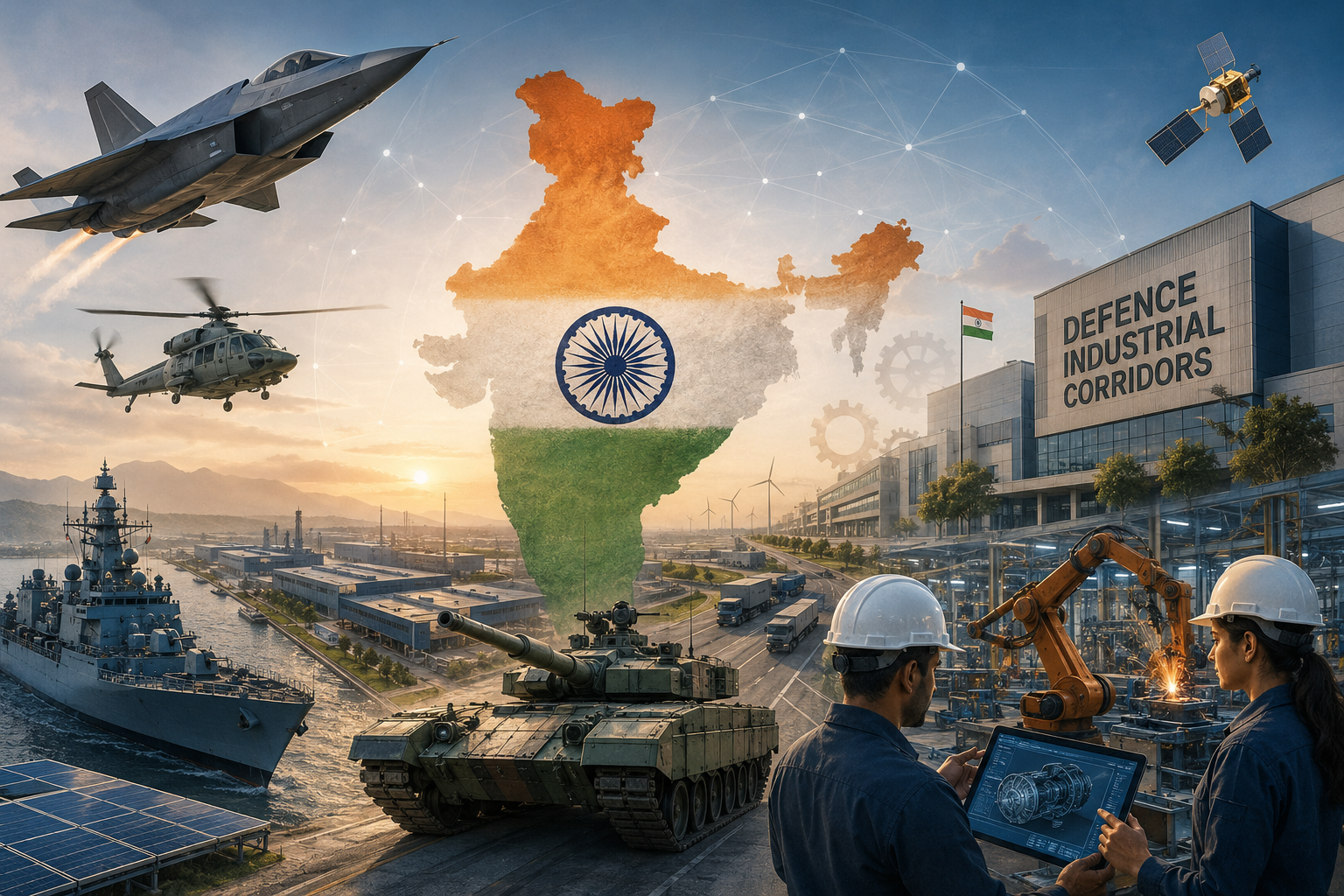
From Aatmanirbhar Bharat to Global Supply Chains, India’s Defence Industrial Corridors are reshaping the country’s aerospace and defence landscape.
Kamal Shah
India’s defence and aerospace landscape is in the midst of a bold and far-reaching renaissance. Where the country was long seen primarily as a major buyer in the global defence market, it is now accelerating its transformation into a manufacturing and innovation powerhouse; one that designs, builds, equips and exports advanced systems while knitting Indian firms into international supply chains.
Driving this seismic shift is the Aatmanirbhar Bharat vision, which has evolved from a narrow focus on import substitution into an ambitious national strategy to cultivate a vibrant indigenous innovation ecosystem. The aim is twofold: to supply world-class capabilities to India’s armed forces and to make Indian companies credible, competitive partners for global aerospace and defence value chains.
A key manifestation of this strategy is the creation of dedicated defence industrial corridors, most notably the Uttar Pradesh Defence Industrial Corridor (UP DIC) and the Tamil Nadu Defence Industrial Corridor (TNDIC). These corridors are not merely clusters of factories; they are purpose-built manufacturing ecosystems supported by allocated land banks, modern infrastructure, streamlined regulatory clearances and multimodal connectivity. By bringing together large defence firms, global OEMs, Tier‑1 suppliers, MSMEs, technology innovators, start-ups and research institutions in proximity, the corridors are engineered to accelerate collaboration, reduce time-to-market and unlock synergies across the sector.
The economic and strategic potential of this effort is enormous. Industry forecasts point to defence capital procurement opportunities on the order of USD 200–250 billion over the next decade; an expansive market that presents significant openings for global OEMs, Tier‑1 suppliers, technology companies and investors looking to engage with India’s growing defence and aerospace ecosystem.
From Import Dependence to Indigenous Capability
India’s defence-industrial base is undergoing a striking transformation, driven by surging domestic production and an expanding vision for self-reliance and exports. Defence production surged to a record ₹1.27 lakh crore (about USD 15.2 billion) in FY 2023–24, up from ₹90,000 crore in FY 2019–20 and is projected to climb beyond ₹1.75 lakh crore in the near term. This remarkable momentum is powered by three mutually reinforcing forces: steady demand from the armed forces, bold policy reforms that incentivize indigenous manufacturing, and an increasingly ambitious push to make India a global exporter of defence equipment and technology.
The scale of underlying demand is substantial: as one of the world’s largest military spenders, India’s Army, Navy and Air Force require modernization across virtually every domain. Needs span combat aircraft and helicopters, missiles, artillery and armoured systems, naval platforms, and a broad array of enabling technologies, such as communications, sensors, electronic warfare, unmanned systems and space-enabled capabilities. That breadth ensures opportunity well beyond conventional hardware manufacturing.
A new, broader defence ecosystem is emerging that embraces software, artificial intelligence, sensors, telecommunications, technical textiles, drones, maintenance and repair, aerospace engineering and advanced materials. Unmanned systems exemplify the size and scope of this opportunity: the commercial and defence market for UAVs and drone-based observation is estimated to reach roughly USD 62 billion by 2030, and unmanned systems are shifting from isolated projects to institutionalised Intelligence, Surveillance and Reconnaissance (ISR) frameworks.
This shift has profound implications for Indian industry. The future defence landscape will not be dominated solely by a handful of large platform builders. Instead, a far wider network of companies specialising in sensors, avionics, communications, propulsion, software, data processing, artificial intelligence, electronic systems, and sustainment will be essential. India’s expanding domestic demand, supportive policies and export ambitions together create a dynamic, multi-layered opportunity for firms across technology and manufacturing tiers to participate in and prosper from the country’s defence-industrial rise.
Defence Industrial Corridors: Creating Concentrated Capability
The Defence Industrial Corridors are a bold step toward turning India’s defence-manufacturing ambitions into real, on-the-ground capacity. The Ministry of Defence has launched two flagship corridors—one in Uttar Pradesh and one in Tamil Nadu—each backed by dedicated land banks, single-window clearances and robust multimodal logistics links. Together, these elements create a streamlined framework designed to lower investment hurdles and speed project delivery.
But these corridors are about far more than simply carving out industrial land. Their true purpose is to build vibrant, integrated ecosystems where manufacturing, R&D, supply chains, skilled talent and logistics grow in concert. That integration matters intensely for defence firms: a major platform maker depends on hundreds of suppliers, from precision-machined parts and electronic assemblies to speciality materials, fasteners, software and niche services. Co-locating these players shortens supply chains, boosts responsiveness and makes technology transfer far easier, igniting a more resilient, innovative and competitive defence industry.
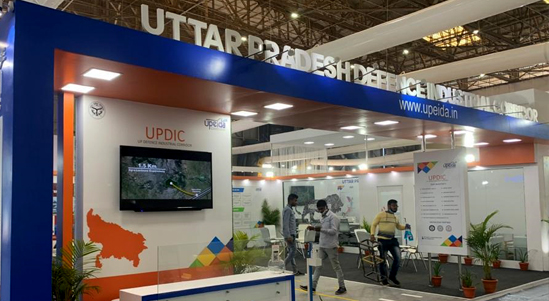
Uttar Pradesh: Six Nodes, One Defence Manufacturing Ecosystem
The Uttar Pradesh Defence Industrial Corridor is rapidly emerging as a powerhouse for India’s defence and aerospace ambitions, spanning six high-impact nodes—Aligarh, Agra, Lucknow, Kanpur, Jhansi and Chitrakoot. More than 1,546 hectares of industry-ready land have already been developed, and plans are afoot to expand the corridor’s land bank to over 5,000 hectares to meet surging demand. Indeed, demand is tangible today: Phase‑I land in strategic locations such as Aligarh has been fully allocated, underscoring strong investor interest.
But the corridor’s vision goes far beyond traditional heavy-weapons manufacturing. UP DIC is designed to attract and nurture a wide range of cutting-edge capabilities, including technical textiles, sensor electronics, telecommunications, persistent surveillance platforms, and Maintenance, Repair and Overhaul (MRO) services. This broader industrial mix reflects the reality that modern military strength rests on integrated networks rather than stand-alone platforms.
Consider a fighter aircraft: it is only one node in a complex combat ecosystem that includes sensors, secure communications, electronic warfare suites, data links, weapons, mission systems and logistics. Likewise, a modern armoured vehicle depends on electro-optics, communications and protection systems, advanced fire-control technologies and sophisticated digital architectures. By creating specialized space for these supporting industries, the Uttar Pradesh Defence Industrial Corridor is laying the foundations for a complete, resilient defence ecosystem, one that will power integrated capabilities, foster supply-chain depth, and drive innovation across India’s defence industrial base. The corridor is not just land and infrastructure; it is a strategic platform for next-generation defence manufacturing and technological collaboration.
Tamil Nadu: Aerospace, Precision Manufacturing & Export Ambition
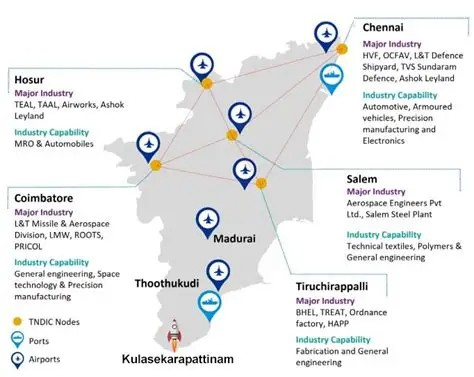
The Tamil Nadu Defence Industrial Corridor is rapidly emerging as a powerhouse of defence and aerospace manufacturing, linking five strategic industrial hubs—Chennai, Hosur, Coimbatore, Tiruchirappalli and Salem into a single, high-performance ecosystem.
This corridor isn’t just a cluster of factories; it’s a focused, future-ready platform built around aerospace, precision engineering and export-led manufacturing. The results speak for themselves: the state’s defence sector has posted an astonishing 30% annual growth rate, while defence exports have surged at a staggering 103% compound annual growth rate. Those numbers show not just progress but momentum; momentum that’s accelerating Tamil Nadu onto the world stage.
Depth and scale are the corridor’s twin strengths. More than 25 major international corporations have established a presence here, bringing world-class standards, cutting-edge technologies, and global supply chain integration. Alongside them are over 1,500 precision-manufacturing MSMEs: nimble, specialised enterprises that deliver the detailed, high-quality components that modern aerospace and defence systems demand. This ecosystem is further bolstered by dedicated aerospace parks and strong R&D institutions, creating a complete value chain from innovation to production to export.
Why does this mix matter? Because the combination of large global firms and dynamic MSMEs creates a uniquely powerful synergy. Multinationals bring advanced capabilities, rigorous quality regimes, and access to international markets; MSMEs contribute adaptability, specialised skills, and deep niche expertise. When these layers interact effectively, they form an internationally competitive industrial fabric—one that can meet exacting defence specifications and integrate seamlessly into global aerospace supply chains.
For India, Tamil Nadu’s corridor represents a strategic leap forward. It’s not just about building hardware locally; it’s about embedding Indian manufacturing in global aerospace ecosystems, supplying critical components, participating in complex assemblies, and demonstrating the reliability and scale international partners seek. With its rapid growth, robust industrial base, and collaborative network of global and local players, the Tamil Nadu Defence Industrial Corridor is poised to become a major gateway for India into the global aerospace supply chain.
Beyond the Corridors: India’s Wider Defence Clusters
India’s two Defence Industrial Corridors offer strong, structured manufacturing hubs, but they’re just part of a much bigger story. Across the country, established clusters deliver complementary strengths in aerospace engineering, R&D, precision manufacturing, UAVs, weapons and ammunition, naval systems, missiles and propulsion, powering a dynamic, expanding defence and aerospace ecosystem.
Karnataka: The Aerospace & R&D Powerhouse
Bengaluru continues to stand out as one of India’s premier hubs for aerospace engineering and R&D. Karnataka is estimated to produce roughly 60–70% of the country’s aerospace output and hosts a who’s who of the sector: from ISRO and HAL to global giants like Airbus, Boeing and Rolls-Royce. What truly sets the city apart is its dense concentration of engineering talent, deep research capabilities and extensive global aerospace engagement. This unique ecosystem positions Karnataka strongly for high-value activities at the cutting edge of the industry—design, systems engineering, software and avionics development, advanced R&D, and Global Capability Centre operations.
Telangana: Precision Manufacturing & Unmanned Systems
Hyderabad and its surrounding industrial belt have fast become a dynamic hub for defence and aerospace, especially in precision manufacturing and UAV development. Dedicated aerospace parks at Adibatla, Eliminedu and Medak are catalysing a vibrant ecosystem, fostering close industrial partnerships with global leaders like Lockheed Martin, Boeing, GE Aviation, Pratt & Whitney and Collins Aerospace. With world-class engineering talent, defence-focused manufacturing capabilities and purpose-built aerospace infrastructure, Telangana is carving out a pivotal role in India’s next-generation high-technology industrial landscape.
Maharashtra: Weapons, Ammunition & Heavy Engineering
Maharashtra stands out as a powerhouse in India’s weapons and ammunition sector, producing roughly 30% of the nation’s output. The state’s dynamic industrial landscape is anchored by major hubs and institutions, from the Dhirubhai Ambani Aerospace Park at Nagpur MIHAN to leading DRDO laboratories in Pune and HAL’s strategic facilities in Nashik. Adding to this momentum, the rise of a “Drone City” at Chhatrapati Sambhajinagar highlights Maharashtra’s rapid diversification into cutting‑edge defence technologies, reinforcing its role as a central engine of the country’s defence manufacturing ecosystem.
Andhra Pradesh: Naval & Missile Systems
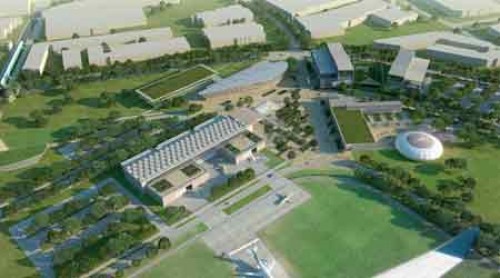
Andhra Pradesh offers a compelling, distinctive strategic advantage, with its defence ecosystem strongly geared toward marine defence and missile systems. The Visakhapatnam–Srikakulam corridor has emerged as a vital naval-systems hub, while the Jaggaiahpet–Donakonda belt is increasingly recognized for missiles and heavy weaponry. As India’s maritime security needs grow and the Indian Ocean region takes on greater geopolitical importance, this industrial geography gains significant strategic weight, positioning Andhra Pradesh as a key player in the nation’s defence and maritime future.
Madhya Pradesh: Propulsion & Heavy Manufacturing
Madhya Pradesh is rapidly rising as a key industrial hub, especially in propulsion and heavy manufacturing. The state is being positioned as a central logistics base, anchored by a headline-grabbing ₹ 2,500-crore missile and propulsion complex in Shivpuri, established by the Adani Group. Propulsion technology is strategically vital for defence, directly shaping the range, speed, and autonomy of missiles, aircraft, UAVs, naval vessels and other military systems, making this development a significant boost to India’s defence manufacturing capabilities.
Why India is Becoming Attractive to Global Investors
For international OEMs and defence firms, India’s appeal goes far beyond the sheer scale of its domestic market — it’s a strategic hub of opportunities brimming with competitive advantages. Four core strengths stand out: a progressively liberalised policy framework, a deep pool of engineering talent, robust and growing defence demand, and increasingly plug-and-play industrial infrastructure ready to support large-scale programmes.
Arguably the most compelling feature for foreign investors is the favourable foreign investment regime. Defence manufacturing now permits up to 74% foreign direct investment through the Automatic Route, and in situations where access to cutting-edge technologies is required, up to 100% FDI can be approved via the Government Route. Complementing this openness are streamlined defence offset and industrial licensing processes engineered to speed project approvals and implementation, reducing friction and shortening time-to-market.
These policy and structural shifts create a rich array of collaboration models for international companies seeking to enter or expand in India. Potential engagement pathways include forming joint ventures with local partners, entering into technology transfer or co-development partnerships, establishing local manufacturing and component sourcing operations, setting up R&D and engineering centres, and running maintenance, repair and overhaul (MRO) and lifecycle support services. Moreover, progressive firms can integrate Indian facilities and suppliers into their global supply chains, leveraging competitive cost structures and talent while ensuring closer alignment with regional demand.
Engineering Talent: India’s Critical Strategic Asset
One of India’s biggest long-term strengths is its human capital. With over 1.5 million engineers graduating each year and innovation hubs such as Bengaluru and Hyderabad hosting major Global Capability Centres for advanced R&D, structural design, and software integration, the country has a deep and growing pool of technical talent. That resource is especially critical as defence systems become ever more software-defined: tomorrow’s platforms will rely on advanced computing, AI, cybersecurity, autonomy, sensor fusion, digital twins, simulation, communications and mission software as much as on traditional mechanical and electronic engineering.
Coupling competitive operating costs with this expansive technical workforce gives India a real chance to capture a larger slice of the global defence value chain. The strategic imperative is clear: steer this talent beyond engineering support into indigenous product development, IP creation and high-value system design so India can move up the ladder from contributor to creator.
Plug-and-Play Infrastructure
Infrastructure often determines whether an announced investment becomes a reality. The industrial ecosystems outlined in the provided materials are built to bridge that gap, offering industry-ready land, dedicated power and water concessions, single-window clearances, and proximity to major airports and seaports. For defence and aerospace manufacturers, this kind of infrastructure is a game-changer: their operations demand specialized utilities, secure facilities, testing capabilities and ultra-reliable logistics. These corridors can dramatically reduce manufacturing setup time and cost, accelerating projects from concept to production.
From Make in India to Make for the World
India’s defence-industrial transformation is entering an exciting new phase: it’s no longer satisfied with merely replacing imports. The goal is now boldly export-led growth, integrating India’s manufacturers into global OEM supply chains and pushing Indian defence products into international markets. This marks a fundamental shift in thinking.
To win on the world stage, Indian firms must do more than serve domestic buyers. They must meet rigorous global quality standards, deliver reliably, provide full lifecycle support, and compete on both advanced technology and cost. That’s how they will earn long-term, sustainable roles in international programmes.
The Defence Industrial Corridors offer a powerful physical platform for this ambition — world-class infrastructure, clusters of skilled suppliers, and an enabling policy environment. But infrastructure alone won’t close the gap. The real measure of success will be whether companies within these corridors evolve into globally competitive suppliers and system integrators, able to win export contracts, partner with multinational OEMs, and sustain defence programmes across the lifecycle.
If India gets this right, the result won’t just be reduced import dependence; it will be a dynamic, export-oriented defence manufacturing base that contributes to national security, economic growth, and global defence innovation.
A Resilient Alternative in Global Supply Chains
Global aerospace and defence supply chains are being reshaped, and the race to diversify manufacturing away from single geographies is well underway. In this shifting landscape, India stands out. Its vast domestic market, deep engineering talent, expanding industrial base, and strategic location combine to make it an increasingly compelling hub for joint ventures, co-development, and fulfilment of offset obligations.
For global OEMs, India presents a clear strategic play: design in India, manufacture in India, and export from India for targeted product lines. That approach can reduce supply-chain risk, accelerate time-to-market and tap local expertise and cost advantages. For Indian firms, the moment is equally transformative: no longer confined to supplying discrete components, they can step up as trusted strategic partners on international programmes, bringing engineering, integration and end-to-end production capabilities to the table.
Taken together, these dynamics position India as a stable, secure, and increasingly attractive destination for aerospace and defence investment, and as a pivotal node in the next-generation global supply chain.
The Road Ahead: From Corridors to Connected Ecosystems
The true yardstick for the success of India’s Defence Industrial Corridors will not be acreage tallies or company registration counts. Their real impact will be judged by the capabilities they generate and by whether they can seed entire, resilient ecosystems that design, build, sustain and export advanced defence platforms.
Can India develop end-to-end supply chains around major systems? Can micro, small and medium enterprises move from low-value components to high-technology subsystems? Will global OEMs view Indian facilities as reliable export hubs? Can domestic firms create world-class intellectual property and commercialise it? Can research labs and industry collaborate more tightly to compress the path from prototype to production? The answers to these questions will define the next, decisive chapter of India’s defence-industrial journey.
The building blocks are coming together. Steady defence demand, far-reaching policy reforms, targeted industrial infrastructure, a deep pool of engineering talent and a rapidly maturing private-sector ecosystem are creating fertile ground. Viewed through this lens, the two Defence Industrial Corridors are more than regional manufacturing projects: they are strategic instruments for capability creation and catalysts for long-term technological autonomy.
Policy has already set the course; now execution is accelerating. Substantial domestic procurement budgets, expanding corridor infrastructure, and growing engineering depth are positioning India not just as a buyer but as a partner: a destination for co-development, sophisticated manufacturing, and exports in contemporary defence technology. Uttar Pradesh and Tamil Nadu are linchpins of this strategy. At the same time, Bengaluru, Hyderabad, Maharashtra, Andhra Pradesh and Madhya Pradesh contribute complementary strengths in design, electronics, propulsion, software, R&D and MRO.
Together, these clusters are redrawing India’s defence-industrial map, linking traditional manufacturing with aerospace engineering, unmanned systems, communications, advanced electronics and maintenance ecosystems. The opportunity is to convert this momentum into lasting technological sovereignty and global competitiveness.
For international companies, the message is unmistakable: India is no longer merely a consumption market for defence products. It is rapidly becoming a place to design, develop, manufacture, maintain and export them. If realised, the Defence Industrial Corridors could become one of the most consequential pillars of India’s ambition to emerge as a global aerospace and defence manufacturing powerhouse — transforming Make in India into Make for the World and strengthening the technological foundations of Aatmanirbhar Bharat.