At Farnborough 2026, Boeing Global Services outlined a new India strategy built around five-year performance-based logistics, stronger local supply chains, deeper MRO participation and a first-of-its-kind search for Indian companies that could become part of Boeing’s global services network.
Chaitali Bag
India is entering a new era in military aviation—one in which possessing advanced platforms is only half the equation. The decisive advantage increasingly lies in keeping those platforms available, mission-ready and sustainably supported through demanding operational cycles.
That is precisely where Boeing is positioning its next chapter in India.
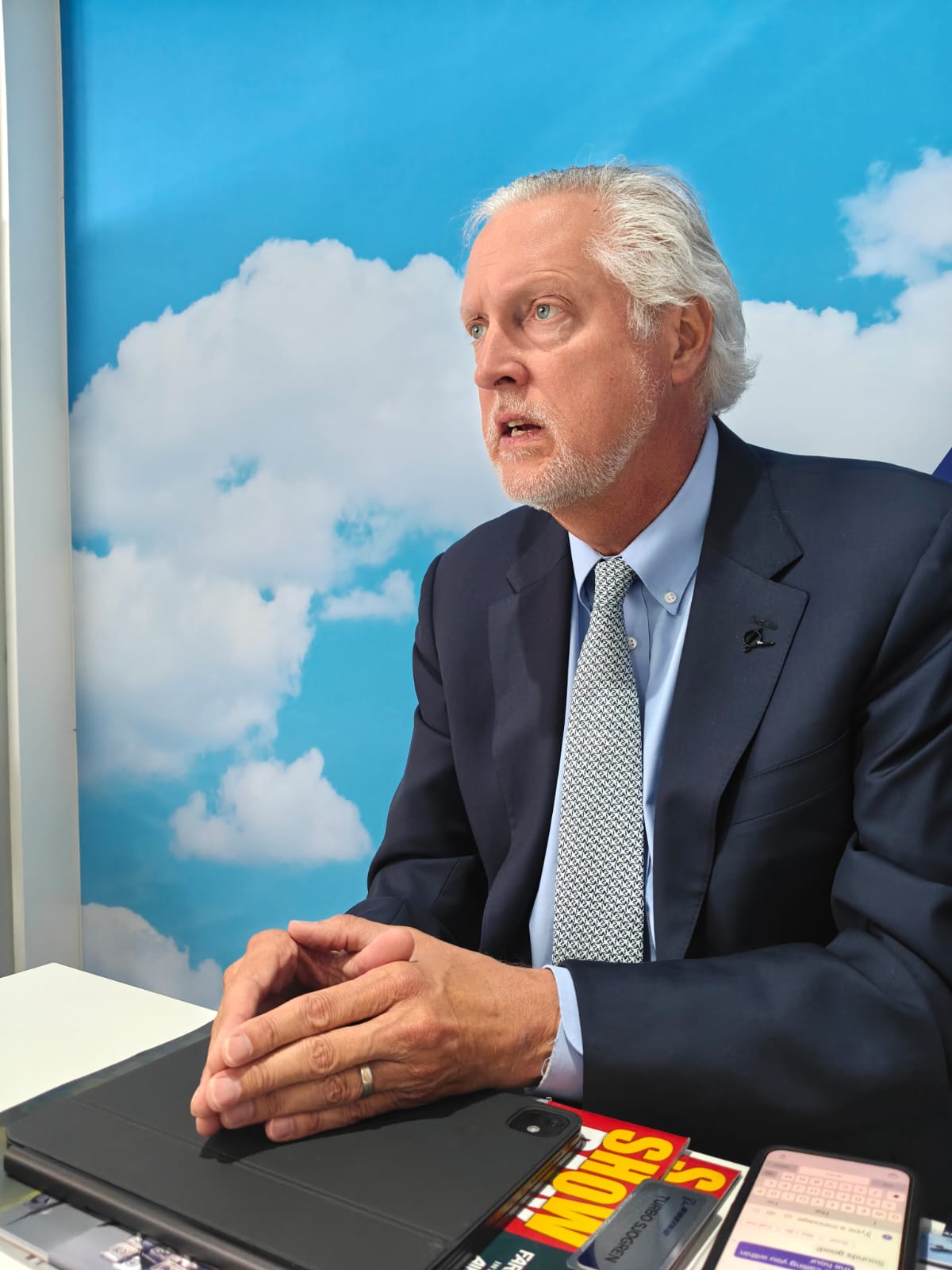
At the Farnborough International Airshow 2026, Torbjorn “Turbo” Sjögren, Vice President and General Manager, Government Services, Boeing Global Services, and Andy Vest, Vice President of Growth, Government Services, Boeing Global Services, offered a revealing picture of how Boeing is transforming its India engagement—from a platform-centric relationship into a long-term readiness, sustainment, technology and industrial partnership.
The strategy rests on two powerful pillars.
The first is operational: five-year performance-based logistics and availability-focused support contracts for India’s Chinook and Apache fleets, with Boeing seeking a similar five-year framework for the Indian Navy’s P-8I fleet.
The second is industrial and technological: Boeing Ventures is preparing to explore partnerships, mentoring and potential investments in Indian companies, particularly startups and technology businesses whose capabilities could strengthen Boeing’s services operations in India and potentially serve customers elsewhere.
Together, the two initiatives signal something much bigger than a conventional support agreement. They point to Boeing’s ambition to make India an increasingly important node in its global aerospace services and supply chain ecosystem.
From Support to Readiness
The most immediate transformation is taking place in fleet sustainment.
Boeing has signed five-year performance-based logistics arrangements covering the Indian Air Force’s Chinook fleet and Apache helicopters operated by both the Indian Air Force and Indian Army. The Chinook agreement was executed in the fourth quarter of 2025, while the Apache agreement followed in the first quarter of 2026. The P-8I currently has a two-year agreement, with Boeing working towards extending it to five years.
The significance of these agreements lies in their fundamental philosophy.
Rather than simply supplying parts or responding to individual maintenance requirements, Boeing is committing to an agreed level of aircraft readiness over an extended period. As Sjögren explained, the contracts are designed around delivering readiness for the platforms in partnership with local and international partners.
This changes the relationship between OEM and operator.
A long-term readiness contract gives Boeing greater visibility into demand while giving the customer a structured sustainment mechanism. It allows Boeing Defence India to plan manpower, training, engineering, inventory, information technology, programme management and supplier capacity around a defined five-year horizon.
That predictability is particularly important in an era of high operational tempo.
Boeing’s own assessment is that the Chinook and Apache fleets have been working hard, creating increased pressure on availability. The new contracts are intended to progressively move aircraft from unavailable or aircraft-on-ground status towards full mission capability while sustaining agreed readiness levels.
“The importance of readiness today has never been greater,” Sjögren said, underlining a reality increasingly shared by militaries worldwide: acquiring a sophisticated aircraft is only valuable if it is available when the mission demands it.
Five Years Changes the Equation
The five-year horizon is strategically important because it allows Boeing to move from reactive sustainment to planned capability management.
With longer-term contracts in place, Boeing can determine how many people need to be recruited and trained, how supply chains should be structured, what engineering resources are required and how digital and IT systems should support programme execution.
For India, this creates the potential for a more responsive sustainment architecture around some of its most important American-origin military aviation assets.
For Boeing, it creates the stability required to make long-term investments in India.
Sjögren described the Chinook contract as the product of years of work and a significant milestone for Boeing Defence India. The company now has responsibility for local supply chain activity, engineering, warehousing, and associated disciplines, all intended to drive aircraft reliability and readiness.
The model is not limited to one platform. Boeing is effectively building a common services architecture capable of supporting multiple fleets and multiple Indian armed services.
And that is where the supply chain becomes critical.
The Supply Chain Becomes the Mission
For Boeing Global Services, parts, repairs and spares are far from peripheral; they’re at the heart of what makes the company indispensable to operators around the world. As Sjögren pointed out, nearly two-thirds of Boeing’s engagement with customers globally centres on parts, spare parts and repairs, alongside engineering and capability-enhancing modifications. That focus explains why the India contracts are doing much more than adding revenue: they’re accelerating the build-out of a robust local supply chain.
Boeing is actively expanding its supply chain footprint in India. The company has expanded its Delhi team and empowered local staff to manage statements of work and take deeper responsibility for supplier relationships. At the same time, Boeing continues to identify and vet Indian firms that can support high-value platforms such as the Chinook, Apache and P-8I fleets. The result is a strategic push to cultivate Indian industrial capability that aligns with real operational needs.
This effort dovetails naturally with the Aatmanirbhar Bharat vision. But Boeing’s approach is pragmatic, not symbolic: localisation is pursued only where Indian companies can meet Boeing’s exacting standards for cost, quality, safety and schedule. The aim isn’t merely to shift work to India; it’s to ensure that work done locally delivers measurable benefit.
And those benefits are compelling. When a component can be repaired to Boeing standards within India rather than shipped overseas, operators can see substantial savings in both time and cost. Faster turnarounds mean higher aircraft availability and improved operational readiness critical advantages for military and civil customers alike.
Put simply, local repair capability becomes a business multiplier: it enhances fleet readiness while reducing lifecycle costs. As Sjögren made clear, if Indian suppliers can match Boeing’s requirements for cost, quality and schedule, localisation yields a win-win — lower costs, quicker service, and a stronger, more self-reliant aviation ecosystem in India.
India as More Than a Customer
This marks a thrilling new chapter in Boeing’s India story — one that moves beyond long-standing partnerships and large manufacturing anchors to create a far broader, more dynamic aerospace ecosystem across the country.
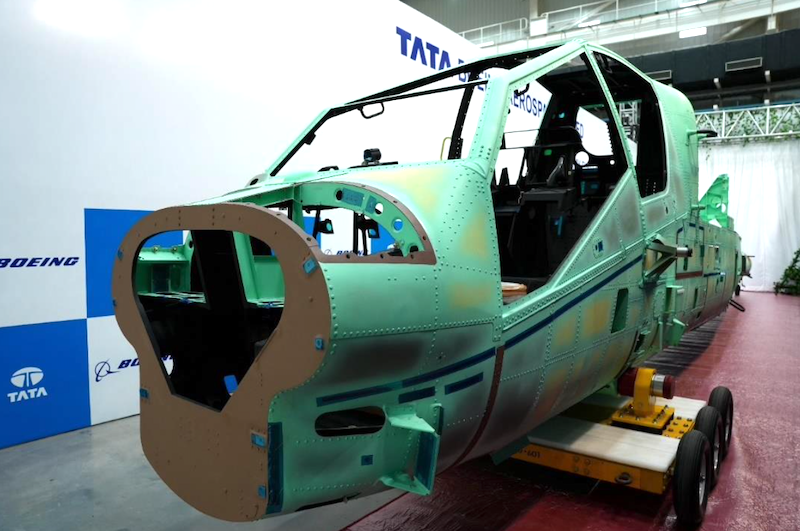
Boeing’s ties to India run deep and have grown steadily over decades. From the high-profile Boeing-Tata joint venture that has produced hundreds of Apache fuselages to Boeing’s cutting-edge engineering and technology campus in Bengaluru, the company’s industrial footprint is already substantial. But the next phase of engagement is even more exciting: it’s about opening up that ecosystem to a wider circle of Indian enterprises and capabilities.
Instead of limiting collaboration to a few large programmes or prime contractors, Boeing is now looking to integrate Indian firms of all sizes into its global supply chain. Indian companies that prove they can meet Boeing’s exacting standards — delivering components, repairs, services or technologies efficiently and reliably — will increasingly be considered not only for domestic programmes but also for international ones. That shift in outlook has the potential to be truly transformational.
For India’s aerospace micro, small and medium enterprises (MSMEs), engineering firms, MRO providers and technology startups, the implications are enormous. Access to Boeing’s procurement pipeline and quality benchmarks can accelerate growth, drive investment in capabilities, and create pathways to global markets. Small suppliers that demonstrate quality, cost-effectiveness, and innovation could become long-term partners on projects worldwide, rather than just local suppliers participating in offsets or one-off contracts.
Boeing is already incorporating this principle into its supply-chain decision-making: when an Indian capability can perform a task or deliver a component more efficiently while satisfying Boeing’s stringent quality, safety, and performance requirements, that capability becomes a candidate for broader deployment. The company’s evolving approach treats Indian suppliers as potential global contributors rather than merely local sources of supply.
This philosophy reframes the conversation around sourcing in India. The opportunity extends far beyond compliance-driven offsets or simple local procurement. It’s about building durable, capability-driven partnerships that elevate India’s aerospace sector as an integral part of global aerospace supply chains. The outcome could be a resilient, innovation-led Indian industrial base, ready to support complex programmes worldwide — and a powerful new engine of job creation, skills development, and technological advancement across the country.
It is about becoming globally competitive within an OEM’s operating ecosystem.
Boeing Ventures Opens a New Door
Perhaps the most intriguing announcement at Farnborough, however, came from Andy Vest.
Boeing Ventures is preparing to explore India’s technology and industrial landscape from a services perspective—a first for the Ventures team in India, according to the discussion at Farnborough.
Vest explained that the team plans to examine Indian companies whose capabilities could help Boeing address existing requirements, fill technology gaps or develop new ways of delivering services.
The search is deliberately broader than artificial intelligence.
AI and digital companies are certainly of interest. Still, Boeing is also looking across the spectrum of aerospace services—including training, maintenance, technical publications, modifications, repair, overhaul, support equipment and other product-support disciplines.
For India, this could become a significant gateway.
Boeing Ventures may engage with companies through several models: commercial partnerships, programme teaming, mentoring or minority investment. Importantly, the company has indicated that there is no single investment formula; opportunities will be evaluated individually according to Boeing’s requirements, the company’s capabilities and available venture resources.
Startups are expected to receive particular attention.
That matters because India’s technology ecosystem has produced companies capable of moving rapidly in areas such as artificial intelligence, digital engineering, advanced manufacturing, analytics and specialised aerospace technologies.
Boeing’s interest could provide these companies with something that capital alone cannot deliver: exposure to the operating standards, engineering practices, quality systems and global market requirements of one of the world’s largest aerospace companies.
From Indian Capability to Global Capability
Vest’s vision goes beyond finding companies that can serve Boeing’s India programmes.
The larger question is whether an Indian company can solve a Boeing problem anywhere in the world.
That is a profound shift.
A technology developed in Bengaluru, Hyderabad, Chennai, Pune or another Indian innovation hub could potentially support an aircraft operator thousands of kilometres away if it meets Boeing’s requirements.
The ambition is therefore not simply “Make in India.”
It is “Create in India, Scale from India and Serve the World.”
The Farnborough discussions made clear that Boeing is interested in companies whose capabilities could fill gaps in its services portfolio and potentially create advantages across international customer programmes.
This also explains why Boeing’s India strategy is increasingly connected to digitalisation.
Modern fleet sustainment is becoming a data-driven discipline. Predictive maintenance, digital engineering, AI-enabled planning, supply chain visibility, and advanced manufacturing can all help reduce downtime and improve aircraft availability.
Indeed, during Farnborough, Boeing also announced a strategic project with Pelico to modernise C-17A Globemaster III heavy-maintenance planning and execution through an AI-enabled manufacturing orchestration platform. The objective is to improve visibility across supply, engineering, planning, and depot operations, and to reduce out-of-fleet cycle time.
That development illustrates the direction in which Boeing Global Services is moving: from traditional sustainment towards digitally enabled readiness.
Quality Will Remain Non-Negotiable
Greater localisation does not mean lower standards.
Boeing’s India supply chain will operate under the same fundamental quality expectations as its global supplier base. The company has local-source representatives in India who can conduct supplier oversight and inspections, while suppliers must meet Boeing’s quality management requirements.
That is crucial.
Military aviation leaves no room for a trade-off between speed and safety. A component may be produced or repaired locally, but once it returns to an aircraft, Boeing remains accountable for the integrity of the support ecosystem.
This creates an opportunity—and a challenge—for Indian companies.
The winners will be those capable not only of developing impressive technologies but also of institutionalising aerospace-grade quality, traceability, certification, cybersecurity, documentation and delivery discipline.
A New Boeing–India Value Proposition
Boeing’s vision for India is bold, expansive and full of promise — a multi-layered value proposition that could reshape the country’s aerospace landscape.
At the foundation is readiness: ensuring platforms like Chinooks, Apaches and, in time, P-8Is are mission-ready whenever called upon. This is about relentless operational availability and dependable performance day in, day out.
Built on that foundation is sustainment: a deliberate push to deepen India’s local capabilities in repair, overhaul, engineering, parts production and MRO. Rather than shipping problems overseas, Boeing is helping build the technical muscle locally so Indian facilities can keep complex systems flying and functioning at peak efficiency.
The third layer is industrialisation: qualifying Indian companies for Boeing’s global supply chain. This isn’t token participation — it’s a pathway for domestic firms to meet international standards, win contracts, scale up manufacturing and become integral links in aerospace production networks.
Next comes innovation: actively scouting and partnering with startups and technology firms that can transform how aerospace services are designed and delivered. From digital tools and predictive maintenance to novel materials and process improvements, this stage injects fresh thinking and cutting-edge capability into the ecosystem.
Finally, globalization: leveraging successful Indian capabilities and exporting them across Boeing’s international customer base. Proven centres of excellence in India would not only meet domestic needs but also serve as anchors in a worldwide network of suppliers and service providers.
Taken together, these five layers — readiness, sustainment, industrialisation, innovation and globalisation — amount to much more than routine OEM support. This is an ecosystem strategy that nurtures local talent, strengthens supply chains, accelerates technology adoption and creates export-ready industries.
Crucially, Boeing’s approach dovetails with India’s own ambitions to become a global aerospace manufacturing, maintenance and technology hub. At a time when India seeks deeper industrialisation and technological leadership, Boeing’s multi-tiered engagement could act as a powerful accelerant, unlocking new jobs, skills and economic value while forging a more resilient, capable and globally connected aerospace sector.
The Next Five Years Could Be Decisive
The five-year contracts give Boeing and its Indian partners a defined runway on which to build.
They provide the time required to establish inventory systems, develop local repair capabilities, qualify suppliers, train personnel, strengthen engineering processes and integrate digital tools.
At the same time, Boeing Ventures introduces an entirely different dimension—one in which Indian innovation can potentially enter the Boeing ecosystem through partnership, mentoring or investment.
Sjögren’s message at Farnborough was ultimately about execution. The contracts may have been signed, but readiness does not improve overnight. Parts have to enter the system, repairs have to be completed, inventories have to be understood, and supply chains have to be aligned.
That is precisely why the five-year framework matters.
It turns a transaction into a journey.
And India’s role in that journey is expanding—from customer to sustainment partner to supplier to technology collaborator and potentially to a source of globally deployable aerospace capability.
For Boeing, the opportunity is equally compelling.
A stronger Indian services ecosystem can improve readiness for Indian forces, create greater supply-chain resilience, unlock competitive engineering and technology capabilities, and potentially generate new solutions for customers around the world.
At Farnborough 2026, Boeing did not merely outline how it intends to support aircraft in India.
It revealed how India itself could increasingly become part of Boeing’s global aircraft support.
That may prove to be the most consequential development of all.