From Regional Connectivity to a Catalyst for Aviation, Trade and Economic Transformation
Vijay Grover
The inauguration of the Alluri Sitarama Raju International Airport at Bhogapuram marks far more than the arrival of a new airport in Andhra Pradesh. It represents the emergence of a new economic gateway for North Andhra Pradesh, one designed to connect Visakhapatnam and the wider region more directly with India and the world.
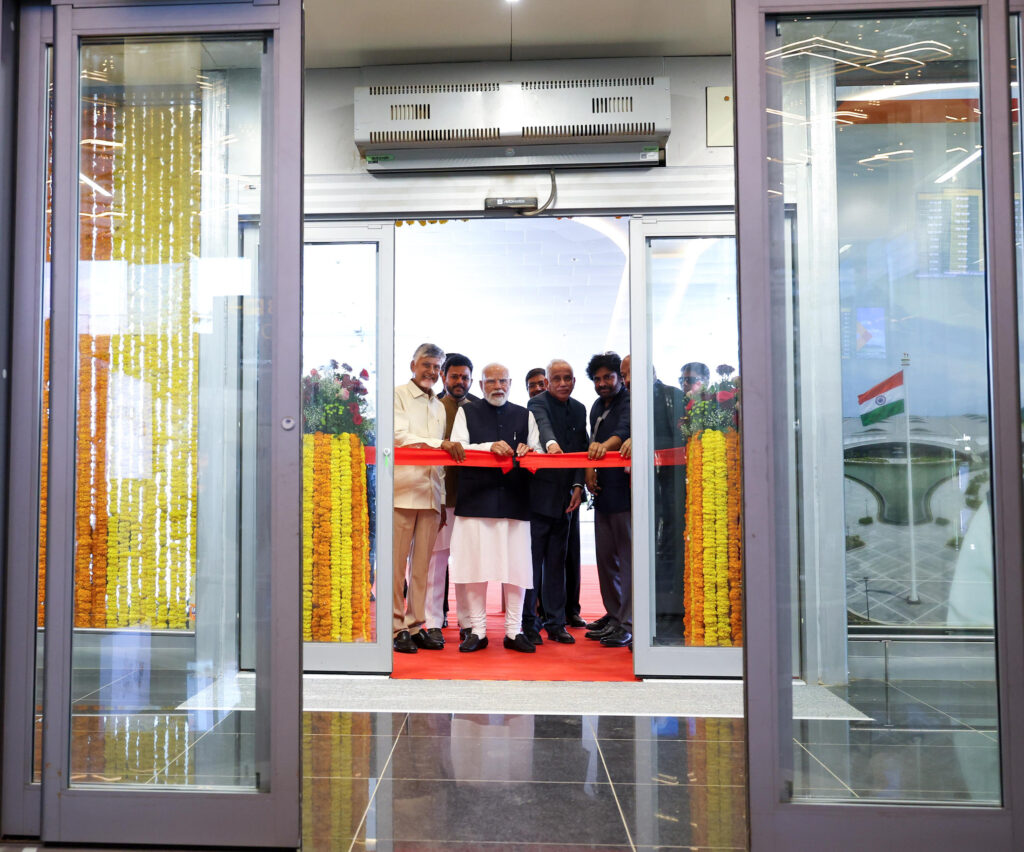
Inaugurated by Prime Minister Narendra Modi on 1 August 2026, the greenfield international airport has been developed as a major infrastructure asset for the region. Built at an estimated cost running into several thousand crore rupees and completed in just 31 months, the project reflects a new approach to aviation infrastructure in which an airport is conceived not simply as a terminal and runway, but as an anchor for economic activity, logistics, tourism, investment and industrial growth.
The airport’s commissioning comes at an important moment for Visakhapatnam and North Andhra. Commercial flight operations are shifting from the existing Visakhapatnam airport to Bhogapuram, effective 17 August 2026, making the new facility the region’s principal aviation gateway.
A New Aviation Gateway
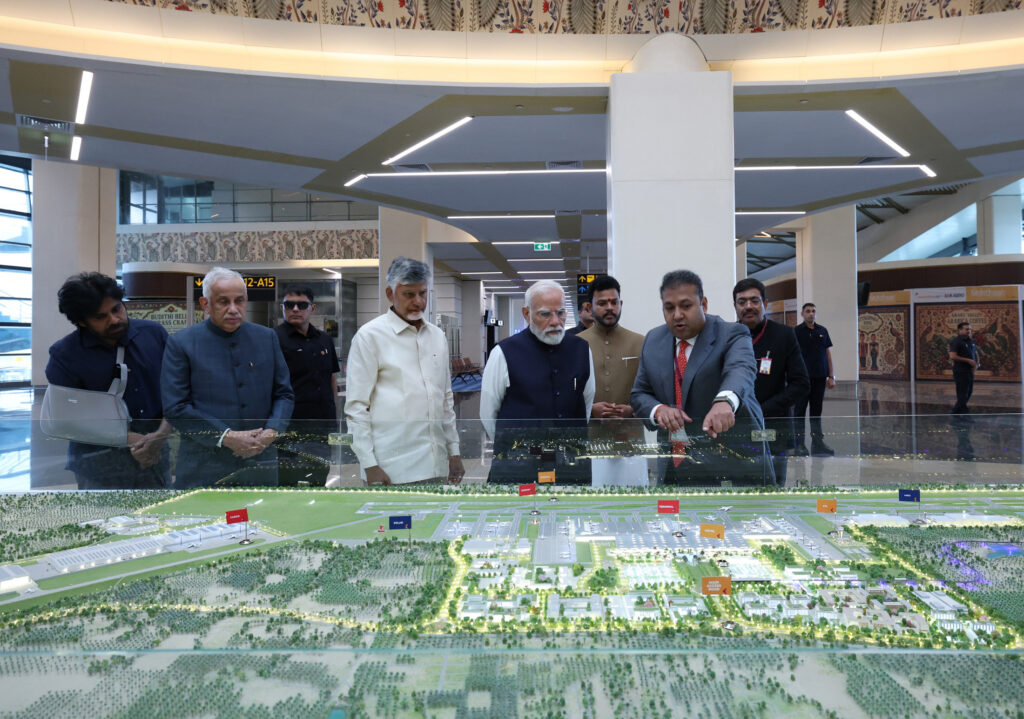
Get ready to celebrate a bold new chapter for North Andhra’s connectivity, an ambitious, future-focused airport rising in Bhogapuram, Vizianagaram district, that’s set to transform travel and trade across the region. Situated roughly 55 km from the existing Visakhapatnam airport, this strategically placed facility is far more than a nearby alternative: it’s a purpose-built gateway designed to serve Visakhapatnam and the wider districts of Vizianagaram and Srikakulam, unlocking opportunities for passengers, businesses and tourism alike.
From the outset, the airport’s planners thought big. Phase one is engineered to comfortably handle around six million passengers per year, a substantial capacity that meets immediate regional needs. But that’s just the beginning. The master plan envisions a phased growth path leading to an astonishing 40 million passengers annually. That kind of scalability is a game-changer: instead of playing catch-up, the airport is being built to anticipate and accommodate the region’s future surge in travel demand, economic expansion, and international engagement.
At the core of the development lies a powerful 3,800-metre Code-E runway, explicitly designed to welcome wide-body aircraft. That capability opens the door to regular operations by jets such as the Boeing 777 and 787 Dreamliner and the Airbus A330 and A340 families — aircraft that enable long-haul international routes and high-capacity movements of people and cargo. Complementing the runway are state-of-the-art airfield lighting systems and a full suite of modern navigation, communication and surveillance/air traffic management technologies, all configured to support seamless domestic and international flight operations.
The practical implications are profound. For decades, North Andhra’s international ambitions have been constrained by limited gateway options. With Bhogapuram’s new infrastructure, the region will no longer be constrained by capacity or aircraft-type restrictions. Instead, it will possess a robust aviation platform built for larger airplanes, greater passenger volumes and a widening web of international connections. This airport doesn’t just improve convenience; it redefines the aviation proposition for Visakhapatnam, Vizianagaram and Srikakulam, positioning the area to attract investment, boost tourism, create jobs, and integrate more fully with global markets.
Architecture That Speaks for the Region
One of the most distinctive elements of the airport is its architecture.
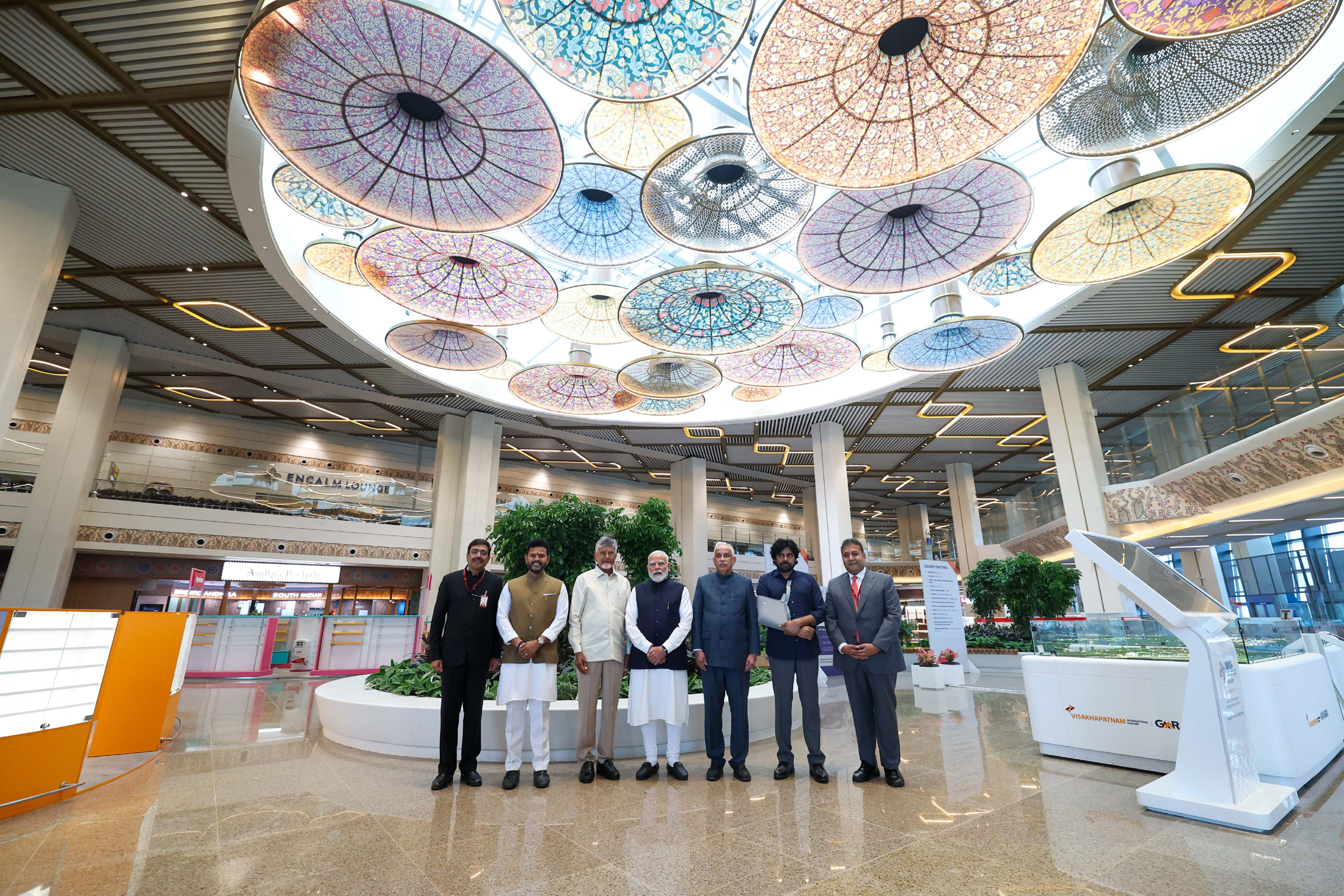
Rather than adopting a generic international-airport aesthetic, the terminal seeks to express the cultural and geographical identity of Andhra Pradesh. Its flowing form draws inspiration from the flying fish, while design elements reflect the region’s traditional architecture, the Chuttilu cottages and the landscapes of the Araku Valley.
The concept is important because modern airports increasingly function as gateways to a region’s identity. For passengers arriving in North Andhra, the terminal is intended to provide an immediate sense of place—linking contemporary infrastructure with the cultural landscape beyond the airport.
The airport therefore combines two narratives: a region proud of its heritage and a region positioning itself for the future.
Beyond Passengers: Building an Export Gateway
One of the project’s most consequential dimensions is its potential impact on freight and logistics.
North Andhra hosts substantial economic activity in sectors such as marine products, pharmaceuticals, agriculture, and horticulture. An international airport equipped with dedicated cargo infrastructure would lower logistical barriers for time-sensitive and high-value goods.
Planned cargo facilities aim to handle approximately 25,000 tonnes annually and include temperature-controlled infrastructure for pharmaceuticals, marine products, and other high-value perishables. This capacity enables a compelling economic equation:
Production + logistics + international connectivity = global market access.
For exporters, transit time is often as critical as cost. Seafood, pharmaceuticals, fresh produce, and other temperature-sensitive commodities deteriorate in value with each additional hour in transit; direct air links therefore provide a measurable competitive advantage for regional industries.
Accordingly, the airport’s significance transcends aviation: it can function as an integral component of the industrial supply chain.
The Airport as an Economic Multiplier
The overarching vision is to reconceptualize the airport not merely as a transport node but as a self-sustaining economic ecosystem. Planned developments include an aviation hub and associated educational infrastructure designed to co-locate airlines, logistics operators, MRO providers, aerospace firms, training institutions and other aviation-linked enterprises, thereby fostering operational synergies and knowledge spillovers. For North Andhra, this integrated proposition holds particular strategic significance: airports draw airlines, which in turn generate passenger and cargo flows; connectivity attracts businesses; businesses create employment; and employment stimulates demand for housing, hospitality, retail and services, all of which can feed back into increased aviation demand. This multiplier dynamic is the mechanism by which Bhogapuram can achieve transformational impact, and the Andhra Pradesh government has accordingly positioned the project as a catalyst for industrial investment, export growth, skill development, tourism and research rather than as a mere transport facility.
A Technology-Driven Airport
The new facility showcases how modern airports are evolving — and it’s exciting to see technology leading the way.
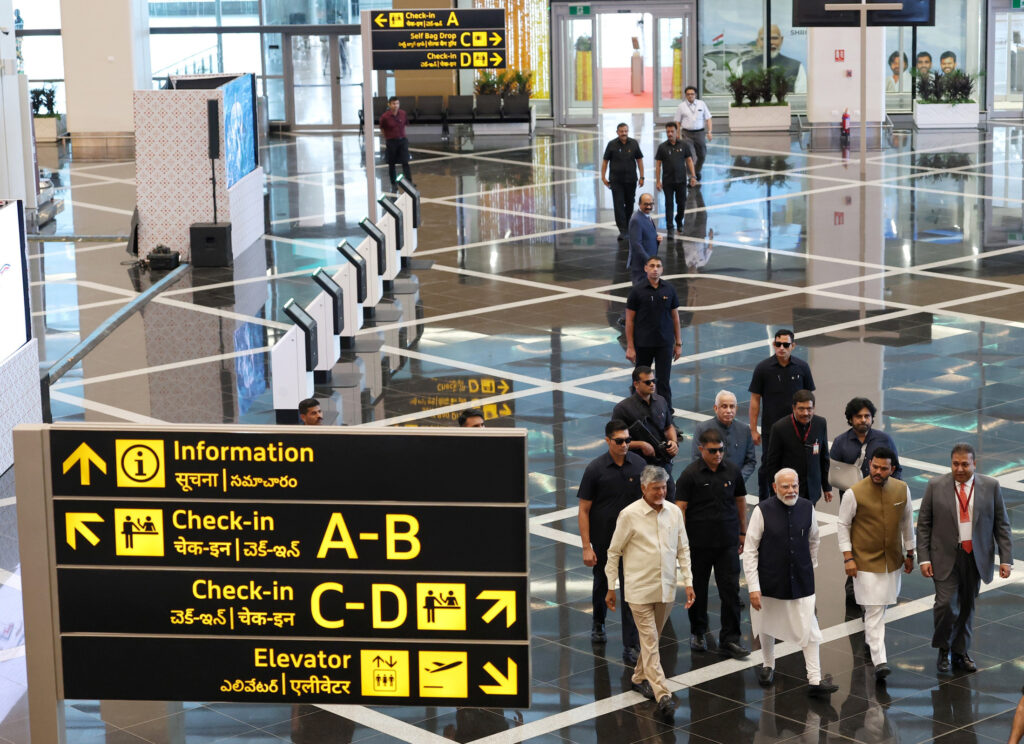
Per the Prime Minister’s Office, the airport is built around cutting-edge tools such as artificial intelligence, Building Information Modelling, Airside 4.0 systems, an Airport Predictive Operations Centre, biometric passenger processing, automated baggage handling, and intelligent operational monitoring. Together, these systems point to a future where airports are ever more data-driven.
Imagine passenger flows, baggage movement, airside activity, predictive maintenance, resource allocation and safety management all linked through smart digital platforms. The goal isn’t technology for technology’s sake, but a smoother, more predictable, more efficient, and more resilient airport experience.
As a greenfield project, this airport has the distinct advantage of embedding that digital backbone from day one — avoiding costly retrofits and setting a new standard for how modern airports should operate.
Sustainability by Design
The airport’s sustainability features are equally noteworthy. The project incorporates energy-efficient HVAC and lighting systems, a 5 MW solar power plant, rainwater harvesting, smart building management, waste management measures, electric vehicle charging infrastructure, and environmental monitoring systems. The terminal has also been designed in accordance with green-building standards and registered with the U.S. Green Building Council.
For India’s rapidly expanding aviation sector, this is becoming an increasingly important consideration.
Airports are major energy consumers and complex urban ecosystems. Their environmental footprint extends from terminal operations and ground transport to construction, waste and water consumption. Embedding sustainability into airport design therefore becomes part of long-term infrastructure resilience.
Connecting Aviation With Aerospace & Defence
For an aerospace and defence audience, perhaps the most interesting dimension is what could develop around the airport.
Andhra Pradesh already has a significant industrial and manufacturing base, while Visakhapatnam is an important strategic and maritime centre. The broader airport ecosystem could provide opportunities for aviation maintenance, repair and overhaul, aerospace supply chains, logistics and specialised technical services.
An aviation hub associated with the airport could potentially become a meeting point between civil aviation and India’s expanding aerospace ecosystem. That possibility deserves attention.
India’s civil aviation market is expanding rapidly, while its defence-industrial base is becoming more private-sector-driven and export-oriented. The convergence of aerospace manufacturing, MRO, logistics, training and airport infrastructure can create regional clusters capable of supporting both domestic and international markets.
A Gateway for Tourism
North Andhra’s tourism potential is set to soar as improved international connectivity makes Visakhapatnam’s stunning coastline, the lush Araku Valley, vibrant tribal cultural heritage, sun-drenched beaches and scenic hill regions far more accessible to both foreign and domestic visitors. The new airport doesn’t just bring travellers closer; it celebrates the region from the moment they arrive, with architecture and design elements that echo the landscape and local culture, turning the terminal into an inviting prologue to the adventure ahead. By framing the airport as the first chapter of a North Andhra journey, the region can showcase its unique attractions more compellingly, boost visitor numbers, and spark broader economic and cultural benefits for local communities.
Built for the Next Generation
Perhaps the strongest message from the Bhogapuram project is its emphasis on scale.
The first phase provides capacity for six million passengers annually, but the long-term vision reaches 40 million. The 3,800-metre runway provides wide-body capability. Cargo infrastructure creates an additional economic channel. Digital systems support modern operations. Sustainability measures attempt to reduce the environmental burden. And the wider aviation ecosystem is intended to generate skills, employment and investment.
The airport is therefore being built not merely for the traffic North Andhra has today, but for the economic geography the region hopes to create tomorrow.
From Infrastructure to Aspiration
Ambition is at the heart of the Alluri Sitarama Raju International Airport story.
When infrastructure expands what a region can do, it transforms lives and prospects. For North Andhra, this airport promises shorter links to global markets, fresh opportunities for exporters, a boost to tourism, smoother connections for businesses and a launchpad for aviation industries.
Its name carries powerful meaning. Alluri Sitarama Raju stands for resistance, courage and the struggle for freedom. Naming a cutting-edge international gateway after him binds a proud historical legacy to a bold, modern vision of a confident, connected and economically driven India.
The real work now is building the ecosystem around the runway. Air routes must be complemented by strong road and public transport infrastructure. Cargo capacity needs robust logistics and competitive exporters. Aviation growth calls for trained talent. Aerospace ambitions demand suppliers, MRO facilities, research centres, and industrial investment. Tourism will only flourish with coordinated destination development.
If these elements come together, Bhogapuram will be far more than an airport. It will be the gateway through which North Andhra steps into its next great chapter of economic growth.
A Gateway to the Future
The shift of commercial flights to Alluri Sitarama Raju International Airport on August 17 is just the start of a much bigger journey. The real challenge and the real opportunity lies in turning runways and terminals into lasting engines of connectivity, investment and jobs.
Success won’t be defined solely by aircraft movements or passenger tallies; it will be judged by what springs up outside the airport fence. Imagine factories humming, logistics parks linking markets, MRO hubs servicing fleets, exporters reaching new destinations, and startups and universities collaborating on innovation. Add hotels, tourist attractions and a pipeline of skilled professionals, and you have the vibrant ecosystem that can grow around this new gateway.
That is the exciting promise of Bhogapuram—an airport that could become the seed of regional transformation.