Staff Correspondent
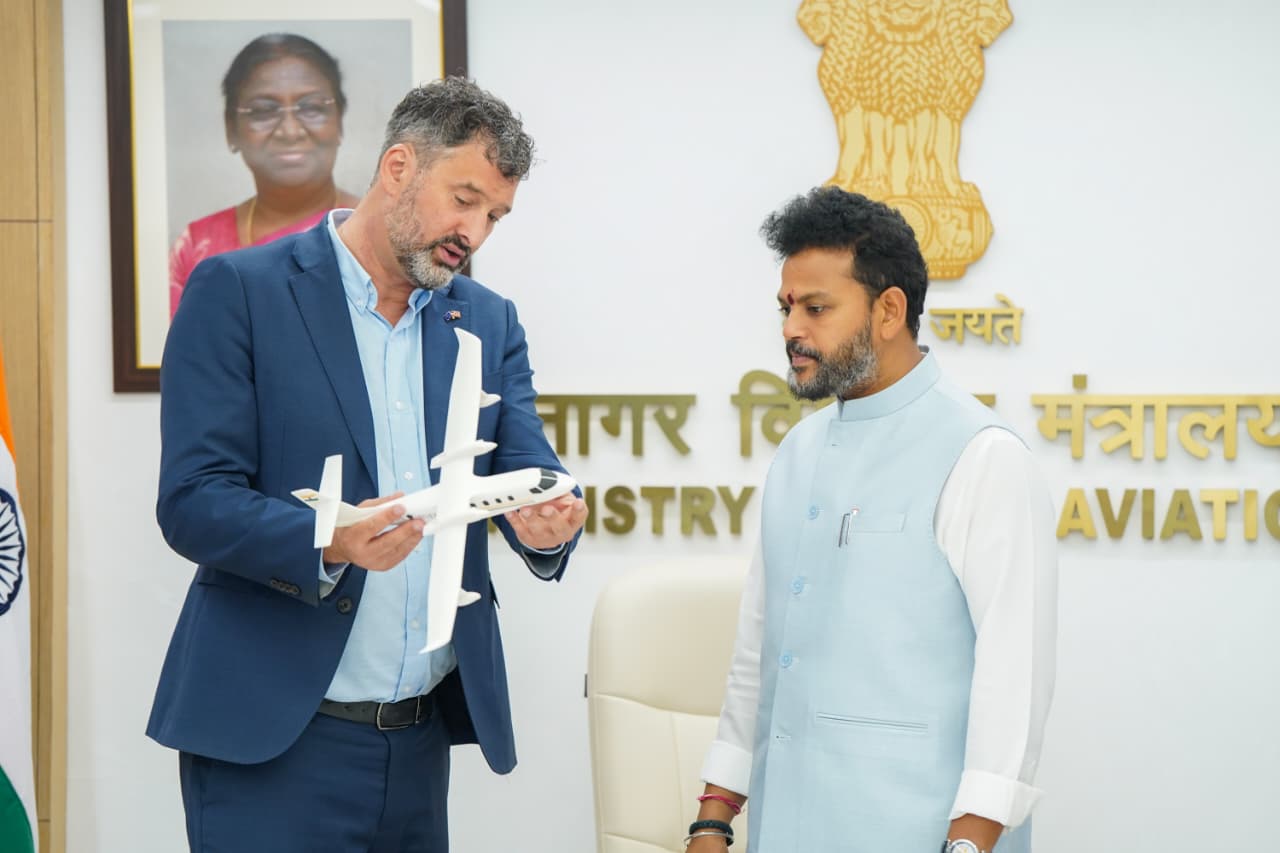
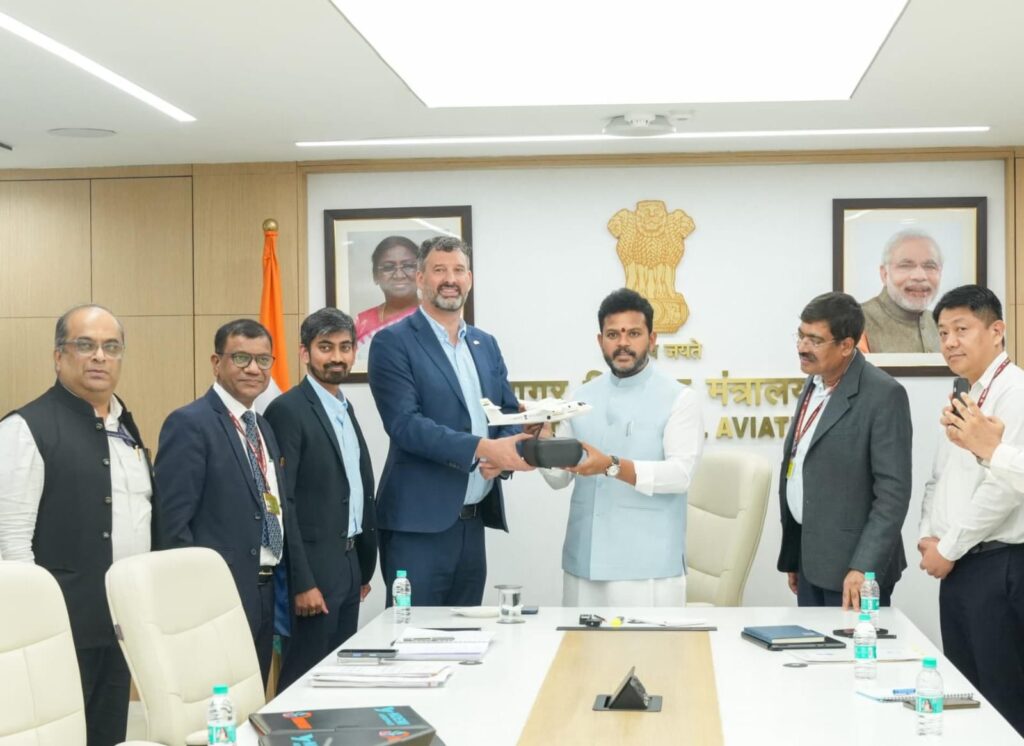
An exciting milestone for India’s aviation future as Pawan Hans Limited (PHL), a Government of India enterprise under the Ministry of Civil Aviation, formalized a Non-Binding Memorandum of Understanding (MoU) with Noemi Aerospace (Elfly AS) of Norway to explore collaboration in next-generation sustainable aviation technologies — notably electric seaplane solutions. Signed in the esteemed presence of Minister of Civil Aviation Shri Ram Mohan Naidu Kinjarapu and Secretary Shri Samir Kumar Sinha, and executed by Shri Sunil Kumar Nagdawne (Chairman & Managing Director, PHL) and Shri Eric François Lithun (CEO, Noemi Aerospace), this MoU signals a bold step toward greener, more connected regional aviation.
The proposed partnership frames a forward-looking agenda: joint study and exploration of electric seaplane technologies, skill development and capacity building, technical knowledge-sharing through workshops, and comprehensive feasibility studies. Each of these focus areas speaks directly to urgent national priorities — from reducing aviation’s carbon footprint to strengthening domestic manufacturing and operational capabilities. Importantly, Noemi Aerospace brings to the table cutting-edge expertise in electric seaplane design, backed by support from the Government of Norway, while Pawan Hans contributes deep operational experience across India’s challenging and diverse geographies. That complementary mix is precisely what makes this collaboration compelling.
This initiative dovetails seamlessly with the Government of India’s broader vision. As Minister Kinjarapu emphasized, the goal is not only to operate seaplanes across India but to manufacture them domestically under the banner of Prime Minister Narendra Modi’s Make in India vision. The recent Union Budget 2026’s emphasis on seaplane promotion — including potential incentives to indigenize production and a proposed Seaplane Viability Gap Funding (VGF) scheme to support operations — underscores strong policy momentum. With regulatory simplifications, dedicated Seaplane Operations Guidelines, and high-profile demonstration flights already undertaken, the stage is set for rapid progress. Combining global technological partnerships with India’s manufacturing prowess could unlock substantial local and regional demand for seaplane services, especially for connectivity to islands and remote areas.
Equally notable is the MoU’s careful, exploratory approach. It sets a cooperative framework without financial, procurement, investment, or exclusivity obligations; any concrete projects will require separate definitive agreements and the necessary governmental approvals. This prudent structure preserves flexibility while enabling both parties to evaluate technical feasibility, operational viability, and socio-economic impact before committing resources.
Beyond technology transfer and manufacturing, the collaboration promises broader benefits: fostering a skilled workforce in novel aviation domains, building institutional knowledge through workshops and training, and catalyzing innovation-led growth in regional aviation ecosystems. For communities in island territories and remote regions, electric seaplanes could mean reliable, low-emission connectivity that boosts commerce, tourism, emergency response, and socio-economic inclusion.
Electric propulsion introduces a second, potentially transformative shift in the economics of seaplane operations. NOEMI’s aircraft, currently under development, is expected to deliver significantly lower operating costs compared with the Cessna 208A turboprops previously operated by Pawan Hans. Electric motors have far fewer moving parts than conventional piston or turboprop engines, translating into lower energy costs, reduced maintenance requirements and potentially greater operational reliability.
These advantages become particularly compelling on short regional routes of 50 to 150 kilometres—the very distances that connect the island groups of the Andaman & Nicobar Islands, the atolls of Lakshadweep, Kerala’s backwater destinations and key coastal points in Goa. In such sectors, the range limitations associated with electric propulsion are far less restrictive. By fundamentally altering the powerplant’s cost structure, electric propulsion could make routes that were previously marginal for conventional turboprop seaplanes economically viable, opening a new pathway for sustainable and cost-effective regional connectivity.
The PHL–Noemi Aerospace MoU is an optimistic and strategically timed initiative that aligns global innovation with national priorities. It embodies a pragmatic pathway to greener skies: forging international partnerships, nurturing domestic capabilities, and piloting transformational solutions for regional connectivity. If pursued with sustained commitment and collaborative vigour, this partnership could become a cornerstone of India’s journey toward sustainable, inclusive, and technologically advanced aviation.