Staff Correspondent
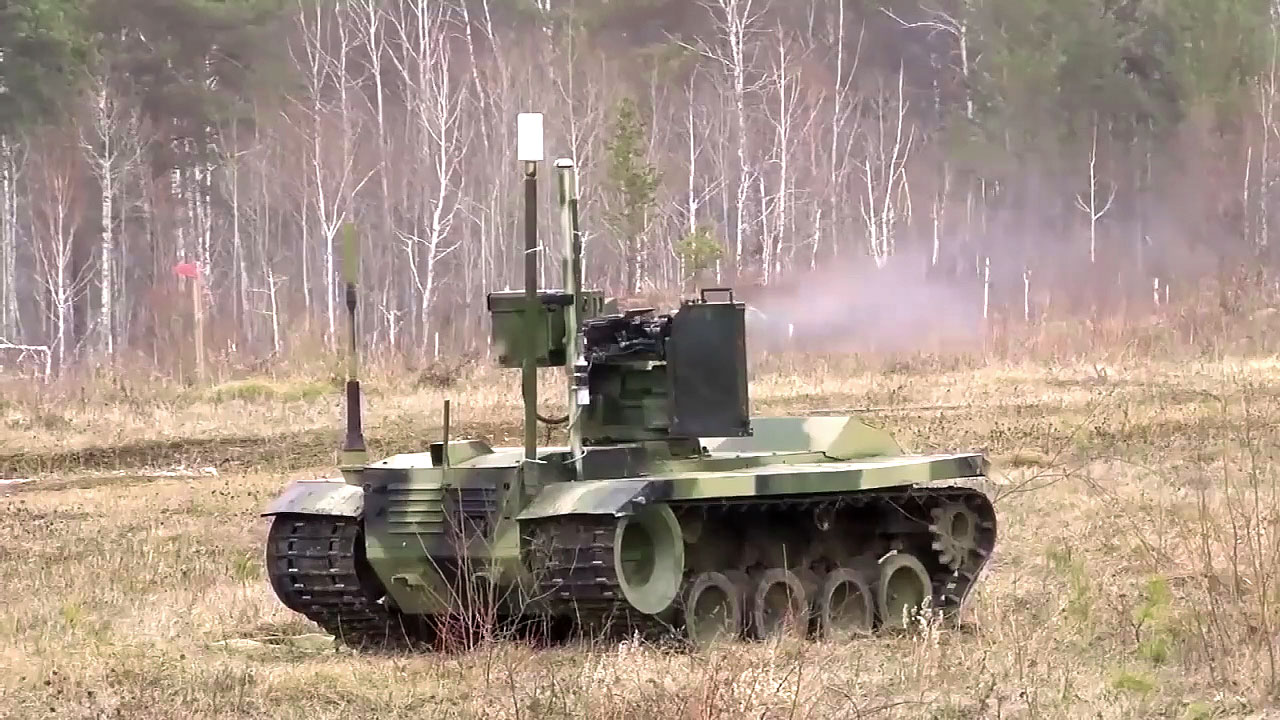
The future of military operations is being shaped not only by advances in weapons and sensors, but also by a growing emphasis on keeping personnel out of harm’s way. In this context, ROSOBORONEXPORT JSC, part of the Rostec State Corporation, is introducing the Nerekhta-E tracked robotic system to the global market. Developed by the V.A. Degtyarev Plant, this unmanned combat ground vehicle is designed to support frontline and reconnaissance units in demanding combined-arms and counter-terrorism operations—across both open terrain and urban environments.
At the heart of the Nerekhta-E concept is a practical ambition: help units accomplish difficult missions while reducing the risks their personnel face. The remotely controlled vehicle can be configured for reconnaissance, surveillance, fire support, anti-tank missions, site security, or logistics. Its ability to take on different roles makes it more than a single-purpose machine; it is a versatile platform intended to adapt to changing operational needs.
According to Alexander Mikheev, Director General of ROSOBORONEXPORT, the Nerekhta-E is the first Russian unmanned combat ground vehicle to complete full-scale official testing. He says its development reflects a modern approach to warfare that prioritizes operator safety, network-centric capabilities, and the use of artificial intelligence. Mikheev also points to the system’s modularity and versatility as key strengths, noting that it can carry a range of mission modules or transport wounded personnel and cargo weighing up to 1,000 kilograms.
That flexibility is central to the vehicle’s appeal. Depending on its configuration, the Nerekhta-E can carry small arms, a grenade launcher, or anti-tank weaponry. It can also be fitted for transport, reconnaissance, or fire support. A force equipped with adaptable platforms can assign them according to the mission at hand, rather than relying on a single fixed design for every task.
The system’s armament is intended to engage a broad range of ground and aerial targets, including armoured vehicles, personnel, fortifications, air-defence assets, aircraft, helicopters, and unmanned aerial vehicles. In a fire-support configuration, the robot can provide units with machine-gun and grenade-launcher support. In other configurations, it can conduct reconnaissance and surveillance, guard and defend facilities or deployment sites, and deliver supplies. Its transport role is especially notable: the vehicle can carry wounded soldiers as well as ammunition, fuel, equipment, and other cargo.
The Nerekhta-E’s two principal combat modules illustrate how its capabilities can be tailored. The small-arms and grenade-launcher module combines a 12.7 mm Kord machine gun with a 30 mm AG-30M automatic grenade launcher. It includes a ballistic computer, an armament stabilization system, and ammunition monitoring. Daylight television and thermal-imaging channels support reconnaissance and targeting, helping the system function in varied conditions.
For anti-tank missions, the Nerekhta-E can be equipped with four launch rails for 9M133 Kornet and 9M134 Bulat guided missiles, developed and manufactured by High Precision Systems, another Rostec enterprise. The module supports a “tandem” firing mode, in which two missiles are launched along a single beam at the same target. The system’s configuration also offers a coordinated option: two vehicles carrying anti-tank modules can be positioned 30 metres apart along the front, allowing them to engage one target or provide crossfire against two separate targets. The module includes a thermal-imaging sight.
Beyond its weapon systems, the vehicle’s design reflects the importance of mobility and endurance. The Nerekhta-E has an armoured hull and a tracked chassis, enabling it to operate across challenging terrain. Its hybrid powertrain combines operational flexibility with reduced noise: the electric motor can help the vehicle move more quietly and reduce its thermal signature, making it harder to detect through thermal-imaging systems. These features are especially relevant for reconnaissance and other missions where limiting visibility and noise can be valuable.
The vehicle can reach a top speed of 20 kilometres per hour. It can operate continuously while moving for up to four hours, and in surveillance mode can operate for up to 20 hours. These endurance figures support a range of tasks, from mobile field operations to extended observation. The system’s gross weight is 2,100 kilograms, rising to 2,700 kilograms when fitted with the transport module, including its payload.
The transport module, with a capacity of up to 1,000 kilograms, adds a substantial logistical dimension to the platform. Moving supplies or equipment closer to units in the field can reduce the burden on personnel, while the ability to transport wounded soldiers could help support evacuation efforts. In this way, the Nerekhta-E is presented not only as a combat system, but also as a tool for sustaining forces and assisting them in dangerous environments.
ROSOBORONEXPORT also offers a reconnaissance and fire-support module, expanding the range of possible configurations. Together, the available modules underscore the vehicle’s defining idea: one tracked platform can be adapted to a variety of operational roles. That modularity may allow prospective users to configure the system around their own requirements, whether those involve surveillance, force protection, combat support, or transport.
The international introduction of the Nerekhta-E forms part of ROSOBORONEXPORT’s wider military-technical cooperation activities. The company says promoting and supplying robotic systems to countries friendly to Russia aligns with objectives assigned to it by the President of the Russian Federation, including strengthening Russia’s position in the global arms market and expanding both its product range and sales geography. As robotic platforms become an increasingly prominent feature of military planning, the Nerekhta-E is being presented as a flexible system designed to meet a broad set of operational demands.
The Nerekhta-E’s story is one of adaptability. Its tracked mobility, armoured hull, hybrid powertrain, extended surveillance endurance, and range of payload modules combine to create a platform capable of supporting many different missions. From carrying supplies and assisting with casualty transport to reconnaissance and armed support, it is designed to give units another option for operating in hazardous settings. Its modular approach reflects a wider shift toward robotic systems that can be configured for specific tasks—and toward technologies intended to enhance mission effectiveness while reducing the exposure of personnel on the front line.