Chaitali Bag
Air power is often measured in speed, reach, precision and combat capability. But in an increasingly complex strategic environment, its true strength also lies in nations’ ability to trust one another, learn together, and work toward a common purpose. Exercise Tarang Shakti 2026 brought this principle to life, demonstrating that the most enduring expression of power is not merely the ability to operate independently, but the capacity to build partnerships that strengthen collective security.
Hosted by the Indian Air Force (IAF), Exercise Tarang Shakti 2026 emerged as a powerful demonstration of international goodwill, professional solidarity and the shared commitment of participating nations to peace, stability and security. With representatives from 41 nations, seven of which contributed operational assets, and more than 150 aircraft involved, the exercise offered a multinational platform where differences in platforms, procedures and operational philosophies became opportunities for mutual learning rather than barriers to cooperation.
The message was unmistakable: partnership does not require every nation to possess identical capabilities or share identical strategic priorities. It requires a willingness to engage, understand, respect and build the confidence necessary to work together when circumstances demand it.
The theme “Power in Partnership” captures this larger significance. Tarang Shakti was not simply an assembly of aircraft and air forces; it was a meeting of professional cultures, strategic perspectives and national aspirations, united by a shared belief that cooperation is indispensable to a stable international order.
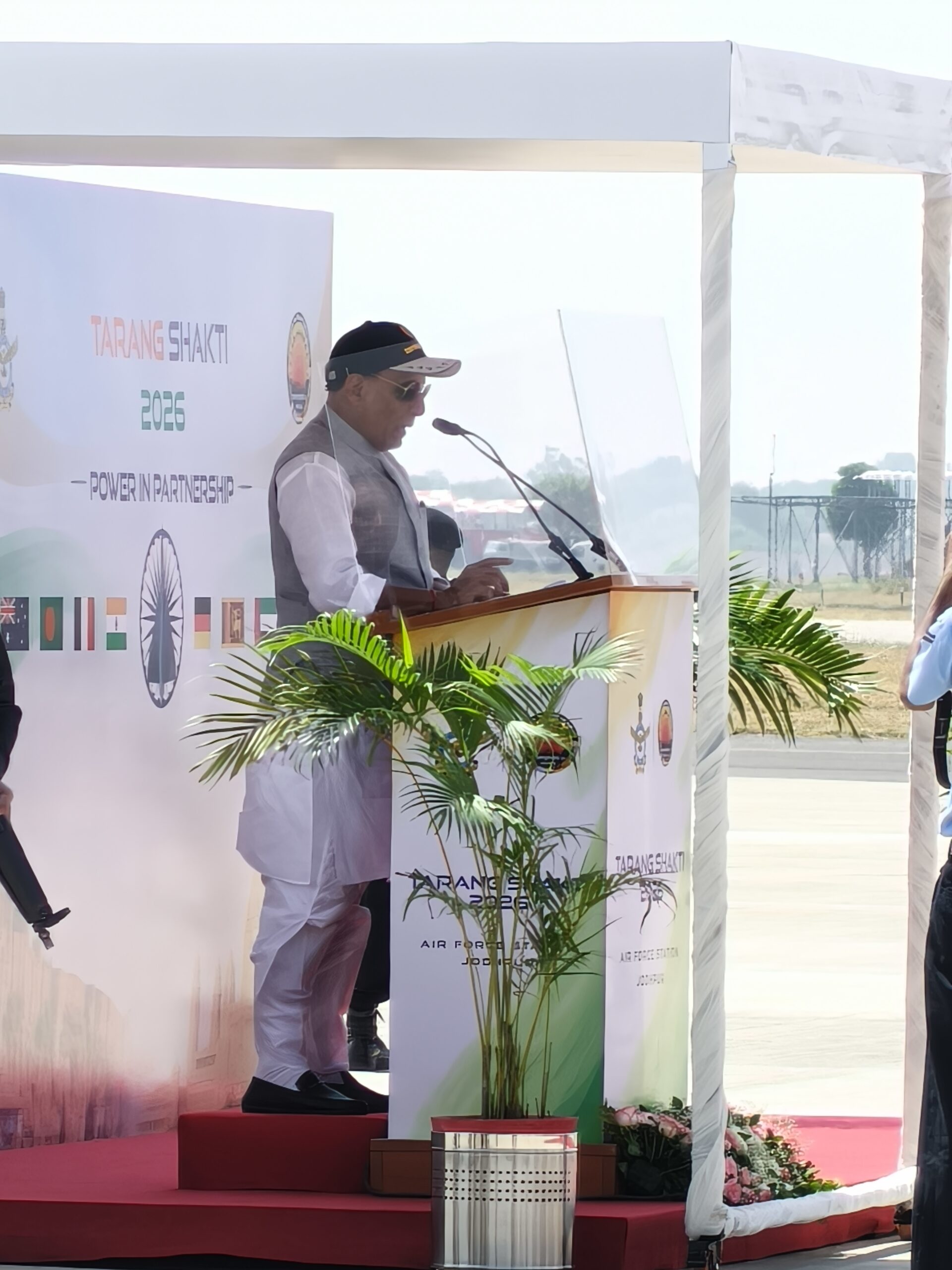
Addressing the delegates and media, Raksha Mantri Rajnath Singh placed Exercise Tarang Shakti 2026 within the larger transformation of modern warfare, where artificial intelligence, unmanned systems, cyber and space capabilities, electronic warfare and long-range precision weapons are reshaping the character of conflict. He underscored that India’s pursuit of Atmanirbhar Bharat in defence is not a move towards isolation, but an effort to build the indigenous capacity to design, develop, manufacture, maintain and upgrade critical technologies while strengthening cooperation with trusted international partners. Emphasising that no nation can afford to learn exclusively from its own experience, he highlighted the unique value of multinational exercises in bringing together different platforms, doctrines and operational philosophies. Tarang Shakti, he noted, transformed the principles of capability, interoperability and mutual trust into practical experience, enabling aircrews and commanders from diverse nations to learn to “sense, decide and act together.” His message resonated strongly with the exercise’s theme of Power in Partnership: national strength and international cooperation are complementary forces, and when professional excellence, advanced technology and confidence converge, they can strengthen collective readiness while serving the larger cause of peace, security and stability. The real measure of Tarang Shakti’s success, he emphasized, would lie in carrying its lessons forward into future training, doctrine, technological development and enduring partnerships.
A Gathering of Nations, A Common Purpose
Air forces from six continents underlined the exercise’s global reach. From the United States and France to Germany, Australia, the United Arab Emirates, Sri Lanka and Bangladesh, participating air forces brought distinct operational experience, aircraft and perspectives to a common training environment. Other participating nations joined as observers, extending the exercise’s value beyond those directly flying missions.
For the Indian Air Force, the significance extended well beyond hosting a large international event. Tarang Shakti provided an opportunity to demonstrate India’s growing ability to convene diverse air forces, facilitate professional exchanges and create an environment in which international partners could learn from one another.
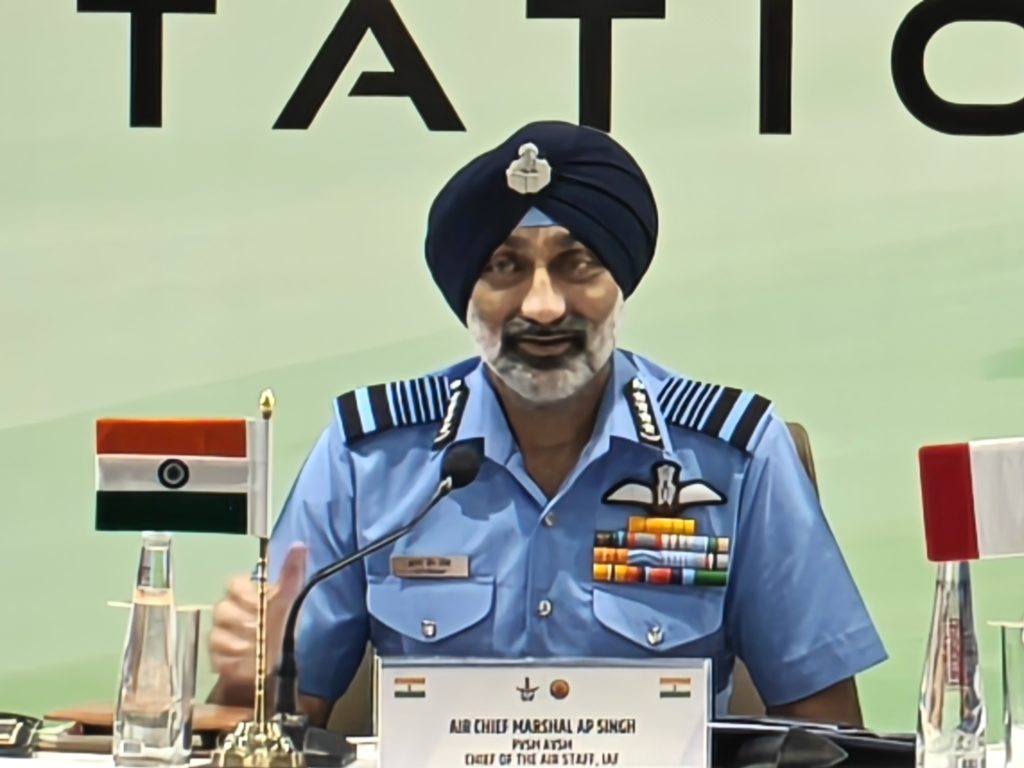
Air Marshal A.P. Singh, Chief of the Air Staff, has emphasized the value of collective learning and the importance of incorporating lessons from contemporary conflicts into operational training. The exercise reflected that approach by exposing participating forces to realistic scenarios, complex aerial engagements and the challenges of integrating different capabilities.
The appreciation expressed by participating air chiefs for the IAF’s organisation, professionalism and safe conduct of the exercise was itself an important affirmation of the goodwill underpinning the gathering. Such recognition reflects more than the successful execution of flying missions; it speaks to the confidence that nations place in one another when operating in a demanding multinational environment.
Beyond the Formation: Interoperability as a Strategic Asset
The real test of multinational air power lies not in flying together for a photograph, but in coordinating effectively when missions become complex, information is incomplete and operational decisions must be made under pressure.
Tarang Shakti 2026 addressed precisely these challenges. More than 600 sorties were flown, accumulating over 800 flying hours, with all planned missions and large-force engagements completed without reported accidents, aerospace safety violations or mission cancellations, according to the exercise briefing.
The training encompassed within-visual-range and beyond-visual-range combat, large-force engagements, air mobility, air-to-air refuelling, combat search and rescue, and other demanding operational scenarios. Indian and foreign aircraft operated in a training environment shaped by contemporary threat conditions and lessons from recent conflicts.
Tarang Shakti brought together an extraordinary range of aircraft, from the US F-35 and French Rafale to Germany’s A400M, India’s Su-30MKI and indigenous Light Combat Aircraft Tejas, alongside the Mirage 2000 and MiG-29, creating a valuable opportunity to explore different operational strengths and employment concepts. Just as importantly, the exercise showed that interoperability does not happen automatically: aircraft use distinct data links, secure communications and information-sharing protocols, while advanced platforms operate under strict security safeguards that cannot simply be relaxed for a multinational exercise. Making cooperation work therefore demands thoughtful mission planning, shared procedures, clear coordination and a practical understanding of what each partner can contribute. By recognizing real-world limitations as well as capabilities, Tarang Shakti helped participants build a more grounded understanding of how multinational forces can operate together. That is where partnership gains its operational meaning: trust opens the door to cooperation, while planning, discipline and professional competence turn that promise into effective action.
Every Nation Contributes to the Collective Strength
One of Tarang Shakti’s most valuable features was the opportunity it provided for participating nations to contribute according to their capabilities and experience. The exercise was not a demonstration of a single dominant air force, but a collective learning environment in which different contributions enriched the whole.
India: A Convening Power for Air Cooperation
The IAF brought a broad range of fighter, transport, helicopter, airborne surveillance and aerial-refuelling capabilities into the exercise. As host, it demonstrated its ability to coordinate a complex multinational training environment while sharing operational experience and learning from partner air forces.
United States: Advancing High-End Operational Cooperation
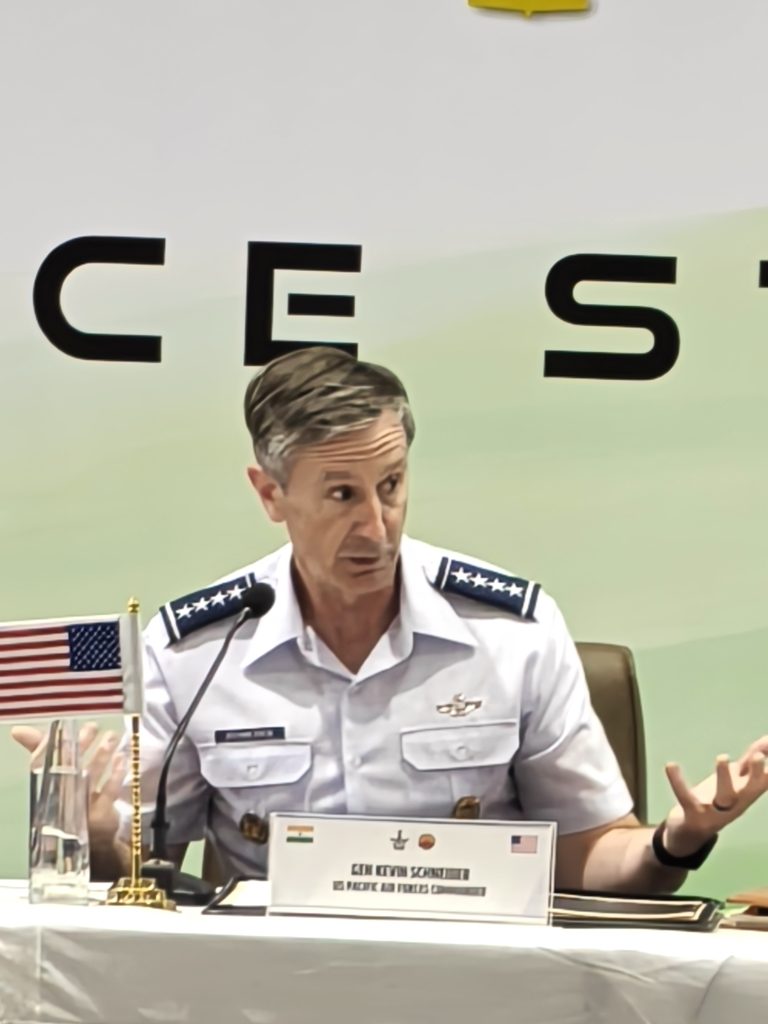
The historic first deployment of F-35 aircraft to India for Tarang Shakti symbolised the forward movement of US–India defence engagement. The exercise also offered a platform for tactical interaction and broader professional cooperation, within the security restrictions governing advanced platforms.
France: Deepening an Established Operational Partnership
French participation, featuring Rafale fighters, MRTT refuelling aircraft and A400M transports, reinforced the value of sustained bilateral engagement within a larger multinational setting. Shared experience in air operations and established training relationships helped provide a foundation for interoperability.
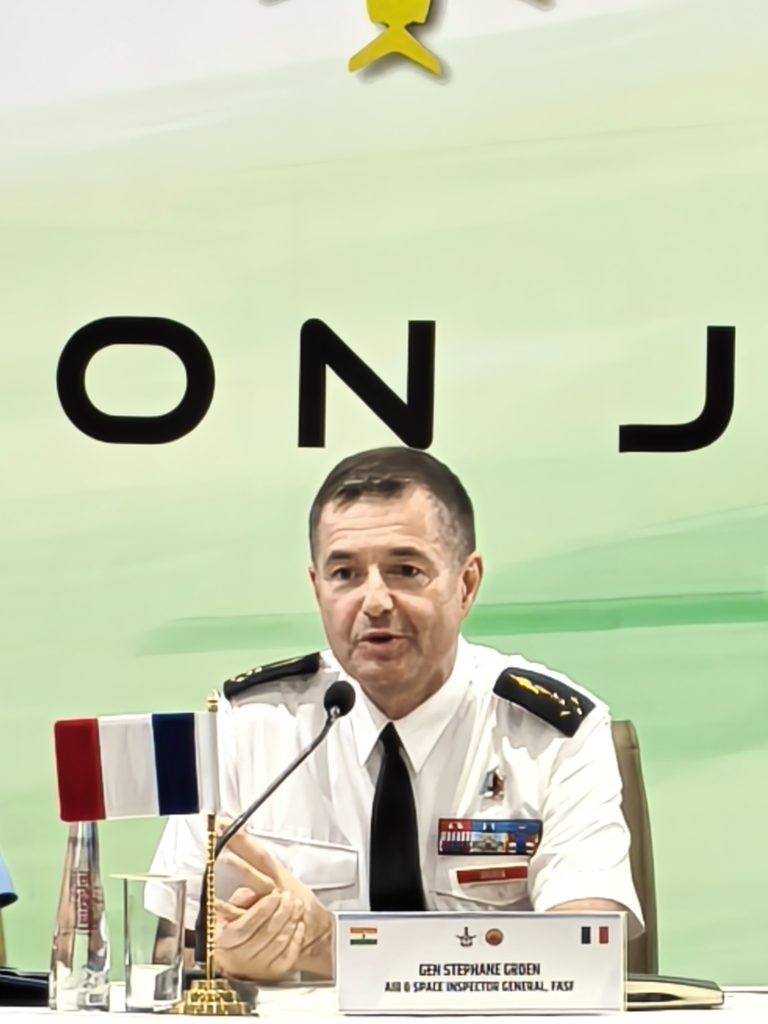
Germany: Partnership in Support of Indo-Pacific Stability
Germany’s participation reflected its interest in peace and stability in the Indo-Pacific and its growing defence engagement with India. The exercise offered a practical way to strengthen professional relationships and improve understanding between like-minded partners.
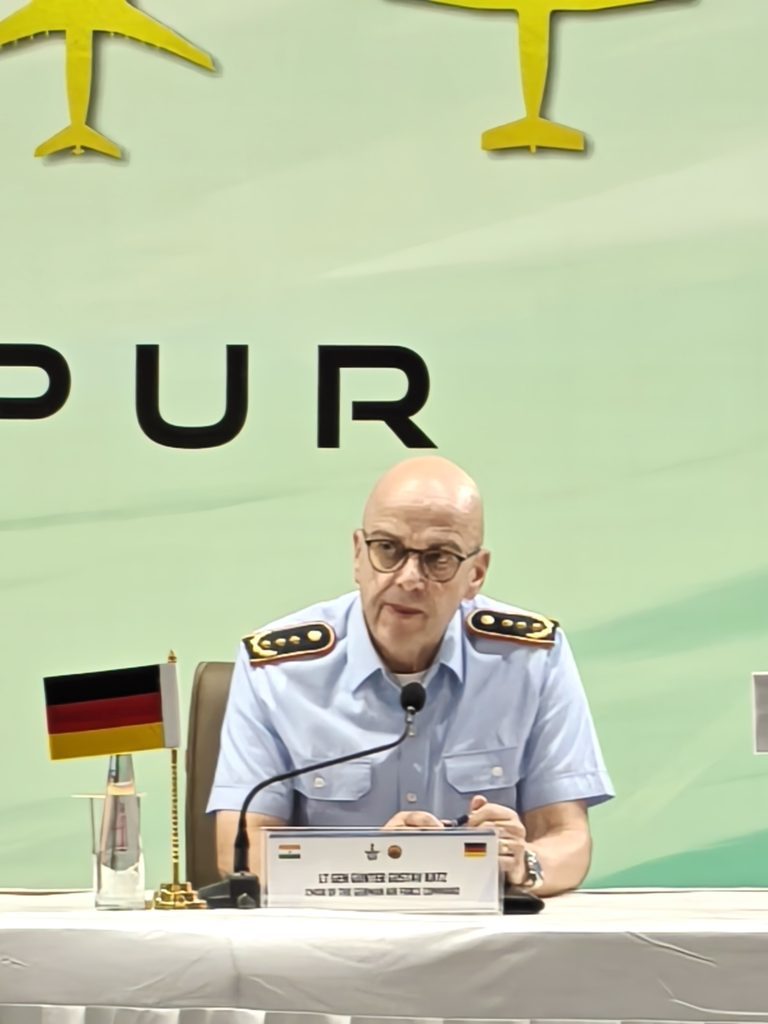
Sri Lanka & Regional Partners: Turning Experience into Contribution
Sri Lanka’s expanded participation illustrated how repeated engagement can move an air force from gaining familiarity towards making more meaningful operational contributions. Participation by regional partners, alongside Bangladesh and the UAE, broadened the exercise’s operational and geographic perspective.
The contributions of Australia, Kazakhstan, Cyprus, Mozambique and other participating nations further reinforced the breadth of professional engagement. Each partnership brought its own experience, priorities and institutional relationships to the exercise.
The larger message was one of inclusion: collective readiness becomes stronger when nations understand not only their own capabilities but also their partners’ capabilities, limitations, and operating practices.
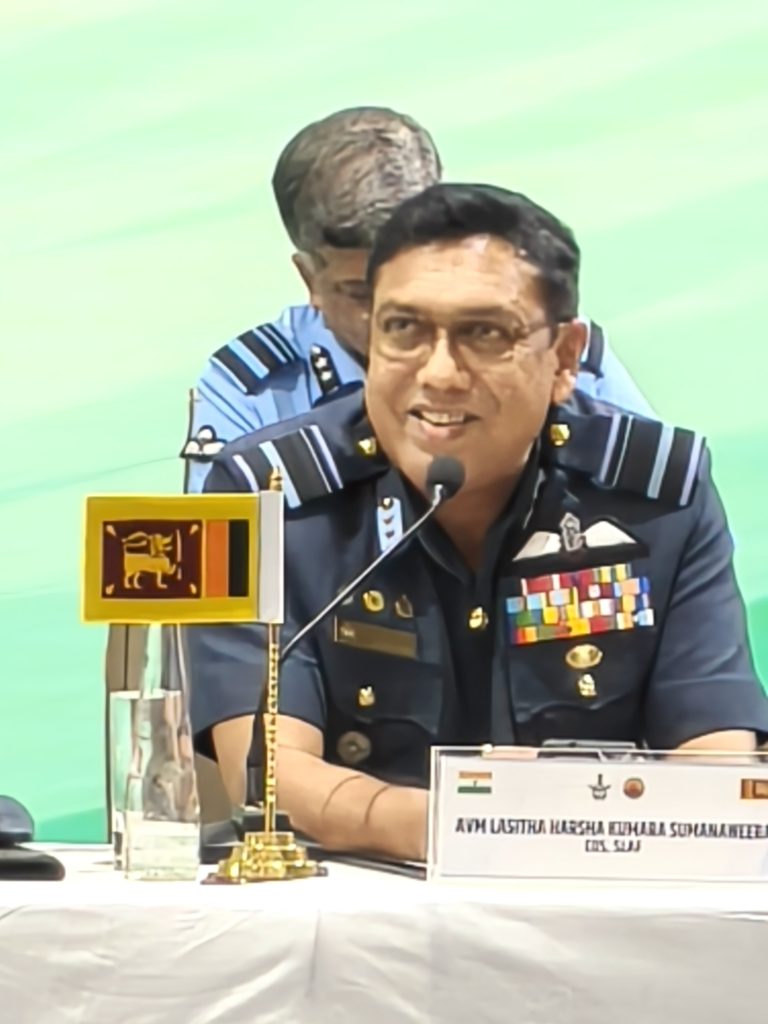
Lessons from Contemporary Conflicts: The Primacy of Networks & Resilience
Modern air warfare increasingly depends on more than an individual aircraft’s performance. The ability to detect, interpret, communicate and act on information across a battlespace has become central to operational effectiveness.
Discussions during Tarang Shakti highlighted the importance of sensors, network-enabled operations and resilient command-and-control systems. Lessons from recent conflicts have underscored communications vulnerabilities and the need for systems that can sustain information flow even when networks are disrupted.
For multinational forces, this challenge becomes more pronounced. Aircraft may have sophisticated individual capabilities, but differences in communications architecture, data links, and security restrictions can complicate information sharing.
The exercise therefore provided a valuable opportunity to examine how common planning procedures and established coordination mechanisms can bridge operational differences without compromising national security.
The lesson is clear: interoperability is not simply about connecting systems; it is about connecting people, procedures and decisions.
For India, these insights are especially relevant as the IAF continues to integrate diverse aircraft, indigenous platforms, and advanced surveillance capabilities into a complex operational architecture. The experience also reinforces the importance of resilient command-and-control networks, secure communications and the ability to continue operating in contested information environments.
India’s Indigenous Capability in the International Arena
Tarang Shakti also offered an opportunity to observe India’s growing indigenous aerospace capabilities in a multinational setting. The LCA Tejas, developed to meet Indian Air Force requirements, participated alongside advanced aircraft operated by international partners.
International observers praised the Tejas and its performance during the exercise. Such exposure is valuable because indigenous platforms must ultimately demonstrate their operational relevance through disciplined employment, reliable performance and continued development.
The significance goes beyond the reputation of a single aircraft. International exercises allow Indian personnel to evaluate their tactics, understand how domestic platforms fit into different operational environments and identify areas for further improvement.
The IAF’s participation across fighters, helicopters, transport aircraft, airborne warning and control platforms, and refuelling aircraft also demonstrated the importance of integrating multiple capabilities into a coordinated force.
For India’s aerospace industry, such exercises provide a broader context for understanding operational requirements. They can help inform future development priorities, particularly in areas such as sensors, communications, mission systems, survivability and network integration. They do not, by themselves, establish export success or prove technological parity across every capability, but they contribute to the professional and operational experience that underpins further progress.
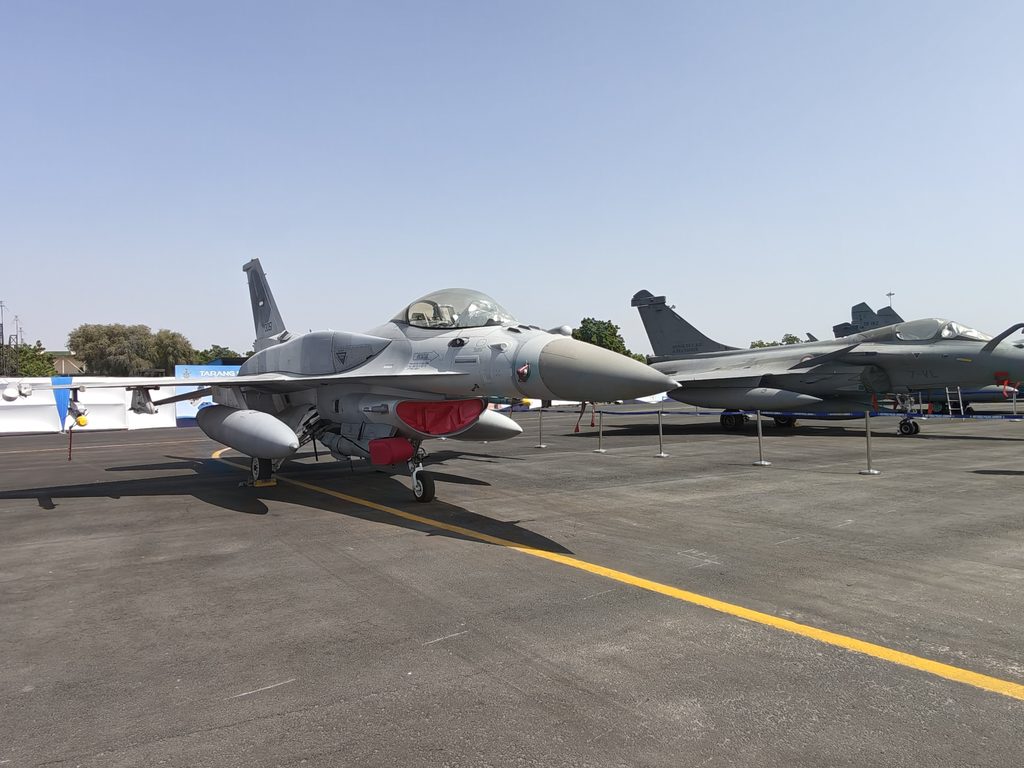
Goodwill That Extends Beyond Combat Operations
The power of partnership at Tarang Shakti was not confined to combat training. The exercise also created opportunities for professional interaction, cultural exchange and personal relationships among airmen from different countries.
Joint activities, subject-matter expert exchanges, yoga sessions and an international evening complemented the demanding flying programme. These interactions helped build familiarity and trust at the human level—an essential but often underappreciated dimension of military cooperation.
The importance of such relationships extends into missions that do not involve combat. Humanitarian assistance, disaster relief, aeromedical evacuation and other emergency operations often require nations to coordinate rapidly, share information and work within unfamiliar operating environments.
Participants highlighted the value of learning across exercises and the potential to carry lessons from Tarang Shakti into future multinational engagements. Such exchanges help establish professional connections that can prove valuable when a crisis requires cooperation beyond established bilateral channels.
Power in Partnership: A Stronger Foundation for the Indo-Pacific
The Indo-Pacific is a region of immense economic importance, maritime connectivity and strategic complexity. Its stability depends on a combination of national capability, responsible conduct, sustained dialogue and cooperation among countries with shared interests.
Tarang Shakti’s multinational character reflected the importance of keeping professional channels open and strengthening mutual understanding in this environment. For Germany, France, the United States and other participants, engagement with India offered opportunities to deepen relationships through practical cooperation. For India, hosting the exercise reinforced its role as a partner capable of bringing together diverse nations around shared professional objectives.
Such cooperation should not be mistaken for a uniform strategic alignment among all participants. Nations retain distinct foreign policies, national interests and operational constraints. The strength of a multinational exercise lies precisely in its ability to create meaningful cooperation despite those differences.
The goodwill displayed at Tarang Shakti was therefore a powerful statement in its own right: countries can build confidence through professional engagement, strengthen readiness without abandoning their individual responsibilities, and contribute to regional stability through sustained dialogue and practical cooperation.
From an Exercise to a Lasting Partnership
Tarang Shakti 2026 demonstrated that the value of an international air exercise cannot be measured solely by aircraft numbers, sorties flown or missions completed. Those achievements are important indicators of scale and execution. Still, the deeper measure lies in what participating nations take home: better understanding, stronger professional relationships, more realistic assessments of their capabilities and a clearer appreciation of how they can work together.
For the Indian Air Force, the exercise reinforced the value of international engagement while offering an opportunity to share its own operational experience. For participating nations, it created a setting where goodwill could translate into practical learning and stronger cooperation.
The enduring challenge is to carry those lessons forward—through continued exercises, bilateral exchanges, institutional relationships and the gradual improvement of operational procedures and interoperability.
Tarang Shakti 2026’s most powerful message is that partnership is not a substitute for national strength; it is a force multiplier. When nations bring their capabilities together with professionalism, mutual respect and a commitment to peace, the result is greater than the sum of individual contributions.
In a world where uncertainty increasingly defines the strategic environment, the friendships forged on the ground, the lessons learned in the air and the confidence built through shared effort may prove as consequential as the aircraft themselves.
That is the enduring promise of Power in Partnership—not simply the ability to fly together, but the willingness to stand together in pursuit of a more secure and stable future.