Staff Correspondent
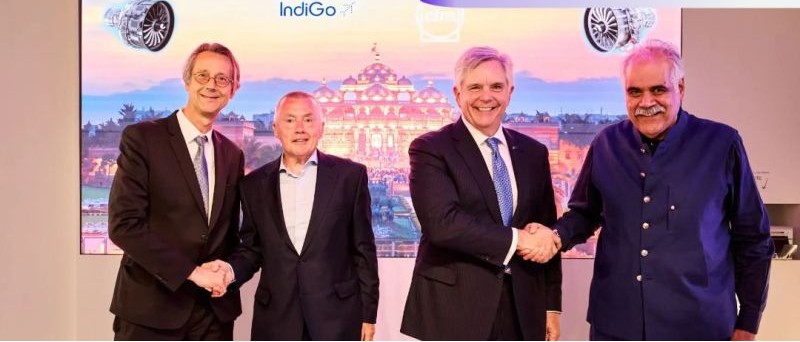
IndiGo and CFM’s July 20, 2026 Memorandum of Understanding marks a watershed moment for commercial aviation. This bold, ambitious leap will reshape fleet economics, maintenance ecosystems, and the competitive landscape of one of the world’s fastest-growing airlines. The MoU, which paves the way for an order of more than 1,000 LEAP-1A engines to power 510 Airbus A320neo family aircraft, is at once a testament to IndiGo’s growth trajectory and a ringing endorsement of the LEAP engine program’s performance, durability, and operational value. This essay celebrates the significance of that agreement, explores its strategic implications, and reflects on the broader industrial and national dimensions of such a landmark deal.
At the heart of this announcement lies scale, and scale matters. For IndiGo—a carrier that has transformed the Indian skies with its low-cost, high-frequency model—the decision to place an unprecedented order for LEAP-1A engines is a decisive investment in a future of massive, sustained expansion. The airline’s fleet now exceeds 375 A320/321 family aircraft and is poised to grow further; locking in propulsion for 510 additional neo-family deliveries with a single engine type simplifies logistics, enhances operational predictability, and produces powerful cost synergies. Fuel efficiency gains and improved time-on-wing statistics from the LEAP engine translate directly into lower per-seat operating costs, higher aircraft utilization, and better scheduling resilience—advantages that are invaluable in the fiercely competitive short- and medium-haul markets IndiGo serves.
Beyond economics, this agreement amplifies reliability and sustainability. The LEAP-1A’s proven reliability—especially in hot and harsh operating environments—is critical for Indian operations, which regularly encounter high temperatures, dusty conditions, and intense utilization. Longer time on wing reduces shop visits and downtime, improving dispatch reliability and passenger confidence. Fuel-efficiency improvements contribute to reduced carbon emissions per seat, helping airlines meet increasingly stringent environmental targets and regulatory pressures. For IndiGo, whose ambitions now extend toward becoming a truly global airline, these attributes support both expansion and responsible growth—reconciling scale with sustainability.
Another striking and strategic element of the MoU is its inclusion of long-term material services and the creation of an MRO (maintenance, repair and overhaul) capability. This is far more than an engine procurement: it is an industrial partnership. In committing to help establish IndiGo’s engine MRO facility, CFM International binds technical know-how, spare parts supply chains, logistics planning, and training pipelines to IndiGo’s operational ecosystem. The result will be faster turnaround times, greater control over maintenance schedules, and predictable maintenance costs—critical levers for an airline balancing rapid expansion with tight cost discipline. Locally based MRO capability also generates skilled jobs, fosters supplier development, and deepens the country’s aerospace ecosystem—outcomes that resonate beyond the balance sheet and into national industrial policy.
The MoU also reflects a mature, longstanding relationship between IndiGo and CFM. Their partnership stretches back a decade: from the CFM56-5B powered A320ceo subset to the more recent adoption of LEAP-1A for neo-family aircraft. That continuity has likely engendered mutual trust, operational alignment, and a shared data-driven understanding of reliability and maintenance realities in India. For CFM and its parent organizations—GE Aerospace and Safran—the deal cements a formidable installed base in a market where India ranks as their third-largest. The commitment is reciprocal: IndiGo secures a proven engine platform with comprehensive support; CFM secures a massive, headline-making order and deeper access to a market with rapid aircraft growth.
The national-industrial implications are profound. CFM’s manufacturing in Pune, engineering presence in Bengaluru, and an expanding supplier network in India mean this MoU feeds a virtuous cycle of local capability building. The creation of a large-scale engine MRO facility, potentially supported by CFM expertise and parts logistics, will catalyze skills development, create high-value maintenance jobs, and reinforce India’s position as a regional aviation services hub. Safran’s investment in an expansive LEAP MRO center and test bench capacity underlines the industry’s commitment to onshore technical depth—complementing Make-in-India aspirations and promoting a resilient, indigenous aerospace maintenance infrastructure.
From a program perspective, the LEAP family has already demonstrated remarkable uptake—more than 10,000 engines delivered to date and sustained program improvements in durability and efficiency. This record order will further entrench the LEAP as a dominant force in single-aisle propulsion and accelerate cumulative gains in economies of scale for parts, training, and tech development. For airlines and lessors worldwide, the IndiGo-CFM partnership serves as a signal: long-term fleet planning tied to robust OEM support can yield strategic leverage—lower lifecycle costs, improved residual values, and operational robustness.
The human dimension merits attention too. For crews, engineers, and ground staff, greater engine commonality and nearby MRO support translate into simpler training pipelines, more predictable workloads, and fewer disruptions for passengers. For passengers, the agreement promises tangible improvements: better on-time performance, more efficient aircraft leading to lower emissions per journey, and an airline better positioned to expand route networks with confidence. For policymakers and regulators, the MoU underscores aviation’s role as an engine of economic growth: investment, job creation, and technological collaboration that strengthens the nation’s aerospace capabilities.
Risks and challenges naturally accompany such scale. Execution of a facility of MRO magnitude requires meticulous planning: securing real estate, developing qualified personnel, ensuring regulatory approvals, managing supply chains, and aligning demand forecasts with capacity. Integration of CFM’s technical processes into IndiGo’s operational tempo will require cooperation, data sharing, and clear governance arrangements. Market uncertainties—fuel price volatility, shifting demand patterns, and geopolitical dynamics—could affect fleet growth trajectories. Yet the structural logic of the deal—anchoring a vast number of aircraft to a proven engine, backed by local support and predictable material services—mitigates many of these risks.
The IndiGo-CFM MoU is both a landmark commercial transaction and a strategic blueprint for aviation growth in India and beyond. It crystallizes a compelling proposition: combine fleet-scale ambition with a trusted propulsion platform and a locally embedded maintenance ecosystem, and the result is operational resilience, cost-efficiency, and accelerated industrial capability. For IndiGo, the agreement accelerates its march toward global scale; for CFM, it represents a crowning program achievement and deeper roots in a critical market; for India, it signals a maturation of aerospace competence and economic opportunity. This is not merely an engine order—it is a catalytic partnership that promises to reverberate through the skies, hangars, and factories of the aviation world for years to come.