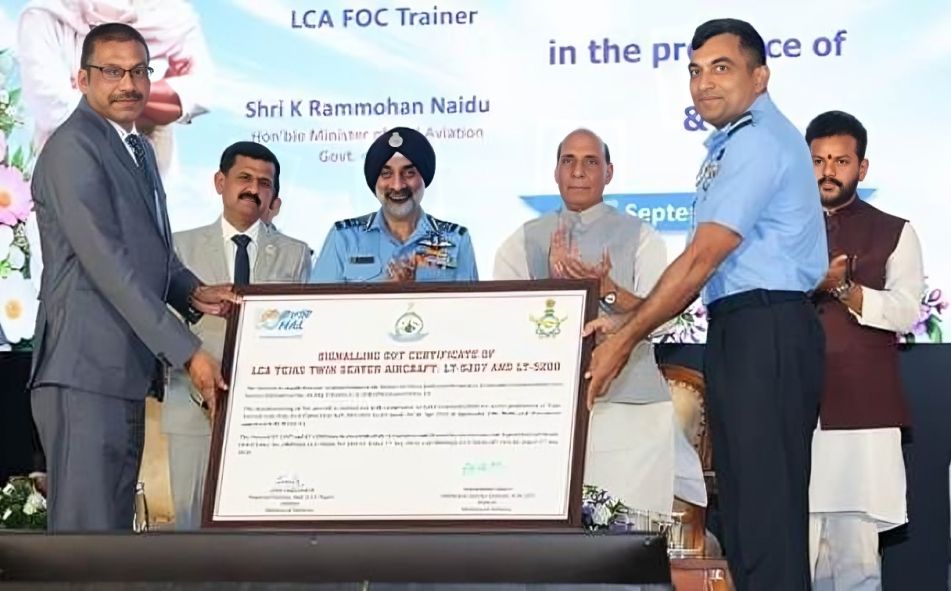
The handover of Tejas twin-seat trainers and HTT-40 basic trainers to the Indian Air Force, along with Dhruv NG helicopters for Pawan Hans, highlights India’s diverse aviation goals. While this is a notable achievement, its true impact hinges on factors like production reliability, timely delivery, fleet support, and expanding the industrial base.
Chaitali Bag
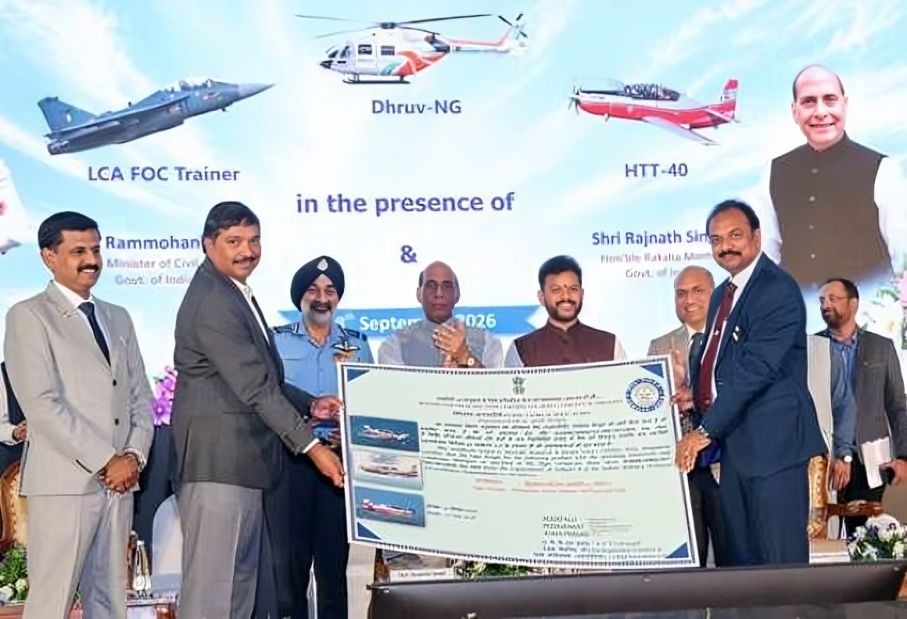
On September 18, 2026, Hindustan Aeronautics Limited (HAL) delivered two LCA Tejas twin-seat trainers and three HTT-40 basic trainers to the Indian Air Force (IAF), along with four Dhruv Next Generation (NG) helicopters to Pawan Hans Limited (PHL). The ceremony in Bengaluru, attended by Raksha Mantri Rajnath Singh and Civil Aviation Minister K. Rammohan Naidu, showcased India’s aim to build an aerospace sector that serves both defence and civilian needs.
This delivery marks a step forward in domestic design and manufacturing, but true self-reliance in aerospace won’t happen overnight. It requires consistent production, thorough certification, operational readiness, a strong domestic supply chain, and ongoing support throughout an aircraft’s life.
Training is the foundation of combat air power.
The two Tejas twin-seaters are the last aircraft under the FOC trainer contract. Their job? To create a training path for pilots moving into frontline fighter roles. These trainers help pilots transition from basic instruction to mastering the complex systems and procedures of the aircraft they’ll fly in service.
This connection is key. A modern fighter isn’t just a shell; its worth relies on pilots who can handle its systems, process information, and make split-second decisions. A trainer mirroring the frontline aircraft in design and systems helps bridge the gap from basic flying skills to combat readiness. Thus, the Tejas trainer plays a crucial role in developing skilled pilots for the fighter program.
While the trainers retain the core systems and combat capabilities of the frontline jets, delivering two aircraft doesn’t establish a full training fleet’s scale or readiness. Their importance lies in completing the twin-seat contract and introducing an indigenous platform into the IAF training lineup.
The real challenge is integrating these trainers effectively into the training system. This involves having the right instructors, maintainers, and infrastructure like simulators, spare parts, maintenance facilities, and a steady stream of qualified personnel.
HTT-40 & the value of an indigenous training ladder
The three HTT-40s address an earlier stage in pilot training. Built as basic trainers, they teach essential flying skills before trainees move on to more advanced platforms. Roles include aerobatics, general handling, instrument flying, navigation, night flying, and close formation flying.
While basic trainers might seem simpler than fighters, they play a vital role in building foundational skills at scale and ensuring a consistent flying standard. An indigenous trainer gives India more control over design, production, and support, especially in the early stages of a pilot’s career.
This handover isn’t just about replacing imports. It can boost domestic expertise in areas like flight testing, avionics integration, manufacturing, and maintenance. The long-term goal is to create a seamless training ladder with Indian-designed aircraft supporting pilots from basic instruction to advanced and operational conversion.
Success depends on the fleet’s size and availability, which can’t be judged from just three aircraft. The practical measure will be whether the HTT-40 consistently meets the IAF’s training requirements with reliable maintenance and a steady supply of parts.
Dhruv NG takes HAL into a wider market.
The four Dhruv NG helicopters handed over to PHL aim to extend Indian aerospace into civil and commercial markets. The NG, designed for civil use, features modern avionics, updated systems, and a more powerful engine. Potential uses include passenger transport, emergency medical services, and offshore logistics.
Civil operators have different needs from the military. Aircraft must meet civil certification standards and be reliable, readily available, maintainable, and trusted by passengers. This handover marks a significant step into a market where operational performance and customer support are key to success.
For HAL, PHL offers a valuable environment to gain experience with the helicopter in civil service. The aircraft’s future success will depend on its daily performance and how quickly HAL can provide spares, repairs, and technical support. Potential uses mentioned in the release aren’t proof of demand; the civil market will judge the helicopter on demonstrated performance and cost-effectiveness.
A strong service record for the Dhruv NG could showcase domestic aerospace manufacturing’s ability to support operators beyond the defence sector, broadening the industrial base and creating opportunities for Indian suppliers, maintenance organizations, and service providers.
One industrial ecosystem, different demands
The three aircraft types illustrate the wide range of challenges in the aerospace sector. A basic trainer, a fighter trainer, and a civil helicopter serve different users with different certification and operational needs. Yet, they all rely on overlapping capabilities: engineering, avionics, propulsion, flight controls, materials, testing, manufacturing, and lifecycle support.
This is why the government emphasizes building a domestic aerospace ecosystem rather than isolated programs. Skills developed in one program can support others, as long as knowledge and suppliers can move across projects and meet high standards. The economic and strategic returns come not just from assembling aircraft in India, but also from fostering local expertise in design, qualification, component production, maintenance, and upgrades.
HAL is central to this effort, overseeing aircraft and helicopter production, overhaul, repair, and engineering. The government’s call for more public-private collaboration highlights the need to involve more private firms in the supply chain, offering them chances to invest in skills, tools, and quality systems.
A strong ecosystem requires more than just many suppliers. It needs companies that can consistently meet aerospace standards, with traceable quality and reliable delivery. HAL’s ability to work with these partners—and to develop, qualify, and retain them—will determine the industry’s growth beyond single programs.
Self-reliance also means delivery discipline.
At the ceremony, Rajnath Singh spoke about aerospace development as a gradual process, with progress built one step at a time. He also urged realistic project timelines, warning that delays can create gaps in defence needs, increase costs, and risk technological obsolescence.
This is a crucial measure of the programs’ strategic value. In defence aviation, late deliveries can disrupt training and operational plans. In civil aviation, delays in support or certification can shake operator confidence. A domestic product must excel in execution, not just design.
Self-reliance should be judged by results: whether production schedules are realistic, aircraft are available when needed, maintenance is timely, and upgrades are delivered as technology and operational needs evolve. The ability to maintain a fleet over decades is just as important as production capacity.
Research and development will be crucial too. Technologies highlighted at the event—artificial intelligence, autonomous and unmanned systems, electronic warfare, cyber technologies, and next-generation propulsion—point to areas where future advantages will depend on ongoing investment and integration. The challenge is to turn research into certified, maintainable systems that can be fielded at a practical pace.
A milestone, with a longer test ahead
The September 18 handover highlights three distinct contributions to India’s aerospace goals: the Tejas twin-seaters support fighter-pilot training; the HTT-40 focuses on basic instruction; and the Dhruv NG starts HAL’s civil helicopter operations with PHL.
Together, they provide a snapshot of the sector’s potential. But true progress will depend on what these aircraft enable after the ceremony: better training, reliable civil service, steady production, and a network of Indian companies contributing to aerospace programs.
That’s how a delivery milestone becomes industrial capability. For India’s Aatmanirbhar Bharat initiative, the next step is turning domestic platforms into reliable fleets—and using that experience to build a stronger, more competitive aerospace ecosystem.