Staff Correspondent
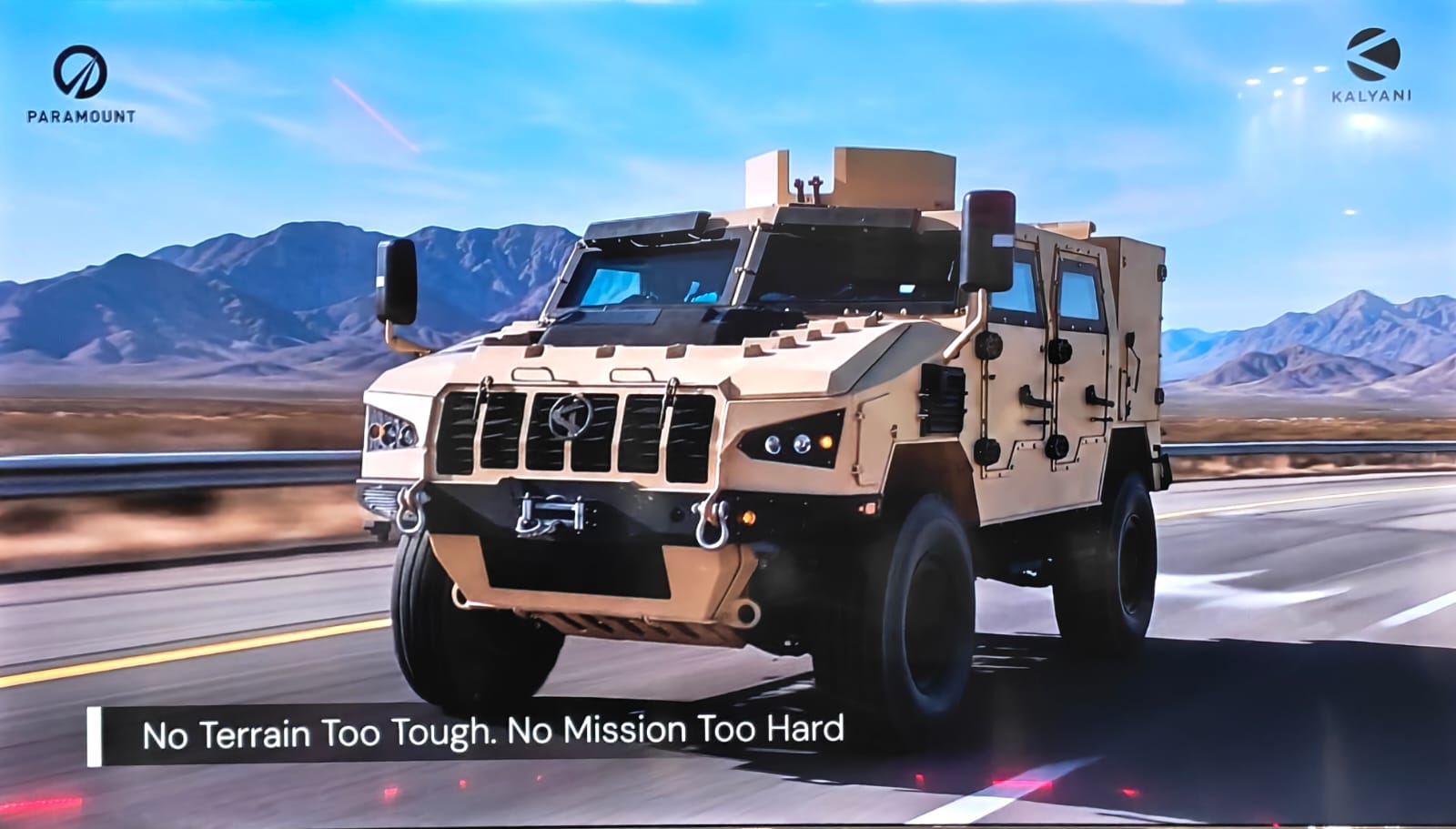
In an era defined by rapid technological change, shifting threat landscapes, and an urgent need for adaptable, sovereign defence capability, the unveiling of the Simha 4×4 by Kalyani Strategic Systems Limited (KSSL) and Paramount at Eurosatory 2026 is a timely and significant development. This next-generation Light Armoured Multi-Purpose Vehicle (LAMPV) encapsulates an ambitious synthesis of modern design philosophy, operational versatility, and industrial pragmatism. It is not merely a new entry in the crowded market of protected mobility solutions; it is a clear statement about how collaborative, engineered solutions can meet both present operational demands and the strategic industrial ambitions of partner nations.
At its core, the Simha 4×4 is a response to a pressing requirement: the armed forces today need a platform that can move quickly and safely across urban and off-road environments, perform a spectrum of missions from reconnaissance to command-and-control, and be rapidly reconfigured to reflect changing tactics and technologies. The Simha’s ab initio design—developed from first principles—enables a truly modular architecture. This allows users to tailor protection levels, payloads, electronic suites, and mission modules, affording them a vehicle that can transition from internal security duties to special operations support with minimal downtime. Such flexibility is indispensable for militaries operating in resource-constrained environments or facing unpredictable, hybrid threats.
Performance-wise, the Simha juxtaposes power and agility with layered protection. Built around NATO-qualified aggregates and “Europeanized by design” principles, the vehicle promises reliable, interoperable components and supply chains that resonate with many defence buyers’ demands for compatibility and maintainability. The focus on proven aggregates reduces technical risk, expedites certification and fielding, and simplifies maintenance and logistics—critical advantages for nations seeking durable capability with manageable lifecycle costs. Crucially, the Simha’s modular MRO-friendly architecture enables streamlined supply lines and quicker turnarounds for repairs and upgrades, yielding higher platform availability and reduced total cost of ownership.
Protection in the contemporary battlefield is not just about armour thickness; it is about system-level survivability. The Simha 4×4’s design addresses ballistic and blast threats while accommodating mission-specific add-ons—active protection systems, remote weapon stations, or advanced sighting and sensor suites—allowing forces to scale protection and lethality according to threat and mission requirements. Coupled with its mobility focus, the platform supports both urban warfare demands—where agility, situational awareness, and crew protection are paramount—and off-road reconnaissance missions that require endurance and terrain negotiating capability.
What distinguishes the Simha, beyond its technical attributes, is its strategic framing around local industrialisation and sovereign production. KSSL and Paramount have positioned the vehicle for rapid industrialisation and localisation in partner nations. This positioning aligns with contemporary defence procurement imperatives: governments increasingly seek platforms they can produce, maintain, and upgrade domestically to reduce long-term dependence on foreign supply chains and to stimulate local defence-industrial bases. By designing the Simha to be easily localised—built around globally qualified aggregates yet amenable to domestic production of key structures and systems—the partners offer a route to effective capability transfer, job creation, and sovereign sustainment. For many countries across Africa, South Asia, and elsewhere, such a model is as attractive as the vehicle’s operational performance.
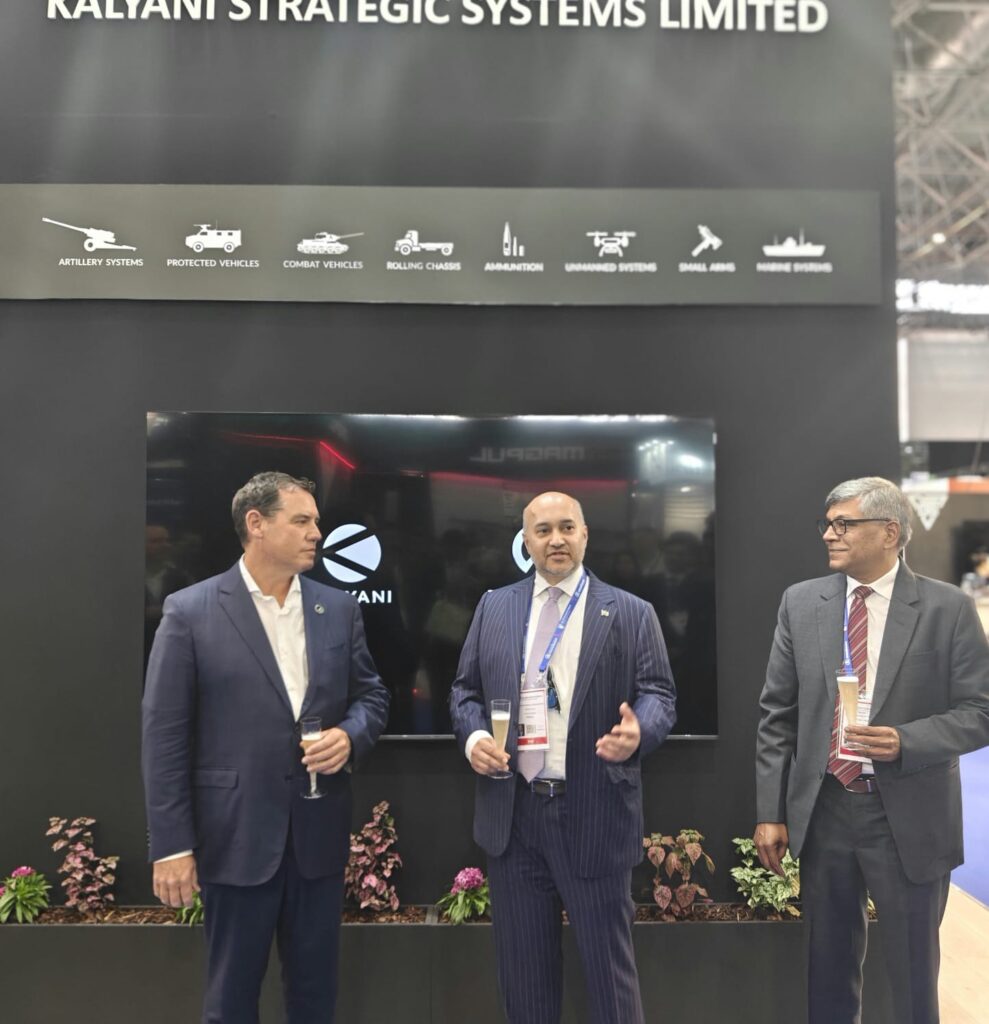
The Simha 4×4 also embodies an industrially pragmatic approach to development. Delivered in record time while prioritising rigorous validation and testing through advanced digital platforms, it reflects modern engineering practices—digital twinning, virtual verification, integrated systems testing—that reduce development risk and accelerate time-to-field. This capability is a testament to KSSL’s engineering depth and to the synergetic benefits of the KSSL–Paramount partnership. As Amit Kalyani noted, the vehicle demonstrates the maturity of India’s defence engineering and its ability to meet global expectations; Eric Ichikowitz’s remarks underscore the vehicle’s capacity to integrate emerging technologies and adapt over time.
From a doctrinal standpoint, the Simha 4×4 answers a broad set of operational needs. Reconnaissance forces require survivable mobility and modular sensor integration to collect timely intelligence while avoiding unnecessary exposure. Internal security units benefit from flexible protection levels to manage riot control, convoy security, and urban patrols. Border protection and rapid reaction forces need platforms that can be quickly re-roled and sustained in austere environments. Special operations and command-and-control detachments require mobility married to communications and situational-awareness capabilities. The Simha’s mission-configurable design makes it suitable across this spectrum, enabling militaries to standardize on a common chassis while deploying mission-specific variants—streamlining training, logistics, and fleet management.
Economically and geopolitically, the Simha’s introduction into the global market is consequential. The vehicle’s design philosophy—marrying NATO-qualified components with an open modular architecture and a localisation-friendly industrialisation pathway—makes it an attractive proposition for nations balancing capability, sovereignty, and budget constraints. It serves as an example of how strategic industrial cooperation between trusted partners can yield platforms that are both competitive and aligned with national security objectives. For KSSL, the Simha extends its land-systems portfolio and strengthens Bharat Forge Group’s global footprint; for Paramount, the collaboration expands its reach and reinforces its role in delivering adaptable, export-oriented defence solutions.
The Simha 4×4’s potential extends beyond immediate sales. Adoption by partner nations could catalyse broader technology transfer, skill development, and second-tier supplier ecosystems, fostering longer-term defence-industrial growth. The platform’s modular architecture also future-proofs investments: as new sensors, communication systems, lethality options, and protection technologies emerge, they can be integrated into existing fleets, protecting the value of initial procurement and making the platform a living system rather than a static product.
Of course, success in the global market will hinge on more than engineering merits. Competing effectively will require demonstrable field performance, competitive pricing, robust after-sales support, and credible commitments to local industrial participation. The partners’ emphasis on NATO qualifications, proven aggregates, and rapid industrialisation pathways addresses many of these imperatives. Still, operational deployments and user feedback will ultimately determine the vehicle’s reputation and market traction.
The Simha 4×4 represents a compelling convergence of capability, modularity, and industrial strategy. It showcases how modern defence platforms must be conceived not only as tactical enablers but as instruments of sovereign industrial policy and international partnership. By delivering a versatile, modular, and localisation-friendly vehicle, KSSL and Paramount have introduced a platform that is poised to meet the diverse needs of militaries operating in complex, multi-domain environments. If field performance and industrial follow-through align with the promise demonstrated at Eurosatory 2026, the Simha 4×4 could become a benchmark for next-generation light-armoured multi-purpose vehicles—propelling both the technology and the industry that underpin national defence capabilities into a new, more resilient era.