Chaitali Bag
India stands on the verge of a strategic transformation that may prove to be the most consequential reorganization of its armed forces since 1947. Operation Tiranga, the move to integrated Joint Theatre Commands (JTCs), is no longer an abstract reform debate but an actionable blueprint awaiting final sign-off by the Cabinet Committee on Security. The ambition is bold: replace a century-old habit of service silos with theatre-focused commands that separate force generation from force application, thereby forging a military better suited for multi-domain, high-intensity conflict and for projecting power across the Indian Ocean.
Why this matters now is obvious. India faces the simultaneous challenge of a two-front security environment: a persistent, politico-military rivalry with Pakistan to the west and a protracted, technically demanding standoff with China along the high-altitude LAC to the north. Beyond the subcontinent, India’s strategic interests and responsibilities are expanding across the Indian Ocean Region, where maritime security, supply lines, and regional influence are increasingly contested. The current structure—17 single-service commands (seven Army, seven Air Force, three Naval)- was built for different eras and episodic coordination. The theatre model reframes the problem: empower integrated commands to apply forces in a theatre while allowing services to concentrate on raising, training, and sustaining those forces. That intellectual pivot is widely accepted across the services; the debate has always been about design, scope, and sequencing rather than principle.
Operation Tiranga compresses the existing architecture into three theatre commands: a Western Theatre Command (Jaipur) focused on Pakistan; a Northern Theatre Command (Lucknow) tasked with the fraught, infrastructure-poor, high-altitude LAC against China; and a Maritime Theatre Command (Thiruvananthapuram) responsible for the Indian Ocean Region. Each command reflects distinct operational realities. The Western command must coordinate swift, land-dominant operations with decisive air support. The Northern command must integrate specialised mountain warfare units, advanced surveillance, and logistics within an unforgiving terrain. The Maritime command must weld naval power with air, amphibious and expeditionary capabilities to protect sea lines of communication and deter coercion in a vast oceanic theater.
The potential benefits are compelling. Theatre commands promise faster decision cycles, reduced redundancy, optimized allocation of scarce capabilities (such as airlift, ISR assets, and precision fires), and clearer lines of responsibility during crises. They can foster jointness in planning, training, and operations, conditions essential for modern warfare where cyber, space, air, land and sea domains interlock. For India, a coherent theatre construct also aligns force posture with geopolitical priorities: deter immediate threats on land while enabling maritime power projection and regional influence.
Yet beneath the promise lies the hard work of institutional transformation. Operation Tiranga is as much a political and bureaucratic enterprise as it is a doctrinal one. The compression from 17 commands to three will require painstaking reallocation of assets, clarification of command relationships, and new legal and administrative frameworks. Services must recalibrate careers, postings, and promotion pathways so that talent flows into joint billets rather than being penalized by service-centric career tracks. Doctrinal compromise is inevitable: services must cede degrees of autonomy while retaining the authority to generate and sustain highly specialised capabilities. That cultural shift, trusting commanders outside one’s own service to employ and prioritize assets, will test professional identities built over decades.
Resource constraints will further complicate implementation. Integrated commands demand interoperable systems, joint logistics, shared communications, and secure C4ISR architectures; these require sustained capital investment, procurement reforms, and a harmonized industrial base. In the near term, planners will have to optimize existing resources, prioritize addressing capability gaps, and sequence reforms to ensure readiness is not degraded during the transition. Successful theaterization will also depend on wargaming, joint exercises, and a learning culture that converts early missteps into institutional learning rather than recrimination.
Institutional friction is inevitable but manageable. The Army, Navy, and Air Force have long histories, doctrines, and pride; any plan that reshapes roles and budgets invites resistance. The key to overcoming this lies in transparent political leadership, credible incentives for joint careers, and quick operational wins that validate the theatre concept. Equally important is building a robust legal and policy framework that delineates responsibilities between civilian authorities, the CCS, service chiefs, and theatre commanders, especially for escalation management and rules of engagement in rapidly evolving crises.
Funding the Transformation: A Costly Necessity
India’s push to reconfigure its military into theatre commands is an ambitious, expensive and essential undertaking. The Ministry of Defence has increased capital expenditure by roughly 24% to underwrite the scale of change: building new headquarters, relocating and redistributing assets, integrating communications and intelligence systems, and developing joint logistics networks. Framed as a pillar of the Viksit Bharat vision, the theatre command system promises a more self-reliant, responsive and decisive military posture. But money alone cannot speed the work: analysts warn that full operationalization could take up to 24 months after Cabinet Committee on Security approval, even with minimal delays.
Inside Operation Tiranga: Process and Progress
Operation Tiranga represents a bold, carefully wrought step toward remaking India’s military architecture. Far from being a sudden mandate from the top, the development of theatre commands has been a consultative, iterative enterprise, one that sought to blend rigorous operational thinking with institutional sensitivity. The resulting blueprint is notable for its broad-based deliberation, practical two-layer consensus, and an ambitious reimagining of how the services cooperate under a unified strategic framework.
A foundation of broad-based deliberation underpins everything. Six dedicated teams examined different facets of the change, and three structural systems were studied to assess trade-offs. The Chiefs of Staff Committee (COSC) played a central role, and there was extensive involvement of mid- and senior-level officers across the Army, Navy, and Air Force. This broad engagement ensured that the concept was stress-tested across operational, logistical, and doctrinal dimensions, producing a plan that reflects both ground realities and strategic intent.
That inclusive process produced two clear layers of agreement. First, there is conceptual consensus: all three services concur on the imperative for theatre commands and the logic of separating force generation from force application. This unanimity is a major achievement—establishing the political and professional mandate for change. Second, differences remain over implementation: geographic boundaries, exact locations of headquarters, and the sequencing of rollouts have sparked robust debates. Crucially, these are viewed as manageable, pragmatic disputes that are expected to be refined through phased implementation rather than as insurmountable barriers.
At the center of the new architecture stands the Chief of Defence Staff (CDS). The CDS is envisioned as the critical node bridging service headquarters and theatre commanders—tasked with allocating shared assets (notably air power), coordinating between theatres, prioritizing strategic objectives across fronts, and overseeing joint operations. This role signals a decisive shift from service-centric command toward centralized military leadership, an evolution many defence thinkers have regarded as essential, though politically and institutionally sensitive.
Theatre commands are conceived to be far more than battlefield coordination mechanisms; they are intended to integrate the entire operational ecosystem. Each theatre will feature joint headquarters that unify operations planning, multi-source intelligence analysis, logistics coordination, communications, and intelligence fusion. Rather than maintaining parallel intelligence streams, theatre commands will centralize inputs from military, air, and naval intelligence, thereby reducing duplication and accelerating decision-making. Similarly, logistics integration, shared supply chains, maintenance regimes, and transportation networks promise greater efficiency and operational reach, even as they remain among the most complex implementation challenges ahead.
Recognizing practical constraints, Operation Tiranga adopts a transitional architecture in which existing service commands do not vanish overnight. Instead, a hybrid model will operate: operational control will flow to theatre commanders, while administrative control will remain with service headquarters. This dual-reporting arrangement balances continuity and reform, allowing forces to operate under an integrated framework while preserving the essential institutional capacities of each service during the transition.
Finally, the plan clears up a common confusion between theatre commands and Integrated Battle Groups (IBGs). IBGs are tactical, primarily Army-focused formations engineered for rapid offensive action; theatre commands are strategic, cross-service structures that provide the framework within which IBGs and other forces operate. In short, IBGs function inside theatre commands—they are complementary, not interchangeable.
The Real Challenges Ahead
There is cause for optimism: India has taken bold steps toward modernizing its military command structure, and the blueprint for integrated theatre commands Operation Tiranga, signals ambition, intent, and a willingness to learn from global peers. Yet enthusiasm must be tempered by realism. Translating a visionary design into operational capability will require sustained attention to persistent structural and operational hurdles.
Resource Constraints
At the heart of the transition lies a simple fact: aspirations require resources. The Indian Air Force’s well-publicized squadron deficit is emblematic of deeper shortfalls that will frustrate theatre ambitions unless addressed. Surveillance assets remain limited relative to the demands of distributed, multi-domain operations; precision strike capabilities must be expanded and networked to be effective across theatres; and logistics infrastructure—rail, roads, forward bases, fuel and munitions depots must be upgraded to support faster, sustained operations. Without persistent investment and prioritization, theatre commands risk becoming organizational shells rather than combat-ready formations.
Inter-Service Culture
A shift to joint, theatre-centric operations is as much cultural as it is structural. Decades of ingrained service-specific traditions, practices and institutional incentives do not vanish with the stroke of a pen. True jointness requires active cultural alignment: deliberate trust-building measures, shared education and training, cross-service postings, and the co-creation of doctrine. Only when personnel internalize shared goals and the benefits of integrated operations will the theatres realize their potential.
Rank & Command Equivalence
Who commands in a joint environment is not merely a bureaucratic question; it is a sensitive matter of professional pride, career trajectories and operational clarity. Determining rank and authority within theatre commands, especially when officers from navy, army, and air force backgrounds meet, will require carefully calibrated policies that uphold operational effectiveness while respecting service equities. Clear protocols for command relationships and dispute resolution are essential to avoid paralysis in crises.
Infrastructure Development
Building the physical backbone of theatre commands is a monumental task. New headquarters, secure communication networks, integrated command-and-control nodes and theatre-specific logistics hubs must be established across three strategic theatres. Each element—site selection, construction, cyber and physical security, redundancy and sustainment—carries cost, time and political implications. Effective phasing and milestone-driven implementation will be critical to prevent capability gaps during the transition.
Doctrinal Evolution
A coherent, joint warfighting doctrine is the intellectual framework that will make theatre commands operationally meaningful. Crafting doctrine that aligns with theatre responsibilities, integrates multi-domain effects, and is adaptable to evolving technologies and adversary tactics will take years of iteration, exercises and real-world feedback. Doctrine development must be institutionalized, with mechanisms for rapid learning and revision built in.
Strategic Implications: Beyond the Battlefield
Operation Tiranga is not merely an administrative reform; it reshapes India’s strategic posture. Integrated commands enhance deterrence by signalling the ability to conduct coordinated, multi-domain operations simultaneously on India’s western and eastern fronts—an important message for both Pakistan and China. The Maritime Theatre Command reflects a deliberate maritime ambition: to project influence across the Indian Ocean and protect sea lines of communication vital to India’s economic and strategic interests. Faster, flatter decision-making within theatres promises more timely responses to crises. In contrast, India’s adoption of theatre commands places it among a global cohort modernizing towards joint warfighting—an evolution with diplomatic and defence-technology implications.
The Final Mile: CCS Approval & Beyond
Approval by the Cabinet Committee on Security would be a pivotal milestone, but it must be seen as a beginning, not an end. Implementation is where the hardest work begins: sequencing capability development, resolving inter-service tensions, funding modernization, and embedding new doctrine through training and operations. As a senior officer aptly observed in consultations: “Designing the structure is the easy part. Making it work is the real challenge.” That aphorism captures the path ahead, a long, complex, and necessary journey requiring resources, patience, political will and institutional humility.
Operation Tiranga: Execution as the Crucible of Transformation
Operation Tiranga is a bold pivot in India’s military journey—an audacious effort to reshape force posture, streamline command, and prepare the nation for the complexities of modern and future battlefields. It aims to turn decades of fragmented practice into a unified, agile instrument of national power. Yet the real test won’t be the slogan or the tidy math of going from 17 commands to 3; it will be the grit of implementation.
This is more than an administrative change. It redefines how India plans and fights—touching doctrine, training, procurement, logistics, intelligence sharing, and command culture. Beating institutional inertia—old habits, parochial loyalties, and entrenched processes—will take imaginative leaders who build cross-service mindsets, redesign careers for jointness, and reward cooperation over silos.
Strategic clarity is essential. A lean command structure must pair with a clear vision that sets roles, priorities, and thresholds of action. Without that, efficiency on paper risks confusion in a crisis. With clarity, the three-command model will expedite decision-making, sharpen theatre coherence, and strengthen deterrence across the conflict spectrum.
Resource management will be the crucible. Integration means reallocating matériel, synchronizing procurement, fielding interoperable platforms, and forging resilient joint logistics—costly and politically sensitive moves. Smart prioritization—ISR, cyber and space, joint transport and sustainment—and investment in human capital through joint education and exercises will turn reorganization into real combat power.
Finally, political will is the catalyst. Transforming structures at this scale requires steadfast, courageous backing from the top—ready to arbitrate hard choices, weather pushback, and ensure funding and legal support. Political resolve will align strategy with operational reality and send a clear signal that India is serious about modernizing its deterrent and warfighting edge.
There will be friction. Transitions of this magnitude generate ambiguity, gaps, and temporary dislocations. That is not a reason to baulk; it is an argument for careful sequencing, rigorous testing, and incremental institutional learning. Pilot exercises, phased integration, transparent metrics, and honest after-action reviews will convert friction into feedback. In this way, failures become data points for refinement rather than proof of doom.
At its heart, Operation Tiranga is about something larger than structural reform: it is about forging a unified ethos—three services becoming a single, cohesive fighting force capable of rapid, integrated response. The tricolour lends the operation its name and symbolism, but the true flag under which history will judge this effort is operational effectiveness. Will India’s armed forces be faster, smarter, and more lethal because of this change? Will command cohesion translate into battlefield advantage? Those are the measures that will define the legacy.
Enthusiasm for the blueprint is deserved: it recognizes the demands of modern warfare and sets India on a path toward coherence and readiness. But enthusiasm must be matched by relentless execution. If institutional adaptability, strategic clarity, disciplined resource management, and unwavering political will converge, Operation Tiranga can be more than a reform; it can be a transformation that secures India’s strategic position for generations. Execution is the crucible in which that promise will either be fulfilled or falter.
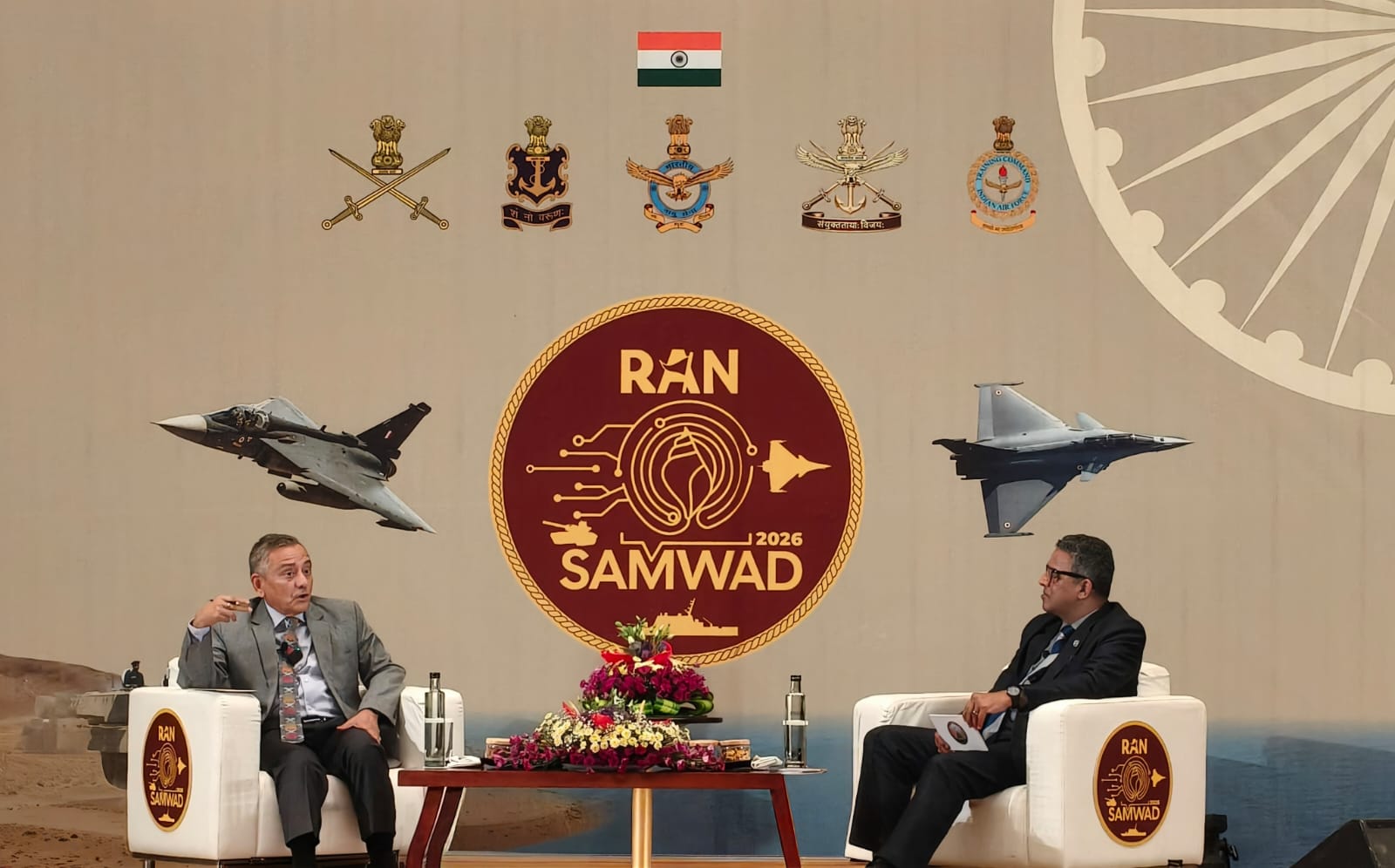
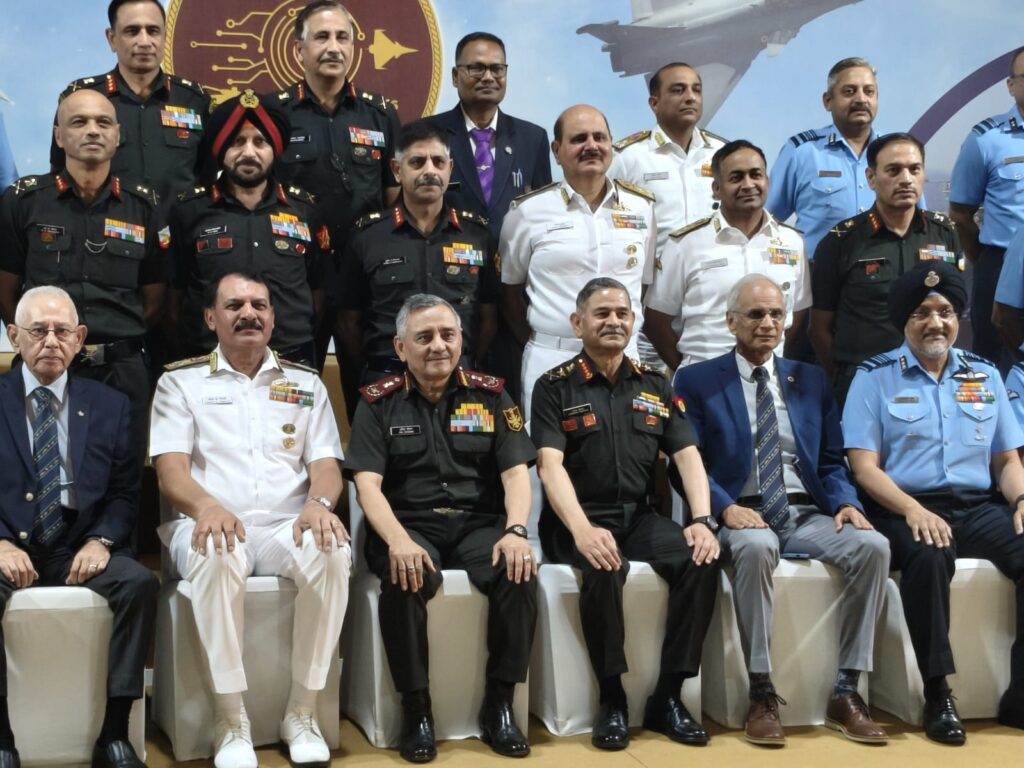
Most inputs for the article were collected during the two-day Ran Samwad 2026.