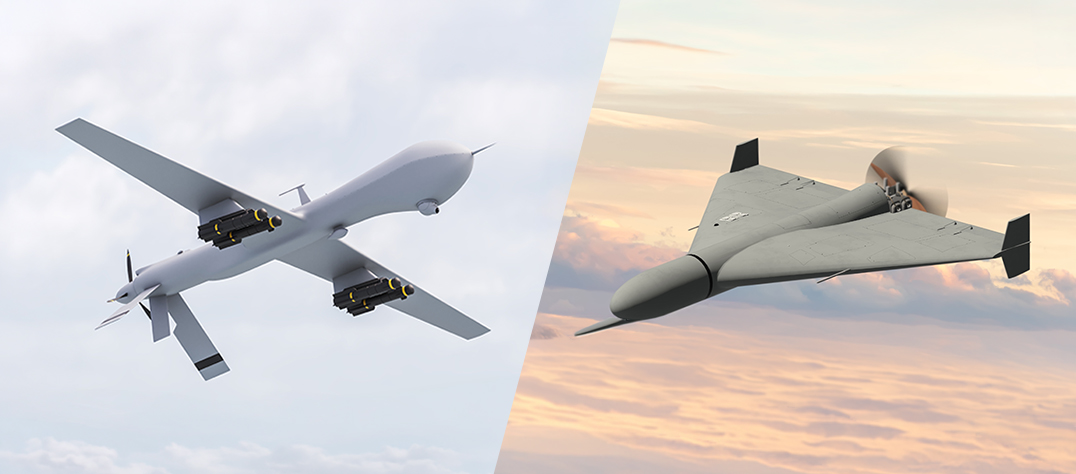
Will Drones Replace All Other Weapons Systems In The 21st Century?
Sanjay Soni

The question I am increasingly asked these days is this: Will drones replace every other weapons system in the 21st century?
Will drones make existing platforms such as artillery, missiles, fighter aircraft, mortars, and conventional ammunition redundant?
My company, Hughes Precision, manufactures small-caliber ammunition, which is supplied to the Indian armed forces and exported to several military forces worldwide. Many people wonder if the business of manufacturing ammunition, artillery shells, mortars, etc., is going to become extinct very soon, as wars are mainly fought through drones. Especially after Operation Sindoor, these concerns have increased as the war, which lasted 12 days, was fought with long-range drones and missiles.
A well-known fact in warfare is that you cannot capture or hold territory solely with air power. That is very evident in the Ukraine-Russia war, which is in its 4th year. Both sides have suffered huge casualties, despite extensively using drones and UAVs of various capabilities. In fact, drone operators themselves faced a high risk of casualties.
Let us study the limitations of drones in the modern warfare theater in some scenarios:
FPV (First Person View) Drones vs Infantry: A Long Arm with Major Disadvantages

FPV Drone Operator
It’s no secret that drones have long ceased to be a threat solely to military equipment. They are used, and much more actively, against infantry – sometimes so much so that the number of drone sorties in a given section of the front exceeds the number of shots fired by conventional weapons like artillery.
In essence, drones have emerged as a “long arm” on the battlefield, capable of striking enemy personnel at ranges and in positions that conventional projectiles often cannot reach. This is undisputable, as the daily stream of online battlefield footage makes the lethal impact of drones unmistakably clear.
As often happens with any “game-changing” weapon system, the rise of FPV drones has also created its fair share of myths. Some commentators now describe them in exaggerated terms – as highly accurate, extremely effective weapons that can replace conventional systems such as barrel artillery.
The argument is usually straightforward – deploy a group of drone operators close to the line of contact and let them engage infantry targets directly. You could accept that view at face value. Or you could look at it from a slightly different angle and recognize that FPV drones used against infantry are not a complete replacement for traditional weapons, but simply one of the newer tools of modern warfare – one that comes with serious drawbacks.
Drone operators are an expensive consumable.
Perhaps we should start by saying that FPV drones cannot effectively replace artillery. And you don’t need to be a military genius to understand the obvious. An artillery shell, in terms of power, particularly in terms of penetration, explosive, and fragmentation effects, will surpass any drone with a small munition strapped onto its “fuselage.”
Yes, drones have some advantages—the range of some models exceeds that of conventional artillery, and their controllability allows them to fly into hard-to-reach places. However, even several hundred drones won’t be able to raze a stronghold as effectively as a thorough artillery barrage with good aiming and experienced gunners.
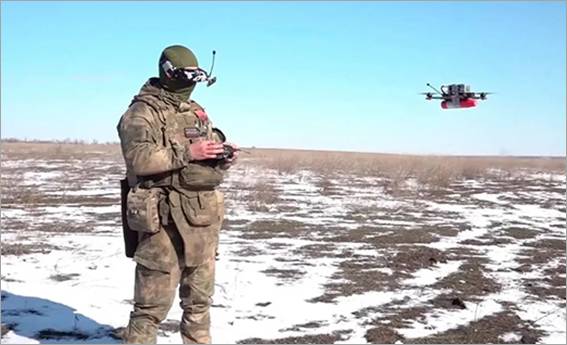
First Person View (FPV) Drone and Operator
Moreover, the use of drones as a “replacement” or “supplement” to artillery leads to significant losses among their operators.
Why? After all, to the average person, a drone pilot sits in a completely safe place – like a bunker, controlling an unmanned vehicle from a vast distance, without risking retaliation from the enemy. Or, at worst, he wanders endlessly from place to place, launching drones and always disappearing from the enemy’s line of sight.
This means these aren’t slow self-propelled artillery units or, God forbid, towed artillery. The chance of being caught in return fire is minimal. Outside active combat, elusive lone operators and drone pilots entrenched far from the line of contact face comparatively less danger.
However, as battlefield experience shows, the number of drone operators positioned near the line of contact during active combat operations rises sharply, to provide continuous fire support to frontline troops. This also leads to a growing number of UAV control posts near the line of battle – camouflaged shelters equipped with communications systems, drone stocks, power supplies, and other operational support equipment for drone teams.

Ukrainian Armed Forces UAV control center
These positions are often detected by enemy reconnaissance assets, including reconnaissance UAVs. Once identified, they can be targeted by any suitable weapon system within range, making drone operators highly vulnerable. For example, towards the end of 2024, official reports from the area of operations involving Russia’s “North” force group claimed that Ukrainian forces were losing up to ten UAV operators per day.
In fact, the Ukrainians were losing several combat units per day – units capable of launching dozens of drones daily. Each drone operator killed or wounded, of course, was nothing compared to the loss of a self-propelled artillery unit or towed howitzer. Still, the effectiveness of fire support for the troops was clearly diminished by this mowing down of drone personnel.
Of course, the loss of a drone operator isn’t like the loss of a self-propelled gun or howitzer. However, it has a significant impact on literally everything. This includes the financial costs of training a new operator, as well as the long timeline from induction and training to entry into active service. And finally, it reduces the effectiveness of the unmanned systems unit, since even five newcomers can’t replace an experienced drone operator in terms of effectiveness.
Low efficiency of FPV drones
The next point is the high accuracy of FPV drones as weapons, operating on the take-off-and-hit-the-target principle. This theme is actively fueled by heaps of drone videos successfully hitting infantry and targets of any kind, for that matter. After all, no one can say how many drones were used to hit the target.
The situation is actually very murky.
Firstly, most FPV drones are based on civilian technology. These range from consumer-grade items found on AliExpress to home-brewed or home-made stuff. This means there are hardly any military standards regulating product quality.
This does not mean the military is buying blind or receiving unreliable equipment. Most UAVs of this type are currently sourced from reputable manufacturers, so it is not a matter of chance.
However, harsh field storage conditions – extreme heat or cold, humidity, vibration, dust, and rough handling – can significantly affect the performance of batteries, electric motors, electronics, and other components that were not originally designed for prolonged military use.
The same concern applies to drone munitions, many of which are improvised to varying degrees. In some cases, the entire explosive charge is assembled by hand. In others, a homemade fuse or release mechanism is attached to factory-produced ordnance.
Secondly, FPV drones are highly sensitive to weather conditions. Poor flying conditions can directly limit their effectiveness or ground them altogether.
Strong winds, for example, can make FPV operations extremely difficult. Dense fog creates another serious limitation, as even thermal imaging systems cannot reliably see through it.
Thirdly, an FPV drone could lose contact with the operator. It could crash into anti-drone barriers or come under infantry fire. Furthermore, the drone could ultimately crash somewhere off target due to control errors. Anything can happen.
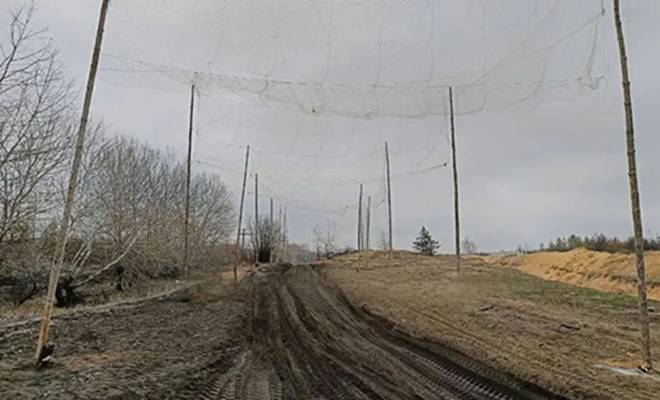
Anti-drone barriers
All these factors contribute to the extremely low efficiency of FPV systems with various payloads.
These issues aren’t widely discussed, making statistics extremely difficult to find. However, the commander of the Ukrainian Unmanned Systems Forces offered the following insight.
“The effectiveness of FPV drones in different units ranges from 20 to 40%. I’m not even talking about cases where a drone lands and hits an unknown target. Only when it lands, hits the target, and is recorded can it be included in relevant statistics. The electronics might malfunction, and the drone might not explode; it might detonate en route. A significant percentage of drones are suppressed by the enemy using various means, such as EW. Some are shot down by small arms fire. Therefore, the efficiency of drones in the Ukrainian Armed Forces and among Russians is 20-40%…”
Of course, one shouldn’t completely trust this data. But overall, even when using FPV over fiber optics, which is resistant to electronic warfare, the statistics are unlikely to be much better.
One drone is often one soldier.
Another factor determining the effectiveness of FPV drones against infantry is the extremely small area of effect of their ammunition. This isn’t like an artillery shell, which, if it hits a group of soldiers, would leave behind several dead and many more seriously wounded. In practical terms, the battlefield equation is – one drone equals one dead soldier.
In all likelihood, this doesn’t apply to situations where a drone flies into a confined space with enemy personnel. However, in open terrain, and especially in trenches, this is often not the case. Here’s a quote from experts at KNDS, a Franco-German manufacturer of military equipment:
“FPV drones compete with 120mm mortar ammunition, but significantly less so with 105mm. Mortar fire remains the preferred option for trench suppression missions due to its steep terminal trajectory. A forward observer can call in a linear fire mission, expending 20 rounds against an enemy who is oblivious to the fire. Using FPV will require only the required number of rounds against each enemy infantryman clearly visible from the drone…”
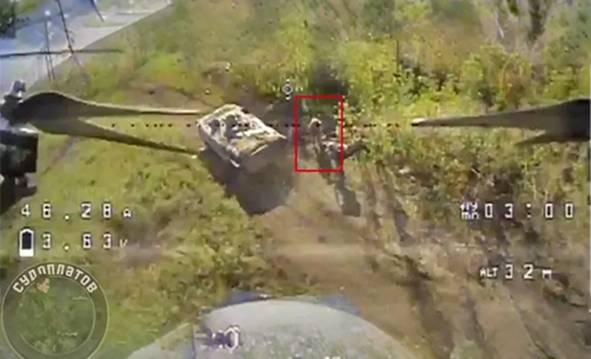
A UAV Operator Targeting infantrymen
This is understandable: FPV drones cannot carry heavy munitions capable of producing the large, lethal fragmentation patterns associated with artillery shells or other heavier weapons. Homemade drone munitions often do include fragmentation material, ranging from ball bearings to coins, but their overall destructive radius remains limited. This helps explain why people near a FPV drone strike often suffer minor injuries rather than fatal or severe wounds.
This was discussed in the Military Medical Journal, the official publication of the Russian Ministry of Defense. Experts examined periods of active hostilities in June – October 2023 and a period of calm from October 2023 to January 2024.
It turned out predictably that during the lull, when there were no active offensives, the majority of wounds suffered by Russian soldiers (from a sample of 5,813 soldiers) came from drones deployed to drop munitions, as well as kamikaze drones. These drones accounted for 75.5% of all wounds, while artillery accounted for only 20.5%.
Drone-related injuries are generally not critical to health or life. Between 84.2% and 100% of injuries from all locations in a sample of 1147 wounded were rated as grades 1 and 2 on the AIS (Abbreviated Injury Scale), where 1 is minor and 5 is critical. Some allowance can be made for the fact that soldiers are more likely to wear protective equipment, such as body armour and helmets, in cold weather, but overall, the situation is quite clear.
The role of UAVs in light of the effectiveness of Iran and Ukraine’s air defences
Unfortunately, today we often encounter erroneous assumptions about the advent of the UAV era in military affairs. In short, the logic is this: Air Defence Forces have demonstrated that combat aviation is incapable of penetrating modern air defences, and therefore, combat aviation is obsolete. Many ground-target destruction missions previously assigned to aircraft are now performed by drones, which have become widely used in both the Russian and Ukrainian Armed Forces. Iran, while lacking air superiority, has nevertheless managed to force nations with immeasurably superior air power to negotiate. Moreover, it achieved this by using missile and drone strikes, which US air defences proved incapable of countering.
Therefore, the conclusion that a new wonder weapon has emerged – His Majesty the UAV, capable of defeating any opponent – is fundamentally flawed.
Drones have certainly changed the battlefield, but they have not overturned every rule of warfare. Their effectiveness depends on several practical factors, many of which impose serious limitations.
Let us examine each of these points in greater detail.
Point 1: The Air Defence Forces have proven that air power – whether fighter aircraft or drones – alone cannot achieve the objectives that the planners of a conflict would have laid out. Air power needs to be complemented with artillery, missiles and ground troops.
Reality: Let us study the Israel incursion into Lebanon in March 2026 to cleanse Southern Lebanon of the threat of Hezbollah. The Israeli Air Force conducted more than 700 sorties and bombed nearly everything that could be bombed in Southern Lebanon. However, Hezbollah continued to retaliate by sending rockets regularly into Northern Israeli territories, forcing the evacuation of a large swath of Northern Israel. Finally, the IDF had to send in ground troops to fight Hezbollah. The air campaign using fighter jets and drones alone was not able to meet the objective of the IDF to clear Southern Lebanon of Hezbollah.
Take a look at the war between Ukraine and Russia. Both sides have used ground troops extensively since the beginning of the conflict in February 2022. Russia and Ukraine are also using thousands of drones to help their infantry and artillery in achieving their objectives. The Russians would like to take Donbas, while the Ukrainians would like to push the Russians back to their 2022 positions. What will decide the outcome is not which side has more drones, but which side can recruit and replenish its army to compensate for personnel lost in combat.
Moreover, the Iranian experience has demonstrated that air superiority is achieved only with appropriate equipment and tactics. Iran’s air defences are excellent at shooting down drones, but they have proven completely powerless against manned fighter and bomber aircraft, reconnaissance aircraft, electronic warfare, AWACS, and so on.
Point 2: Modern air defences cannot effectively combat UAVs.
Reality: This is absolutely correct. The reason is that anti-UAV missiles are several times more expensive than the UAVs themselves. With economies of scale working in their favour, drone attacks can be launched in large numbers and at relatively low cost. When used this way, they can saturate and overwhelm the capacity of almost any air-defence system.
Point 3: UAVs are capable of reconnaissance and ground-attack missions that were previously handled by tactical aircraft.
Reality: This is a flawed conclusion. Despite deploying large numbers of UAVs, neither the Ukrainian nor Russian armed forces have demonstrated anything comparable to the performance of American combat aircraft during Operation Desert Storm.
In that campaign, U.S. air power effectively isolated the battlefield, cut into supply lines, and severely limited the ability of Iraqi formations to move or manoeuvre.
FPV drones and tactical UAVs can be highly effective in specific roles, especially at the tactical level. However, they have not yet demonstrated the ability to dominate, isolate, and reshape an entire battlespace on the same scale as a large, coordinated air campaign.
Further to the rear, the Ukrainian Armed Forces easily move units, up to several brigades, and redeploy them. The Russian Armed Forces command is often unaware of the enemy’s concentration of forces, which allows the Ukrainian Armed Forces to periodically launch surprise counterattacks.
Drone Swarm
Point 4: Air superiority is irrelevant, or the US failed to achieve air superiority because it failed to “bomb” Iran out of the war. The US objectives in the operation against Iran were not achieved.
Reality: The challenges the U.S. faces in the war with Iran are not due to Iran’s air defences or air superiority, but to inadequate preparation for the conflict.
To be fair, the U.S. could have been misled by Iran’s willingness to make peace in the twelve-day war, immediately after Israel and the U.S. expressed their desire to cease hostilities, or by Iran’s entirely perfunctory military response. In 2025, Iran attacked a U.S. base not to harm the Americans, but to save face. And the U.S. understood this perfectly well.
But in 2026, the Iranians took up the war in earnest. And it immediately became clear that the forces concentrated against Iran were clearly insufficient to force the Iranian leadership to peace.
During Operation Desert Storm against Iraq, the U.S. and its allies deployed roughly 2,800 aircraft. By contrast, in the war with Iran, a country nearly four times the size of Iraq, only around 500 U.S. and Israeli aircraft were reportedly deployed.
Moreover, in Desert Storm, the Americans had no intention of winning the war solely through air power. In other words, the multinational air force wasn’t supposed to force Saddam Hussein to peace on its own. Its primary purpose was to weaken Iraqi forces enough to allow the ground forces to achieve their objectives with minimal losses.
An inadequate goal and a completely insufficient force structure – that’s why the U.S. and Israeli air forces failed to force Iran to peace, despite establishing air superiority.
Point 5: In confronting Iran with its cheap UAVs, the Americans inflicted enormous damage on the U.S. Air Force. The cost of the destroyed American aircraft exceeded a billion dollars. This is an effective asymmetric response using cheap, deadly UAVs!
Reality: Of course, Iran’s UAVs inflicted serious damage, but everything is relative. Israel estimates the cost of a war with Iran in 2026 at $11.52 billion. The Americans are unlikely to have spent more. Iran, however, estimated the damage from the US and Israeli air strikes at $270 billion, although even this figure is crude and preliminary.
Undoubtedly, UAVs are very cost-effective. Still, it cannot be ignored that Iran, waging a war with missiles and UAVs against overwhelming air power, has suffered much more damage than it managed to inflict on the aggressors.
Lightweight Reconnaissance Drone
Conclusion
UAVs have undoubtedly become a new word in military art. Armies incapable of using UAVs en masse can no longer be considered modern. To date, no effective countermeasures have been found against either battlefield UAVs or Geranium-style unmanned aerial vehicles targeting the enemy’s rear.
However, UAVs cannot replace cruise missiles, manned aircraft, artillery, armoured vehicles, etc. They complement all of the above superbly and will undoubtedly be the decisive factor in a clash with an enemy possessing the same weapons but lacking UAVs
Final World
First and foremost, FPV drones are a reality that cannot be ignored.
No matter how much criticism they receive, they are actively used, and they have clearly caused the deaths and serious injuries of thousands of soldiers on both sides of this conflict. In fact, they have also destroyed numerous armoured vehicles, transport vehicles, and other objects.
However, they shouldn’t be deified. They’re a “crutch” born of special military operations, and they have terrible shortcomings. They’re incapable of replacing any weapon and, while new, are essentially a run-of-the-mill and mediocre combat tool.
Sanjay Soni is the Managing Director of Hughes Precision Manufacturing Pvt. Ltd., India’s first small caliber manufacturer in the private sector. An MBA from the Indian Institute of Management, Bangalore, he has been involved in the ammunition industry in India and abroad for the past decade.