Chaitali Bag
As global aerospace and defence dynamics evolve amid shifting geopolitical realities, India is emerging as a pivotal force shaping the sector’s future, driven by its focus on self-reliance, technological capability, and strategic partnerships. Against this backdrop, Boeing’s long-standing engagement with India offers a compelling lens into how global OEMs are aligning with national priorities while advancing their own global value chains.
In an exclusive conversation with Indian Aerospace & Defence, Nikhil Joshi, Managing Director of Boeing Defence India, outlines the company’s vision for a “long haul” commitment, one that goes beyond immediate business goals to encompass capability building, co-development, and deep integration into India’s aerospace ecosystem. From expanding indigenous manufacturing and MRO capabilities to strengthening engineering innovation and supply chain partnerships, the discussion highlights how Boeing is positioning India not only as a key market but as a strategic hub for global aerospace advancement.
The interview also explores critical themes, including the transition from component manufacturing to platform-level capabilities, the potential for India to emerge as a regional sustainment hub, and the evolving landscape of U.S.-India defence cooperation. Together, these insights underscore a broader narrative: India’s journey from a participant in global supply chains to a driver of next-generation aerospace and defence solutions.
- You’ve emphasized Boeing’s long-term commitment to India despite geopolitical and tariff challenges. What does “long haul” concretely mean for Boeing Defence India over the next decade?
- At Boeing, our century‑long legacy demonstrates resilience across global shifts. In India, with a presence of over eight decades, we’ve built enduring partnerships that reflect the same adaptability. Together, these legacies underscore why our commitment to India is long-term, multi-dimensional, and focused on supporting the growth of the aerospace and defence sector – building capability, resilience, and self-reliance, while positioning India as a global hub for sustainment, innovation, and exports. Boeing Defence India (BDI), established in 2017, is dedicated to strengthening the country’s defence capabilities, aligning with the Government of India’s “Make in India” initiative. BDI leverages Boeing’s global technical expertise and product portfolio to provide crucial support to the Indian Armed Forces. Over the next decade, this commitment would mean:
- Mission readiness and sustainment: The Boeing fleets operated by the Indian armed forces, P‑8I, Apache, Chinook, and C‑17, are central to India’s defence capability. We continue to expand in‑country maintenance, repair, and overhaul (MRO) capabilities, both organically and in partnership with the Indian MRO ecosystem. In 2023, we partnered with Airworks to undertake depot-level maintenance of the P8I fleet, and later in 2024, we partnered with AI Engineering Services Limited to overhaul the Indian Navy’s P‑8I landing gear locally. Boeing today has the largest MRO partner network among foreign OEMs in India, covering both defence and civil aviation.
- Co‑development and co‑production: Our joint venture, Tata Boeing Aerospace Ltd. (TBAL), in Hyderabad, has delivered over 300 Apache fuselages for armed forces worldwide, including those for the Indian Army, and expanded into manufacturing 737 vertical fins. In 2024, the U.S. White House and the Indian Prime Minister’s Office announced a teaming agreement between Liquid Robotics (a Boeing company) and Sagar Defence Engineering to co-develop and co-produce Wave Glider Uncrewed Surface Vehicle (USV) systems. This partnership was highlighted as a key example of the expanding U.S.-India Defence Industrial Cooperation Roadmap and the “Make in India” initiative, aiming to enhance Undersea Domain Awareness (UDA) for both nations. For BDI, this means deeper partnerships, scaling indigenous capability, and ensuring India is a driver of next‑generation aerospace and defence solutions.
- Engineering and innovation: Boeing’s manufacturing and engineering presence in the U.S. remains a cornerstone of our global operations. At the same time, the unique talent and supply chain capabilities in international markets, including India, not only serve local needs but also enhance our global capabilities, driving advancements for Boeing and the industry worldwide. Our $200M Boeing India Engineering & Technology Centre (BIETC) in Bengaluru, inaugurated in 2024 by the Indian Prime Minister, is home to 6,500+ engineers working on AI, additive manufacturing, and digital engineering. It is Boeing’s largest facility outside the U.S., underscoring our intent to make India a hub for aerospace innovation.
- Supply chain integration: India’s strong engineering talent and growing industrial base are enabling local firms to move beyond build‑to‑print work into higher‑value design, development, and systems integration. This positions them not just as suppliers, but as true partners in innovation. Boeing’s partnerships in India reflect this transformation: $1.3 billion / INR 12,000 crores in annual sourcing, with 70% in manufacturing, and a network of 375+ suppliers, including 25% micro, small and medium enterprises (MSMEs). Suppliers are advancing rapidly, moving into complex assemblies with composites, thermoplastics, full-size determinant assembly (FSDA), and robotics.
Q. The Tata Boeing Aerospace Limited has delivered 300+ Apache fuselages made in India. What’s the next step in deepening manufacturing localization?
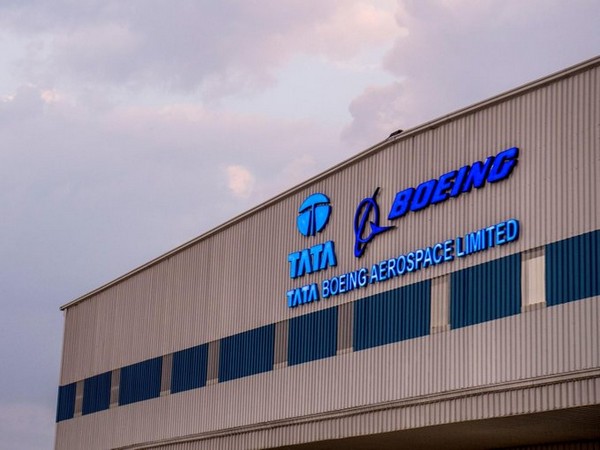
A. The progress at TBAL reflects Boeing’s approach to localization as a long‑term capability‑building effort. Delivering over 300 Apache fuselages has proven India’s ability to produce globally certified, complex aerostructures at scale, and the next step is to move further up the value chain into higher-complexity work and integrated manufacturing. TBAL’s expansion into 737 vertical fins already demonstrates growing technical depth, and the coming decade will see Indian partners potentially take on more advanced structures, composites, and precision assemblies. Localization is also evolving from parts to subsystems, with a focus on co‑developing and co‑producing integrated systems. Equally important is the supplier ecosystem behind this progress: TBAL is supported by more than 100 Indian MSMEs, with over 90% of parts sourced locally, delivering precision‑machined components and composites to Boeing’s global standards. Strengthening this ecosystem is critical to building sustainable industrial capability and positioning India as an integral part of the global aerospace ecosystem.
Q. What would it take for Boeing to move from component manufacturing to full-scale defence platform assembly in India?
A. Boeing is committed to India’s aerospace sector and has previously offered final assembly opportunities, such as with the F/A‑18 program. To move to full‑scale platform assembly, three things are essential: a mature supplier base, clear and sustained demand, and integration of advanced engineering capabilities. India is making strong progress on all fronts. As the defence manufacturing foundation strengthens under Aatmanirbhar Bharat and Make in India, we will continue to expand co‑production and co‑development.
Q. With India planning to expand its fleet of P-8I maritime surveillance aircraft, how is Boeing preparing to support lifecycle sustainment and upgrades locally?
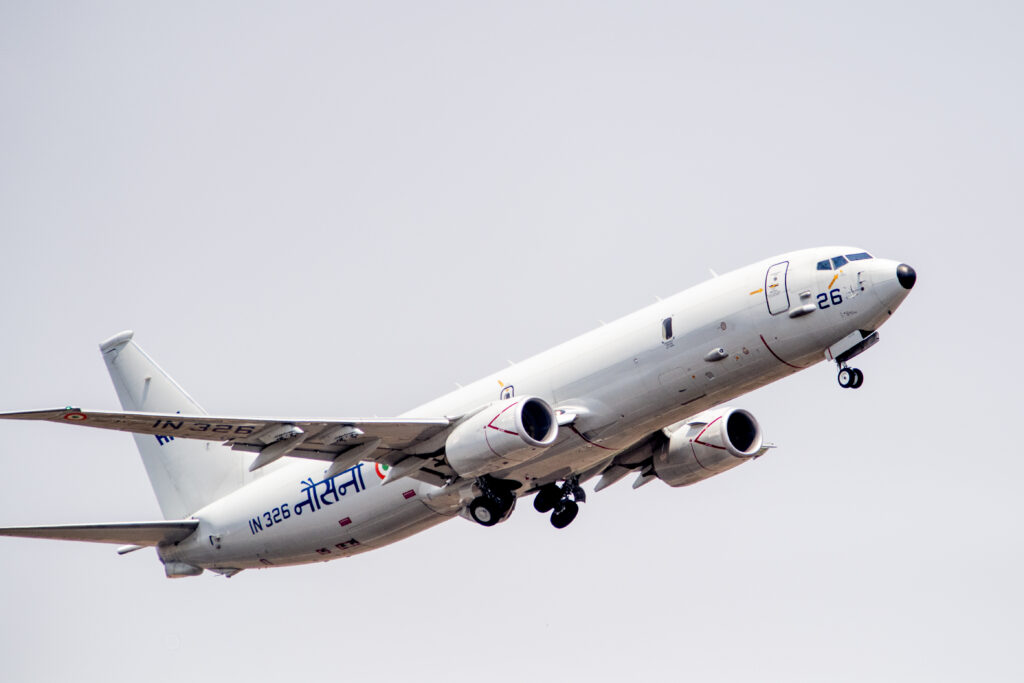
A. India’s P‑8I fleet is already one of the most advanced maritime patrol assets in the region, and our focus today is on keeping those aircraft mission‑ready. We are continuing to develop local capability for maintenance, repair, and overhaul, so the Navy can rely on in‑country support for its existing fleet. The P8I training facility at Rajali ensures operational readiness and sets benchmarks for excellence. Our lifecycle support includes integrated logistics and long-term Performance-Based Logistics (PBL) solutions for the P-8I, modelled on proven programs that keep availability high, cut downtime, and reduce costs. The focus on in-country sustenance is also creating a robust MRO ecosystem across defence and commercial aviation, building self‑reliance, creating jobs, and strengthening MSMEs. In 2024, for example, we partnered with AI Engineering Services Limited to overhaul the Navy’s P‑8I landing gear locally.
Q. Could India become a regional MRO hub for Boeing’s defence customers across Asia-Pacific?
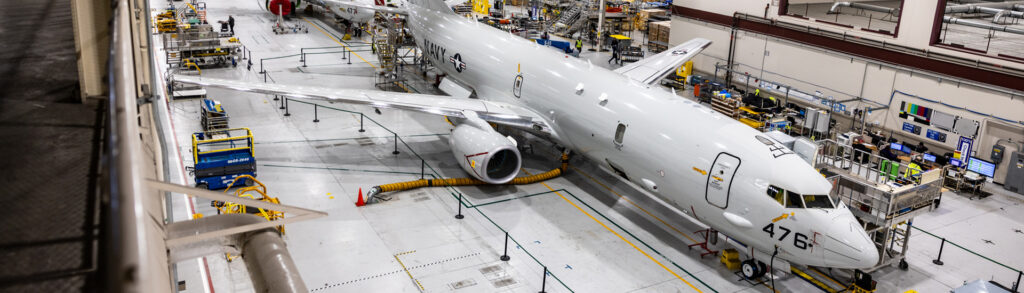
A. India has the potential to emerge as a regional MRO hub, supported by its growing ecosystem, strong technical talent, and focus on indigenization. We are building in-country MRO capability organically, with Indian partners, and improving turnaround times. Today, Boeing has the largest network of MRO partners in India, spanning both defence and civil aviation.
Q. The MoU between Liquid Robotics and Indian partners signals interest in unmanned maritime systems. What is Boeing’s broader vision for unmanned and ISR capabilities in India?
A. The MoU is an important step because it shows how India can move from build-to-print to‑the co-development of advanced unmanned systems. Our broader vision is to bring the best of Boeing’s global unmanned and ISR capabilities into India, while building local partnerships that strengthen self‑reliance.
Q. How is Boeing navigating US-India defence cooperation frameworks while balancing export controls and technology transfer concerns?
A. The United States and India share a strong and growing economic partnership, and we see continued opportunity for collaboration across aerospace and defence. The interim trade agreement reflects both countries’ shared commitment to strengthening trade, supporting industrial growth, and enabling deeper supply chain integration. Boeing has long supported policies that promote open and predictable trade, as they help foster innovation, strengthen global supply chains, and support the long-term growth of the aerospace ecosystem. With over eight decades of presence in India, we remain committed to working closely with local partners, investing in talent and capability development, and supporting India’s aspirations to further strengthen its aerospace and defence ecosystem. India continues to play an important role in Boeing’s global operations, and we look forward to building on our longstanding partnership in the years ahead.
Q. Do you foresee India becoming a design hub, not just a manufacturing base, for Boeing’s global defence programs?
A. Boeing’s manufacturing and engineering presence in the U.S. remains a cornerstone of our global operations. At the same time, the unique talent and supply chain capabilities in international markets, including India, not only serve local needs but also enhance our global capabilities, driving advancements for Boeing and the industry worldwide.
All responses are attributed to Nikhil Joshi, Managing Director of Boeing Defence India