Cdr Rahul Verma (r)

The PLA’s Doctrine, Not Just Its Platforms
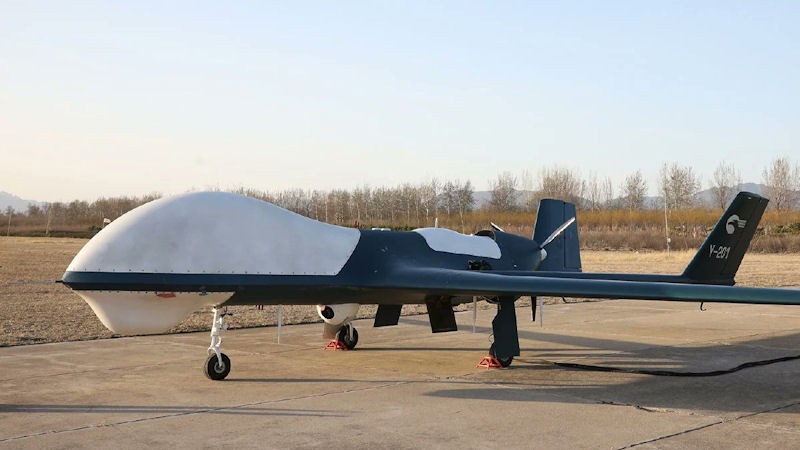
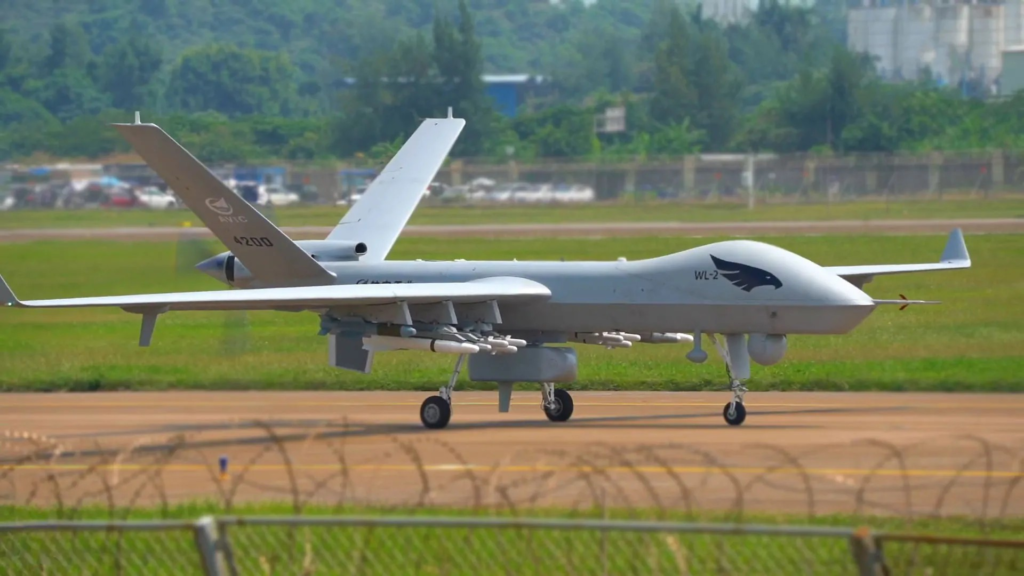
Analysis of the Chinese unmanned threat along the LAC often defaults to platform enumeration. Wing Loong here. BZK-005 there. CH-4 somewhere in Tibet. This misses the point that matters most.
The PLA’s unmanned capability is not a collection of aircraft. It is an integrated warfighting doctrine. Unmanned systems occupy every echelon of the kill chain simultaneously, from section-level ISR to theatre-level strike coordination. Understanding how those layers connect and what decision timelines they impose on an Indian commander is more important than knowing any platform’s specifications.
Think of it as three interdependent layers like an aircraft’s systems. Each has a distinct function. Each feeds the others. Remove one and the whole degrades. Together, they create a threat architecture that no single counter can address.
The first is the persistent surveillance layer. BZK-005 MALE UAVs 40-hour endurance, 2,400-km range, operating between 3,000 and 7,000 metres, provide continuous, unblinking coverage of the entire LAC from well within Chinese territory. This layer does not expose itself. It simply watches. Patrol patterns. Logistics flows—equipment movements. Forward deployment signatures. Over time, that observation builds a baseline. Any deviation, a change in vehicle density, a new antenna signature, or a revised patrol route registers immediately as an indicator.
The second layer is the tactical strike-ISR layer. Wing Loong II and CH-4 Rainbow armed UCAVs, combat-proven in Libya, Yemen, Sudan, and the 2024 Pakistan-Iran conflict, provide immediate sensor-to-shooter coupling at battalion and brigade level. The critical metric is not range or payload. It is the kill chain cycle time. PLA doctrine targets a sensor-to-shooter cycle of under ten minutes for time-sensitive targets. A decision architecture that uses drones as its terminal instrument. That distinction is operationally fundamental.
The third layer, the least discussed yet most consequential for high-altitude warfare, is logistics and sustainment. Since 2020, the PLA’s CMC Logistics Support Department has been systematically solving the plateau resupply problem through unmanned vehicles. The stated objective, documented in PLA Daily, is to remove the forward-stockpile dependency that constrains conventional high-altitude operations. If PLA forward units can receive ammunition and supplies on demand by drone, two of India’s most significant high-altitude advantages, terrain difficulty and the adversary’s logistical vulnerability, are materially reduced.
Pakistan’s unmanned employment during Operation Sindoor in May 2025 added a specific tactical dimension. The GPS jamming that degraded Indian formation navigation across a 150-kilometre radius was not improvised. It was the operational expression of a Chinese-supplied electronic warfare and drone-integration architecture built since acquiring armed UCAVs in 2021 and expanded since then. The lesson is not that Pakistan has better technology. It is that GPS jamming, combined with the employment of drone swarms, creates a tactical environment in which formations dependent on commercial GPS navigation cannot manoeuvre confidently while simultaneously managing an overhead air threat. Both demands compete for the same command attention at the worst possible moment. The layering of Turkish CRPA-equipped loitering munitions and short-range, slow-mover ISR platforms within the same contested airspace compounds this, creating a multi-altitude, multi-role unmanned environment that a single-layer defensive response cannot address.
What Actually Fails at Altitude and Why It Matters
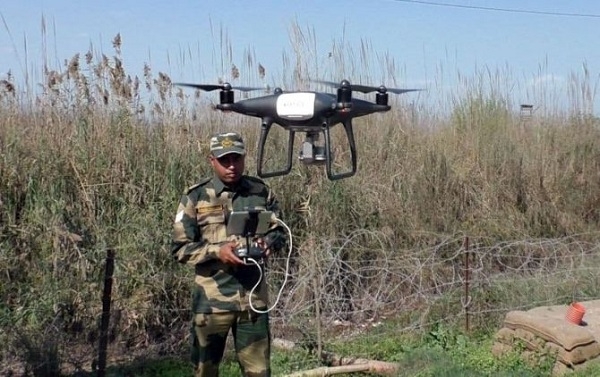
Every drone procurement discussion in the Indian context must begin here. The Himalayan operating environment is a category apart from conditions in which virtually every drone system available globally is designed, tested, and optimised. The consequences are not abstract. They are measurable. They determine whether a system is operationally useful or an expensive liability at 4,500 metres.
Propulsion and Lift
At 4,500 metres, the routine operating altitude along the central and eastern LAC, the air density is approximately 58 per cent of the sea-level value. Think of it as flying in an envelope that has been thinned. A multi-rotor drone must spin its motors approximately 30 per cent faster to generate equivalent thrust. That draws more current. Generates more heat in the windings. Reduces payload and endurance significantly. A tactical quadrotor rated at 2 kg at sea level may carry 800 grams reliably at altitude before stability degrades. Fixed-wing systems require longer takeoff rolls and higher indicated airspeeds, narrowing the already limited options for forward operating locations. A system that performs comfortably at Jodhpur is operating at the edge of its design envelope at Daulat Beg Oldie or Nyoma.
The PLA has been engineering specifically for the Western Theatre Command’s altitude profile since 2020. Dedicated research into motor winding materials, propeller geometry for low-density air, and thermal management for extreme cold has been documented in PLA Daily. India’s tactical drone procurement has not yet defined high-altitude performance as a mandatory threshold specification. It remains a desirable characteristic evaluated during trials rather than one that determines whether a system is considered at all. That is a design choice with operational consequences.
Power, Cold, and Endurance
Lithium-polymer batteries, a standard energy source for tactical and mini drones, lose between 20 and 40 per cent of their rated capacity below- 10 degrees Celsius. That is a routine winter temperature at forward positions from Ladakh to Arunachal Pradesh. Below minus 20, the degradation accelerates and becomes unpredictable. A drone launched on a four-hour training mission at Leh in October may have two usable hours in January at a higher-altitude post. Operators learn this through experience. What they should not discover in the field is that their issued system was never tested under those conditions before procurement.
The Electromagnetic Environment
High-altitude terrain creates severe line-of-sight constraints for ground control station communications. Deep valleys and ridgelines mean a drone operating on the far side of a ridge from its GCS may lose its datalink entirely. That demands mature autonomous flight capability, not merely a GPS-hold mode that freezes the aircraft in space while the link is re-established. Any peer adversary in this theatre will contest the electromagnetic spectrum from the first hour. A drone dependent on an unencrypted commercial datalink or commercial GPS for navigation is not a military system in a contested environment. It is a civilian platform in uniform. Op Sindoor proved this at the formation scale. The PLA will replicate it faster and at greater intensity.
Where India Stands: An Honest Assessment
India’s response since Galwan has been genuine in urgency and significant in scope. Indigenous private-sector startups responded to emergency procurement requirements and demonstrated that man-portable, encrypted, high-altitude-capable tactical UAVs could be developed and contracted in months, not years. Emergency contracts worth hundreds of crores executed at a pace the standard acquisition cycle has never matched. Domestic logistics UAVs now deliver ammunition above 12,000 feet, reducing dependence on helicopter sorties and manned convoys in terrain where both carry real risk. MALE ISR platforms provide persistent surveillance. The doctrinal restructuring into light commando, mechanised integration, and dedicated loitering munition formations represents exactly the integrated unmanned employment thinking the threat demands.
But emergency procurement contains its own diagnosis. Those contracts succeeded because they bypassed the standard process. That cannot be the permanent pathway. Imported loitering munitions, procured in limited quantities early this decade, represent a placeholder across 3,488 kilometres of LAC, not a deterrent mass. The PLA’s Western Theatre Command operates thousands of unmanned systems across multiple echelons. A limited inventory distributed across a frontier of that length provides coverage density that the mathematics of high-intensity conflict will exhaust within 48 hours. Iran expended over 2,000 drones in the opening 72 hours of Operation Epic Fury in February 2026 against nine countries simultaneously and still had thousands remaining. Scale is not optional. It is the operational condition.
The specific gap is in the attritable strike and persistent tactical ISR layers. India does not yet field, at a meaningful scale, an indigenous loitering munition that meets all five requirements of the northern frontier simultaneously: certified high-altitude performance above 4,500 metres, adequate cold-weather battery endurance, encrypted GNSS-independent navigation, electromagnetic hardening against jamming, and per-unit cost low enough to expend at the tempo of peer-adversary contact demands. Several iDEX-funded programmes have demonstrated systems approaching this specification. None has reached operational induction at scale.
What the Process Does to the Platform
The standard capital acquisition lifecycle, from GSQR through RFP, field evaluation trials, cost negotiation, financial sanction, and delivery, typically runs five to seven years. DAP 2026 acknowledges this directly, that in domains where AI, drones, and electronic warfare evolve in 18 to 36-month cycles, a 60 to 84-month process means a system completes two full technology generations between GSQR approval and troop induction. The drone ordered to counter the 2024 threat arrives in 2030, only to face the 2028 threat. The procurement cycle is not merely slow. It is structurally mismatched to the category it is meant to serve.
Three procedural stages account for most of the delay. The GSQR formulation has no mandatory time limit; it frequently takes 12 to 18 months for novel technology categories. Field evaluation trials, sequentially conducted across hot-weather, cold-weather, and high-altitude environments, each requiring separate scheduling and independent oversight, add two to three years to a programme timeline for a system the operational user already knows works from watching it in the field. CEMILAC certification, designed appropriately for manned platforms with multi-decade service lives, applies the same stage-gated architecture to attritable systems whose operational life may be a single sortie.
For the northern frontier, the high-altitude requirement adds a fourth burden. Separate evaluation in a high-altitude environment requires either deploying an evaluation team to a forward location, which is logistically complex, seasonally constrained, and operationally sensitive or testing at the nearest available altitude, which may not replicate actual operational conditions. Neither option fits neatly into the standard trial schedule. The result is further delay. At altitudes where the aircraft’s performance margins are already compressed, this is not an administrative inconvenience. It is a capability gap that widens with every passing cycle.
Solutions: Working Within DAP 2026 and Beyond It
The criticism of India’s procurement process is well-established. What follows is specific and implementable, some within DAP 2026 as currently drafted, and one structural addition that the final version should incorporate.
Fix 1: Activate LCCA With a Mandatory Timeline and High-Altitude Annex
DAP 2026’s Low-Cost Capital Acquisition route, with Rs 75 crore per project and a Rs 2,000 crore aggregate annual ceiling, is explicitly designed for fast-moving technology items where speed matters more than procurement formality. Drones and electronic warfare modules are named. The route is authorised. What it lacks is a mandatory timeline. Without one, LCCA defaults to a conventional procurement pace, defeating its purpose entirely.
The fix is specific. LCCA for unmanned and counter-UAS systems should carry a mandatory 90-day evaluation-to-contract timeline, enforceable at Service HQ level without further MoD approval, for systems at TRL 7 and above. Additionally, an LCCA High-Altitude Annex should specify that systems intended for deployment above 3,500 metres are evaluated at a designated high-altitude test site within a fixed 30-day window, replacing sequential environmental trials. Emergency procurement set the precedent. LCCA with a mandated timeline makes that precedent the standard rather than the exception.
Fix 2: Connect LCCA to LTBA for Scale
DAP 2026 already contains a two-step pathway that is not yet operationally connected for drone programmes. LCCA allows rapid induction of limited quantities. The Long Term Bulk Acquisition framework provides the industry with multi-year demand visibility for scaled production. Linked explicitly, they create exactly the spiral development pipeline the unmanned domain requires—Induct 50 systems under LCCA at TRL 7. Operate them for six months with forward units on the LAC. Collect operational feedback. Trigger an LTBA contract for 500 systems, incorporating those lessons—no new legislation required. A Service HQ Standard Operating Procedure mandating the LCCA-to-LTBA handshake for all unmanned system programmes would do it.
Fix 3: TRL-Linked Provisional Airworthiness Clearance
DAP 2026’s TRL-based categorisation is a significant step. Its logical extension, not yet in the draft, is a TRL-linked certification fast-track for attritable systems above TRL 7. For any unmanned system with an operational life of fewer than 50 flight hours, CEMILAC should issue a Provisional Airworthiness Clearance based on simulation data, a design documentation review, and a 20-hour flight test programme. This PAC authorises operational deployment in defined conditions. The full Military Type Certificate can proceed through the standard process, but the PAC enables induction while that process runs in parallel, not as a prerequisite. The issues of shelf life have to be considered alongside operational life; these are not missiles, which are kept in storage for decades.
The Case for Speed
The PLA did not wait for a perfect process. After Galwan in 2020, it identified the requirement and began fielding, iterating through operational deployment, incorporating lessons, and scaling production. By 2026, it will have a doctrine-first, platform-second unmanned architecture engineered specifically for the altitude, terrain, and electromagnetic environment of its intended theatre. Every element of it was designed for that fight.
India has the engineering talent. The industrial ecosystem. The institutional intent. What it must now build is the procurement architecture that converts intent into induction at the speed the threat timeline permits, not the speed the process was designed for.
DAP 2026 contains the seeds. LCCA, LTBA, TRL categorisation, iDEX mainstreaming, two-stage trials. The Conflict-Cycle Unmanned Systems track is not an additional complexity. It is the connector that links those seeds into a coherent pipeline. The northern sky does not belong to the side with the better platform. It belongs to the side that puts the right capability in the right hands before the adversary decides the timeline. The procurement reform is how we get there.
| PROPOSED: CONFLICT-CYCLE UNMANNED SYSTEMS TRACK | |
| Scope | Attritable UAS, loitering munitions, tactical C-UAS effectors. Operational life under 50 flight hours or unit cost under Rs 2 crore. Shelf life for three years, not seven or ten. |
| Timeline mandate | Concept to PAC: 6 months. PAC-to-LCCA contract: 90 days. LCCA to LTBA scale: 6 months post operational evaluation. |
| Certification | CEMILAC Provisional Airworthiness Clearance as an induction gate. Full MTC pursued in parallel but not as prerequisite. |
| Trials reform | High-altitude performance verified at designated test site in 30-day fixed window. Simulation accepted for previously demonstrated environmental envelopes. |
| GSQR reform | Subject experts from operational units co-author GSQR. Mandatory completion within 60 days. No extensions without the highest approval. Make in India and IDDM should not delay the technology required; they should empower them. |
| Spiral contracts | Spiral 1: 50 units, 6-month evaluation. Spiral 2: upgrade plus 200 units based on field feedback. Spiral 3: LTBA scale. Each Spiral is triggered by an operational report, not a fresh procurement cycle. |
Cdr Rahul Verma (r), former Cdr (TDAC) at the Indian Navy, boasts 21 years as a Naval Aviator with diverse aircraft experience. Seaking Pilot, RPAS Flying Instructor, and more, his core competencies span Product and Innovation Management, Aerospace Law, UAS, and Flight Safety. The author is an Emerging Technology and Prioritization Scout for a leading Indian Multi-National Corporation, focusing on advancing force modernization through innovative technological applications and operational concepts. Holding an MBA and Professional certificates from institutions such as Olin Business School, NALSAR, AXELOS, and IIFT, he’s passionate about contributing to discussions on aviation, unmanned technology, and policy. Through writing for various platforms, he aims to leverage his domain knowledge to propel unmanned and autonomous systems and create value for Aatmannirbhar Bharat and the Indian Aviation industry.