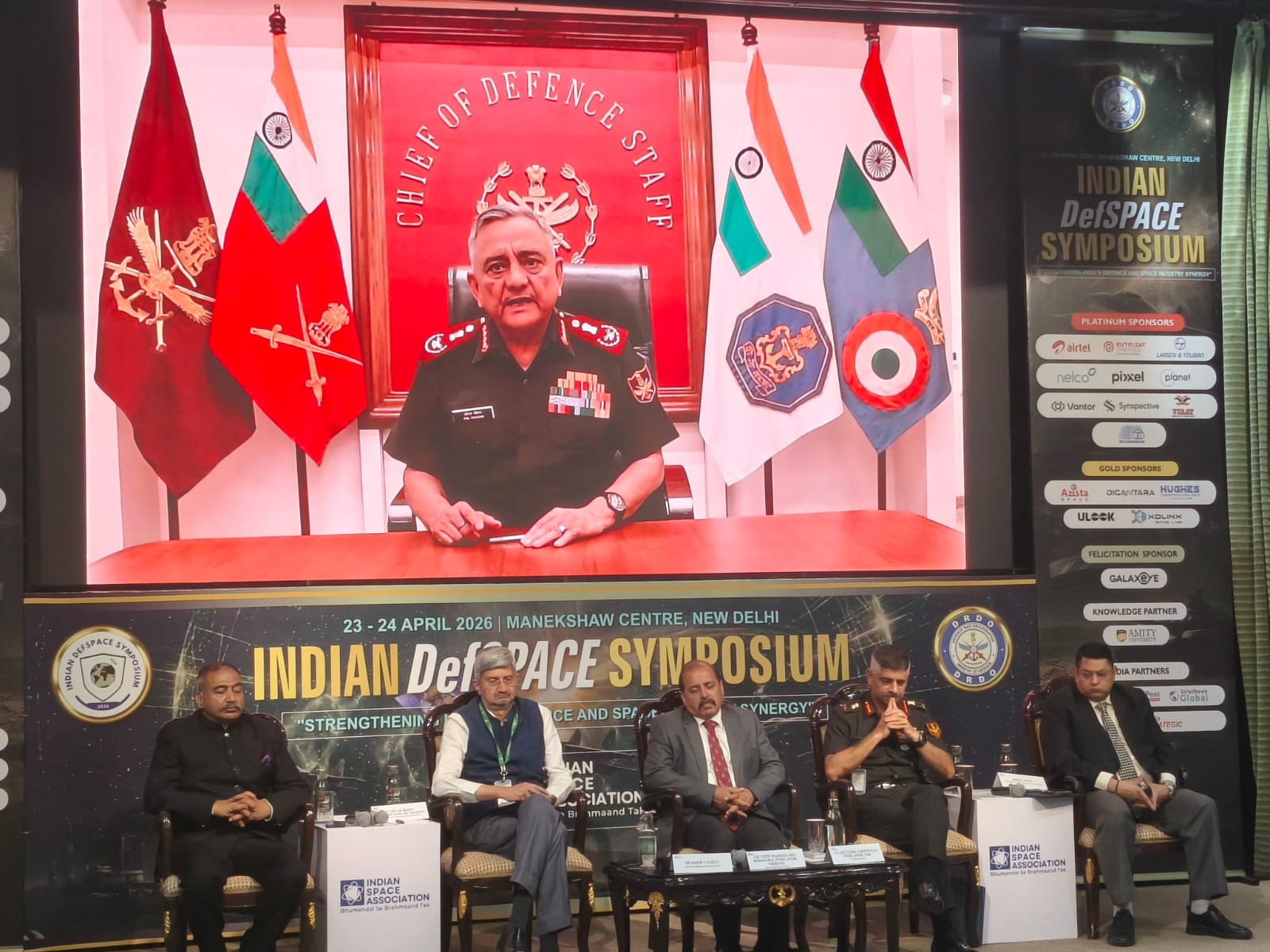
Lt. Gen. AK Bhatt (r)

The character of modern conflict has ascended. No longer is the “high ground” merely a tactical advantage found on a Himalayan ridge or a fortified coastline; it has shifted irrevocably into the exosphere. In the contemporary theater of operations, space has transitioned from being a silent, passive enabler of terrestrial forces to becoming the dominant domain that will determine the outcome of future wars. As General Anil Chauhan, Chief of Defence Staff (CDS), observed during the Indian DefSpace Symposium (IDS) 2026, the reality for India is stark. If we fail to secure our interests in space, we will be forced to fight blind. Conversely, if we dominate this silent frontier, we will fight with a level of foresight and precision that was once the province of science fiction. This strategic imperative is driving a profound transformation in India’s defence architecture, a shift articulated through the synergy among the Indian Armed Forces, the Defence Space Agency (DSA), and the advocacy of the Indian Space Association (ISpA).
For decades, India’s storied space journey was defined by its civilian focus—tele-education, disaster management, and resource mapping. While these remain vital, the current geopolitical climate necessitates a “Space-First” defence posture. The doctrine is shifting from simply “using space” to “operating in space.” Historically, military reliance on orbital assets was concentrated in a few, massive, and expensive satellites in Geostationary Orbit (GEO). However, these assets have become “juicy targets” in an era of kinetic and non-kinetic counter-space capabilities. The emergence of direct-ascent anti-satellite (DA-ASAT) missiles, co-orbital interceptors, and high-energy laser dazzling means that a centralized architecture is inherently vulnerable. To counter this, India is pivoting toward a proliferated and resilient LEO (Low Earth Orbit) constellation model. By deploying vast networks of smaller, low-cost satellites, the military ensures that the loss of a single node does not result in a strategic blackout. This distributed architecture provides the redundancy and rapid replenishment capabilities essential for maintaining a continuous operational picture even under the duress of active conflict.
The core of this philosophy is that technological sovereignty cannot be the sole burden of government agencies like ISRO or DRDO. Instead, it requires the deep, systemic integration of India’s burgeoning private space ecosystem. Through initiatives like Mission DefSpace, the Indian defence establishment has posed 75 specific technological challenges to the private sector, covering critical gaps in signal intelligence, autonomous debris removal, and persistent surveillance. This represents a paradigm shift in procurement—moving away from legacy processes that often stagnate under their own weight toward the agility of “Non-Governmental Entities” (NGEs) and startups. By leveraging the private sector’s speed of innovation, India is building a military-industrial complex that can match the rapid pace of its regional rivals.
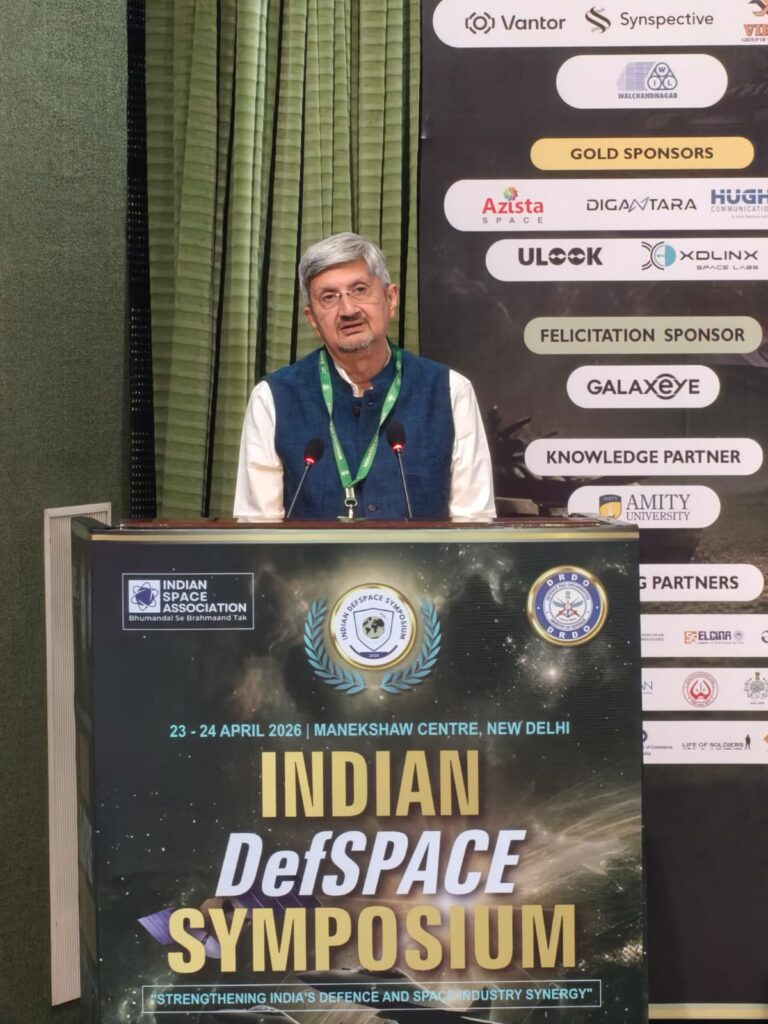
One of the most transformative frontiers in this new strategy is the development of In-Space Servicing, Assembly, and Manufacturing (ISAM). As highlighted in recent ISpA white papers, the traditional “launch-and-forget” model of satellite deployment is becoming obsolete. ISAM technologies allow for the life extension of critical assets through in-orbit refuelling and modular upgrades. In a conflict scenario, the ability to repair a damaged sensor or reposition a satellite to cover a new theatre of operations without the need for a costly, time-consuming new launch is a game-changer. Furthermore, ISAM paves the way for building large, complex orbital structures—such as high-powered ISR (Intelligence, Surveillance, and Reconnaissance) platforms—that simply cannot be lofted in a single rocket fairing. This capability transforms space from a static gallery of tools into a dynamic, serviceable infrastructure.
However, the sheer volume of data generated by these new constellations presents its own challenge. The “sensor-to-shooter” loop can only be shortened if raw data from Earth Observation (EO) satellites can be processed into actionable intelligence in real time. This is where integrating Geospatial Foundation Models and AI becomes a force multiplier. By applying AI-driven intelligence layers to satellite imagery, the military can achieve “Planet-Scale Intelligence,” automatically identifying troop movements, new airfield construction, or changes in naval deployments across thousands of kilometres of borders and maritime zones. When combined with the high revisit rates of LEO constellations, this ensures the “fog of war” is replaced by a transparent battlefield.
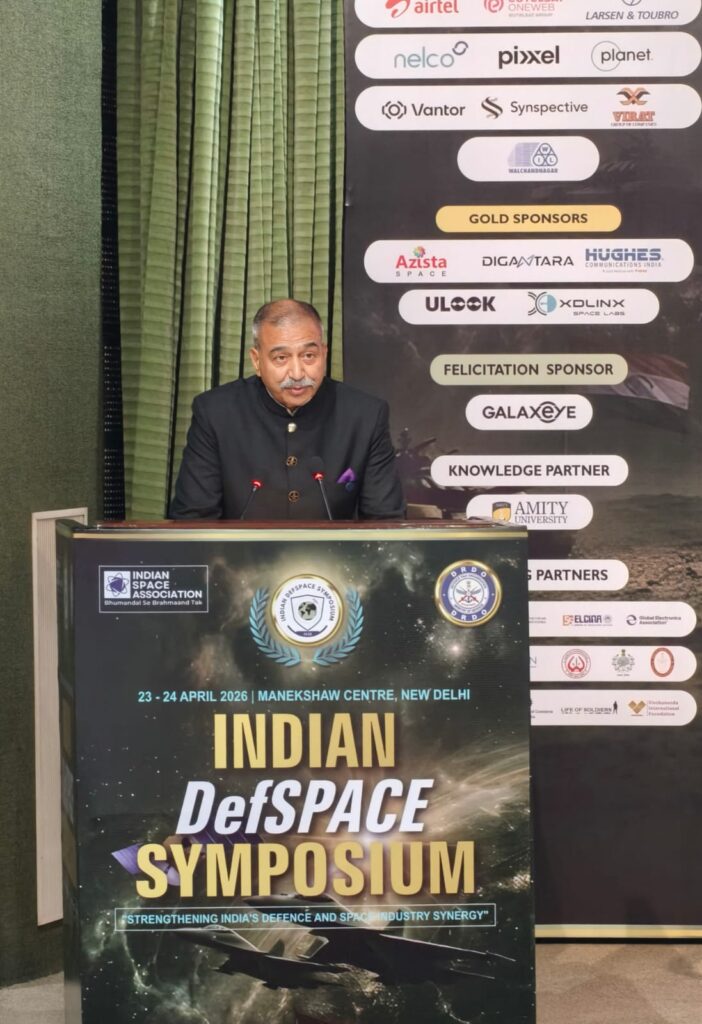
The security of these orbital assets is equally dependent on the “soft” infrastructure of data links. As space becomes increasingly contested, the vulnerability of satellite communications to cyber-attacks and electronic jamming has become a primary concern. The roadmap toward 2047 envisions an architecture that is not just encrypted, but quantum-secure and cyber-hardened. The deployment of Quantum Key Distribution (QKD) is essential for ensuring that military commands and intelligence feeds remain unhackable, even as quantum computing threatens to break traditional cryptographic standards. This “hardened” connectivity is the nervous system of the upcoming tri-service Space Command. This institution will evolve from the current DSA to integrate space-based effects into every facet of land, air, and sea operations.
Institutional evolution must be matched by fiscal and policy reform. The private sector’s ability to act as a primary engine of defence innovation depends on a predictable and supportive environment. ISpA has been a vocal advocate for granting “Critical Infrastructure” status to space assets, which would unlock the long-term, low-cost capital necessary for these capital-intensive projects. Furthermore, a 50% government procurement mandate for domestic private players would provide the stable demand needed for startups to scale their technologies for the global market. Rationalizing GST and introducing Production-Linked Incentive (PLI) schemes for satellite manufacturing are not just economic measures; they are strategic decisions that determine whether India builds its own shield or remains dependent on foreign vendors.
True strategic autonomy also hinges on Space Situational Awareness (SSA). With the increasing militarization of space and the looming threat of the Kessler Syndrome—where a cascade of debris renders orbits unusable—India must have its own “eyes” looking upward. Indigenous SSA capabilities are being developed to track not just debris, but adversarial “inspector satellites” that could manoeuvre close to sensitive Indian platforms for espionage or sabotage. Strengthening SSA ensures that India is not caught off guard by developments in its own orbital backyard. This is intrinsically tied to the need for sovereign PNT (Positioning, Navigation, and Timing). While global systems like GPS are ubiquitous, India’s own NavIC constellation provides a secure, independent signal, ensuring that missile guidance and troop navigation remain operational even if foreign signals are degraded or denied during a crisis.
As we look toward the future, the democratization of space capability means that non-state actors and smaller nations will also have access to orbital data. In this crowded and transparent environment, the competitive edge will go to the nation that can synthesize information the fastest and act with the greatest precision. The “Amrit Kaal” vision for 2047 is one in which India is not merely a participant in the space race but a leader setting the standards for sustainable and secure orbital practices. The path forward requires a sustained increase in R&D investment—scaling up from the current modest levels to one that reflects the domain’s existential importance.
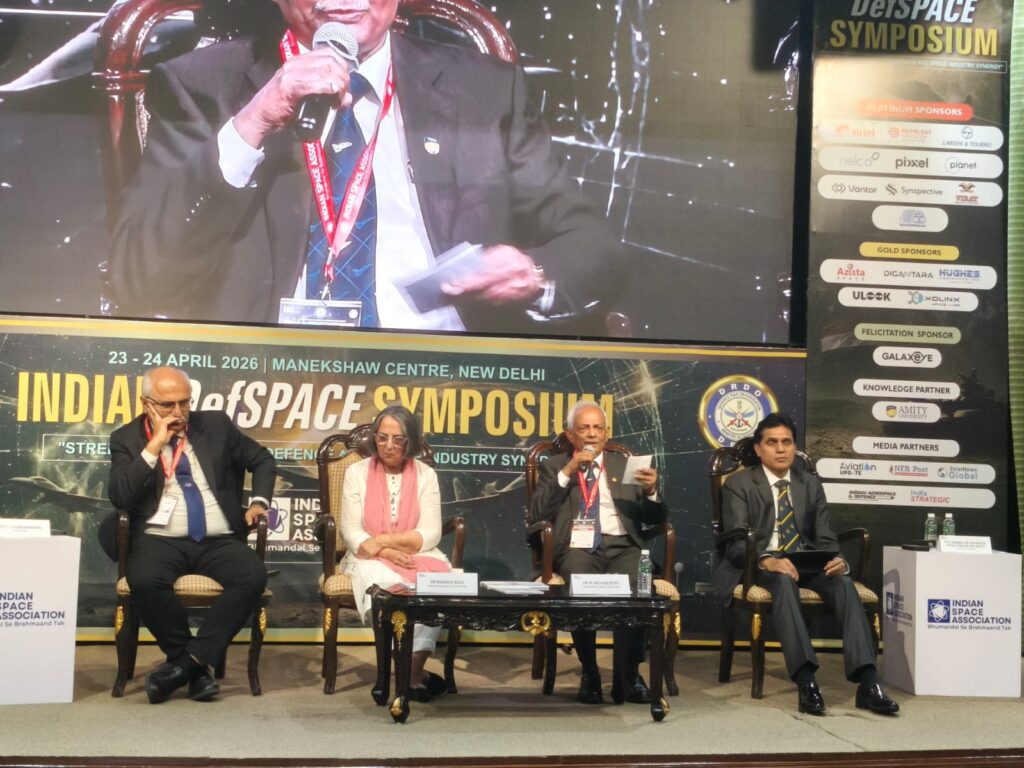
In conclusion, strengthening India’s defence capabilities through space is a multi-dimensional project that requires the precision of a researcher, the agility of an entrepreneur, and the strategic foresight of a general. It is a journey from the era of “Space for Peace” to a necessary era of “Space for Strength.” By fostering a thriving indigenous ecosystem, integrating AI and quantum security, and evolving our institutional commands, India is ensuring that its sovereignty is as robust in the heavens as it is on the ground. The final frontier is no longer a distant horizon; it is the first line of defence that will protect the nation’s future in an increasingly uncertain world. Space may be a vacuum, but India’s presence within it is becoming a shield, a sword, and an unblinking eye that secures the peace through undeniable strength.
Lt Gen AK Bhatt PVSM UYSM AVSM SM VSM (r), Founding Director General of the Indian Space Association and Chairman of IIIT Kota and Ranchi, is a distinguished former Indian Army officer with over 39 years of service, including as Director General Military Operations and Chinar Corps Commander.