Bikram Vohra
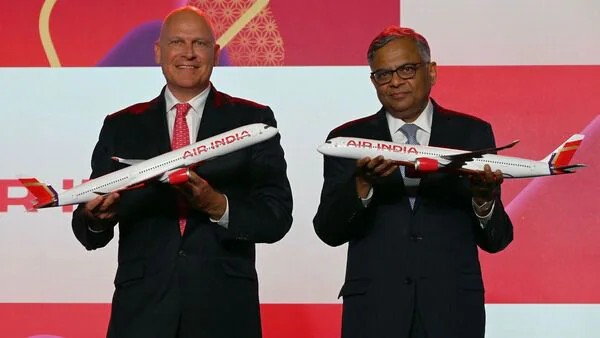
Air India CEO Campbell Wilson called it a day after he felt the kitchen getting too hot for comfort. In the same time zone, Natarajan Chandrasekaran, Chairman of the board of directors of Tata Consultancy Services, threw in his cards and decided it was time to gather the remnants of his tattered dignity and not seek a further extension.
Both, in different ways, were architects of the refurbishment of the once-showpiece airline. Wilson promised the moon, but it didn’t shine.
Chandra masterminded the Vistara deal and the roadmap for Air India’s future comeback, but had his hands tied by the Tate board of trustees.
Let’s be brutally honest.
570 aircraft on the register and the management flight deck empty in both seats. Not a pretty sight. The expansìon number rolls off the tongue like a winning lottery ticket. But let’s step away from the press releases and the gloss of promises kept and unkept. Let’s talk about the unglamorous, back-breaking, sweat-and-tears reality.
Because 570 planes aren’t just metal. They are a logistics war. And the Tatas have just bought the biggest arsenal in Indian aviation history. The question isn’t if they can buy them. The question is: where the heck are the rightly trained people and the parking spots to support them?
This isn’t a video game. You don’t click “Buy Fleet” and watch them magically appear in the hangar. Let’s break down the messy, human, and painfully real infrastructure nightmare that’s coming; be sure of it.
Air India was meant to be one of the most visible symbols of India’s aviation resurgence under private ownership. Instead, the airline finds itself at another difficult inflexion point, fighting to restore operational credibility, passenger confidence and financial stability even as the Tata Group enters a leadership transition.
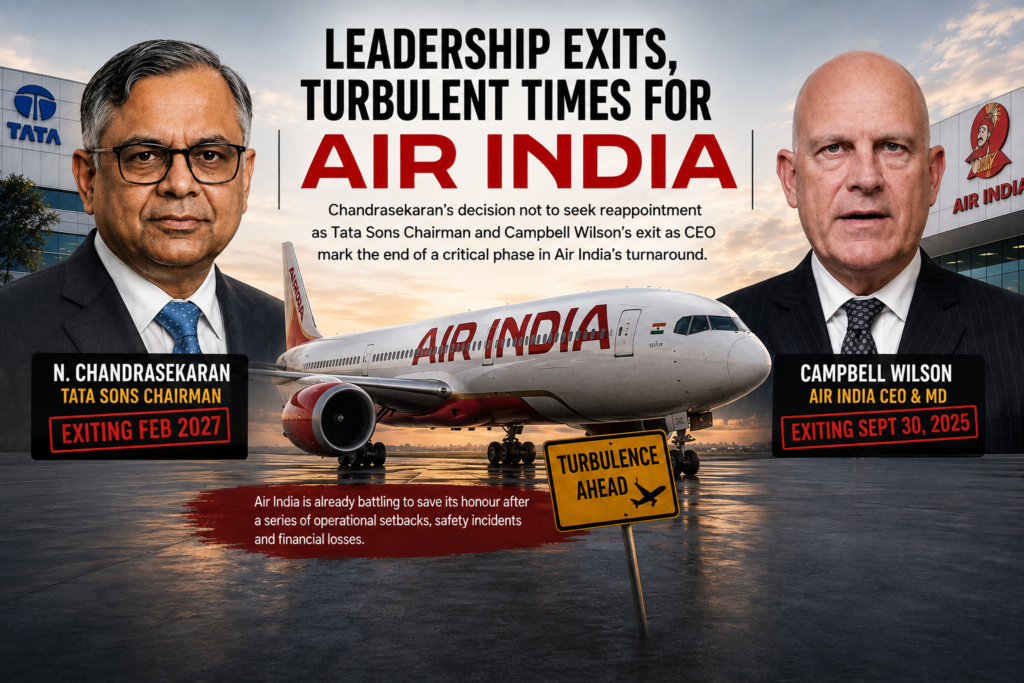
Natarajan Chandrasekaran’s decision not to seek reappointment as Chairman of Tata Sons when his current term ends in February 2027 therefore comes at a particularly sensitive moment. Chandrasekaran has been closely associated with the Tata Group’s return to aviation and its ambitious plan to rebuild Air India as a global network carrier. His departure does not alter Tata’s ownership of the airline. Still, it inevitably raises questions about strategic continuity and governance at a time when Air India needs sustained leadership attention and significant capital.
The timing is especially significant because Air India itself is undergoing a change at the top. The airline has appointed former Ethiopian Airlines chief Tewolde Gebremariam as its next CEO and Managing Director, succeeding Campbell Wilson. Wilson, who has led the airline through its initial transformation, is expected to leave by September 30. Air India has described Gebremariam’s appointment as part of the next phase of its transformation, with a stronger emphasis on operational excellence, safety, customer service and profitable expansion.
A Transformation Still Searching for Momentum
The Tata Group’s acquisition of Air India from the Government of India in 2022 was accompanied by expectations of a dramatic turnaround. The subsequent merger of Air India and Vistara, fleet modernisation, expansion of international routes, upgraded cabins and investment in technology were intended to create an airline capable of competing with the world’s leading carriers.
Yet the transformation has been far more difficult and expensive than initially envisaged.
Air India has faced a succession of operational and reputational setbacks. The tragic crash of Flight AI171 in Ahmedabad in June 2025, which killed 260 people, dealt a devastating blow to the airline’s reputation and placed safety and operational discipline under intense scrutiny.
Air India A320 on the Phuket–Delhi run experienced a sudden altitude loss after a temporary loss of hydraulic pressure across all three systems, resulting in 24 injuries, though, fortunately, a safe landing; this incident has understandably intensified scrutiny of the carrier’s operational reliability at a time when every flight, every headline and every passenger impression matters more than ever.
For an airline on the cusp of reclaiming and rebuilding its international reputation, such events are galvanizing reminders that success is not measured solely by the number of new aircraft or expanding route maps, but by the unwavering demonstration of safety, reliability and service excellence on every leg; restoring confidence means embedding rigorous maintenance, transparent communication, crew preparedness and a culture that prioritizes preventative practices so passengers and regulators alike can see and feel tangible, consistent improvements. This is a crucial inflection point brimming with challenge and opportunity: with focused investment in systems, training and accountability, and a visible commitment to learning from incidents instead of merely reacting to them, Air India can turn scrutiny into momentum, proving to travellers and industry observers that it is resolute in becoming the world-class carrier its history and ambitions promise; an airline where safety is not an aspiration but a demonstrable, daily reality, and where every successful, uneventful flight steadily rebuilds trust and pride.
As aviation analyst Mark D. Martin, founder and CEO of Martin Consulting, put it: “Air India has been off to a disappointing start under the Tatas, who have no real experience in aviation because Vistara was run by Singapore Airlines.”
That assessment may be blunt, but it highlights a fundamental challenge: owning and transforming an airline is very different from owning an airline business that already operates at global standards.
Singapore Airlines’ Warning Signal
Perhaps the clearest indication of the scale of the challenge comes from Air India’s strategic partner, Singapore Airlines.
Singapore Airlines holds a 25.1% stake in the enlarged Air India Group. Its share of losses from Air India reached S$945.2 million for the year ended March 2026, while Air India itself reported a net loss of about $3.77 billion and net liabilities of approximately $1.02 billion.
The financial pressure has been intensified by a combination of factors: the Ahmedabad crash, the closure of Pakistani airspace to Indian carriers, higher jet fuel costs, supply chain constraints, a weaker rupee, and the enormous expense associated with fleet renewal and network restructuring. Singapore Airlines’ investment has consequently become a costly long-term bet, even though the group continues to regard India as strategically important.
This is an important distinction. Air India’s difficulties cannot all be attributed to management. The airline is undertaking one of the most complex transformations in global aviation while operating in an exceptionally challenging cost and supply environment. But the scale of the losses means that execution now matters more than ever.
The Chandrasekaran Factor
Chandrasekaran’s nine-year tenure at Tata Sons has been marked by aggressive expansion and diversification. Under his leadership, the group entered or expanded its presence in semiconductors, electronics manufacturing, batteries and aviation, while listed Tata companies created significant shareholder wealth. Tata’s aviation ambitions were among the most consequential strategic bets of his tenure.
His decision not to seek another term has consequently triggered a broader governance debate. Tata Group companies reportedly lost around ₹44,000–46,000 crore in market value following the announcement, reflecting investor concerns about succession and strategic continuity.
For Air India, the critical issue is not simply who succeeds Chandrasekaran. It is whether the new Tata Sons leadership remains equally committed to the airline’s long-term transformation and willing to provide the capital, patience and management support required to complete it.
The answer will have profound implications.
Air India is not a conventional turnaround that can be completed through a single restructuring programme. It involves integrating multiple airlines, replacing ageing aircraft, establishing new maintenance and engineering capabilities, rebuilding employee culture, expanding international connectivity and competing against highly efficient global carriers.
A New Leadership Test
The arrival of Tewolde Gebremariam could prove particularly important. His experience at Ethiopian Airlines gives Air India access to a leader associated with one of Africa’s most successful aviation transformations. The challenge will be translating that experience into the much larger and more complex Indian market.
Gebremariam will inherit an airline with enormous potential, but also an organisation still carrying the weight of legacy systems, operational inconsistencies and financial losses.
At the same time, Tata Sons will need to ensure that the transition from Chandrasekaran does not create strategic uncertainty at Air India. The group must maintain continuity in fleet orders, network expansion, technology investments and the integration of the Air India Group while allowing the new CEO sufficient operational independence.
The next Tata Sons chairman will therefore inherit more than a corporate succession issue. Aviation will be one of the clearest tests of whether the conglomerate can convert a bold strategic vision into sustainable execution.
The Flight Ahead
Air India’s revival remains strategically important for India. The country is one of the world’s fastest-growing aviation markets, and a strong Indian global carrier can retain more international traffic, strengthen India’s aviation ecosystem and enhance the country’s connectivity with major economic centres.
But the airline now needs to move from transformation announcements to transformation results.
That means improving on-time performance, strengthening safety culture, reducing operational disruptions, controlling costs, accelerating aircraft induction and ensuring that the passenger experience consistently matches the ambitions of the new Air India brand.
Chandrasekaran’s exit should not, in itself, derail that journey. But it does introduce a new test of institutional resilience.
The Tata Group has invested enormous financial and strategic capital in Air India. The next phase will determine whether that investment ultimately yields the global Indian airline envisioned or becomes a cautionary example of how difficult it is to rebuild a legacy carrier at scale.
For Air India, the message is clear: the transformation cannot afford another reset. It needs continuity, operational discipline and results.
Bikram Vohra is the Consulting Editor of Indian Aerospace & Defence.