Ameya Joshi

When the Middle Eastern war started on the last day of February, airlines in India were possibly hoping for the financial year to end and look for a fresh beginning starting April 01, 2026. The year had been disastrous to say the least. Four quarters were filled with four different challenges, starting with Operation Sindoor as an aftermath of the ghastly attack on tourists in Pahalgam last April, the crash of AI 171 at Ahmedabad, operational meltdown at IndiGo in December and then came the war. This is by far the biggest challenge in recent years, as it affects air routes and traffic and, more importantly, has driven crude prices higher, which directly impacts airlines’ operational costs.
The scheduling season for airlines is divided into two: Northern Summer, which is the last Sunday of March until the last Saturday of October and Northern Winter, which is the remainder of the period. As the scheduling season turned from Winter to Summer this year, the shift was muted. Each season, the regulator and the airlines come up with information on how many flights they are increasing and where the increases are, which were absent this time around. The dwindling rupee impacts the foreign travel for passengers, and uncertainty and fare hikes impact the domestic travel too. For both passengers and airlines, this is a case of being stuck between a rock and a hard place.
Domestic Growth Is Flat
Data shared by Cirium, an aviation analytics company, shows that April will see 23,250 weekly domestic flights in India. This is nearly the same as the 23,003 weekly domestic flights planned in April 2025, the first full month of the Summer schedule for 2025. For records, the Summer schedule of 2025 had 25,610 approved flights, while the Winter schedule, which included March 28, had 26,495 approved flights, though IndiGo saw its schedule cut post January. Even with the cuts, IndiGo, Akasa Air and Air India had high utilization of slots, while SpiceJet continued to be a laggard. In February, the last full month of the winter schedule, domestic airlines operated 22,424 weekly flights, a far cry from the approved number.
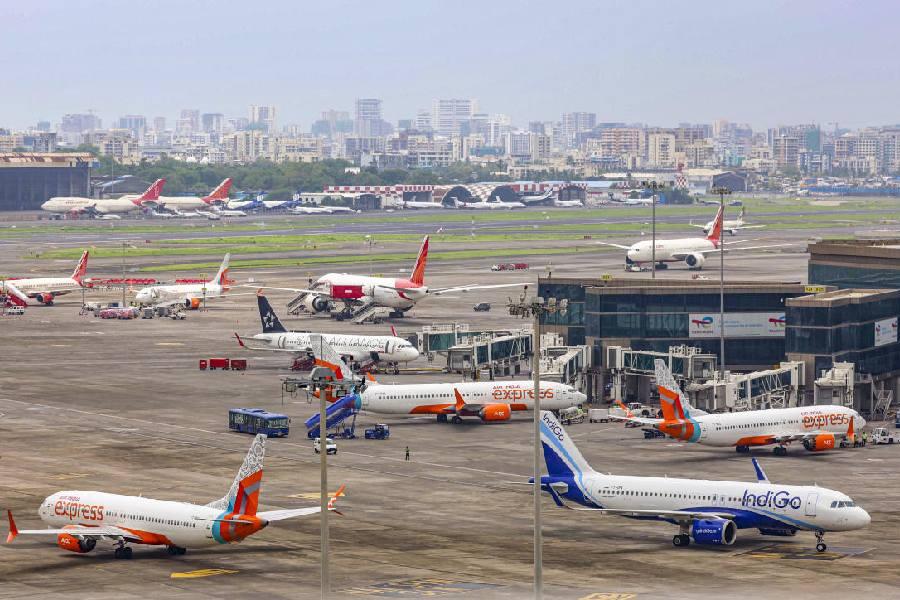
Air India and Air India Express are shrinking with Air India flying 75 flights fewer than last April while Air India Express which has grown four times since privatization is flying nearly 350 fewer flights per week in domestic skies. Among the major carriers, IndiGo and Akasa Air are adding nearly 100 flights per week, while regional carriers Star Air and Fly91 plan to add nearly 150 flights per week compared to last April. SpiceJet is likely to record a major jump, with over 250 additional weekly flights compared to last Summer. However, it continues to face hindrances to its plans and thus reduces its flights based on how the season progresses.
The nominal increase in flights is uneven, with flights to Hyderabad, Srinagar, Chennai, Bhubaneswar, and Mumbai seeing a reduction. In contrast, Navi Mumbai, Delhi, Bengaluru, and Jaipur have seen an increase in flights.
Summary
Overall, growth is 1.1% in departures, but 3.3% in seats and capacity (ASK, Available Seat Kilometres). This is due to IndiGo and Akasa Air inducting higher-capacity aircraft: IndiGo with the A321neo, which replaces the A320, while Akasa Air is inducting the 737-8200, both with higher seat counts.
For Air India Express, the decline is largely due to planned replacements, with the older A320ceo going out of the fleet and the newer MAX 8 aircraft also out of service for reconfiguration, as it moves to a mono-class operation. Air India Express had inducted 50 white-tailed planes meant for Chinese carriers but not taken up by the Chinese airlines. While these came in handy from a capacity perspective, they were dual-class in some cases, with varied seat types, features, and LOPA (Layout of Passenger Amenities).
Tail Note
Indian aviation has been poised for growth for a long time, but one external shock after another has been holding the sector back. With GDP growth above 5% in consecutive quarters, aviation growth should have been in double digits. The industry body IATA (International Air Transport Association) estimates that air traffic growth in passenger numbers is typically double a country’s GDP growth. The external shocks have meant that the true potential has yet to be reached.
Ameya Joshi is an aviation analyst and columnist who runs the analysis website Network Thoughts.