Ameya Joshi

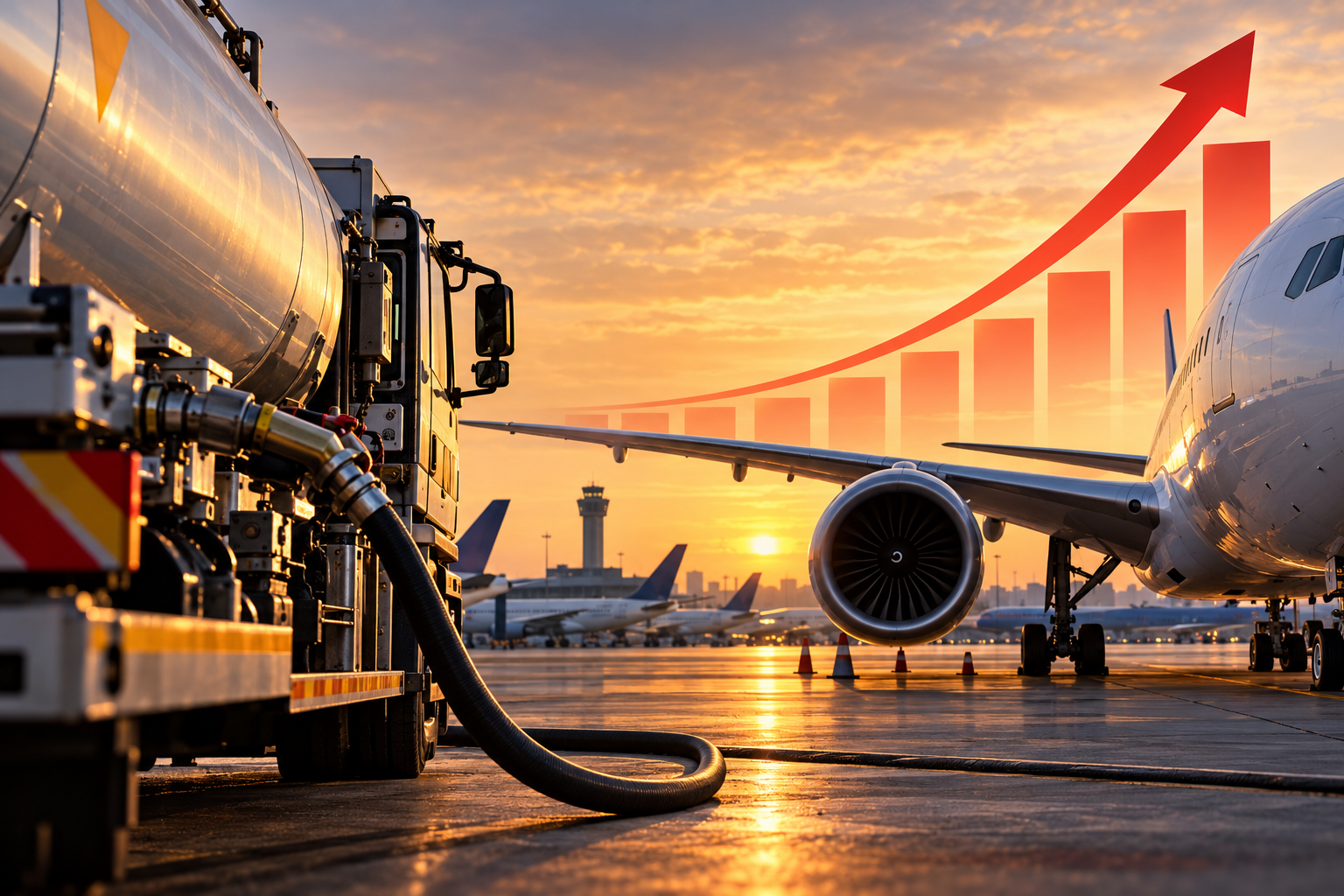
On 1 October 2026, India’s state-run oil marketers raised the price of aviation turbine fuel (ATF) for domestic airlines from about ₹121 to ₹137 a litre in Delhi, a roughly 13% jump. It was the third increase in as many months, after rises of ₹5 in August and ₹6.28 in September, taking the cumulative climb since July to about ₹27 a litre.
Indian aviation has faced another challenge since the April to June quarter of 2025. It started with the closure of Pakistani airspace and the deadly crash of AI171, taking away traffic in subsequent quarters. The West Asia war, which started on the last day of February this year, has been the latest spoke in a wheel that was expected to roll smoothly after a record-breaking January to March quarter last year, driven by the historic Maha Kumbh at Prayagraj.
The increase comes as the country typically gears up for additional traffic due to festivities, but it has seen a year-over-year drop, raising concerns for airlines. With a prolonged challenge clearly visible, the impact goes beyond airlines into the aviation ecosystem and will affect long-term growth.
Ripple effect
By the end of September, IndiGo had taken delivery of nearly 40 planes from Airbus, about 7% of the total planes Airbus manufactured this year. This is in line with its performance over the last few years. However, its effective fleet has remained stagnant, as these planes help retire the older planes and incremental additions are low. Traditionally, airlines have survived rising prices, but inflationary pressures and economic shocks reduce traffic while increasing costs. This double whammy can lead to airline collapses, not just oil shocks. With the Indian market concentrated among IndiGo and Air India, both backed by deep pockets, a collapse looks unlikely, but the pressure could mean shrinking to sustain.
Will it adversely affect already struggling SpiceJet and a resurgent Akasa Air, which recently inducted planes in quick succession? Aviation is an ecosystem, and the impact goes far beyond the airlines. The ecosystem involves airports, crew training institutes, fuel companies, cargo companies and more. The impact on airlines rarely stays with airlines alone. Two groups, viz. GMR and Adani are heavily invested in the airports business and a reduction in air traffic directly impacts airports. The government is also in the final stages of privatising another set of airports to unlock the value and let the state-owned Airports Authority of India focus on building new airports and expanding the aviation map in the country. However, a challenging traffic environment could derail the privatisation or fetch less value.
Why fuel hurts Indian airlines more
A simple calculation shows the scale. If fuel is 40% of costs and its price rises 13%, total operating cost rises about 5% overnight. Indian carriers typically run single-digit margins in good years, so a 5% cost jump can erase a quarter’s profit unless fares follow. Over the last two years, the rupee has weakened significantly against the USD. Indian carriers predominantly lease planes, and lease rates are dollar-denominated. The sliding rupee and rising ATF costs have been a double whammy for Indian aviation.
India is a predominantly price-sensitive market, where the shift to other modes is still common, especially when prices rise. As we enter the holiday season, this combination may not work well for either consumers or airlines. To sustain fares and break even, Indian carriers will have to charge about 50% more than last year. With inflationary pressures strong, passengers are unlikely to pay as much. The battle then shifts to who can sustain the losses: Air India, IndiGo, or Akasa Air? The answer is that none of them can, but how they approach the problem will determine who survives. In the past, worldwide, there have been various ways of looking at this problem, which include shrinking the network, which would mean keeping aircraft on the ground – an expensive proposition- or redelivering the planes, which leads to an early redelivery penalty, again an expensive proposition.
A look at the winter schedule shows that Indian carriers are shrinking, barring Akasa Air on a year-on-year basis. This would mean the market share and presence would change, with flights which sit on the fence for profitability being withdrawn.
Who will bend, who might break
IndiGo and the Air India Group together carry over 90% of domestic passengers. Even so, the shock is already visible in their books. IndiGo reported a first-quarter loss of about ₹382 crore and said in May it would consider hedging fuel. Scale is the biggest advantage for IndiGo, Air India, and Air India Express. Large carriers negotiate better fuel, lease and airport terms, run younger fuel-efficient fleets, and earn part of their revenue in foreign currency on international routes. Air India also has the Tata Group’s balance sheet behind it. A bad year hurts them; it does not threaten them. However, the Air India group has already reported record losses last year.
The worry is demand. Domestic traffic fell 6.34% year on year in August to 12.1 million passengers. Higher fares on top of a soft market raise the risk that travellers defer trips, and that weakness falls hardest on airlines without deep reserves.
Smaller & regional carriers at risk?
SpiceJet has been in the doldrums for a while. The airline has not reported its results since January 2026 and has been in the news for pending payments. Akasa Air enters the picture with better operating shape and a sizable, young fleet. With all planes leased and dollar-denominated, Akasa Air faces challenges as lease bills rise.
India’s regional aviation has a grim record. About a dozen regional airlines have shut down since 2000, roughly one every two years, and FlyBig was the latest when it stopped flying in December 2025. Thin traffic, small fleets and high fixed costs per seat leave almost no buffer for a fuel shock. Amidst this, Fly91 has placed an order for 40 ATRs. Today’s regional aviation comprises Star Air and Fly91, with fleets of fewer than 10 planes, making them vulnerable. State-run Alliance Air already has a sizable grounded fleet. While regional carriers rely on RCS-UDAN for sustainability, pressure on demand can make things challenging.
Tail Note
Traditionally, airlines have managed to survive the fuel shock, but a recession followed, and airlines could not sustain that. Kingfisher shut down in 2012, after braving the oil shock and part of the recession. There are similar global examples. The market on the other side of this could be very different from what it is today. This could also dissuade newer players from entering the market, something the government has been trying to do to break the duopoly in Indian skies.
The danger for India is not one airline’s losses. It is a market that drifts further toward a duopoly, where fewer carriers mean less pressure on fares long after fuel prices ease. How long the conflict in West Asia keeps ATF elevated will determine how much competition remains when it ends. This has larger implications for goals like Viksit Bharat 2047, which is based on a good 10% annual growth. While the industry grew at a record 15%+ from 2014 till about the COVID years, the period after the pandemic has not been smooth.
Will the government revisit bringing ATF under GST, give airlines more SOPs, and use the policy levers it has to help airlines? In all probability, it would.
Ameya Joshi is an aviation analyst and columnist who runs the analysis website Network Thoughts.