Dr Shagun Aggarwal

As the world enters a new era of technology, the space sector is undergoing a fundamental transformation, driven by advances in artificial intelligence (AI), autonomous spacecraft, advanced propulsion, satellite communications, quantum technologies, and sustainable orbital operations. Space missions are no longer limited to launching satellites, collecting data and transmitting it to Earth. Increasingly, spacecraft are being designed to process information independently, cooperate with other satellites, perform complex manoeuvres and potentially repair or service infrastructure already in orbit. These developments are changing how space missions are designed, operated and sustained. They also present new opportunities for scientific research, commercial applications, national security and planetary exploration. However, significant engineering challenges remain, including radiation exposure, onboard power, communication constraints, high development costs and the growing population of orbital debris.
Some technological developments are particularly important in understanding the future direction of the space industry: artificial intelligence onboard satellites, in-orbit servicing, advanced electric propulsion, satellite swarms, optical communications, space-based solar power, quantum technologies, and active space-debris removal.
Artificial Intelligence & Autonomous Satellites
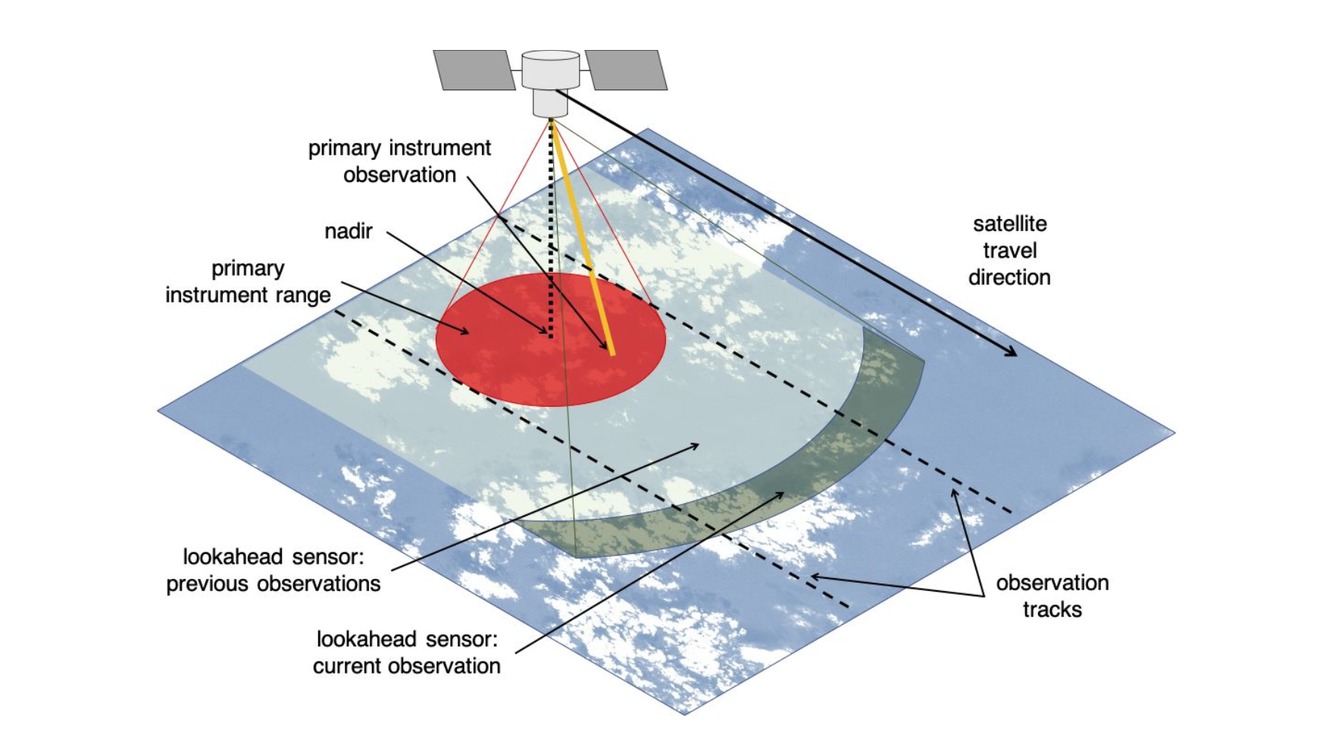
Artificial intelligence is becoming an important component of modern spacecraft operations. Traditionally, satellites collect observations and transmit them to ground stations, where operators process and analyse the data. Mission operators then decide which actions the spacecraft should perform. Although this approach has supported decades of successful missions, it can become inefficient when satellites generate more data than available communication links can transmit. AI-enabled onboard processing offers an alternative. By incorporating machine-learning algorithms and computer vision into spacecraft computers, satellites can identify patterns, classify observations and prioritise information before transmitting it to Earth.
For example, an Earth-observation satellite could identify potential forest fires, detect changes in agricultural land or flag regions affected by flooding. Instead of transmitting every image, the spacecraft could prioritise observations with the greatest scientific or operational value. AI can also support spacecraft health monitoring, anomaly detection, navigation and mission planning. In future applications, satellites may dynamically adjust observation schedules or recommend manoeuvres in response to changing environmental conditions. Nevertheless, autonomous decision-making introduces important challenges. Spacecraft have limited computing resources and must operate reliably despite radiation-induced errors, power constraints and uncertain environmental conditions. AI models must therefore be validated carefully, with conventional flight software enforcing mission and safety requirements. The long-term objective is to develop spacecraft that can respond more intelligently to their environment while reducing dependence on continuous ground intervention.
In-Orbit Servicing, Assembly & Manufacturing
In-orbit servicing, assembly, and manufacturing (ISAM) could fundamentally change the spacecraft lifecycle. Conventional satellites are generally designed to operate until their fuel is depleted, a critical component fails, or their mission ends. Replacing these satellites can be expensive, particularly when they provide essential communications, navigation or scientific services. ISAM technologies aim to make spacecraft maintainable. Servicing vehicles could inspect satellites, transfer propellant, replace components, install new payloads or relocate spacecraft to different orbits. Robotic arms, machine vision, autonomous navigation and precision rendezvous systems are central to these capabilities.
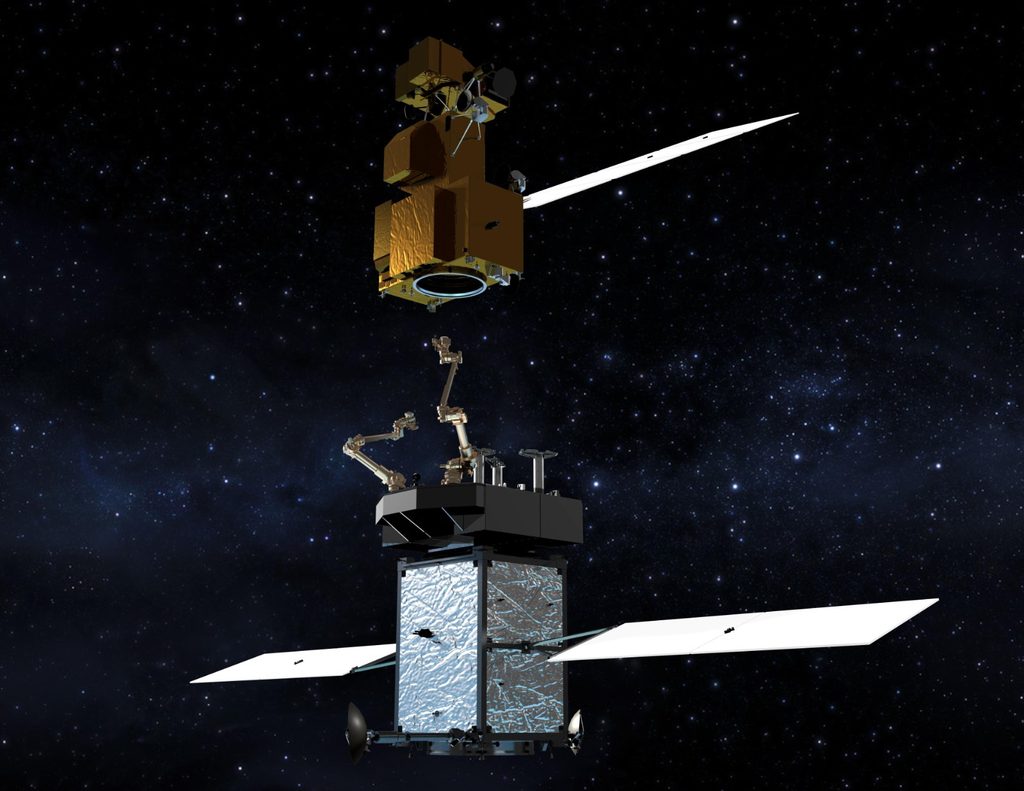
A servicing mission typically begins by identifying and approaching a target spacecraft. The servicing vehicle estimates the target’s position and orientation, performs controlled proximity manoeuvres and establishes a connection through a robotic capture mechanism or docking interface. Once securely attached, it can perform the intended operation. In-space manufacturing extends this concept further. Additive manufacturing and robotic assembly could eventually enable the construction of large antennas, structural platforms and telescope components that cannot easily be launched as complete structures. However, servicing an existing satellite is difficult because many spacecraft lack standardised refuelling ports, accessible attachment points or replaceable modules. Autonomous capture also carries collision risks, particularly when the target is rotating or its structural condition is uncertain. Future spacecraft designs will increasingly benefit from standardised interfaces and modular architectures. Such developments could reduce replacement costs, extend mission lifetimes and support a more sustainable space economy.
Advanced Electric Propulsion
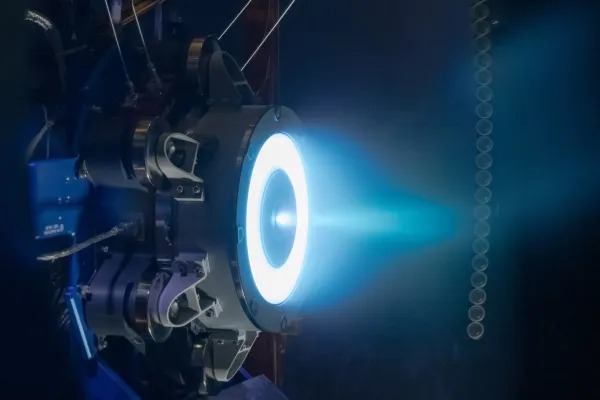
Propulsion technology determines how spacecraft change orbits, maintain positions, and travel between destinations. While chemical propulsion remains essential for launch and high-thrust manoeuvres, electric propulsion offers an alternative for missions where propellant efficiency is a priority. Electric propulsion uses electrical energy to accelerate charged particles or other propellant material, producing thrust. Major technologies include Hall-effect thrusters, gridded ion engines and electrospray propulsion systems. Hall-effect thrusters use electric and magnetic fields to generate and accelerate ions, while gridded ion engines employ electrostatic grids to produce an ion beam. Both can achieve high specific impulse, allowing spacecraft to obtain substantial velocity changes with comparatively little propellant.
These systems are particularly useful for satellite station-keeping, orbit raising, formation maintenance and interplanetary missions. Their main limitation is relatively low thrust, meaning that manoeuvres often take considerably longer than those performed using chemical engines. Research focuses on improving efficiency, reducing system mass, extending operational lifetime, and increasing available power. Alternative propellants and improved thruster designs are also being investigated. Unlike conventional electric thrusters, electrodynamic tethers can exchange momentum with the surrounding electromagnetic environment rather than relying exclusively on onboard propellant. Their performance, however, depends on the plasma environment, magnetic-field geometry, tether design and electrical operating conditions.
Satellite Swarms Distributed Spacecraft
Satellite swarms and distributed spacecraft systems use multiple satellites to perform tasks that might otherwise require a single large platform. Instead of relying on one spacecraft for all measurements, these systems distribute sensing, communication and processing capabilities across a network of smaller satellites. A constellation is typically arranged to provide a service such as global communications or repeated Earth observation. A swarm places greater emphasis on cooperation and coordinated behaviour among its members, although the two concepts can overlap. Satellite swarms can improve coverage, provide redundancy and enable measurements from multiple locations simultaneously. They may also be more adaptable because individual spacecraft can be assigned different tasks as mission priorities change.
For scientific missions, distributed sensing is particularly valuable. A single satellite measuring plasma density or magnetic fields cannot always distinguish spatial variations from temporal changes. Multiple spacecraft observing different locations can help resolve these ambiguities. NASA’s Starling mission has demonstrated technologies for autonomous manoeuvre planning, relative navigation and coordinated spacecraft operations using a group of CubeSats. Despite these advantages, swarms introduce challenges involving inter-satellite communication, orbital coordination, navigation uncertainty and fault management. Satellites must maintain suitable relative positions without excessive propellant consumption, while communication networks must continue functioning when individual links become unavailable. Future applications could include distributed radar imaging, space-weather monitoring, environmental observation and coordinated exploration of the Moon or other planetary bodies.
Laser &Optical Satellite Communications
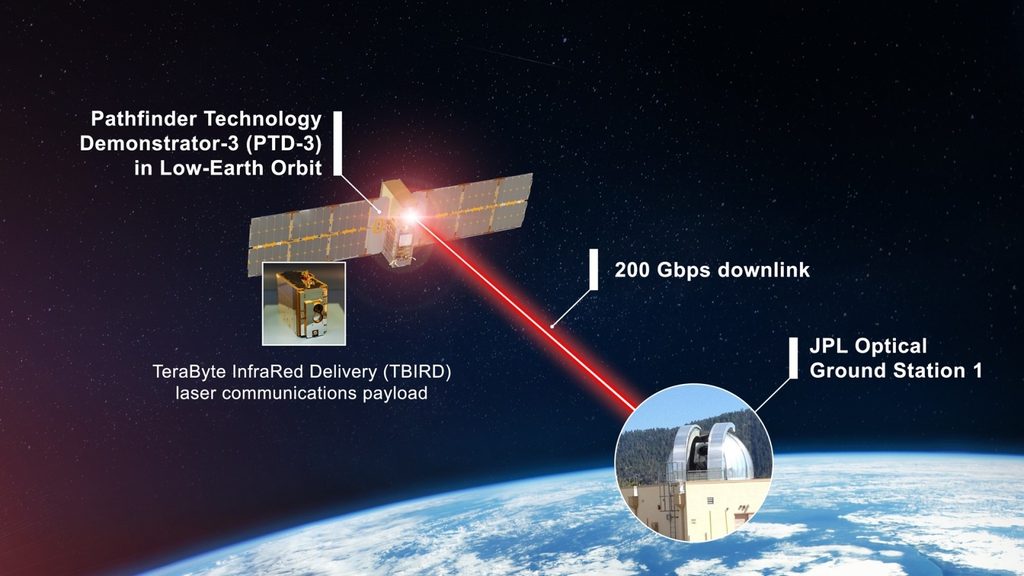
The growing volume of satellite data is driving demand for faster, more efficient communication systems. Optical communications, which transmit information using laser light rather than conventional radio-frequency signals, are emerging as an important solution. Laser beams can support high data rates and narrow transmission footprints. These characteristics make optical communications attractive for high-resolution Earth observation, inter-satellite networking and deep-space missions. A typical optical communication system includes a laser transmitter, a modulation system, a precision pointing mechanism and an optical receiver. The system encodes digital information onto the transmitted light, which is directed toward a receiving telescope. Photodetectors convert the received signal back into electrical information.
However, optical communications require highly accurate pointing, acquisition and tracking. Even small alignment errors can cause the receiver to miss the transmitted beam. Atmospheric turbulence and cloud cover can also reduce the reliability of space-to-ground links. Hybrid communication architectures that combine radio-frequency and optical systems are therefore promising. Radio links can support robust command and control, while optical links handle large volumes of data when conditions permit. As satellite networks expand, optical inter-satellite links may also support space-based communication infrastructure that relays information between spacecraft before it reaches Earth.
6. Quantum Communications and Sensing
Quantum technologies use physical principles such as superposition, entanglement and quantum interference to support specialised communication and measurement applications. In space, quantum communications and quantum sensing are two important research areas. Quantum communication systems can distribute quantum states of light and support quantum key distribution, while quantum sensors can measure physical quantities such as acceleration, rotation, magnetic fields and gravity. Quantum key distribution uses quantum states to establish cryptographic keys under appropriate protocols. Attempts to measure certain quantum states can introduce detectable disturbances, helping communication partners identify potential interception. However, overall security still depends on authentication, implementation quality and conventional cybersecurity measures. Satellites may be particularly useful for quantum communications because they can connect distant locations without requiring a continuous fibre-optic link between them.
Quantum sensing offers different opportunities. Atomic clocks can provide precise timing, while atom interferometers can measure acceleration or gravitational effects. Quantum magnetometers may also support sensitive magnetic-field measurements. These capabilities could eventually contribute to navigation, fundamental physics experiments and specialised Earth-observation missions. Nevertheless, quantum systems can be sensitive to vibration, temperature fluctuations, optical losses and radiation. Space-qualified instruments must operate within strict mass, power and thermal constraints while maintaining the required measurement precision. The key challenge is translating promising laboratory demonstrations into reliable, compact and cost-effective spacecraft instruments.
Active Space-Debris Removal
The growing population of inactive satellites, spent rocket stages and fragments is creating a long-term challenge for the sustainability of orbital operations. Active debris removal involves deliberately capturing or interacting with existing debris to reduce its future collision risk. It complements passive mitigation measures, such as designing spacecraft to avoid generating debris and ensuring their disposal at the end of their operational lives. A removal mission typically involves identifying a target, transferring to its orbit, performing rendezvous and proximity operations, capturing or attaching to the object, and changing its orbit to facilitate disposal. Potential capture technologies include robotic arms, nets, harpoons and specialised docking or attachment mechanisms. The appropriate method depends on the target’s size, geometry, rotational motion and structural condition. Effective debris management requires more than removing objects. Engineers must evaluate collision probabilities, atmospheric drag, disposal times and the expected long-term benefit of each intervention. A sustainable orbital environment will depend on combining prevention, tracking, collision avoidance, responsible end-of-life disposal and selective active removal.
The future of space technology will be shaped by integrating intelligent spacecraft, advanced propulsion, distributed sensing, high-speed communications, and sustainable orbital infrastructure. AI can make spacecraft more autonomous, while in-orbit servicing may extend satellite lifetimes. Electric propulsion and electrodynamic tethers offer different approaches to orbital manoeuvring, and satellite swarms can provide scientific measurements that are difficult to obtain using individual spacecraft. At the same time, optical communications, quantum technologies and radiation-tolerant computing are expanding the capabilities available to future missions. Space-based solar power could eventually create new energy infrastructure, while active debris removal will become increasingly important for maintaining a safe orbital environment. These technologies are at different stages of maturity, and their success will depend on continued experimentation, rigorous modelling and practical demonstrations. Their greatest potential may emerge not from any single innovation, but from the way they work together. Ultimately, the next phase of space exploration will require spacecraft that cannot only reach orbit, but also operate intelligently, collaborate with other systems, use resources efficiently, and contribute to a sustainable space environment.
Dr. Shagun Aggarwal is a space researcher specializing in space debris mitigation, with applications in spacecraft deorbiting and orbital sustainability. Her work combines experimental plasma research, geospatial analytics, and space systems design to address challenges in low Earth orbit operations.