Chaitali Bag
India’s search for a modern medium transport aircraft comes at a pivotal moment in its defence modernisation. From the high-altitude Himalayan frontier and remote border regions to maritime theatres, the Indian Air Force needs an airlift platform that combines payload, range, reliability, and multi-mission versatility—while keeping lifecycle costs sustainable. The programme also offers a valuable opportunity to expand India’s domestic aerospace manufacturing and technological capabilities.
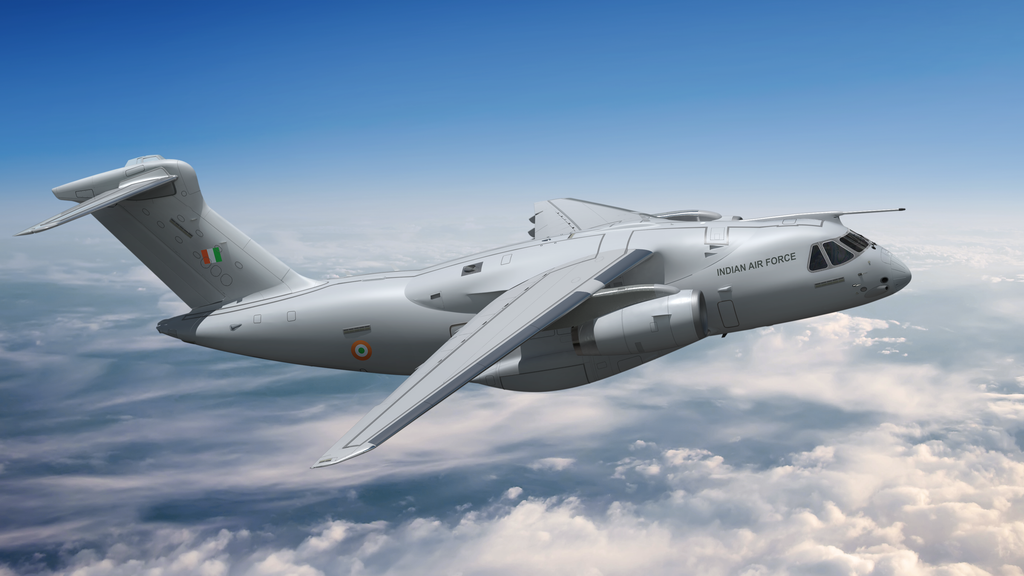
Embraer’s C-390 Millennium is designed for a broad range of missions, including troop and cargo transport, airdrops, medical evacuation, search and rescue, humanitarian assistance and air-to-air refuelling. Its multi-mission approach and focus on operational availability make it a strong contender in a programme that could help shape India’s future tactical and operational airlift capabilities.
Embraer has an established presence in India through the ERJ145, the platform underpinning the indigenous Netra Airborne Early Warning and Control (AEW&C) system developed with the Defence Research and Development Organisation (DRDO). Building on this experience, Embraer and Mahindra have proposed a partnership spanning local manufacturing and assembly, supply-chain development, engineering, and maintenance, repair and overhaul (MRO). If realised, the initiative could take India’s role well beyond aircraft acquisition, creating deeper industrial participation and long-term sustainment capabilities.
In this exclusive interaction with Indian Aerospace & Defence Magazine (IA&D), Sankalp Shrivastava, Country Head & Director, Embraer Defence & Security, India, discusses the C-390 Millennium’s suitability for Indian operating conditions, the lessons of the Netra programme and the potential for technology transfer and localisation through the proposed partnership with Mahindra. He also explores how lifecycle costs, fleet availability, interoperability and emerging technologies are shaping the future of military aviation.
As India assesses its medium airlift needs, the C-390 proposition points to an exciting opportunity: bringing operational capability and indigenous aerospace development together to build a stronger domestic industrial ecosystem.
Q. Considering Embraer’s established presence in India, notably with the ERJ145 platform forming the foundation of the Netra AEW&C system, what specific insights has this sustained engagement provided Embraer regarding the operational environment of the Indian Air Force and the particular stresses and requirements placed upon aircraft operating within India?
A. India requires aircraft capable of operating across diverse scenarios, from high-altitude regions and remote border areas to maritime and disaster-response missions. Embraer is honoured to have played a part in building the Netra AEW&C based on the Embraer ERJ145 platform together with the Defence Research and Development Organisation (DRDO) through the Centre for Airborne Systems (CABS). The three Netra AEW&C aircraft in service have delivered proven performance and reliability in real-time operations.
Our experience through the Netra programme has provided valuable insight into the Indian Air Force’s highly demanding operational environment. User feedback on the program has been encouraging, and we remain ready to support the Indian Air Force in any possible future requirements.
Q. Considering India’s diverse terrain and operating conditions, which technical characteristics of the C-390 Millennium hold the highest priority, and how effectively does the aircraft balance payload and range capabilities when operating from short or semi-prepared runways?
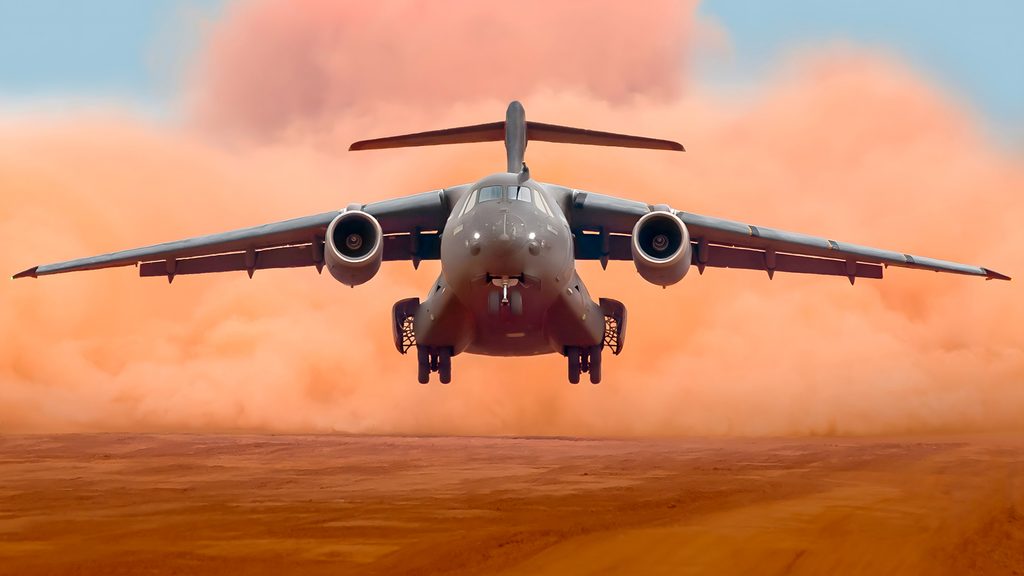
A. Designed and built in the 21st century, the C-390 is the most modern military transport aircraft in its class. It carries more payload than comparable medium-lift aircraft while flying higher, faster and farther.
It is well suited to India’s diverse operating environment, from high-altitude Himalayan airfields and remote border regions to island territories and maritime areas. With a payload of up to 26 tonnes, multi-mission capability, full fly-by-wire avionics, operation from semi-prepared runways, mission completion rates above 99%, and mission-capable rates exceeding 93%, it delivers exceptional performance while offering approximately 30% lower operational and life-cycle costs.
The C-390’s growing international adoption reflects its future-ready capabilities. Recent 2026 orders from the UAE and Colombia demonstrate confidence in the aircraft’s performance across diverse operational environments.
Q. The IAF operates a mix of transport aircraft with different capacities and roles. Where could a medium transport aircraft add the most value to that fleet, and how should planners measure the benefit in terms of availability, sortie generation and lifecycle cost?
A. A modern medium transport aircraft provides the flexibility to perform the majority of tactical and operational airlift missions while complementing heavier strategic assets. The real measure of value is not simply payload, but availability, sortie generation, mission completion rates and lifecycle cost.
The C-390 combines capability, reliability, versatility and interoperability on a single platform. It can perform troop and cargo transport, airdrops, medical evacuation, search and rescue, humanitarian assistance, firefighting, and air-to-air refuelling missions.
As one of India’s most important defence acquisition programmes, the MTA must not only strengthen future airlift capability but also advance domestic aerospace manufacturing, technology development, and self-reliance, and we believe our partnership and proposal with Mahindra is the right strategic choice to meet India’s needs.
Q. India’s Netra programme is an example of an indigenous mission system integrated onto an Embraer airframe. What technical and programme lessons from that collaboration could inform future aircraft-mission-system integration projects in India?
A. The Netra programme remains one of India’s most successful examples of aerospace co-development. It was a technically demanding programme, involving structural modification of a baseline aircraft and the integration of radar, mission systems, aerial refuelling capability and a self-protection suite. The programme demonstrated the power of early collaboration between the OEM, the customer and indigenous technology partners. Integrating advanced radar, mission systems and aircraft modifications required close engineering cooperation throughout the programme.
It is a strong example of how proven platforms and indigenous innovation can be combined to deliver highly capable, operationally relevant solutions. With the MTA, we want to support the objectives of ‘Make in India’ and ‘Atmanirbhar Bharat’ through meaningful localisation, technology transfer and cooperation, and long-term capability development, and the Netra is a great example to show that it is possible.
We have a range of modern & efficient aircraft in our fleet, and we remain open to supporting the IAF and other Indian Armed Forces in future requirements, including Intelligence, Surveillance, and Reconnaissance (ISR), VIP transport, and other special mission platforms across our portfolio.
Q. How would Embraer propose a maintenance, spares, and training model to support an Indian military aircraft fleet across its service life, and how could local capabilities optimize turnaround times?
A. If selected, the C-390 would potentially establish India as Embraer’s second assembly line and could also position India as a regional MRO Hub. Embraer and Mahindra envision a comprehensive aerospace ecosystem around the aircraft, encompassing manufacturing, assembly, supply chain development, engineering, training, and maintenance capabilities.
Our philosophy is to build in-country capability from the start. Local maintenance, repair and training capabilities help reduce turnaround times, strengthen self-reliance and ensure long-term fleet support throughout the aircraft’s lifecycle. Together with Indian industry, we aim to build in-country sustainment capability that supports high operational readiness and aircraft availability.
Q. As the IAF strengthens its networked operations, aircraft increasingly act as nodes in a wider sensor and command system. How should transport and surveillance platforms evolve to support secure data exchange, cyber resilience and joint operations?
A. Modern military aircraft must be designed as part of a broader operational network. Flexibility and interoperability are increasingly critical, ensuring platforms can operate effectively within joint and multi-domain environments. As operational environments evolve, aircraft will need to support greater interoperability, secure data exchange and the integration of new capabilities over time. Future platforms must combine performance with adaptability
In fact, the C-390 itself is constantly evolving. For example, this July, we signed an MoU with Anduril to jointly pursue integrating Anduril’s pallet-launched Barracuda-500M (B-500M) stand-off cruise missile into the C-390 Millennium. The collaboration will aim to expand the C-390’s operational capabilities by providing a flexible, rapidly deployable solution for modern military operations.
Similarly, our A-29 Super Tucano multi-mission Light Attack Aircraft has further expanded its mission portfolio to counter modern unmanned threats effectively and affordably. The A-29 already has an extensive mission set that includes close air support, armed reconnaissance and training. The A-29 is agile, quick to deploy, and one of the most cost-effective solutions for air dominance.
Q. Considering the rapid advancements in aerospace technology, what specific technical domains are projected to exert the most transformative influence on military aviation capabilities over the next ten years, and how is Embraer strategically positioning itself to address and integrate these anticipated developments into its future platforms and operations?
A. Embraer’s focus remains on developing innovative solutions that strengthen mission versatility, support agile combat employment, and increase operational possibilities for our customers worldwide. Future platforms must evolve rapidly as operational requirements change, and we are focusing on modern digital architectures, open-system designs, and continuous capability enhancement to ensure our aircraft remain adaptable, relevant, and operationally effective throughout their lifecycle.
All responses are attributed to Sankalp Shrivastava, Country Head & Director, Embraer Defence & Security, India.