Connecting security, trade and regional partnerships to shape a resilient Indo-Pacific
Chaitali Bag
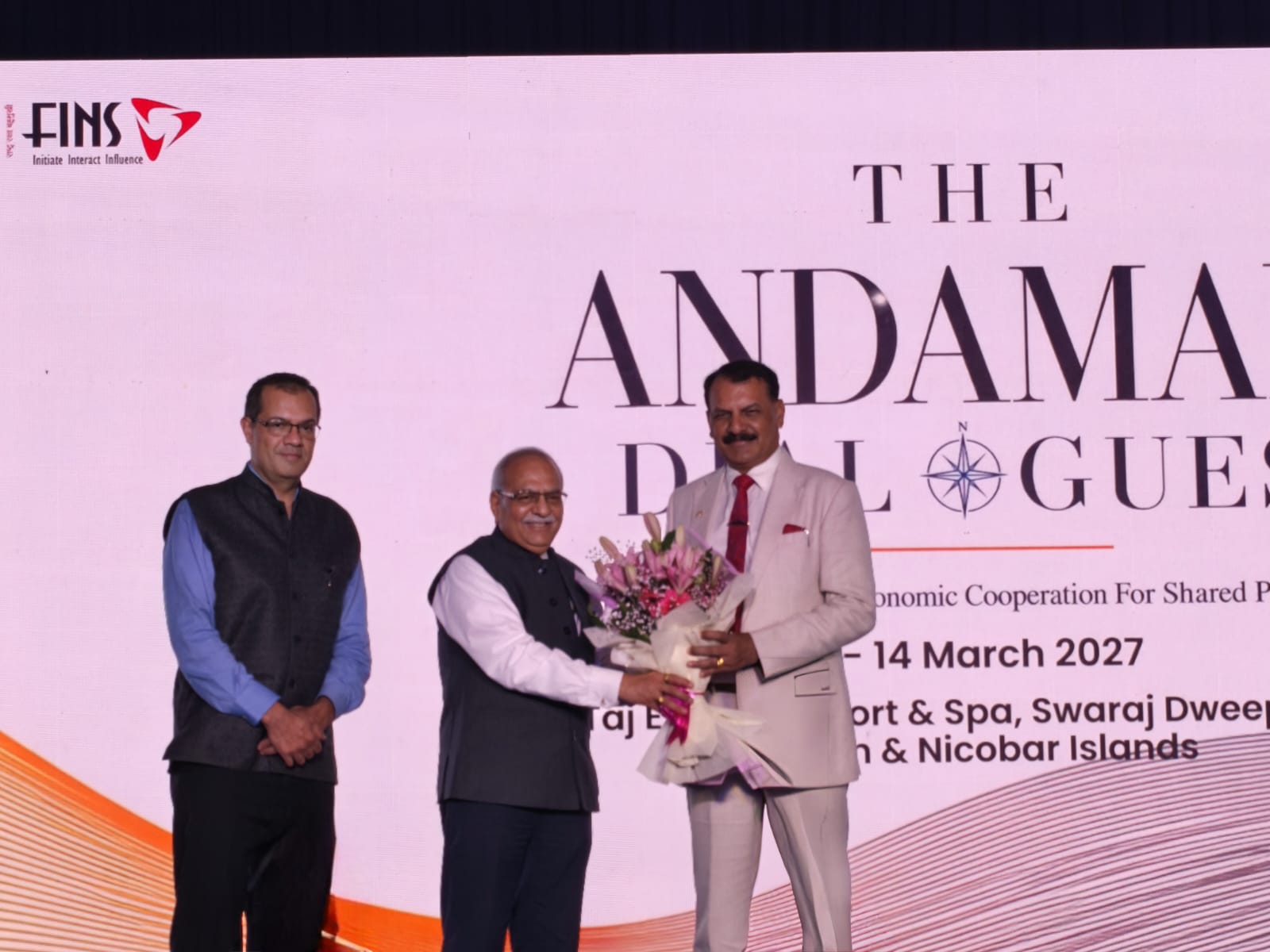
The curtain raiser of the Andaman Dialogues in New Delhi marked an important step towards positioning the Andaman and Nicobar Islands as a catalyst for maritime cooperation, economic resilience and shared prosperity across the Indo-Pacific. Bringing together perspectives from national security, maritime strategy, trade and industry, the event advanced a compelling proposition: the seas that connect nations must become platforms for deeper cooperation, stronger economic linkages and enduring regional stability.
With the inaugural edition scheduled for 12–14 March 2027 at Swaraj Dweep in the Andaman Islands, the initiative seeks to move beyond strategic discussions towards practical partnerships that deliver tangible outcomes. Its central premise is both timely and consequential—maritime security and economic prosperity are not competing priorities; they are mutually reinforcing foundations of national and regional strength.
The curtain raiser highlighted the growing importance of the maritime domain as global supply chains are reorganizing, critical infrastructure faces new vulnerabilities, and geopolitical uncertainty reshapes the movement of goods, energy, data and capital. In this evolving landscape, the Andaman and Nicobar Islands occupy exceptional strategic value, standing at the intersection of the Bay of Bengal, the Andaman Sea, and the wider Indo-Pacific, close to some of the world’s most consequential maritime routes.
The dialogue aims to transform this geographic advantage into a platform for collaboration—bringing together governments, armed forces, maritime agencies, port operators, industry leaders, financial institutions, technology providers, researchers and regional partners to address shared challenges and identify commercially viable opportunities.
Trade & Security: A Shared Maritime Vision
The message emerging from the curtain raiser was that the future of the Indo-Pacific will depend not merely on securing maritime routes, but on making them more resilient, accessible and economically productive.
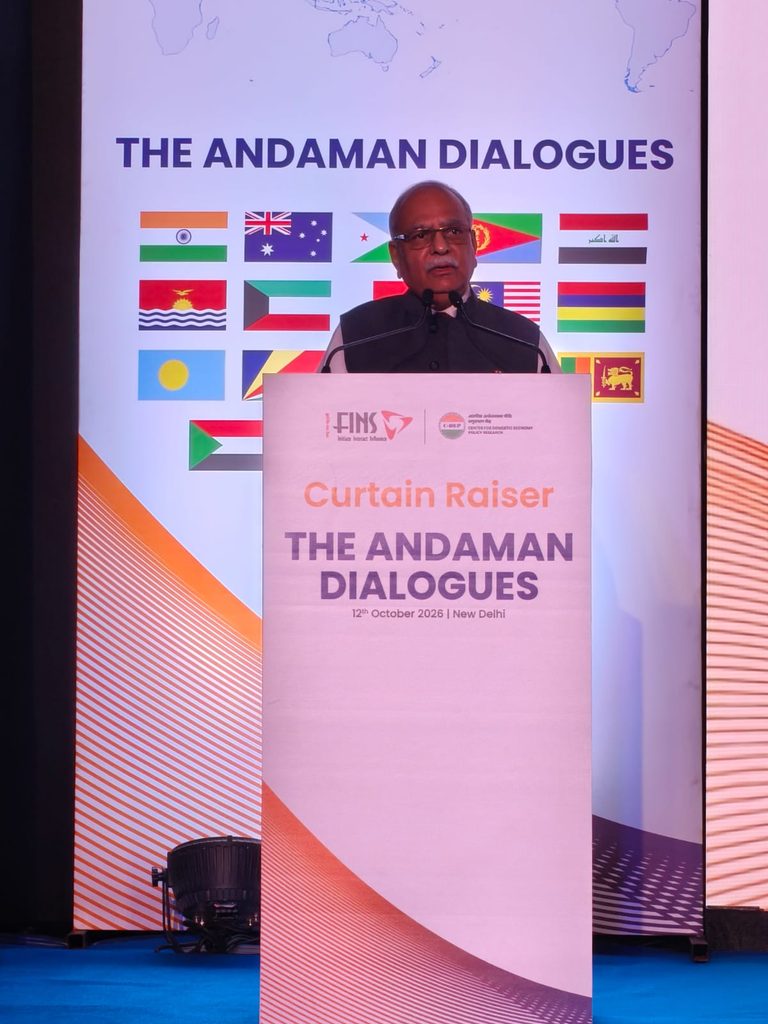
In his address, Union Minister of Commerce and Industry Piyush Goyal underscored the importance of maritime connectivity in a global economy increasingly shaped by supply-chain realignment, technological change and the need for trusted partnerships. He highlighted India’s economic policy priorities of resilience, capacity and partnership—diversifying supply chains, expanding infrastructure and strengthening trade relationships. He also emphasised the Andaman and Nicobar Islands’ potential to serve as an economic bridge linking South Asia, Southeast Asia and the wider Indo-Pacific.
The minister’s perspective added an important economic dimension to the initiative. As India seeks to expand its global trade relationships and strengthen domestic manufacturing, the islands could play a more significant role in regional logistics, port connectivity, shipping, and value-chain integration. The proposed dialogue aims to translate these opportunities into practical initiatives through specialised working groups, identifying policy barriers and developing commercially viable projects.
The Andaman Sea: Where Geography Meets Geopolitics
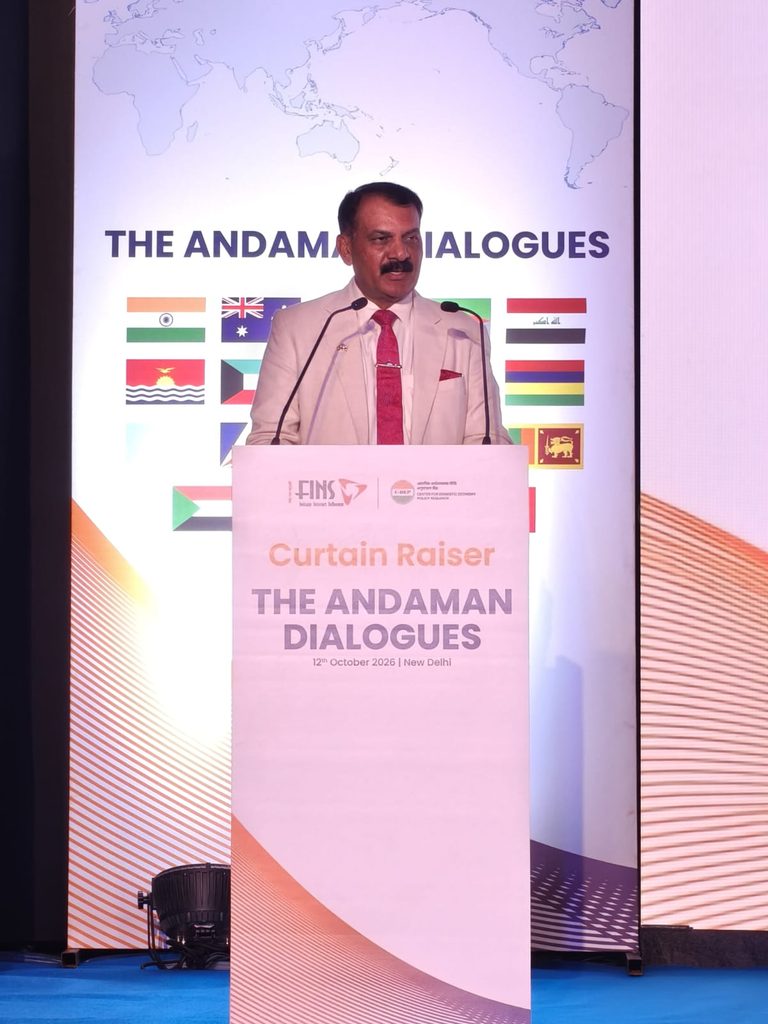
Admiral Dinesh K. Tripathi (Retd), former Chief of the Naval Staff and Chairman of the National Maritime Foundation, highlighted the Andaman Sea’s strategic significance, particularly its proximity to the Strait of Malacca, one of the world’s most important maritime trade arteries.
The Andaman and Nicobar Islands are far more than a remote island chain. Their location gives India a vital strategic vantage point over the eastern approaches to the Indian Ocean, while creating opportunities to strengthen maritime awareness, regional connectivity, and cooperation with neighbouring countries.
The scale of global dependence on the seas makes this geography especially consequential. More than 80% of global merchandise trade by volume moves by sea, according to the figures highlighted during the event. Disruptions to critical maritime passages can generate cascading consequences for energy supplies, manufacturing, shipping costs and international commerce.
Admiral Tripathi’s emphasis on security and growth as twin drivers of national development captured the essence of the Andaman Dialogues. Secure sea lanes sustain economic activity, while stronger economic relationships create additional incentives for stability and cooperation. The two must advance together.
He also highlighted practical avenues for cooperation, including a shared maritime picture, improved port-to-port connectivity, collaboration in shipbuilding and ship repair, seafarer training, and regular communication between maritime industries, navies, coast guards and diplomatic establishments.
These proposals reflect an approach to maritime security that extends beyond naval deployments. It encompasses the infrastructure, information systems, commercial relationships and institutional mechanisms needed to keep regional trade moving during periods of uncertainty.
From Strategic Dialogue to Commercial Outcomes
A defining feature of the Andaman Dialogues is its ambition to connect strategic thinking with implementation. The initiative, discussed by J. D. Patil, President of FINS, seeks to create a recurring platform where governments, businesses, investors and institutions can identify shared priorities and develop actionable partnerships.
This is particularly important as regional economies seek to diversify supply chains and reduce dependence on vulnerable logistical chokepoints. Stronger industrial networks, better access to financing, improved infrastructure and more reliable cross-border connectivity can help countries respond to disruptions while creating new avenues for trade and investment.
The proposed agenda for the 2027 dialogue centres on three interconnected pillars:
– Maritime governance: Strengthening cooperation on regulations, information sharing, maritime awareness and coordinated responses to disruption.
– Maritime infrastructure: Exploring opportunities in ports, shipping connectivity, shipbuilding, ship repair, logistics and the resilience of critical submarine cables.
– Financial connectivity: Improving the mechanisms that support regional trade, investment and commercial partnerships.
The ambition is to move beyond broad declarations of intent to practical cooperation, including mapping regional value chains, identifying investment opportunities, and developing projects with credible commercial foundations.
The Andaman and Nicobar Islands could provide a natural focal point for this effort, connecting India’s Act East policy with the economic and strategic interests of Southeast Asian partners. Realising this potential, however, will require sustained investment, effective coordination, commercially viable infrastructure and careful attention to the islands’ ecological sensitivity.
A Platform for a More Resilient Indo-Pacific
The curtain raiser reinforced a larger reality: maritime resilience is no longer solely a defence concern. It is an economic imperative.
Ports, shipping lanes, energy routes, undersea communications cables and financial networks form an interconnected system on which modern economies depend. A disruption in one part of this system can affect supply chains, digital services, insurance costs and industrial production far beyond the immediate location of the incident.
The Andaman Dialogues seeks to encourage a more integrated response to these challenges by bringing security and commercial stakeholders into the same conversation. Such engagement could improve regional understanding, strengthen contingency planning and help develop alternatives when conventional routes or infrastructure are disrupted.
For India, the initiative also presents an opportunity to deepen maritime partnerships while contributing to a free, open, secure and rules-based maritime order. Its success will depend on combining India’s strategic interests with the shared economic priorities of regional partners.
The opportunity is substantial, but it must be pursued with realism. Geography alone does not create a maritime hub, and strategic importance does not automatically translate into commercial success. Infrastructure, connectivity, regulatory coordination, environmental stewardship and private-sector confidence will determine how effectively the islands’ potential can be realised.

From the Andaman Islands to the Indo-Pacific: A Vision for Shared Prosperity
The curtain raiser of the Andaman Dialogues has laid the foundation for a conversation that is both strategically relevant and economically ambitious. By bringing together maritime security, trade, infrastructure, technology and finance, it seeks to create a framework in which regional cooperation can produce measurable outcomes.
The forthcoming dialogue at Swaraj Dweep offers an opportunity to turn this vision into a practical agenda: more resilient supply chains, stronger port connectivity, deeper maritime-industrial collaboration and more effective mechanisms for managing shared risks.
For India, the Andaman and Nicobar Islands represent a distinctive strategic asset—one that connects the country’s maritime security interests with its ambitions for trade, economic growth and regional leadership. For the wider Indo-Pacific, they could become a focal point for cooperation built around connectivity, resilience and mutual benefit.
The larger significance of the Andaman Dialogues lies in its ambition to transform a strategic location into a platform for collective progress. By bringing security and commerce into a common framework, the initiative can help advance a maritime future in which safer seas enable stronger trade, stronger trade deepens trust, and greater trust creates the foundations for lasting regional prosperity.