Kamal Shah
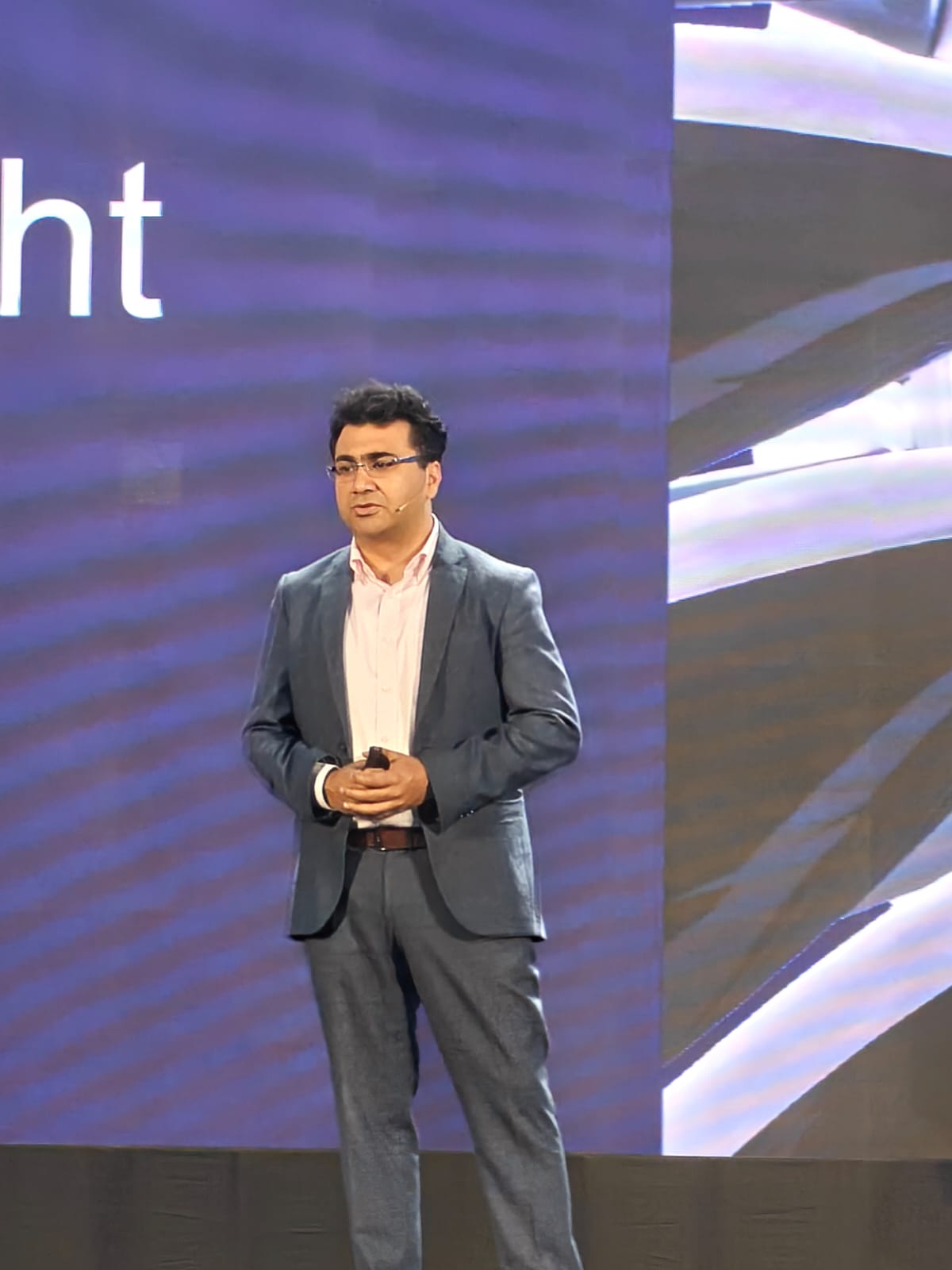
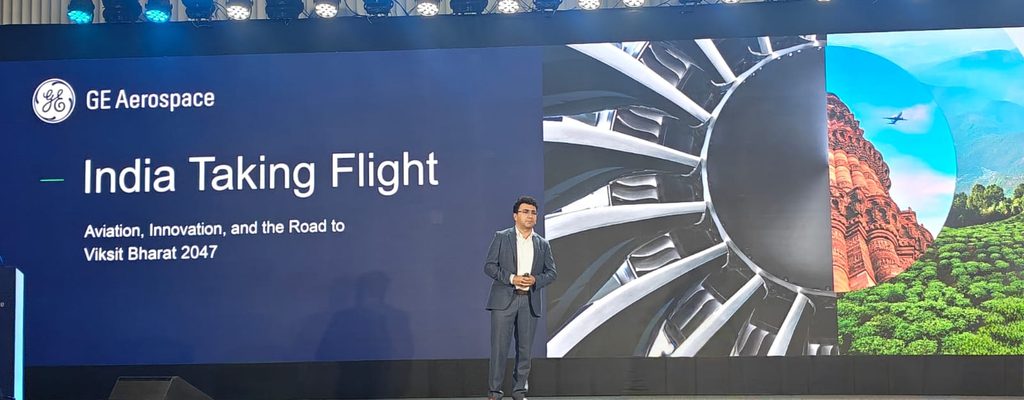
India’s ambition to become a developed economy by 2047 will depend not only on expanding its aviation infrastructure but also on building the technological capabilities, manufacturing ecosystem and skilled workforce required to sustain that growth. This was the central message emerging from India Taking Flight: Aviation, Innovation, and the Road to Viksit Bharat 2047, organised alongside the launch of GE Aerospace’s India Economic Impact Report, Powering Progress: GE Aerospace Economic Impact in India.
The perspectives shared by Vikram Rai, CEO, South Asia, GE Aerospace, and Rajnish Gupta, Partner, Tax and Economic Policy Group, EY India, highlighted a critical dimension of India’s aviation transformation: the opportunity to convert rapidly growing domestic demand into long-term industrial strength, global supply-chain integration and greater strategic self-reliance.
India’s aviation sector currently contributes approximately 1.5% to the national economy through its direct and indirect effects, including tourism. The economic opportunity could expand substantially by 2047, with the sector’s contribution potentially reaching 3%, as the report’s findings suggest. Against the backdrop of an economy aspiring to reach $25–30 trillion, aviation is increasingly positioned as an economic multiplier rather than simply a means of transportation.
The anticipated expansion is significant. Passenger traffic is projected to rise from approximately 340 million to 1.2 billion, while the number of airports could reach 350 by 2047. Achieving these ambitions will require sustained investment in airports, aircraft, engines, maintenance infrastructure, digital technologies and specialised human capital. Crucially, it will also demand a stronger domestic industrial base capable of supporting this growth.
From Market Growth to Industrial Capability
For GE Aerospace, India’s aviation expansion represents both a growing market and an opportunity to deepen its role in the country’s aerospace industrial ecosystem. According to Vikram Rai’s opening remarks, GE Aerospace has maintained a presence in India for nearly four decades, evolving from a primarily commercial presence into a broader partnership encompassing engineering, manufacturing, maintenance and defence.
The scale of its commercial engine footprint illustrates the strategic significance of this relationship. GE Aerospace currently has approximately 1,400 commercial engines operating in India, with more than 3,200 additional engines projected for delivery over the next nine to ten years. Rai said about nine out of every ten aircraft expected to be delivered in the coming decade would be powered by GE Aerospace or its joint ventures.
These projections underline a fundamental reality: the expansion of India’s airline industry will create substantial demand for propulsion systems, maintenance, repair and overhaul (MRO), spare parts and lifecycle support. The larger policy challenge is ensuring that a meaningful share of this opportunity translates into domestic industrial capability, skilled employment and technological advancement.
Aviation growth, therefore, must be measured not only in passenger numbers, aircraft orders and airport capacity, but also in the value India creates across the aircraft lifecycle.
Building a Global Aerospace Manufacturing Ecosystem
One of the report’s most consequential findings concerns the evolution of India’s aerospace manufacturing and supplier base. GE Aerospace’s Pune facility, established with an investment of approximately $200 million, exemplifies the transition toward high-precision manufacturing for global aerospace programmes.
The company sources components through 17 local Indian suppliers, integrating domestic manufacturers into its international supply chain. This is particularly significant in an industry where quality, reliability, traceability and manufacturing tolerances are exceptionally demanding.
Developing aerospace suppliers is not simply about transferring orders to local companies. It requires sustained investment in specialised materials, production processes, quality assurance, technical expertise and the ability to meet stringent international standards. Long-term customer commitments and technical collaboration are equally important in enabling suppliers to make the investments necessary for growth.
The report indicates that India has developed the capability to manufacture an estimated 50% of aircraft components over approximately 15 years. While this represents substantial progress, the next phase must focus on moving Indian suppliers towards increasingly sophisticated components, higher-value manufacturing and a greater share of global programme responsibilities.
GE Aerospace’s reported expenditure of approximately $200 million on Indian supplies in 2025 provides a tangible indication of the scale of this relationship. The company expects this expenditure to nearly double between 2025 and 2030.
If realised, this expansion could deepen domestic supply-chain integration and create opportunities for Indian manufacturers to scale their operations, improve productivity and develop export-oriented capabilities. The larger strategic objective should be to build an ecosystem in which Indian suppliers are not merely fulfilling orders but are becoming indispensable partners in global aerospace manufacturing.
Engineering & Innovation: Moving Beyond the Manufacturing Floor
India’s long-term aerospace competitiveness will depend equally on its ability to design, develop and improve advanced technologies.
GE Aerospace established its engineering presence in Bengaluru in 2000. Over the years, the centre has contributed to global programmes and generated approximately 1,000 patents, according to the remarks and report material. Its work includes improvements in engine fuel efficiency, engine-health monitoring and advanced propulsion technologies.
This engineering footprint challenges the conventional distinction between India as a manufacturing destination and other countries as centres of innovation. Indian engineering talent is increasingly contributing to technologies that support global aerospace programmes, including research into next-generation propulsion.
The development of CFM International’s RISE programme, which explores technologies for more efficient next-generation engines, reflects the importance of advanced research in addressing aviation’s future performance and efficiency requirements. GE Aerospace’s Bengaluru engineering ecosystem is also associated with work on digital technologies, including AI-enabled engine-health monitoring.
The implications extend beyond individual technology programmes. As aircraft systems become more software-intensive and data-driven, opportunities are emerging in predictive maintenance, operational optimisation, digital engineering and lifecycle management. Indian engineers and technology companies can play a larger role in these areas if sustained investment, industry collaboration, and access to demanding global programmes support domestic research capabilities.
For India, the ambition should be to move from contributing engineering hours to owning more intellectual property, developing differentiated technologies, and helping define future aerospace systems.
Defence Self-Reliance & the Strategic Value of Propulsion
The commercial aviation opportunity is only one dimension of GE Aerospace’s contribution. Its defence-related activities highlight the central importance of propulsion technology to India’s broader objective of strategic autonomy.
The company supports Indian defence aviation through engine programmes, including the F404 engine used in the Tejas family, and has highlighted cooperation around the F414 engine for future Indian combat aircraft programmes. GE’s wider industrial engagement also includes assembling LM2500 marine gas-turbine engines in India.
These programmes demonstrate the value of international partnerships in building indigenous industrial capability. They also highlight a persistent challenge: manufacturing an aircraft domestically does not automatically mean that all its critical technologies are domestically controlled.
Aircraft engines require sophisticated metallurgy, advanced materials, precision manufacturing, complex testing and extensive certification. Developing these capabilities requires sustained research, investment and experience accumulated over long periods.
The long-term opportunity lies in expanding work undertaken within India, strengthening domestic suppliers, and building the capacity to manufacture, maintain, and support increasingly complex propulsion systems. Greater absorption of technology and manufacturing processes can deepen the country’s industrial base, although the precise extent of technology transfer and domestic production will depend on programme agreements and implementation.
The distinction between assembly, component manufacturing and comprehensive engine-development capability is particularly important. Each represents a different level of technological maturity. Progress towards deeper domestic capability will be central to India’s ambition to reduce critical dependencies while remaining integrated with trusted international aerospace partners.
Talent as the Foundation of Expansion
Neither manufacturing capacity nor advanced engineering can scale without a specialised workforce. GE Aerospace’s training activities in Pune have reportedly trained approximately 5,000 production associates, illustrating the importance of workforce development alongside capital investment and technology deployment.
Aerospace manufacturing requires skills that extend beyond conventional industrial production. Precision machining, quality control, advanced materials, inspection, process engineering and compliance with global aviation standards all demand specialised training and practical experience.
As India expands its aircraft fleet, MRO infrastructure and manufacturing base, demand for these capabilities is likely to grow. The challenge will be to ensure workforce development keeps pace with industrial expansion rather than becoming a constraint.
Closer collaboration between aerospace companies, technical institutions, universities and training organisations could help create structured pathways from vocational education to advanced engineering roles. Such collaboration would also enable Indian workers to move towards higher-value activities as the domestic ecosystem matures.
A skilled workforce is not merely an operational requirement. It is essential to technological sovereignty and long-term industrial competitiveness.
The Road to 2047: Converting Opportunity into Lasting Value
The launch of GE Aerospace’s economic impact report comes at a pivotal moment for Indian aviation. Rising passenger demand, airport expansion, aircraft procurement and the growth of domestic manufacturing are creating a substantial opportunity for the country to strengthen its position in the global aerospace industry.
Yet the opportunity should not be confused with a guaranteed outcome. Higher aircraft deliveries and greater aviation activity will generate economic value, but how much India captures will depend on the depth of domestic supply chains, the sophistication of manufacturing, the strength of engineering capabilities, and the availability of skilled talent.
Three priorities stand out.
First, deepen domestic value addition by enabling Indian suppliers to move into more complex components, processes and global aerospace programmes.
Second, strengthen indigenous engineering and research so that India participates not only in manufacturing existing technologies but also in developing the propulsion, digital and efficiency solutions that will define future aviation.
Third, align aviation expansion with industrial development by integrating infrastructure investment, MRO capacity, workforce development and defence manufacturing into a coherent long-term strategy.
GE Aerospace’s nearly four-decade engagement with India shows how sustained industrial relationships can evolve alongside a growing market. Its investments in engineering, manufacturing, supplier development and training illustrate the potential for international partnerships to contribute to India’s economic and technological ambitions.
Ultimately, Viksit Bharat 2047 will require more than a larger aviation market. It will require an aviation ecosystem capable of generating domestic expertise, globally competitive products, high-value employment and resilient industrial capabilities.
The most important measure of success will therefore not be how many aircraft India operates by 2047, but how much of the technology, manufacturing capability, intellectual property and economic value behind those aircraft India can create and sustain at home.