The India–U.S. Javelin agreement marks a significant shift from buying an advanced anti-tank weapon to building a deeper industrial relationship around it
Chaitali Bag
The signing of the Letter of Offer and Acceptance (LOA) for the acquisition of the Javelin anti-tank guided missile system represents considerably more than another addition to the Indian Army’s arsenal. Alongside a new agreement between the Javelin Joint Venture (JJV) and Tata Advanced Systems Limited (TASL) to explore co-production of the Javelin All Up Round (AUR) in India, the development points to a potentially important evolution in the India–U.S. defence relationship: from platform acquisition to industrial integration.
The United States has welcomed India’s signing of the LOA through the U.S. Foreign Military Sales (FMS) process, describing it as a milestone in the expanding defence partnership between the two countries. U.S. Ambassador to India Sergio Gor characterised the agreement as evidence of a defence partnership becoming “growing deeper, more capable, and more consequential,” while highlighting opportunities for the two countries’ defence industries to work together.
That industrial dimension is arguably the most consequential aspect of the development.
The Javelin purchase: a capability decision
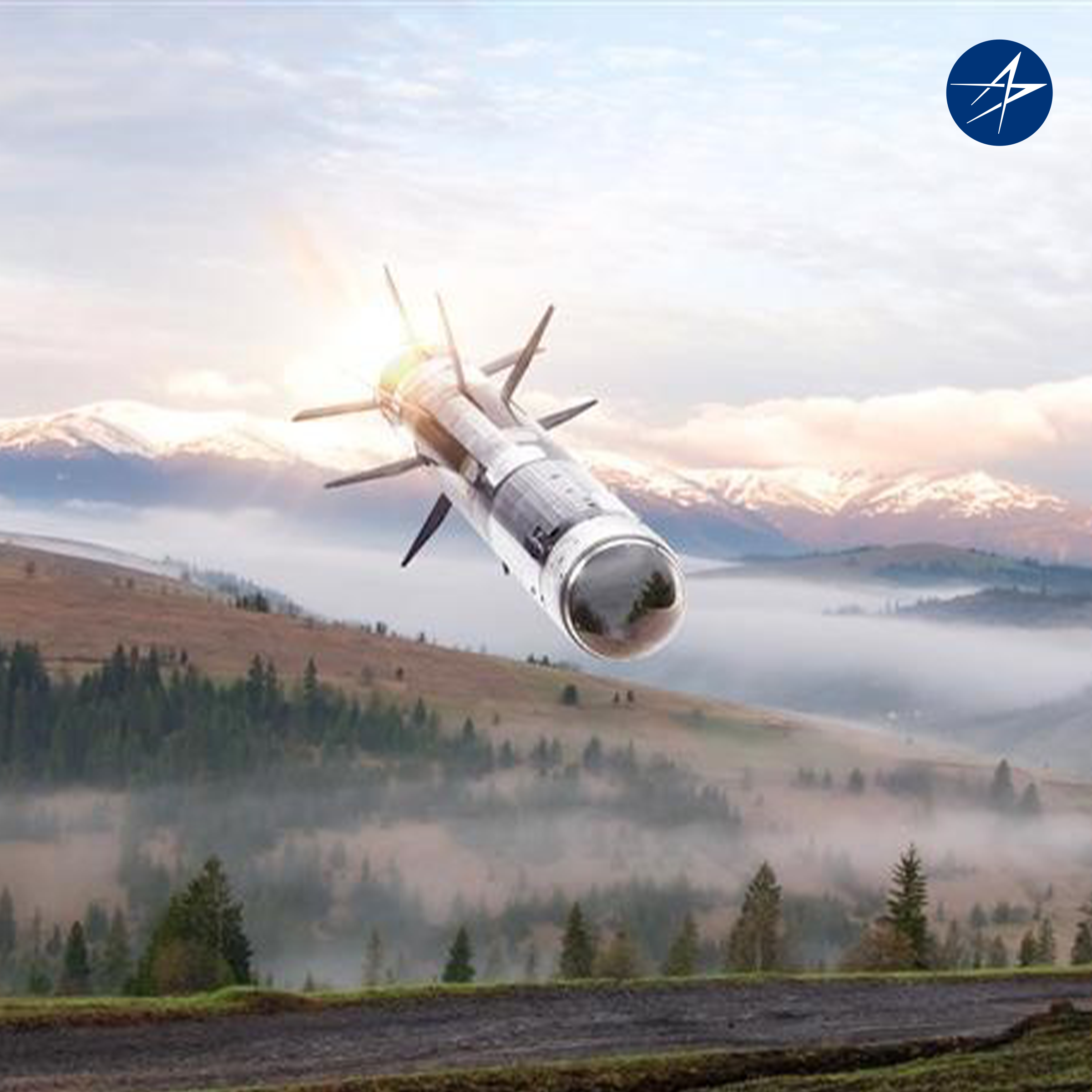
The Javelin is a medium-range, fire-and-forget anti-tank guided missile designed to engage armoured vehicles and fortified positions. Its principal operational attraction lies in giving infantry and other ground formations a highly capable precision anti-armour weapon without requiring the operator to maintain continuous guidance after launch.
For India, the acquisition addresses an important tactical requirement: providing mobile formations with a modern, man-portable anti-armour capability to operate against contemporary battlefield threats.
The November 2025 U.S. State Department determination had approved a possible FMS sale to India valued at an estimated $45.7 million. The proposed package included 100 FGM-148 Javelin rounds, one fly-to-buy missile, and 25 Lightweight Command Launch Units (LwCLU) or Block 1 Command Launch Units, together with trainers, simulation rounds, technical documentation, lifecycle support, spares, training, refurbishment and other logistical and programme-support elements.
The figure, however, was explicitly described as the highest estimated quantity and dollar value based on initial requirements. The actual value would depend upon India’s final requirements, budget authority and the signed sales agreement.
This distinction is important. The Javelin acquisition should therefore not be viewed simply through the headline dollar value or missile count. The package is also an investment in training, sustainment, integration and long-term operational availability.
The bigger story is happening in India
Exciting news arrived on August 31, 2026: Tata Advanced Systems Limited (TASL) and the Javelin Joint Venture (JJV) unveiled a memorandum of understanding to explore co-producing the Javelin All Up Round (AUR) in India, a development with truly game-changing implications for defence industrial cooperation.
After a thorough, competitive assessment of multiple Indian candidates, the JJV selected TASL as its prime Indian partner for prospective in-country co-production. That endorsement reflects TASL’s demonstrated capabilities and expertise and marks a clear vote of confidence in India’s industrial capacity to join a cutting-edge global supply chain.
The proposed industrial architecture is ambitious and forward-looking. It envisions an Indian facility not only for the final assembly and integration of the Javelin AUR but also for the production of key components. This is not merely a manufacturing arrangement; it represents a strategic shift in how defence equipment relationships can be structured. Rather than India being only the end user that imports a finished missile, the new model proposes embedding an Indian defence firm within the Javelin’s global production ecosystem, a partner contributing directly to the weapon’s manufacture and life cycle.
That change transforms the transaction’s character: the relationship evolves from a one-time transfer of hardware into an integrated, enduring commercial partnership. The agreement opens the door to comprehensive collaboration across manufacturing, supply-chain development, workforce skills building, technology absorption, and long-term sustainment. It promises job creation, industrial upskilling, and deeper defence-industrial ties between India and the United States.
If realized, this MOU could become a template for a new generation of India–U.S. defence cooperation, one in which commercial partnerships go well beyond sales and deliveries to create shared production lines, resilient supply networks, and joint capabilities that endure across decades. That prospect is not just strategically important; it is a vivid signal that the future of defence collaboration will be built on shared industrial foundations and mutual investment in capacity, innovation, and sustainment.
Tata’s role is strategically significant.
The selection of TASL is noteworthy in itself. Tata Advanced Systems has developed extensive capabilities across aerospace and defence and maintains partnerships and joint ventures with major international aerospace and defence companies.
The Javelin MOU allows it to extend those capabilities into one of the world’s most established precision-guided weapon programmes.
According to the agreement, sub-assembly kits would continue to be produced at Lockheed Martin’s facility in Troy, Alabama. In contrast, guidance electronics units would be produced at Raytheon’s Tucson, Arizona, facility. These components would then be shipped to India for final assembly and integration.
This is consequently not a conventional “all manufacturing moves to India” model.
Instead, it represents a distributed transnational production architecture: critical elements remain within the U.S. industrial base, while India gains capabilities in final assembly, integration, and component production.
That distinction matters because it provides both sides with strategic benefits.
For India, it expands domestic manufacturing capability and creates opportunities for workforce development and knowledge acquisition. For the United States, this means retaining significant production activity while gaining an additional node in the Javelin supply chain.
From Make in India to supply-chain integration
India’s defence-industrial policy has increasingly sought to move beyond licence production and towards genuine participation in global aerospace and defence supply chains.
The Javelin arrangement potentially fits that objective particularly well.
The proposed Indian production ecosystem is expected to bring final assembly and integration closer to the end-user while creating opportunities for Indian suppliers. The JJV says the initiative could create high-technology employment, enhance local manufacturing expertise, and improve global supply chain resilience.
For India, the strategic value of local assembly is therefore not limited to reducing dependence on imports.
Domestic production and integration capabilities can improve availability, responsiveness, and sustainment, particularly during periods when international demand for weapons systems rises sharply.
The JJV has stated that it has produced more than 55,000 Javelin missiles and more than 12,000 reusable Command Launch Units to date. Integrating India into this established production ecosystem gives the country access to an already mature global programme rather than requiring the creation of an entirely new industrial architecture.
The economics of scale
There’s a hugely important factor we can’t overlook: economics and it’s downright exciting. The JJV makes a compelling case that co-production can increase overall production volumes, enabling the U.S. Government to meet economic order quantities and unlock real, measurable cost savings. That’s not just a paper exercise; it’s the seed of a powerful, positive feedback loop.
Imagine it: rising global demand fuels larger production runs; those larger runs generate economies of scale; economies of scale push unit costs down; and lower costs make these systems far more affordable, which in turn broadens access for partner nations. It’s a cycle that amplifies impact well beyond any single buyer’s inventory.
India’s involvement could be transformative in this context. A manufacturing hub there wouldn’t merely serve India’s needs; it could also fit into a broader supply-chain strategy to meet partner-country demand across the region, all while operating within U.S. export-control rules and any commercial and government agreements negotiated. In short, the Javelin partnership starts to take on a distinctly Indo-Pacific strategic and economic dimension, with ripple effects that could reshape affordability and access across allied nations.
A new node in the Indo-Pacific security architecture
The United States’ FMS determination explicitly linked the proposed sale to strengthening the U.S.–Indian strategic relationship and improving India’s ability to respond to current and future threats.
It also assessed that the sale would not alter the basic military balance in the region.
The subsequent co-production initiative goes a step further.
A locally supported Javelin capability could contribute to a more resilient regional defence-industrial ecosystem. The JJV itself has framed the arrangement as supporting reliable supply, faster fielding and sustained readiness for partner nations in the Indo-Pacific.
This is particularly relevant at a time when defence planners globally are paying greater attention to ammunition stocks, production capacity and the resilience of supply chains.
The conflict in Ukraine and other recent security developments have demonstrated that possessing sophisticated weapons is only one part of military capability. The ability to produce, replenish, repair and sustain that weapon at scale can be equally decisive.
The Javelin initiative reflects that lesson.
The technology question
For India, however, the ultimate test will be the depth of industrial participation.
The term “co-production” can encompass different levels of manufacturing responsibility. The announced arrangement currently focuses on exploring the final assembly and integration of the Javelin AUR, as well as component production capabilities.
The agreement itself describes knowledge transfer and assembly expertise as important elements of the initiative. TASL CEO and Managing Director Sukaran Singh said the programme would bring “critical assembly expertise and knowledge transfer” into India’s defence industrial ecosystem while strengthening self-reliance.
The strategic question for India will consequently be how far the industrial relationship develops beyond assembly.
The greatest long-term benefit would come if Indian suppliers progressively participate in a broader range of the missile’s manufacturing and support ecosystem, building competencies in precision engineering, electronics, guidance-related manufacturing, quality assurance, testing and sustainment.
That evolution will depend on the final industrial arrangements and the degree of access to technology and manufacturing ultimately agreed between the partners.
A test case for the India–U.S. defence relationship
The Javelin programme could become an important test of India’s ability to reconcile two objectives: acquiring proven foreign technology rapidly while simultaneously building indigenous industrial capacity.
These objectives are not necessarily contradictory.
A mature defence ecosystem can use international partnerships to accelerate capability development while ensuring that Indian companies progressively acquire the skills, infrastructure and supplier networks required to participate in global production.
The Javelin model appears to be moving in that direction.
The United States retains important production activity in its domestic industrial base. India gains an indigenous manufacturing and integration node. The JJV expands supply-chain resilience. And the Indian Army gains access to a proven capability with an associated local support ecosystem.
That is a considerably more sophisticated proposition than a conventional import.
From customer to partner
Perhaps the most important phrase in the entire development is not “Javelin missile” but “prime partner.”
TASL’s selection by the JJV signals an intention to position Indian industry as an active participant in the programme rather than merely a customer.
That distinction could prove significant for the future of India–U.S. defence cooperation.
If successfully implemented, the Javelin programme could demonstrate how FMS acquisitions can evolve into industrial partnerships, creating pathways from purchase → local assembly → component manufacturing → supply-chain participation → potentially deeper co-development or co-production.
It would also align closely with India’s broader ambition to become a defence manufacturing hub and a reliable participant in global defence supply chains.
The Javelin may therefore be entering India as an anti-tank missile, but its larger strategic significance lies elsewhere.
It could become a building block in a new India–U.S. defence-industrial relationship—one in which India is not simply buying American capabilities but increasingly helping to build, sustain, and integrate them.
That is the real significance of the Javelin agreement.