Kamal Shah
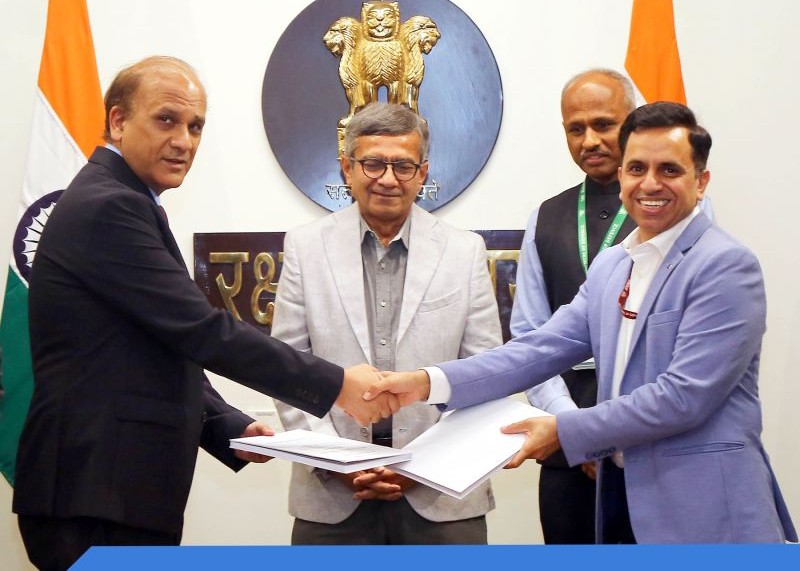
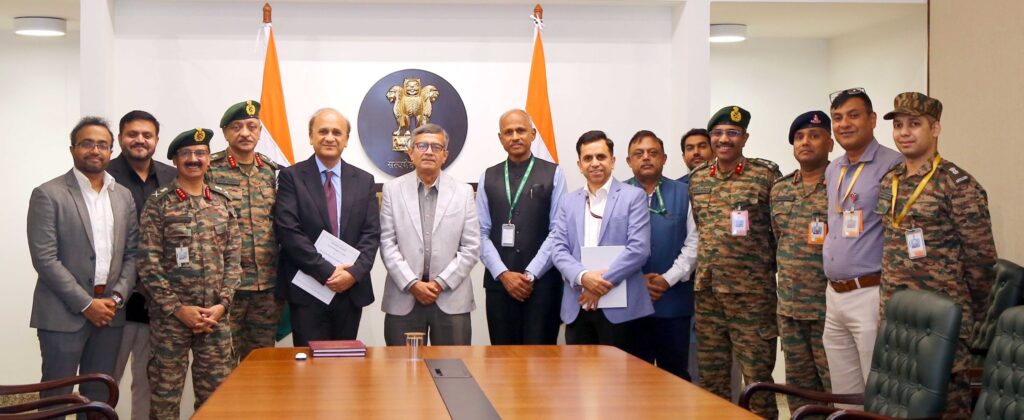
The signing of contracts by the Ministry of Defence (MoD) with Tata Advanced Systems Limited (TASL) and NIBE Private Limited (NIBE) on 14 August 2026 for the procurement of loitering munition systems, munitions and ancillary equipment at an approximate cost of Rs 1,577 crore constitutes a consequential development in India’s defence modernisation trajectory. Procured under the Buy (Indian) category through the Fast Track Procedure (FTP), the acquisition is intended to deliver 84 complete loitering munition systems and 840 munitions, each capable of striking targets at ranges up to 100 kilometres, for the Indian Army’s artillery regiments. Beyond its immediate operational intent to provide long-range, precision-strike capability and augment the firepower and flexibility of artillery formations, this contract embodies broader strategic, industrial, and doctrinal implications for indigenous defence production, battlefield innovation, and the evolving character of contemporary warfare.
Strategic & Operational Significance
Loitering munitions, sometimes described as “one-way attack drones” or “suicide drones,” merge the attributes of reconnaissance platforms and guided munitions: they can persist in an operational area, locate and surveil targets, and then engage selected targets with a warhead. For artillery-centric formations, the integration of such systems promises significant enhancements in responsiveness, target acquisition, and precision effects. The stipulated range—up to 100 km — enables deep-area engagement beyond the immediate line of sight and expands the depth at which artillery regiments may exert influence, enabling interdiction, counterbattery, and suppression of high-value point targets in contested or denied areas. The capacity to surveil, loiter, and strike with minimal manned-asset collateral presence also reduces exposure risk to personnel and high-value platforms.
The 12-month delivery timeline underscores operational urgency, aligned with contemporary threats and the imperative to close capability gaps rapidly. The split in procurement TASL as the lead L1 vendor supplying 54 systems and 540 munitions, and NIBE as the L2 vendor supplying 30 systems and 300 munitions, reflects an attempt to diversify industrial participation while consolidating supply assurance. Operationally, this mix allows the Army to field an initial pool of systems across multiple regiments and theatres, permitting doctrinal experimentation and iterative refinement of employment concepts.
Industrial & Indigenous-Technology Implications
Procurement under the Buy (Indian) category and the use of the FTP are emblematic of the Government of India’s Aatmanirbhar Bharat objective: to catalyse domestic defence production, nurture indigenous capability, and reduce strategic dependence on foreign suppliers. TASL’s indigenous development, and NIBE’s reported contract value of roughly Rs 580 crore for its Vayuastra product line, signal the maturing of India’s private-sector defence industrial base in the unmanned systems domain.
Several industrial consequences follow. First, the contracts provide capital inflows and production orders that can underwrite investments in manufacturing infrastructure, supply chain development, quality assurance processes, and the scaling of engineering teams. Second, operational fielding will generate feedback loops between the user (Army) and industry, accelerating iterative design improvements, reliability enhancements and logistical support systems. Third, multiple vendors participating in a single class of capability can serve as a hedge against single-point failure and may stimulate competition, cost efficiency, and innovation. Finally, successful indigenous production and timely deliveries can bolster confidence in export prospects and broader portfolio growth in the aerospace, propulsion, sensor, and warhead integration sectors.
While the procurement marks a forward step, an objective assessment requires careful attention to technical specifications, performance claims and operational resilience in contested environments. Loitering munitions that function optimally in permissive airspaces may experience degraded performance in the presence of electronic warfare (EW), communications denial, or active counter-UAS measures. Several technical subsystems are critical for robust performance in such conditions: precision inertial navigation systems (INS) frequently augmented by Fiber Optic Gyroscope (FOG)-based IMUs for low-drift attitude and position; anti-jam navigation and timing systems such as Combined Receiver Phased Array (CRPA)-enabled GNSS receivers or alternative PNT (positioning, navigation and timing) technologies; resilient datalinks incorporating frequency-hopping, spread-spectrum, low-probability-of-intercept and anti-jam measures; and autonomous navigation capabilities including vision-based terrain-relative navigation and digital map integration that permit mission execution under degraded or denied GNSS/datalink conditions.
Public commentary and open-source analyses have raised questions about the extent to which specific indigenous platforms incorporate such hardened subsystems. Notably, prior reporting on broader indigenisation efforts indicated that many candidate platforms did not meet Army test criteria in 2025; transparency gaps in test reporting complicate external technical appraisal. Similarly, the absence of public evidence of tests under jamming conditions, or the publication of anti-jam datalink performance metrics and INS specifications, invites cautious interpretation of performance claims. Autonomy in loitering munitions is also a multidimensional challenge: it spans waypoint navigation, target recognition and discrimination, rules-of-engagement adherence, and fail-safe behaviours in the event of a loss of communications. The presence or absence of digital battlefield maps, visual navigation system (VNS) integration, and advanced autopilot features materially affects mission success rates in contested electromagnetic environments or during long-endurance missions that require robust onboard situational awareness.
Logistics, Sustainment & Employment Doctrine
Acquisition is only the first link in a longer chain that includes fielding, training, sustainment, doctrine and legal-ethical governance. The rapid delivery schedule implies a compressed timeline for user trials, operator training, and the establishment of maintenance depots, spares pipelines and software update mechanisms. Successful induction will therefore demand concurrent investment in training curricula for operators and maintainers, the development of tactics, techniques and procedures (TTPs) tailored to artillery-regiment employment, and the creation of secure datalink and mission-command interfaces that integrate loitering munitions within combined-arms and fires networks.
Doctrine must address tasking authorities, target vetting and collateral-damage mitigation, especially for munitions capable of autonomous terminal engagement. Integration with artillery command-and-control (C2) systems, intelligence, surveillance, and reconnaissance (ISR) assets, and electronic warfare units will be necessary to harness the systems’ potential while managing risk. Sustainment considerations spares provisioning, depot-level repair, and software lifecycle management will be decisive for operational availability. Indigenous manufacture may improve supply quantum and reduce lead times, but it also imposes responsibilities for quality assurance, certification, and long-term vendor accountability.
Security, Export Controls & International Norms
As loitering munitions become more prevalent, questions of export control, interoperability with allied platforms, and adherence to international norms assume salience. The dual-use nature of unmanned combat systems obliges Indian industry and the MoD to frame rigorous end-user agreements, export licensing regimes and safeguards to prevent unintended proliferation. At the same time, indigenous capability creates opportunities for strategic partnerships, defence diplomacy and calibrated exports that can enhance India’s influence in regional security architectures, contingent on robust risk-mitigation frameworks.
The programme’s success is not preordained; several risks merit mitigation:
– Technical Risk: If onboard navigation, anti-jam, datalink and autonomous target-recognition subsystems are inadequate, operational effectiveness in contested environments will be reduced. Mitigation: prioritise rigorous field tests under EW conditions, third-party validations, and iterative upgrades.
– Supply-Chain Risk: Single-sourced critical components or immature vendor ecosystems can disrupt sustainment. Mitigation: diversify suppliers for critical components, establish strategic reserves and incentivise local Tier-n supplier development.
– Doctrinal and Human-Factor Risk: Improper tactics or inadequate training can limit utility or produce unintended effects. Mitigation: implement comprehensive training, live exercises, and doctrinal development cycles with feedback loops.
– Legal and Ethical Risk: Autonomous engagement modalities raise legal and ethical questions about meaningful human control and target discrimination. Mitigation: codify engagement protocols, human-in-the-loop requirements for lethal effects and robust accountability mechanisms.
Policy and Forward-Looking Considerations
To translate procurement into durable strategic advantage, policymakers and the MoD should pursue complementary measures: invest in R&D for anti-jam navigation and resilient datalinks; foster civil–military partnerships with academia and start-ups to accelerate sensor, machine-vision and autonomy capabilities; create testbed ranges and EW-capable evaluation facilities to validate systems under realistic denial scenarios; and promulgate clear maintenance and lifecycle funding to ensure long-term operational availability. Procurement practices should emphasise transparency in testing and performance criteria to engender public confidence and enable the forces to make informed trade-offs between acquisition speed and technical robustness.

The Rs 1,577 crore contracts between the MoD and TASL/NIBE for 84 loitering munition systems and 840 munitions represent a material augmentation of the Indian Army’s long-range, precision-strike toolkit and a noteworthy milestone for indigenous defence manufacturing. The acquisition aligns with strategic aims to modernise artillery regiments, expand operational reach, and strengthen Aatmanirbhar Bharat. Realising the full potential of this procurement, however, will depend on rigorous technical validation, investments in anti-jam and autonomous navigation capabilities, robust sustainment arrangements, doctrinal integration, and ethical and governance frameworks. If these complementary imperatives are addressed, the programme can be more than an acquisition: it can catalyse a resilient domestic unmanned-systems ecosystem and a substantive enhancement of India’s conventional deterrence and operational flexibility.