Staff Correspondent
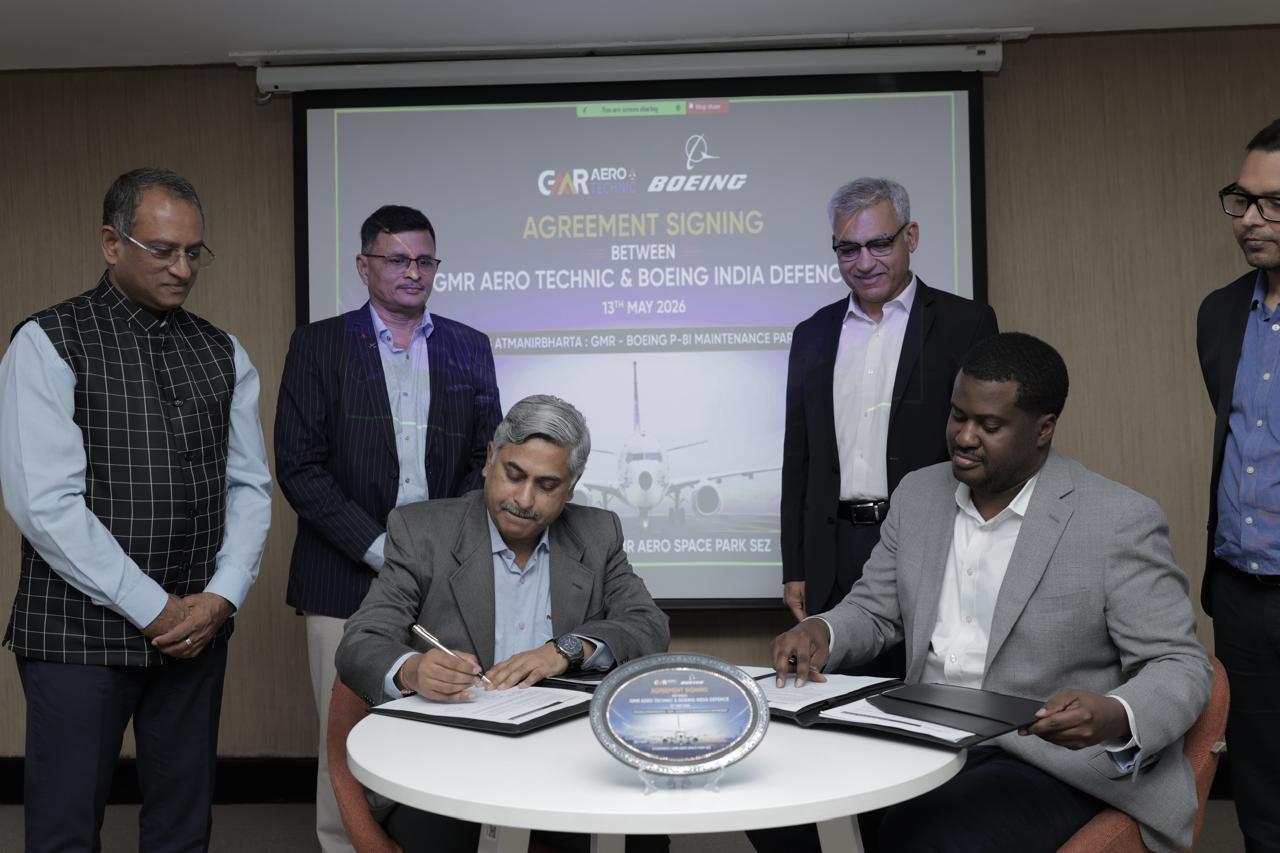
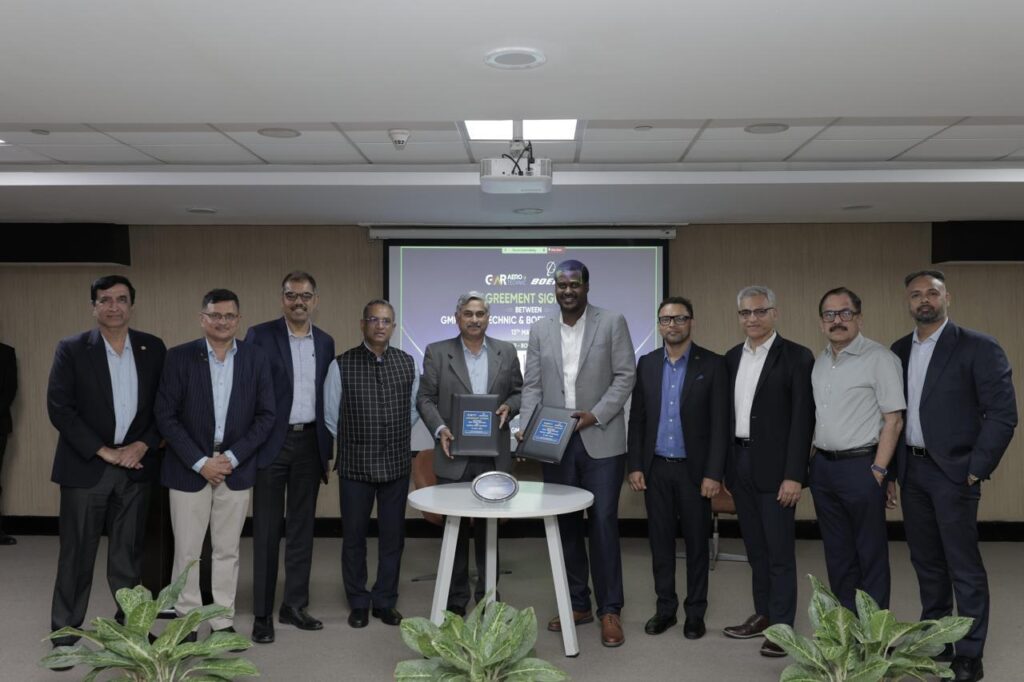
GMR Aero Technic (GAT), a leading Indian aircraft Maintenance, Repair and Overhaul (MRO) provider, formalized a significant agreement with Boeing Defence India Private Limited (BDIPL) to execute Phase 56 heavy maintenance checks on the Indian Navy’s P-8I maritime patrol aircraft. The accord, to be fulfilled at GAT’s modern MRO complex within the GMR Aerospace Park Special Economic Zone in Hyderabad, represents a strategic advance in India’s defence sustainment capability and an important step toward the nation’s long-term objective of emerging as a global defence MRO hub.
The technical scope of the agreement encompasses a comprehensive suite of heavy maintenance activities. GMR Aero Technic will undertake structural upgrades and in-depth inspections, execute painting and corrosion control tasks, and implement systems upgrades in strict conformance with Boeing’s standards and prevailing defence aviation maintenance requirements. By integrating these activities at a certified, high-capacity facility, the partnership addresses both the immediate operational needs of the P-8I fleet and the broader imperative of sustaining mission readiness through timely, standards-compliant maintenance and modernization.
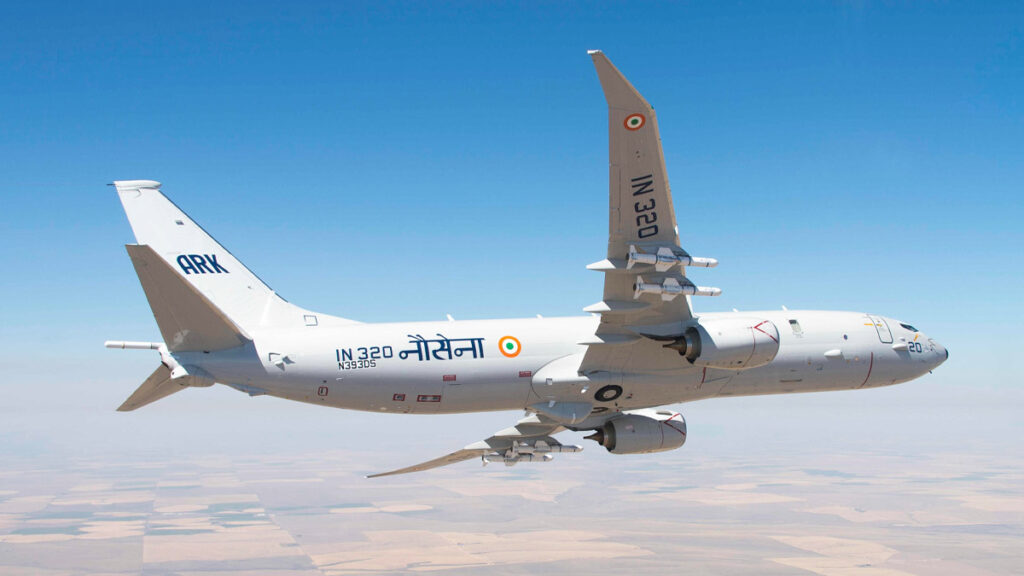
This collaboration carries significance on multiple levels. Operationally, the Boeing P-8I is a long-range maritime patrol and reconnaissance platform designed for anti-submarine warfare, anti-surface warfare, and intelligence, surveillance and reconnaissance missions—roles that are central to the Indian Navy’s capacity to secure maritime approaches and protect national interests. The Indian Navy’s fleet of 12 P-8I aircraft, based at INS Rajali and INS Hansa, depends on periodic heavy maintenance cycles to preserve structural integrity, avionics performance, and mission systems reliability. Ensuring that Phase 56 checks are conducted proficiently and in a timely manner directly bolsters operational availability and extends the service life of these critical assets.
Strategically, the agreement exemplifies an evolving model of defence-industrial cooperation: international OEMs and domestic MRO providers partnering to localize sustainment capabilities. Boeing’s decision to entrust Phase 56 heavy maintenance to GMR Aero Technic signals confidence in GAT’s technical competencies, workforce skill levels, and regulatory compliance. It also validates prior collaborations between the entities—such as passenger-to-freighter conversions—and reinforces the credibility of India’s nascent defence MRO ecosystem. For Boeing, the partnership aligns with a broader commitment to cultivate indigenous capability through investments in services, sustainment, manufacturing, research and development, and talent development in India.
For GMR Aero Technic, the agreement constitutes a milestone—the company’s first major role supporting a frontline defence aircraft platform. The engagement highlights GAT’s maturation from a predominantly civil MRO provider into an enterprise capable of performing complex military aircraft sustainment tasks. GAT’s facility credentials, including approvals from numerous global regulators such as EASA and the FAA, as well as the Indian defence aviation authorities, underpin its capacity to meet the exacting technical and quality-assurance demands associated with heavy maintenance on a sophisticated platform like the P-8I. Moreover, the presence of the GMR School of Aviation, an institution approved by DGCA and EASA, strengthens the company’s human capital pipeline by producing maintenance engineers and technicians trained to recognized international standards—an essential enabler of sustainable, high-quality MRO operations.
From a national-policy vantage point, the partnership advances India’s aim of fostering a resilient, self-reliant aerospace and defence industrial base. By enabling complex sustainment work to be carried out domestically, the arrangement reduces dependency on foreign facilities and long logistics chains, shortens aircraft downtime, and retains value within the national economy. The transfer and local execution of specialized maintenance tasks contribute to capability diffusion across the domestic supplier base, cultivate specialized skills, and create opportunities for ancillary industries—including component repair shops, specialized tooling manufacturers, and certification bodies—to mature alongside primary MRO providers.
Economic and employment impacts are implicit but consequential. Heavy maintenance programs of the P-8I’s nature demand a highly trained workforce, sophisticated tooling, and a robust quality assurance regime. As GMR Aero Technic scales its defence sustainment activities, direct employment within its facilities is likely to grow, while indirect employment may expand through supply-chain engagements and training initiatives. The GMR School of Aviation’s role as a Centre of Excellence further institutionalizes workforce development, ensuring that trained personnel are available to meet both military and civil MRO demands.
Institutionally, the agreement demonstrates the interplay between regulatory compliance, OEM oversight, and defence authority requirements. Performing Phase 56 checks in alignment with Boeing and defence aviation maintenance standards necessitates rigorous processes for airworthiness certification, configuration control, and documentation—areas in which GMR Aero Technic’s existing approvals and experience in handling narrow-body base maintenance, structural repairs, avionics upgrades, component repair, and painting provide a firm foundation. Continued adherence to these standards will be critical to sustaining trust among stakeholders—Boeing, the Indian Navy, and regulatory authorities—and to enabling future expansions of the scope and scale of domestic sustainment activities.
The strategic narrative embodied by this agreement also addresses geopolitical and deterrence considerations. A reliably sustained maritime patrol capability enhances the Indian Navy’s capacity for persistent domain awareness, anti-submarine warfare responsiveness, and maritime interdiction—capabilities that carry direct implications for regional stability and maritime security. By embedding advanced sustainment capability within India, the services gain greater predictability in maintenance scheduling and operational availability, reinforcing deterrence through demonstrated readiness.