Dr Anu Sharma

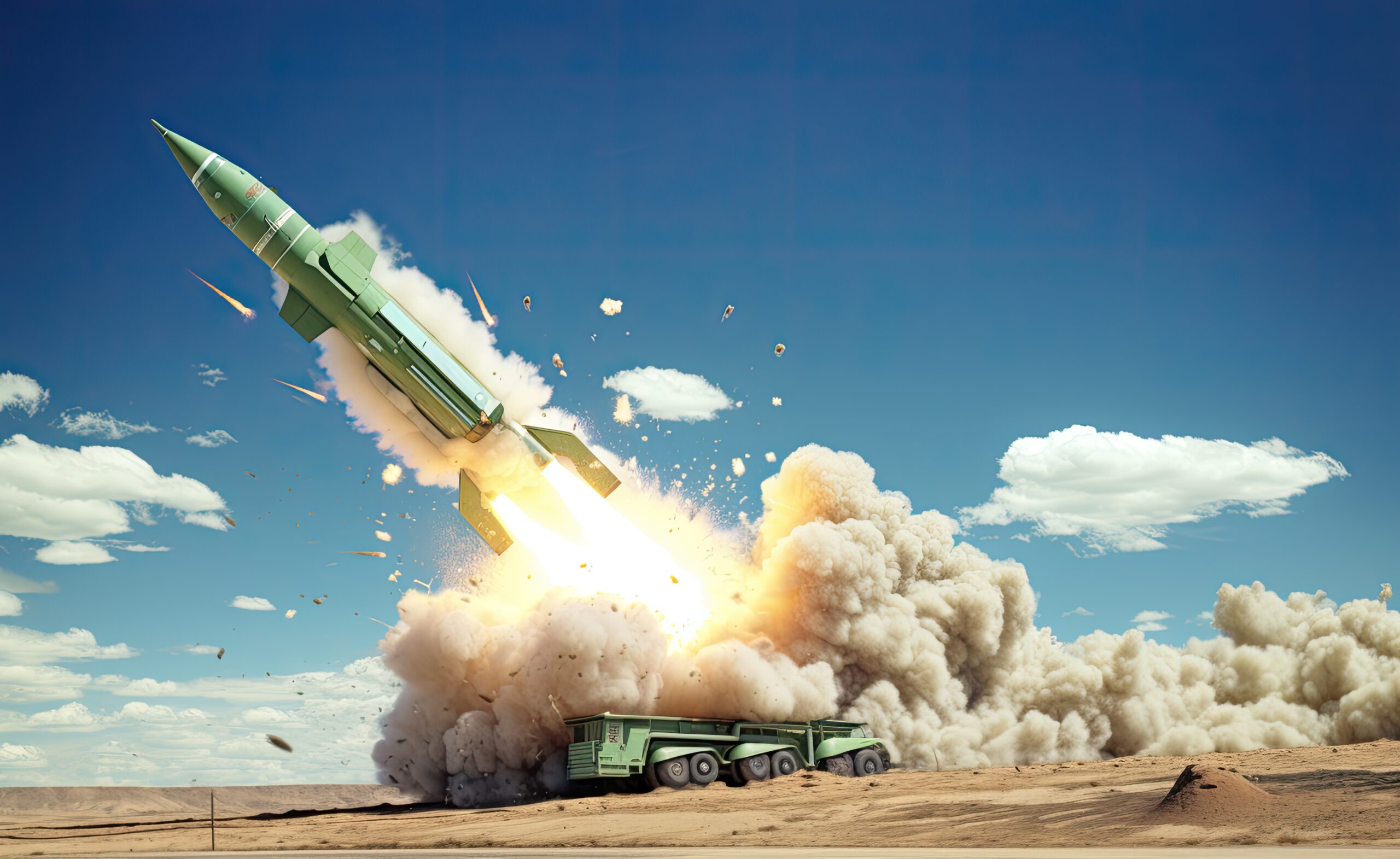
As of the writing of this article, the air warfare dimension of the current West Asian crisis has become a significant arena of escalation. What began as a confrontation between Iran, Israel and the United States has widened into a regional air-and-missile contest involving the Gulf nations like the United Arab Emirates (UAE), Saudi Arabia, Qatar and Bahrain, apart from Lebanon and Jordan. The current crisis is no longer defined simply by aircraft striking targets across borders in neighbouring nations. It has evolved into a layered struggle involving combat aircraft, long-range ballistic missiles, cruise missiles, assault drones, electronic warfare, suppression of enemy air defence systems, and intensive interception campaigns. The side that can preserve its strike complex while exhausting the adversary’s air defences gains the strategic upper hand. There have been several media reports indicating the United States-Israeli campaign is damaging Iran’s launchers, missile infrastructure, air-defence assets, etc. At the same time, Israel and Gulf states have simultaneously been forced to expend large numbers of expensive interceptors to defeat repeated missile and drone barrages.
One important aspect of this conflict is that it has confirmed a broader transformation in air warfare across West Asia. Air superiority no longer rests on manned aircraft alone; instead, it now relies on the combined architecture of intelligence, surveillance, early warning, cyber-electronic disruption, precision strike, and missile defence systems. Iran has relied heavily on saturation tactics, especially with Shahed drones and ballistic missiles, because they can be a substantial threat to the adversaries without needing a traditional modern air force. In terms of Gulf responses, it demonstrates that cheap drones can impose severe economic strain on defenders like the Gulf nations, who are often forced to respond with far more expensive systems. In other words, the current conflict has become a test not only of battlefield performance but also of defence economics, examining how long states can sustain these kinds of low-cost threats.

Israel’s air campaign illustrates the offensive side of this equation. Israeli operations have combined deep-strike aviation, long-range precision strikes, targeted killings, and persistent attacks on command nodes and launch infrastructure. Israeli strikes have continued not only against Iran-linked targets but also across Lebanon, which faced the heaviest Israeli attacks since that front reignited, striking more than 100 Hezbollah-related sites in Beirut, the Bekaa Valley, and southern Lebanon. Israel also announced the killing of Hezbollah leader Naim Qassem in an airstrike on Beirut, underscoring how Israeli military doctrine integrates strategic assassination of senior military officials or leaders with conventional airpower to break adversary command cohesion. In a way, it also indicates that Israel’s concept of air warfare is not restricted to battlefield interdiction but also seeks to dismantle the adversary’s leadership system, degrade logistical depth, and deter sustained rocket and missile warfare by making the cost of command survival extremely high.
Iran, by contrast, has fought this air warfare asymmetrically. Its air force remains far weaker than Israel’s in terms of training, avionics, and survivable deep-strike capability. So, Tehran has compensated through missiles, drones, dispersal, mobility, underground infrastructure, and layered ground-based air defences. Although Iran’s missile arsenal and launchers have been substantially reduced, Iran still retains thousands of low-cost missiles, including over 1,000 medium-range systems. This means that its coercive capability has been degraded but not eliminated. The operational pattern is therefore clear—Iran’s theory of victory is not to win a classic air-superiority contest, but to impose attrition, political shock, and economic disruption by sustaining enough missile and drone fire to puncture regional defence shields and force adversaries into a costly, prolonged interception effort.
This is where air defence becomes pivotal in any conflict. Israel has the region’s most sophisticated multi-layered air defence architecture, and the current crisis has shown why it matters. The lowest and most heavily used layer is the Iron Dome, designed to defend against short-range rockets, mortars, drones, and other short-range threats. Above that is the David’s Sling, built to intercept heavier rockets, cruise missiles, aircraft, drones, and some ballistic threats in the medium layer. At the top are the Arrow 2 and Arrow 3, which provide Israel with high-end ballistic missile defence, including exo-atmospheric interception against long-range ballistic missiles. Countering the incoming Iranian threats only became possible through the integration of multiple layers of air defence and early warning systems. Moreover, the lesson learned is that even the most advanced defence architecture can come under strain when facing sustained missile and drone pressure. Israel’s defensive success has therefore been real, but it is not free of cost and not infinitely scalable. The ongoing conflict demonstrates that missile defence systems are effective in safeguarding critical infrastructure and population centres; however, it also evolves into a contest of industrial sustainability, wherein the side capable of replenishing interceptors, sensors, and launch platforms more rapidly secures a long-term strategic advantage.
Iran’s own air defence architecture has proven much weaker under sustained attack. Its best-known long-range indigenous system is the Bavar-373, which Iran presents as a domestic equivalent to the Russian S-300 class. The Bavar-373 system is aimed at engaging aircraft and ballistic missiles at long range and forms the prestige core of Iran’s indigenous network. Iran also operates the Russian S-300, together with indigenous systems such as Khordad-15, 3rd Khordad, Raad, Tabas, Tor-M1, and a range of locally produced radars and Sayyad missile systems. Even though this appears to be a layered network, the current conflict has indicated the serious limitations in survivability, networking, and resistance to modern suppression. The claims by Israel indicated that roughly 80 per cent of Iran’s air defences were destroyed during the past conflict in 2025 and had already weakened Iran’s integrated air defence system before the present escalation. This does not mean that Iran had no shield. Still, its shield has not been robust enough against a modern offensive campaign combining stealth, standoff munitions, intelligence penetration, and repeated targeting of sensors and command nodes.
The Gulf monarchies provide a third factor of air defence in this conflict. Saudi Arabia, the UAE, Qatar, Bahrain, and others have not built an indigenous architecture. Still, they have assembled powerful imported layers based on the American Patriot PAC-3 and the Terminal High Altitude Area Defence (THAAD) systems. These are further supplemented, in some cases, by systems such as the Russian Pantsir, American NASAMS, Israeli Barak-8, South Korea’s Cheongung-II, and lower-tier counter-drone measures. Gulf states intercepted large numbers of Iranian drones and missiles during the current war but have also become acutely aware of the cost asymmetry and stockpile problem. The UAE has been described as having one of the most diverse layered shields in the region, combining THAAD, Patriot, Barak-8, Pantsir-S1, Cheongung-II, and local systems. The significance of the Gulf experience is twofold—firstly, the layered defence works better than single-system reliance; secondly, even successful defences can be strategically exhausting if there are repeated launches of costly interceptors against inexpensive drones.
What does all this reveal about the broader West Asian air war? The West Asian region has entered an era in which missile warfare, drone warfare and air defence are inseparable. Offensive operations are designed not just to hit targets but also to saturate and exhaust defensive inventories. Israel remains the strongest regional defender because of its multi-tiered air defence system, battle experience, and integration of offensive and defensive capabilities. In the case of Iran, it remains dangerous despite defensive weakness, because its strike strategy is based on volume, dispersion, and the political impact of even limited leakage through defences. Furthermore, the Gulf states are increasingly important participants because they host American assets and are within the Iranian missile range. Also, the future wars may target their infrastructure directly. Finally, the current crisis has shown that air defence is not an impenetrable shield. It can dramatically reduce damage, but it cannot eliminate risk, especially in a prolonged conflict of salvos.
The current West Asian crisis is best understood as a contest between America and Israel’s technological superiority in integrated air warfare and Iranian persistence through distributed missile drone coercion. Israel has shown that it can combine offensive airpower with a uniquely layered defensive umbrella, enabling it to keep operating under fire while striking deep into enemy territory. At the same time, Iran has demonstrated that even when its air defences are degraded, it can still have an impact on the adversary by imposing costs through missiles, drones, and regional proxy pressure. The Gulf states, meanwhile, have demonstrated both the value and the fragility of imported layered defences. Strategically, the ongoing crisis in West Asia clearly demonstrates a fundamental shift in how military power is measured. It is no longer determined solely by the number of combat aircraft a state possesses. Instead, effectiveness now depends on the degree to which a state can integrate multiple components, including advanced sensors, interception systems, offensive strike capabilities, and efficient industrial replenishment processes, into a cohesive and coordinated warfighting system. This integrated approach enhances operational resilience, sustainability, and adaptability. Therefore, contemporary air warfare in the West Asian region reflects a broader transformation toward network-centric and system-driven military power rather than platform-centric superiority.Top of Form
*The views expressed are those of the author and do not represent the institution.
Dr. Anu Sharma is an Assistant Professor at the Amity Institute of Defence and Strategic Studies (AIDSS), Amity University, Noida, with prior tenure as a Research Fellow at the Centre for Air Power Studies (CAPS), New Delhi. Her research focuses on the politics and international relations of Iran and the broader West Asian region, and she has published and presented numerous papers nationally and internationally. She authored the book Through the Looking Glass: Iran and its Foreign Relations (KW Publishers, 2020; co-published by Routledge, 2022).