
Wg Cdr Prem Kumar Garg (r)

India’s aviation sector stands at an important inflection point. While the past decade has been defined by rapid expansion in metro and trunk routes, the next phase of growth will be shaped by the depth and resilience of regional connectivity.
The Union Cabinet’s approval of the Modified UDAN scheme, with an outlay of ₹28,840 crore, reflects a strategic shift in policy, from expanding connectivity to ensuring its sustainability. More importantly, it acknowledges the pivotal role of regional airlines in integrating India’s underserved geographies into the national aviation network.
This policy direction, under the leadership of the Hon’ble Prime Minister Narendra Modi and the Ministry of Civil Aviation, builds on nearly a decade of learning from the implementation of UDAN and addresses the structural realities of operating in regional markets.
Beyond Metrics: What UDAN Really Achieved
Since its launch in 2016, UDAN has operationalized over 600 routes and connected nearly 100 airports, heliports, and water aerodromes. However, its true success lies not in scale alone but in market creation.
It demonstrated that demand exists beyond metros in Tier 2 and Tier 3 cities and that regional aviation can unlock economic activity, improve accessibility, and stimulate local ecosystems.
Equally significant was the emergence of regional carriers willing to operate in markets characterised by low initial demand, operational constraints, and limited infrastructure.
The Regional Reality: Where Large Airlines Do Not Operate
Despite its notable successes, UDAN has brilliantly illuminated a fundamental reality: regional connectivity is structurally different from mainstream aviation, and that difference is precisely where the promise and purpose of regional airlines shine brightest. Take routes in states like Odisha, Jharkhand and parts of West Bengal, markets where demand accumulates slowly rather than exploding overnight, where load factors wobble unpredictably in the early seasons, where operators must contend with the economics of smaller aircraft and inherently higher unit costs and where infrastructure frequently needs steady, hands-on support to function reliably; these are environments that reward patience, local knowledge and tailored operational models rather than the scale-driven playbooks of major carriers.
Large airlines often steer clear not because the opportunity isn’t real but because their cost structures, fleet mixes and yield expectations simply don’t map onto these realities. That mismatch creates an essential opening for nimble, community-focused regional carriers that can adapt capacity, cultivate demand, nurture relationships with local stakeholders and operate profitably on thin routes. In short, UDAN’s experience underscores that unlocking true connectivity across India’s hinterlands requires championing regional operators who understand that building air travel in such markets is a marathon, one that pays dividends in social and economic inclusion precisely because it is patient, bespoke and rooted in the distinctive fabric of these regions.
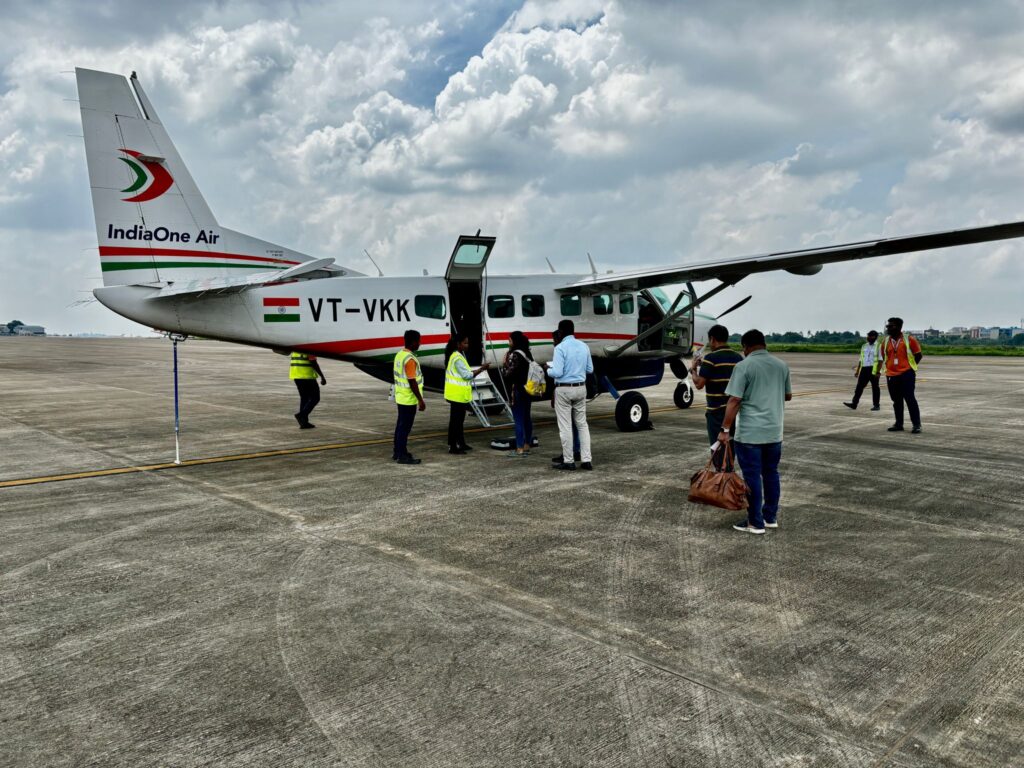
Operators such as IndiaOne Air have established connectivity in precisely these geographies, serving routes that would otherwise remain unconnected, thereby enabling first-time flyers, improving access to essential services, and integrating local economies.
Modified UDAN: A Structural Correction
The Modified UDAN scheme addresses the central issue that constrained earlier phases—the sustainability of operations.
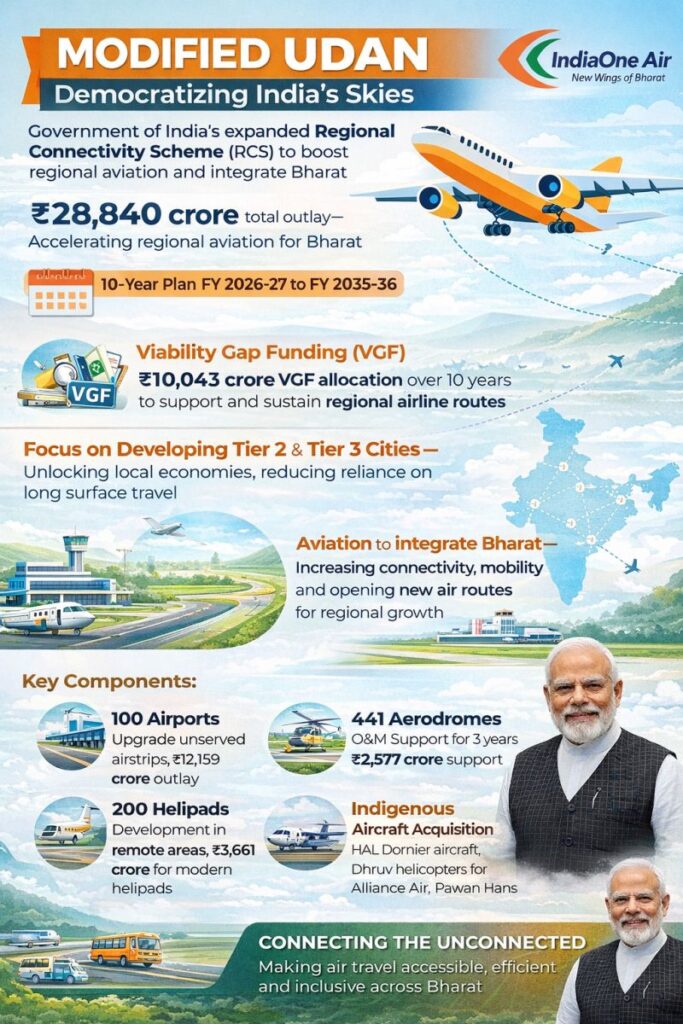
The announcement of a ₹10,043 crore allocation to Long-Term Viability Gap Funding over the next decade is a game-changing commitment that transforms how regional aviation plans for growth. This predictable, multi-year support not only delivers a reliable revenue cushioning but also empowers airlines to move beyond short-term survival tactics and thoughtfully invest in robust network strategies, enabling carriers to time ably build passenger demand, stabilise load factors, and confidently deploy fleet capacity into nascent routes without the disruptive churn of stop‑start service; reframed as market development capital rather than a mere subsidy. Long-Term VGF becomes the essential catalyst for unlocking sustained economic connectivity in underserved regions, attracting private investment, fostering route maturity, and ultimately knitting together communities and markets that have long waited for consistent aviation access.
Infrastructure with Operational Relevance
The scheme’s ambitious focus on developing 100 airports, together with O&M support for more than 400 aerodromes and a bold expansion of helipad infrastructure, is nothing short of transformative and brimming with potential; by dramatically broadening the physical network, it promises to unlock new routes, stimulate regional connectivity and catalyze economic activity in places long underserved, while also creating a platform for faster emergency response and greater access to remote communities. For regional operators, this infrastructure is far more than just added capacity, it’s the bedrock of cost efficiency, shaving fuel and handling expenses through optimized routing and reduced diversions; it directly impacts turnaround times by enabling quicker, smoother ground operations and more predictable slot availability; and above all it underpins the reliability of daily service, reducing cancellations and delays that damage customer confidence and operator margins.
The real payoff, however, will hinge on marrying engineering ambition with the practicalities of airline and rotorcraft operations:
- Runway length and pavement strength tailored to actual fleet mixes, apron and taxiway layouts that minimize bottlenecks
- Night-vision and weather-resilient aids that keep schedules running, and maintenance regimes and supply chains that sustain high availability.
If planning, procurement and O&M frameworks are crafted with a clear eye on operational realities—integrating feedback from carriers, prioritizing cost-effective technologies, and ensuring predictable, well-funded maintenance, this program can move beyond impressive statistics to deliver tangible, day-to-day improvements in affordability, punctuality and service resilience, turning a bold policy into measurable outcomes for operators, passengers and the regions they serve.
Right-Sizing Aviation for Regional India
The inclusion of indigenous aircraft acquisition marks an exciting and pragmatic policy shift that recognizes regional connectivity demands the right tools for the job: appropriately sized equipment. Smaller aircraft shine on low-density routes, short sectors, and in challenging geographies where larger jets are inefficient or simply impractical, delivering flexible, reliable service while keeping operating costs and environmental impact down. By championing locally suitable fleets and supporting their deployment—through training, maintenance infrastructure, and route incentives—policymakers can unlock new economic opportunities, strengthen community ties, and build a resilient, sustainable regional network that truly meets the needs of diverse populations.
A Case in Point: Eastern India’s Connectivity Gap
The experience of regional operators in eastern India underscores the importance of this policy shift.
In states like Odisha, Jharkhand, and West Bengal, several routes that are now operational were historically underserved or entirely unserved. These are not marginal markets; they represent latent demand that requires time and consistent connectivity to mature.
Regional airlines have stepped into this gap, often as the first and only operators, demonstrating that:
a) Demand can be created through reliable service
b) Connectivity can stimulate economic and social activity
c) Smaller markets can integrate into broader aviation networks.
This is the segment that Modified UDAN seeks to strengthen.
Execution Will Determine Outcomes
While the policy framework is well-calibrated, its success will depend on execution across four key dimensions:
a) Timely and transparent VGF disbursement
b) Infrastructure readiness aligned with airline operations, including critical infrastructure requirements of fuelling and hangar facilities at small airports
c) Rational and demand-driven route allocation
d) Regulatory support tailored to regional aviation
Consistency in these areas will be essential to sustain operator confidence and ensure long-term viability.
Conclusion: The Next Phase Will Be Regional
India’s aviation growth story is entering a new phase—one that will be driven less by metros and more by regional integration.
The Modified UDAN scheme recognises that connectivity alone is not sufficient; it must be economically sustainable, operationally viable, and geographically inclusive.
Regional airlines will be central to this transformation. They operate where others do not, build markets where none exist, and connect communities that would otherwise remain isolated from the benefits of aviation.
With the right policy support, this model can scale meaningfully, transforming regional aviation from a niche segment into a core pillar of India’s economic infrastructure.
Wing Commander Prem Kumar Garg (r) is a distinguished aviation leader and C-suite executive with over 26 years of experience across military and commercial aviation, flight safety, and strategic leadership. As CEO & Accountable Manager of IndiaOne Air, he advances regional connectivity in support of the Government’s UDAN initiative, while drawing on a rare combination of operational expertise and business acumen developed at NDA, DSSC and IIM Visakhapatnam. A former combat pilot, qualified flight instructor, Joint Director in Flight Safety and DGCA‑approved Examiner, he has strengthened operational capability, safety culture and regulatory compliance throughout his career.