Kamal Shah
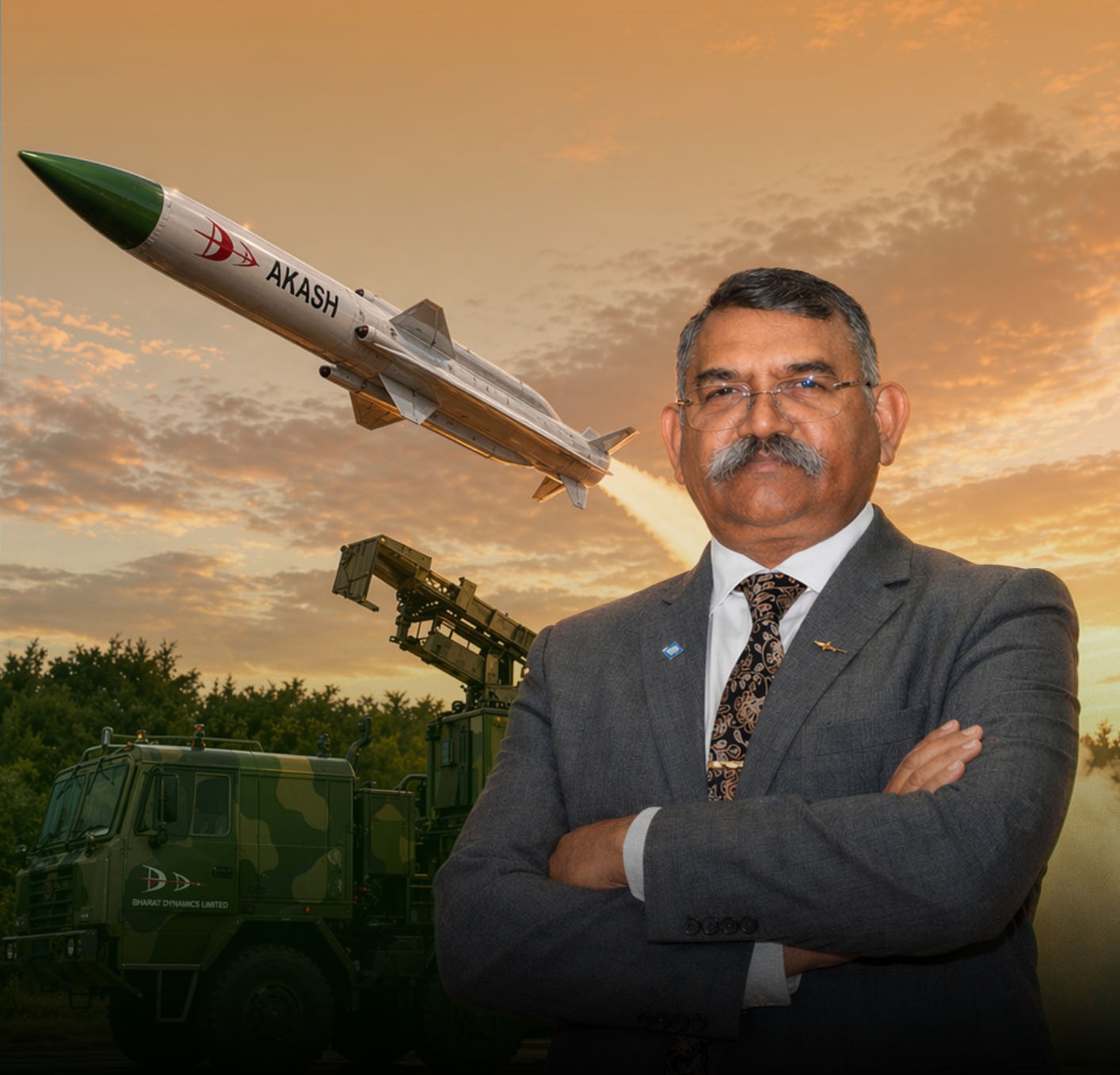
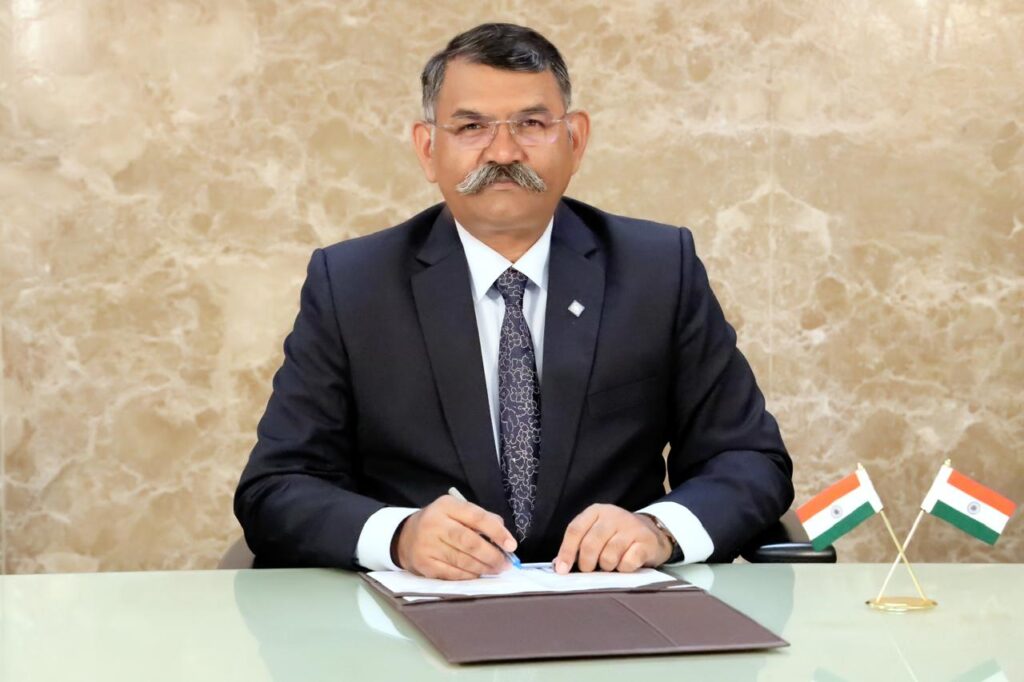
A compelling exclusive interview by Indian Aerospace & Defence with Bharat Dynamics Limited Chairman & Managing Director, Commodore A Madhavrao (r), on the giant strides taken in creating an arsenal of multiple missiles and the trajectory of this armament category projected for the future, and the major role it plays in military strategy, both defensive and offensive.
Q. Bharat Dynamics Limited has evolved significantly since its inception. How would you describe BDL’s transformation from a licensed production agency to a modern missile systems integrator?
- With pride and purpose, Bharat Dynamics Limited (BDL) has charted an extraordinary journey since its founding in Hyderabad, India, in 1970. Born as a Public Sector Undertaking under the Ministry of Defence, Government of India, BDL’s original mandate was focused and vital: to manufacture Anti-Tank Guided Missiles for the Indian Army. From those early days, the company embraced collaboration with global Original Equipment Manufacturers (OEMs) to supply a variety of missiles and allied equipment to India’s Armed Forces — laying the groundwork for the remarkable growth and capabilities that would follow.
The 1980s heralded a transformational chapter for BDL. With the launch of the Integrated Guided Missile Development Programme (IGMDP) by the Government of India, vast new opportunities opened up. Recognized as the Prime Production Agency, BDL partnered closely with the Defence Research and Development Organisation (DRDO), assimilating cutting-edge manufacturing processes, program management expertise and set up critical state-of-the-art aerospace standard manufacturing facilities for all subsystems necessary for the manufacture of weapon systems. This close synergy enabled BDL to make a crucial leap: from a specialist missile manufacturer to a full-fledged Weapon System Integrator capable of delivering complete, sophisticated solutions tailored to the nation’s defence needs.
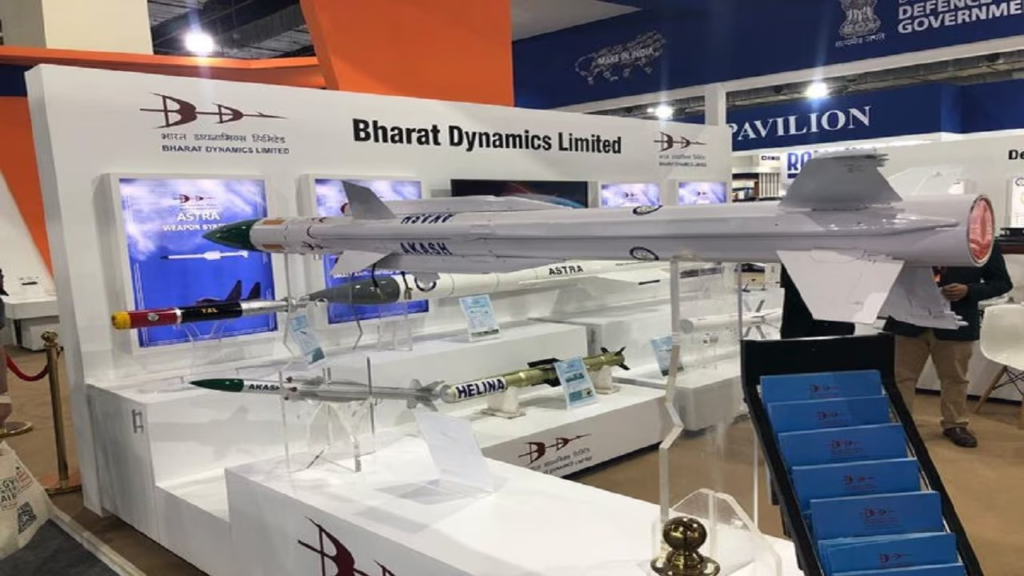
Today, BDL stands as a dynamic, multi-product, multi-location enterprise that proudly serves the Indian Army, Navy and Air Force. Its product portfolio has expanded impressively and now includes Anti-Tank Guided Missiles, Surface-to-Air, Air-to-Air, Air-to-Surface weapon systems, Ballistic and cruise missiles, Underwater Weapons and sensors, Launchers, Test Equipment, Counter Measure Systems, etc. Beyond manufacturing, BDL delivers comprehensive Product Life Cycle Support and refurbishment services for legacy missiles, ensuring trusted performance and longevity of critical defence systems. Always looking ahead, the company is harnessing future-generation technologies and placing increasing emphasis on AI-driven solutions to meet emerging defence challenges.
Innovation and diversification remain at the heart of BDL’s growth strategy. The company is actively exploring frontier domains such as Drone/Unmanned Platforms (across all three dimensions – air, ground, and water, including amphibious), launched weapons (including bombs and missiles), Anti-Drone Systems, design, development, and production of mines, underwater decoy systems, etc. Simultaneously, BDL continues to strengthen international collaboration, pursuing strategic partnerships with foreign OEMs for new weapon systems and Transfer of Technology (ToT) opportunities, while maintaining its robust engagement with DRDO programs.
In short, BDL’s evolution is a testament to visionary collaboration, technological mastery and unwavering commitment to national security. From its origins as a dedicated anti-tank missile maker to its present stature as a versatile manufacturer of advanced weapon systems, BDL is forging the future of India’s defence landscape with confidence, innovation and unflagging enthusiasm.
Q. How does BDL’s long-term roadmap align with India’s vision of Viksit Bharat 2047?
- BDL has formulated its own Vision 2047, aligned with Viksit Bharat’s vision. This vision document will be promulgated shortly. In addition, I would like to outline the core strategies that will guide the organization forward in a rapidly evolving defence and technology environment.
The Vision Document 2047 provides a strategic direction for shaping BDL’s future, leveraging extensive research, stakeholder consultations, and strategic foresight. It draws on authoritative frameworks and key documents aligned with India’s Defence priorities, emphasizing Self-Reliance and global competitiveness.
Key Foundations.These foundational inputs provide a roadmap for achieving technological superiority, fostering industrial collaboration, and sustaining Self-Reliance, aligning BDL’s strategy with National security imperatives and technological aspirations. It also encapsulates operational priorities, the government’s commitment to innovation, and the integration of global practices with localized solutions.
First and foremost: strategic alignment — this is our compass and our commitment. Every initiative, every investment, every operational decision must be tightly woven into the fabric of the Nation’s defence and self-reliance objectives. When our work is purpose-driven and synchronized with national priorities, we gain clarity of focus, ensure relevance in the most critical arenas, and generate long-term impact that truly matters to the country’s security posture.
Second: collaboration — the defence landscape today is too complex and multifaceted for any single organization to tackle alone. We must actively pursue deep, pragmatic partnerships across the ecosystem: with DRDO and government laboratories; with academia; with leading foreign OEMs and large defence Industry partners; with nimble, inventive startups; and with the backbone of our defence industry, MSMEs. By pooling expertise, sharing risks, and aligning capabilities, collaboration accelerates innovation, eliminates needless duplication, and unlocks synergies that none of us could achieve in isolation. BDL has signed more than 80 MoUs and work-sharing agreements in this regard.
Third: build a relentless culture of innovation. Innovation must be habitual, not episodic. We need an organizational DNA that rewards experimentation, embraces calculated risk, and channels curiosity into tangible R&D outcomes. That means sustained and growing investment in research and development — not as an expense to be minimized, but as the strategic fuel that powers long-term technological leadership. Continuous innovation will keep us ahead of emerging threats and enable us to deliver solutions that redefine capability. BDL has increased its R&D spending from a meagre 0.5% of revenue to 6-7% in the last FY and plans to sustain investment in R&D.
Fourth: capacity and capability enhancement – to be competitive and reliable, our production infrastructure and processes must be world-class. Upgrading facilities, adopting cutting-edge manufacturing techniques, and embedding the latest quality standards are non-negotiable. Modernization raises efficiency, improves consistency and reliability, and positions us to meet and exceed both domestic needs and global market expectations. BDL has doubled its production capabilities in the last couple of years and is setting up 2-3 additional modern manufacturing facilities. The company is investing more than 2000 crores in infrastructure and modernisation. The process commenced in 2024, and this investment is planned over the next 3-5 Years.
Fifth: talent development — people are our ultimate force multiplier. None of the strategies above can succeed without skilled, motivated professionals. We must prioritize attracting top talent and, more importantly, invest heavily in reskilling and upskilling our existing workforce. Training, mentorship, career pathways, and an environment that nurtures technical and leadership growth will create the human capital base necessary for sustained technological and operational excellence.
Together, these five pillars — strategic alignment, collaboration, a relentless culture of innovation, comprehensive modernization, and focused talent development — form a bold, coherent strategy for sustainable growth and profound national impact. United, they enable us not merely to respond to today’s challenges but to lead decisively into the future, strengthening security, advancing self-reliance, and delivering technology and capabilities that the nation can depend on. BDL is committed to these principles with urgency, energy, and an uncompromising belief in our capacity to transform the Indian defence Industry for the better.
Q. Could you share insights into BDL’s integration of advanced technologies such as AI, precision guidance, and smart weapon systems?
- BDL has been integrating advanced technologies through the co-development of products such as new-generation Surface-to-Air Missiles (SAMs), Air-launched weapons, Drone/Unmanned Platform-launched weapons, Underwater Weapons, and sensor systems with DRDO and other industrial partners. BDL is also integrating advanced technologies, such as AI, into the products designed and developed by its in-house R&D division. Advanced technologies such as precision guidance are used to improve accuracy, target discrimination, and resistance to electronic countermeasures. In contrast, AI is used in areas such as target recognition, decision support, and swarm coordination. BDL has set up full-fledged RF and IIR seeker facilities and is working closely with DRDO, Academia, and Industrial partners (including start-ups) to develop multispectral seekers and enhanced propulsion systems to improve the accuracy and speed of future weapons.
Q. How does BDL identify and onboard innovative defence startups, particularly in deep tech domains like AI and robotics?
- Onboarding defence startups is being facilitated throughIndustrial Partner development programs, MoUs, and pilot projects.
BDL has identified and onboarded innovative defence startups both directly and through ecosystem-driven channels, particularly through the Ministry of Defence and DRDO initiatives such as iDEX and TDF.
Innovations for Defence Excellence (iDEX)
The iDEX scheme, or Innovations for Defence Excellence, is a government initiative launched by the Ministry of Defence in 2018. It aims to foster innovation and technology development in the Indian defence and aerospace sector by engaging startups, MSMEs, individual innovators, and academia. The scheme provides financial support, grants, and other resources to encourage the development of cutting-edge technologies for the Indian military.
BDL has developed Miniaturized Visual Imaging Guidance and developing items like NVG panel, Scalable wireless Communication Network for Autonomous Mobile Platform, etc by startups & MSMEs through iDEX scheme.
Technology Development Fund (TDF): a Ministry of Defence (MoD) program executed by DRDO. The TDF Scheme extends financial support and expertise to upgrade existing products/systems, processes, and their applications by reducing production costs, improving functionality and quality, promoting Make in India, and developing futuristic technologies with defence applications. The Scheme lists requirements of the Service Headquarters for upgrading products/systems and futuristic defence technologies as Projects for which eligible stakeholders can apply through the TDF platform.
The Direct Drive Frameless BLDC Motor and Encoders required by BDL are being developed by startups & MSMEs under the TDF scheme.
These initiatives connect startups with DPSUs and the armed forces. Startups have been shortlisted through challenge-based programs, and BDL, as a mentor and production agency, partners with them to develop and produce the product.
Successful defence startups are being integrated into the supply chain or co-development efforts. BDL is continuously evolving towards faster, more flexible engagement models, including accelerating contracting speed, simplifying procurement norms, and creating dedicated innovation cells focused on leveraging deep-tech startups in areas such as AI and robotics.
Q. How do you see MSMEs contributing to strengthening India’s defence supply chain resilience?
- BDL remains firmly committed to enhancing the participation of Micro, Small and Medium Enterprises (MSMEs), ensuring fair opportunities, timely procurement, and long‑term partnerships that contribute to both national defence preparedness and economic development. Well before the current impetus to encourage MSMEs, the DRDO development model included MSMEs and start-ups to develop and manufacture sub-systems for complex weapon systems, under both Built to Print (BTP) and Built to Specification (BTS) models.
Building on this, and with the current impetuous and robust Atmanirbhar Policies of the Government of India (GoI) and specifically the Ministry of Defence (MoD), BDL and other Defence Public Sector Units (DPSUs) have developed these MSME partners as the essential backbone of India’s mission for a self-reliant and resilient defence sector. We currently procure around 40-60% of our annual requirements from MSMEs. This model is essential for the defence sector, which has a cyclic demand. In a cyclic demand industry like the defence sector, where orders are not linear and products supplied in large numbers would not be ordered immediately in the near future, the robustness of the echo system is key to sustenance. Multiple products are essential, from the system integrator to the subsystem manufacturer. This would require a full interview, which can be reserved for another day.
BDL’s strength lies not only in its own manufacturing capability but also in its supply chain partners. As of date, there are more than 3,500 Industrial partners registered with BDL, of which more than 1,500 are MSME Industrial Partners that provide specialised expertise in high-precision electronics & mechanical components, and sub-systems. Many of these partners hold AS9100 certification, they guarantee that our supply chain operates at the highest international quality standards. BDL doesn’t consider these companies as vendors but as Industry partners.
These Industry partners, with experience working with DRDO and Foreign OEMs, their initiatives, and their design & development skills to create domestic alternatives for imported goods, are contributing to BDL in the endeavour to cautiously increase the Indigenous Content of our weapon systems.
By directly encouraging these MSMEs and through government schemes, BDL is building a secure indigenous defence ecosystem. Not the individual large companies, but this vibrant echo system is the key not only to meet the requirements of the Indian Armed Forces and the global defence Industry, but also to have significant surge capacity in the hour of need.
Q. How is cyber-physical integration influencing the design and deployment of modern weapon systems?
- The shift of weapon design from stand-alone hardware, i.e., purely mechanical or electronic, to network-enabled, autonomous, state-of-the-art “systems-of-systems” that behave more like intelligent, connected ecosystems has made cyber-physical integration mandatory. Modern weapon systems are complex systems that seamlessly integrate physical elements—such as structures, engines, and control mechanisms—with cyber components, including software, sensors, IoT devices, data processing units, and communication networks. This integration enables weapon systems to operate intelligently, respond to real-time conditions and perform with a high degree of targeting accuracy and efficiency.
The most important aspect of cyber-physical integration is the continuous interaction among sensing, computation, and action. Modern systems are equipped with advanced sensors that collect data from the environment, including position, movement, temperature, and other operational parameters, process this data using onboard computers with sophisticated algorithms, which in turn generate commands to control physical components. As a result, systems can continuously monitor their surroundings and adjust their behavior dynamically, improving performance and effectiveness in complex situations.
The increasing role of software in determining system capabilities is dominant. Many functions that were once hardware-based are now controlled through software, making systems more flexible, modular, scalable and easier to upgrade. New features, improved performance, and enhanced capabilities can often be achieved through software updates without major physical modifications, thereby reducing development time and allowing systems to evolve more rapidly in response to changing requirements.
Cyber-physical integration also supports the development of networked and interconnected systems. Modern weapon platforms are no longer isolated; they are part of a larger operational network where information is shared in real time across multiple units and domains. This enhances situational awareness, coordination, and decision-making, enabling more effective and synchronized operations. The ability to integrate data from multiple sources and derive meaningful insights is a major advantage in modern system design.
At the same time, this integration has enabled greater automation and autonomy. Systems can perform complex tasks with minimal human intervention, reducing response time and increasing operational efficiency. However, human oversight remains important, especially in critical decision-making processes. Designing effective human-machine interaction has therefore become a crucial aspect of development.
Cyber-physical integration also introduces new challenges. The increased reliance on software and connectivity makes systems more vulnerable to cyber threats such as hacking, jamming, and data manipulation. Ensuring cybersecurity and system resilience has become a critical requirement from the early stages of design. Additionally, the complexity of integrating multiple technologies can increase development costs and require advanced expertise.
Cyber-physical integration has shifted modern weapon system design from purely mechanical engineering to a multidisciplinary approach that combines hardware, software, and communication technologies. This transformation has significantly enhanced capability, adaptability, and precision, while also demanding greater attention to security, reliability, and ethical considerations.
Cyber-physical integration influences the design and development of modern weapon systems in the following ways:
- Shifting the operation of weapon systems from standalone platforms to intelligent, networked systems
- Integrating with broader command-and-control networks.
- Improving accuracy, coordination in swarms (e.g., drones or loitering munitions), and decision-making.
- Enables greater autonomy and adaptability during deployment.
- Systems can respond dynamically to battlefield conditions using AI, ML, etc.
However, this also introduces new vulnerabilities—cybersecurity becomes as critical as physical protection. BDL, on its part, is investing heavily in recruiting and training manpower to imbibe these technologies, manufacture and maintain them securely and build on them based on the ever-changing scenario and technology. In addition to the existing manpower and recruitment processes, BDL has recruited over 300 fresh graduate engineers and trained them in these areas over the past 3-4 years, and remains committed to this process.
Q. How closely does BDL work with the armed forces to anticipate emerging operational requirements?
- BDL has a well-established mechanism for interacting with the Armed Forces to anticipate emerging operational requirements.
Customer Requirements
Understanding customer requirements is critical for BDL’s market strategy. BDL has a dedicated team within the Business Development team, with a good mix of BDL executives with experience in ToT from DRDO and FOEMS, Production and Product support, and officers with an Armed Forces background to understand, assimilate, and evolve a roadmap for BDL’s development and production plans. These teams continuously interact with Officers of the Armed forces and the MoD to understand the need. Also, there is a team that scans print and electronic media for various requirements projected by the Armed forces, and draws on documents released by these agencies, including DRDO, on long-term technology and induction plans made public from time to time.
Indian Armed Forces. Based on the current interactions and study of literature, along with geopolitical developments, the following could be the summary for the Armed Forces:-
- Requirements. Advanced, cost-effective, and reliable systems with a focus on indigenization.
- Preferences. Integrated, multi-role systems for joint warfare scenarios.
The following are the few guidelines and roadmaps of the Armed Forces/Ministry of Defence which highlight the emerging operational requirements: –
- Government Policies and Guidelines. The ‘Atmanirbhar Bharat Abhiyan’ emphasizes Self-Reliance in Defence production, promoting indigenous manufacturing and reducing dependency on imports. The Ministry of Defence has earmarked 75% of the modernization budget for procurement through domestic sources, underscoring this commitment.
- Integrated Capability Development System (ICADS). It guides the Armed Forces’ future needs, emphasizing jointness and advanced technologies. BDL can align with ICADS by focusing on next-generation Missiles, precision-guided munitions, AI-driven Systems, and Hypersonic Weapons, contributing to India’s Defence Self-Reliance. Realise products and solutions in consonance with the planning process formulated by the Defence Planning Committee (DPC) – LTIPP, SCAP & AAP.
- Technology Perspective and Capability Roadmap (TPCR) 2025. Highlights technological advancements, viz. AI, Machine Learning, Big Data for battlefield transparency, information dominance, electronic warfare, etc., Unmanned autonomous systems, Stealthremotely piloted aircraft (MALE/HALE), Counter-drone systems including adaptive jamming and electronic denial zones, integrate UAVs with precision munitions, next-generation propulsion, Future Ready Combat Vehicles (FRCVs). Priorities include Hypersonic Missiles with Ramjet/Scramjet propulsion, directed-energy weapons, stealth capabilities, and integrated Missile platforms over the next 15 years.
- MoD Acquisition Wing TPCR 2018-2030. Focuses on aerospace, land, and maritime modernization through UAVs, Stealth Aircraft, AI-driven Systems, Modular Naval Platforms, and Advanced Cyber Defences.
- Indian Navy 15 Year Indigenous Plan. Outlines Self-Reliance in maritime capabilities, emphasizing advanced Naval Platforms, Hybrid Propulsion, and sophisticated weapon Systems like Guided Missiles and Sonar Technologies.
- Compendium of Problem Definition Statements 2025-VIIth Edition of Indian Army.
- Make I, II, and III Projects published by MoD. Prioritises Self-Reliance through government-funded, industry-driven, and procurement-led initiatives spanning combat vehicles, autonomous platforms, and propulsion technologies.
- DRDO Transfer of Technology (ToT) Programs. Facilitates the transfer of advanced technologies such as stealth coatings, composite materials, and Missile Guidance Systems to boost indigenous production and innovation.
- Ministry of Defence Offset Programs. Strengthens industrial partnerships and technology transfers, enabling capabilities across Aircraft Systems, Naval Platforms, and Integrated Communications.
Q. How can greater jointness between the armed forces and industry accelerate capability development?
- Synergy amongst all stakeholders for a national mission and agencies identified to drive the same in all organizations, especially the User is the Key. Greater jointness between the armed forces and industry is not merely desirable—it is essential for building a responsive, resilient, and future-ready defence ecosystem. In an era where threats evolve rapidly and technologies become obsolete in shorter cycles, the traditional linear model of capability development—where the services define requirements and industry responds—needs to transform into a collaborative, iterative partnership.
First and foremost, early and continuous engagement between the armed forces and industry significantly reduces the gap between operational needs and delivered systems. When industry is involved at the conceptual stage itself, it gains a deeper understanding of the operational environment, mission profiles, and constraints faced by the user. This enables more realistic design choices, faster prototyping, and reduced rework later in the development cycle. In turn, the armed forces benefit from exposure to emerging technologies and innovative solutions that may not have been considered within conventional requirement frameworks.
Secondly, jointness promotes agility in capability development. Modern warfare increasingly demands rapid adaptation—whether in response to new threat vectors such as unmanned systems, electronic warfare, or cyber threats. A tightly integrated ecosystem enables quicker decision-making, parallel development processes, and shorter induction timelines. Industry can adopt modular design approaches, enabling incremental upgrades based on field feedback rather than waiting for complete system overhauls.
Another critical dimension is the alignment of long-term capability roadmaps. When the industry has visibility into the armed forces’ strategic plans, it can make informed investments in research and development, infrastructure, and skill development. This reduces uncertainty and encourages indigenous innovation. Conversely, the armed forces can shape their requirements based on realistic assessments of technological feasibility and industrial capacity, ensuring that aspirations are grounded in deliverable outcomes.
Joint trials, user feedback loops, and co-development initiatives further strengthen this synergy. When industry teams work alongside service personnel during these trials, they can immediately incorporate feedback, troubleshoot issues, and refine system performance. This iterative process not only enhances product quality but also builds mutual trust and understanding. Field trials conducted in realistic operational conditions provide invaluable insights that cannot be replicated in laboratory settings. However, one key element would be to reduce trial durations, which span seasons and regions. Technology in simulation has improved immensely, and the induction of version 1 based on this would greatly boost the defence industry. When the Indigenous Defence Industry strives to produce the best and is committed to doing so, spiral development and induction shall not only make reliable weapon systems available to the Armed Forces quickly but also continuously improve these systems through field inputs and the use of contemporary technology.
Additionally, jointness helps in optimizing lifecycle support and sustainment. Modern defence systems are complex and require long-term maintenance, upgrades, and logistical support. Early collaboration ensures that maintainability, reliability, and supportability are built into the design itself. The Armed forces have come a long way in investing in Project Monitoring Teams and resident QA engineers at DRDO, Academia, Production agencies and setting up of relevant indigenization cells and agencies. Today, there is greater coordination and synergy.
With modern defence equipment manufactured domestically, the industry can develop robust support ecosystems, while the armed forces can plan for efficient deployment and sustainment. Especially in an Industry with cyclical rather than linear demand, this would help sustain the large ecosystem of MSMEs that made production possible in the first place. The sustenance of the defence echo system has to be part of the Armed Forces’ agenda too. The DAP and DPMs have made certain provisions, and there has been a concerted effort by the Industry, through MoD/DDP, SIDM, and other Industry federations, to provide inputs to improve them.
The role of digital technologies cannot be overlooked either. Collaborative platforms, digital twins, and data-sharing frameworks enable real-time interaction between stakeholders, reducing geographical and organizational barriers. These tools facilitate better design validation, predictive maintenance, and performance monitoring, thereby enhancing overall capability development.
Finally, jointness fosters a culture of innovation. When the armed forces and industry work as partners rather than as separate entities, it encourages experimentation, risk-taking, and out-of-the-box thinking. Start-ups, MSMEs, academia, DRDO, and large defence manufacturers like BDL are all aligned with the Armed Forces and National assets under the MoD. This is well recognized and acknowledged at the highest echelons of all stakeholders. More integration at the field and command levels is being pursued to bring all stakeholders into this ecosystem and draw in fresh perspectives and niche capabilities.
Q. What steps are necessary for Indian defence companies to become globally competitive exporters?
A. Some of the important aspects to make the Indian Defence Industry a force to be reckoned with in the Global market and the areas that BDL is working on with the support of the stakeholders, viz. MoD, MEA, Users(Armed Forces), DRDO, Academia, QA Agencies, Industry Partners(both Indian and Foreign), Indian Officials posted abroad like Ambassadors/High Commissioners/Defence Attaches, Channel Partners (CPs), etc., could be listed as follows: –
- Advance Indigenous Technology and Innovation
- Invest in homegrown R&D across missiles, unmanned aerial systems, loitering munitions and electronic warfare to create proprietary capabilities.
- Prioritize reduction of dependence on foreign platforms and critical subsystems through targeted technology development and reverse engineering where necessary.
- Build centres of excellence focused on emerging domains (autonomy, AI-enabled sensor fusion, resilient communications, counter‑UAV, hyper sonics) and cultivate talent pipelines through academia, industry consortia and national laboratories.
- Improve Cost Competitiveness of Defence Platforms
- Modernize and streamline manufacturing processes using lean principles, value-stream mapping and digital engineering to eliminate waste and shorten lead times.
- Accelerate adoption of advanced automation, robotics and additive manufacturing to raise throughput and lower unit costs, while exploiting scale economies through program consolidation.
- Develop an integrated domestic supplier ecosystem—tiered industry partner development, quality-assurance programs and financing support—to reduce input costs and secure supply chains.
- Build a Strong, Export-Oriented Product Portfolio
- Design modular, scalable systems that can be cost‑tailored to diverse customer budgets and operational requirements, enabling easy configuration and upgrade paths.
- Emphasize products with operational provenance—battle-tested, validated systems that demonstrate reliability and performance under real conditions.
- Expand offerings beyond single-weapon platforms to integrated defence solutions (sensors, effectors, C2, logistics and sustainment) to provide end-to-end capability packages attractive to foreign militaries.
- Strengthen Global Marketing, Sales and Brand Positioning
- Establish dedicated international sales and business-development teams with regional expertise and language capabilities to pursue opportunities proactively.
- Maintain an aggressive presence at major global defence exhibitions, bilateral events and industry forums to showcase products, demonstrations and live trials.
- Invest in long-term customer engagement—government-to-government outreach, industry partnerships and after-sales relationships—to build trust and repeat business.
- Leverage Strategic Partnerships and Joint Ventures
- Enter co-development and co-production agreements with global OEMs to accelerate capability acquisition, share costs and gain access to mature technologies.
- Use diplomatic channels and defence diplomacy to facilitate government-to-government procurement and intergovernmental support packages.
- Negotiate technology-transfer arrangements to increase domestic intellectual property ownership and local value capture gradually.
- Ensure Quality, Certification and Operational Reliability
- Adopt and certify to internationally recognized quality and safety standards; benchmark products against global best practices.
- Prioritize on-time delivery, rigorous field testing and demonstrated operational reliability as core selling points.
- Offer comprehensive lifecycle management—warranty, maintenance, spare parts provisioning and technology refresh cycles—to ensure sustained performance.
- Strengthen After-Sales Support and Service Infrastructure
- Establish regional maintenance, repair and overhaul (MRO) hubs to provide rapid service response and minimize platform downtime for overseas customers.
- Provide structured training programs, logistical support, readily available spare parts and upgrade pathways to enhance customer confidence and operational readiness.
- Provide ToT to enable the local industry to take on life cycle support, spares manufacturing, co-production and co-development gradually in that order.
- Target the Mid-Tier Global Market
- Focus export efforts on developing and mid-tier purchasing nations across Asia, Africa and Latin America that seek capable yet affordable defence solutions.
- Position offerings as high-quality, cost-effective alternatives to premium Western systems, emphasizing total-cost-of-ownership advantages, ease of integration and rapid delivery.
- Displaying Indian Products at the scale of global manufacturers in the developed country exhibitions to make a statement of comparative price rather than a token representation.
- Execution Priorities at the higher level, taken up or in the process at GoI/MoD, Board level in the Company, that could help in this cause are:-
- Align funding, procurement policy and export-control frameworks to incentivize indigenous development and exports.
- Monitor performance through measurable KPIs: R&D pipeline milestones, unit production costs, export volumes, time-to-delivery and customer satisfaction indices.
- Ensure cross‑stakeholder coordination among government, industry, academia and foreign partners to sustain momentum and scale impact.
- Outcome. A resilient, innovation-driven defence industrial base capable of producing cost-competitive, export-ready systems; expanded global footprint in mid-tier markets; deeper technological sovereignty; and strengthened lifecycle support that delivers long-term strategic and economic value.
Q. How do you see BDL balancing legacy strengths with the need for disruptive innovation?
- BDL’s evolution reflects a careful balancing act between leveraging its legacy strengths in missile manufacturing and embracing disruptive innovation to remain relevant in a rapidly changing defence landscape.
Its legacy strengths are formidable. With over five decades of experience, BDL has built deep expertise in manufacturing precision-guided munitions, quality assurance, and large-scale production. It has established itself as a reliable supplier of critical systems, including anti-tank guided missiles, surface-to-air missiles, and underwater weapons. These capabilities are not easily replicable and form the backbone of India’s weapon arsenal.
However, relying solely on legacy platforms is insufficient in an era defined by emerging technologies such as artificial intelligence, autonomous systems, and network-centric warfare. Recognizing this, BDL is actively investing in research and development, diversification, and advanced manufacturing technologies.
One key strategy is the adoption of Industry 4.0 practices, including robotics, automation, and digital manufacturing. These technologies not only improve productivity and reduce costs but also enable the flexibility required for next-generation systems, which often involve complex electronics and software integration.
Another important dimension is product diversification. BDL is moving beyond its traditional focus on missile production to become a weapon system integrator and solution provider. This includes expanding into areas such as countermeasure systems, drone-delivered payloads, advanced underwater weapons and sensors, Space, satellite and satellite launch vehicles, etc. By broadening its portfolio, BDL reduces its dependence on a limited set of legacy products and positions itself to meet future operational requirements.
Innovation at BDL is increasingly ecosystem-driven. The company is fostering partnerships with startups, academia, and private industry to tap into emerging technologies. Its focus on AI-enabled systems and next-generation weapon technologies demonstrates a willingness to embrace disruptive change.
At the same time, BDL ensures that innovation does not come at the cost of reliability, a critical requirement in defence systems. Its legacy processes, quality standards (such as AS9100), and extensive testing infrastructure provide a stable foundation for integrating new technologies. BDL has a core strength of highly qualified and experienced manpower. Industry skills are of paramount importance. BDL boasts excellent coordination and synergy with DRDO, not only in the productionization of their developed weapon systems but also in maintaining a zero-defect record in manufacturing standards and a robust ecosystem of Industrial partners, both big and small. This balance between experimentation and rigour is essential for translating innovation into deployable capabilities.
Indigenization is another area where legacy and innovation intersect. While BDL has historically relied on licensed production and foreign collaborations, it is now actively working to replace imported components with indigenous alternatives and promote domestic manufacturing. This not only enhances strategic autonomy but also drives innovation within the domestic ecosystem.
Furthermore, BDL’s increasing investments in new facilities and infrastructure—such as upcoming manufacturing units and propellant plants—reflect a forward-looking approach to capacity building. These investments are designed not just to meet current demand but to support future technologies and production paradigms.
Ultimately, BDL’s approach to balancing legacy and innovation can be understood as a dual-track strategy:
- Exploit legacy strengths: Maintain excellence in manufacturing, quality, and program execution for existing systems.
- Explore disruptive frontiers: Invest in R&D, emerging technologies, and partnerships to build future capabilities.
By integrating these two tracks, BDL avoids the pitfalls of both stagnation and over-disruption. It retains the trust of the armed forces and DRDO as a dependable manufacturer while evolving into a technologically advanced, innovation-driven enterprise.
BDL has been maintaining a balance between its established legacy strengths and emerging disruptive innovations, which coexist in its operations. While continuing to produce and supply legacy systems, BDL has been developing advanced modular upgradeable weapon systems to meet evolving operational requirements. This allows BDL to stay relevant while still leveraging its proven capabilities.
BDL has been collaborating with organizations such as DRDO, academia, Industry partners (large private industry, private startups, MSMEs), and global OEMs to achieve disruptive innovation. BDL has been integrating cutting-edge technologies to develop innovative products such as drones, Anti-Drone systems (Rockets and lasers), Unmanned Ground, water and Air Vehicles, and AI-based advanced features for weapon systems.