Chaitali Bag
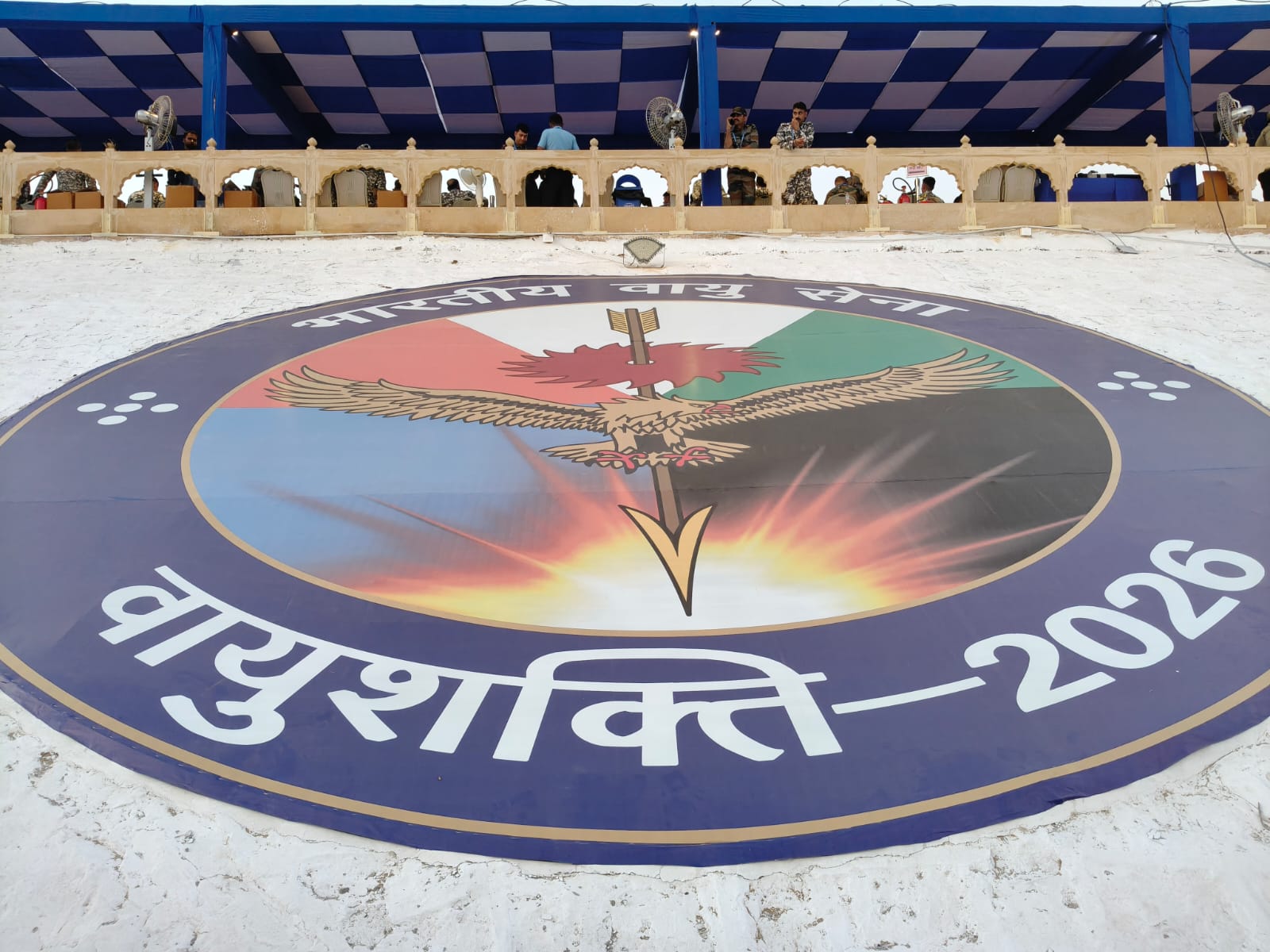
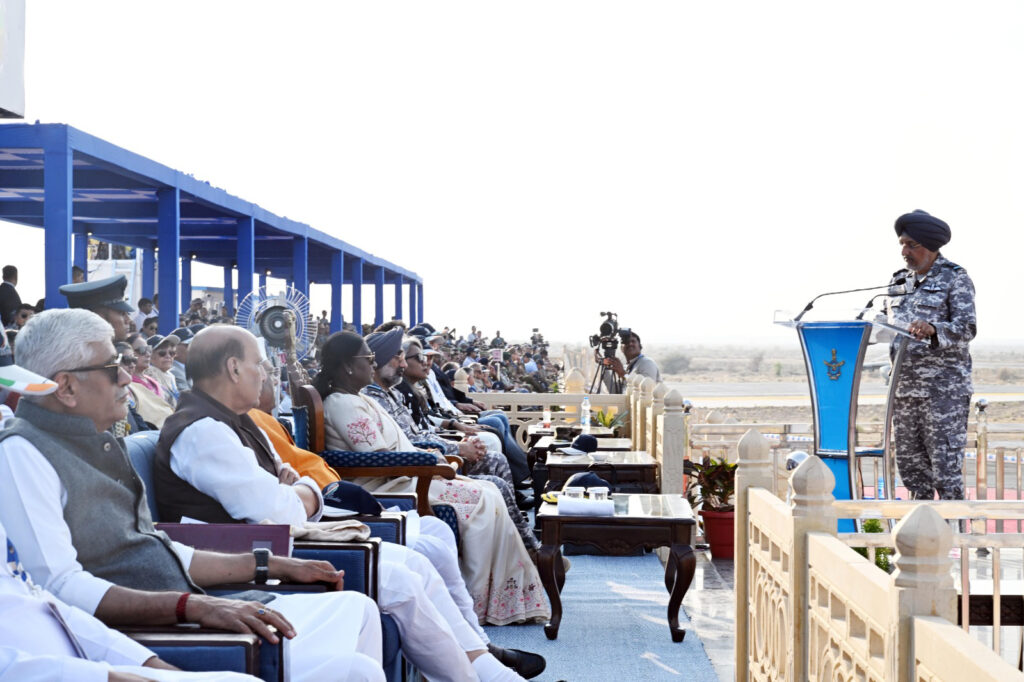
On a crisp winter day that transformed the stark beauty of the Thar into a roaring crucible of modern airpower, Exercise VayuShakti-26 unfolded over the Pokhran Field Firing Range on February 27, 2026. The spectacle was more than a display of machines and munitions; it was a confident proclamation of an India that is rapidly evolving into a self-reliant, multi-domain force—an Aatmanirbhar Bharat that can conceive, integrate and execute complex operations across the full spectrum of warfare. Under the watchful gaze of President Droupadi Murmu, Defence Minister Rajnath Singh, Chief of Defence Staff General Anil Chauhan, senior military leadership, foreign defence attaches and veterans, the Indian Air Force (IAF) turned the desert sky into a simulated live combat theatre, demonstrating doctrinal maturity, technical depth and operational readiness.
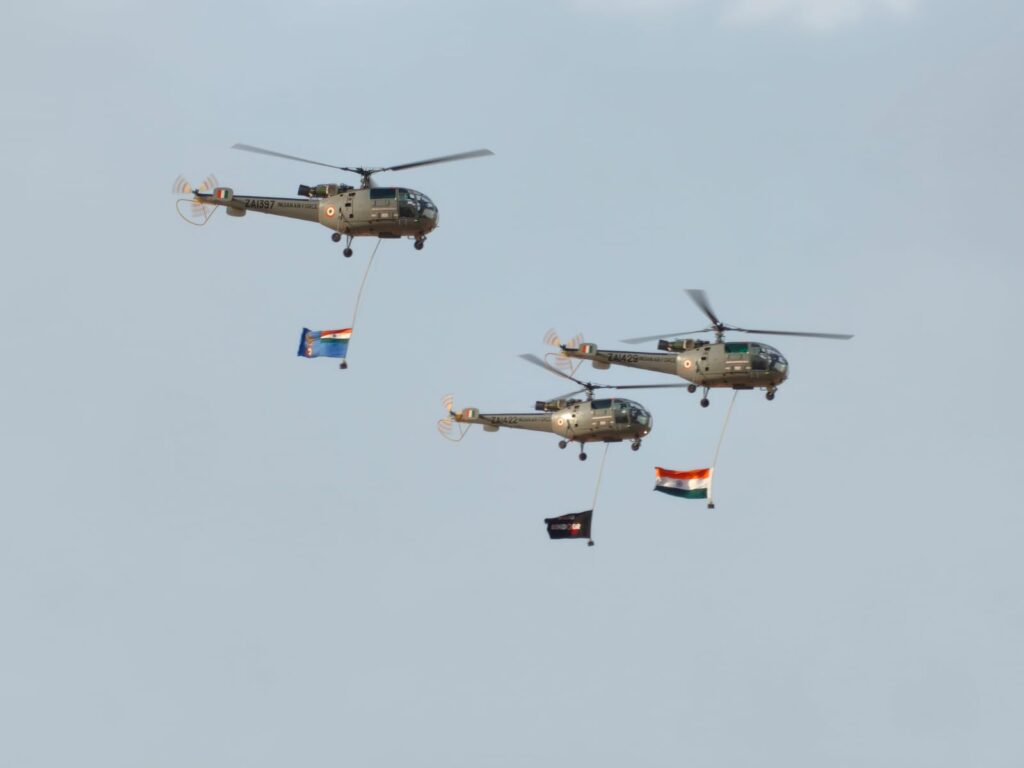
From ceremony to combat simulation, VayuShakti-26 narrated a story of capability and cohesion. The event opened with solemn notes—the National Song and National Anthem—followed by a ceremonial flypast of Chetak helicopters bearing the National Flag, the Air Force Ensign and the Operation Sindoor Flag. That symbolic linkage of tradition, honour and recent operational experience segued into action: a Rafale’s sonic boom snapped the desert silence and marked the transition from pageantry to high-intensity drills. What followed was a meticulously choreographed sequence of offensive counter-air strikes, deep precision attacks, air defence engagements, special operations, strategic and tactical airlift missions, and humanitarian assistance demonstrations. For the first time, the exercise was carried out along a defined operational storyline—transforming the event from a static firepower demonstration into a simulated battlefield campaign that mirrored the complexities of contemporary conflict.
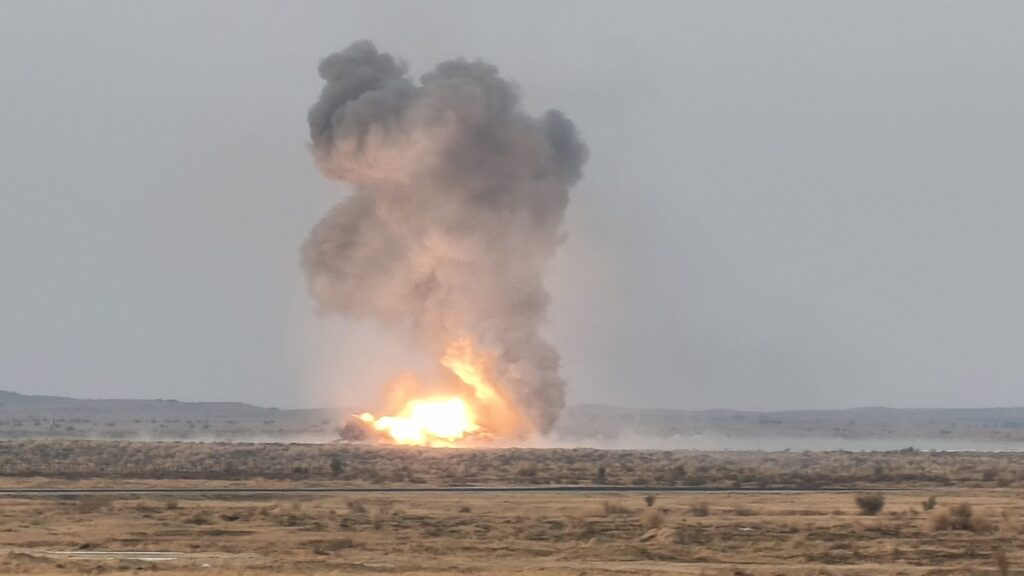
Scale and diversity were striking. Over 130 aircraft—ranging from Rafale, Su-30MKI, Mirage-2000, MiG-29, Jaguar and Hawk fighters to helicopters such as the Mi-17 and indigenous platforms like the Advanced Light Helicopter (ALH) Dhruv and the Light Combat Helicopter (LCH) Prachand—took part in integrated day-and-night operations. Strategic and tactical airlifters—C-130J Super Hercules, C-295 and the colossal C-17 Globemaster—showcased India’s capacity to move forces and materiel rapidly across vast distances. At the same time, indigenous platforms underlined the nation’s growing technological confidence. Frontline fighters executed precision strikes on simulated enemy assets using advanced air-to-ground ordnance, including precision-guided munitions and long-range strike systems, delivering selective, decisive effects that highlighted the IAF’s ability to project calibrated, lethal force with minimal collateral impact.
The drills underscored two complementary themes: precision and persistence. Precision manifested in pinpoint strikes against critical targets and in the coordination required for multi-asset engagements. Persistence was evident in the continuous tempo of operations—from the daylight kinetic manoeuvres to the coordinated precision night strikes that reinforced the Air Force’s ability to dominate the battlespace round-the-clock. This 24/7 operational readiness is a crucial deterrent attribute in an era where the tempo of conflict can shift in minutes.
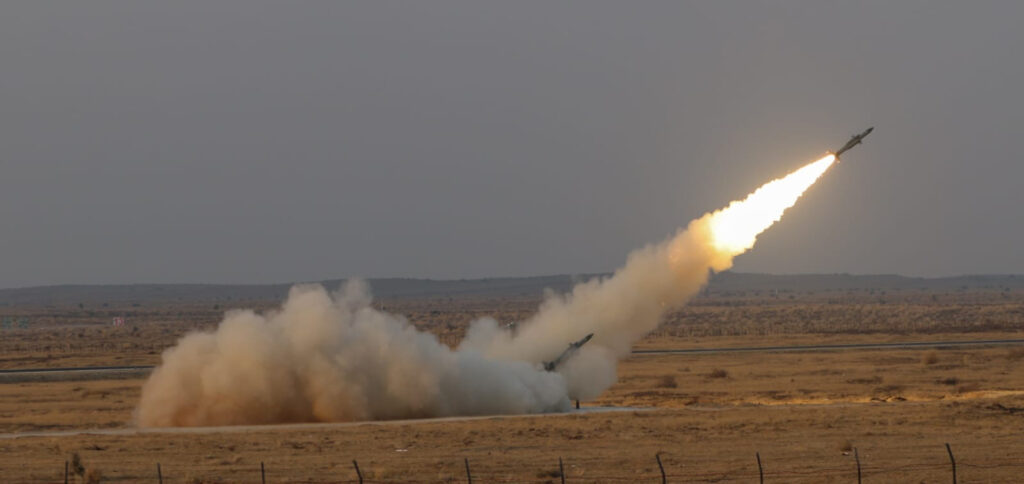
Equally important was the emphasis on layered and integrated air defence. VayuShakti-26 illustrated seamless coordination between airborne platforms and surface-based systems such as Akash and SPYDER, alongside Army air defence assets including L-70 guns and M777 systems. These synchronized engagements were not merely technical demonstrations; they showcased evolving jointmanship doctrines—where air and land forces operate under shared situational awareness, interoperable command and control, and mutually reinforcing firepower. The event’s night phase further emphasized integrated air defence and air-landed operations, simulating responses to multi-vector threats in realistic conditions.
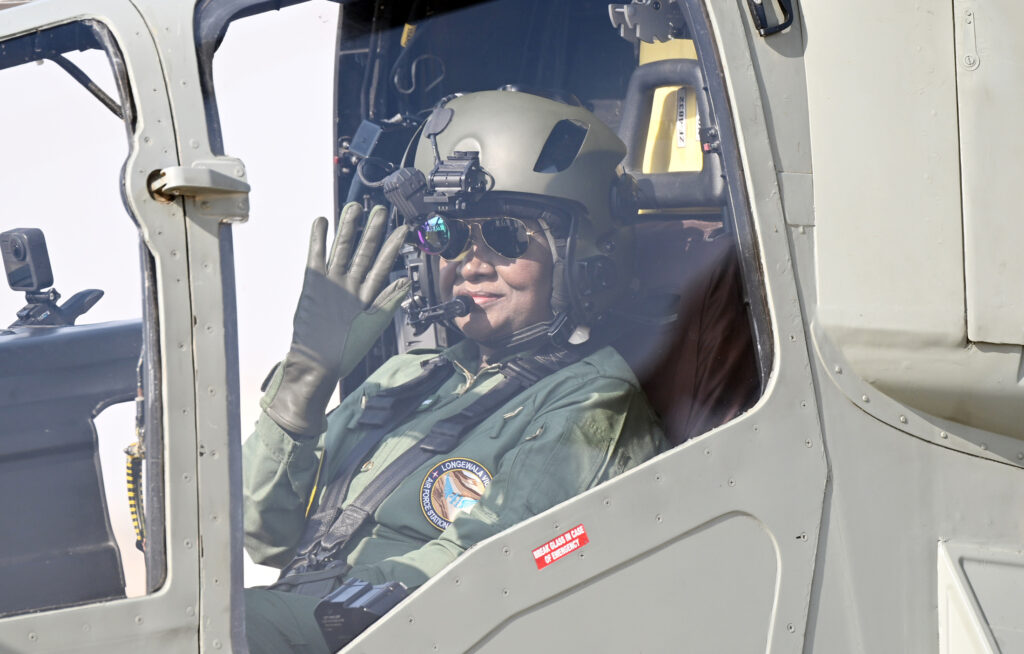
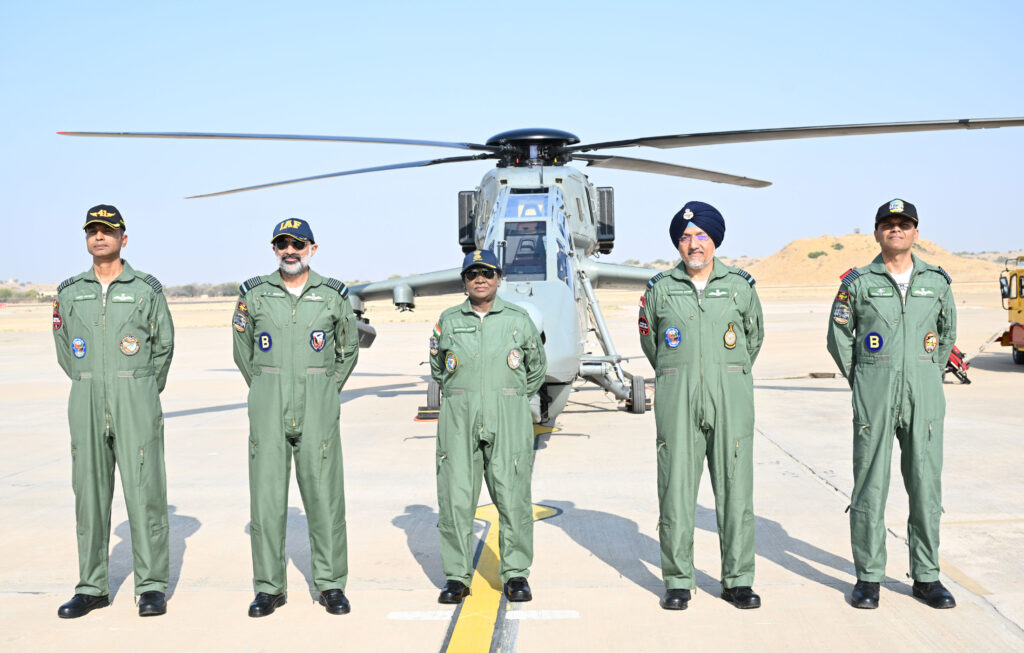
The presence of the nation’s top leadership elevated the exercise’s strategic significance. Defence Minister Rajnath Singh’s praise of the IAF—framing its ethos as “Achook, Abhedya aur Sateek”—captured the national aspiration for an Air Force that is unerring, impenetrable and precise. President Droupadi Murmu’s participation carried personal and symbolic weight; her sortie in the indigenous LCH Prachand prior to the exercise underscored both faith in homegrown platforms and a shared national pride in indigenization efforts. Such endorsements amplify the message that India is not only modernizing but is doing so on the foundation of domestic design, development and production.
VayuShakti-26 also conveyed doctrinal evolution. By scripting the exercise as a campaign—an operational storyline that linked tactical actions to strategic objectives—the IAF demonstrated its ability to transition seamlessly from localized engagements to broad-spectrum campaigns that integrate offensive and defensive operations, logistical sustainment, and civil-military contingencies such as humanitarian assistance. This approach reflects a contemporary appreciation that airpower must be conceptualized not as standalone kinetic bursts but as a persistent, orchestrated instrument of national power capable of shaping strategic outcomes across domains.
Technology and human skill were displayed in tandem. Advanced sensors, long-range weapons and precision-guided munitions were as much on show as the professionalism and courage of aircrews, ground controllers and maintenance personnel. Special operations elements and airlift crews illustrated the IAF’s capacity to deliver combat power and humanitarian relief under demanding conditions. The result was a holistic demonstration of capabilities—kinetic, non-kinetic and enabling—that together form a credible deterrent and operational backbone for national security.
Beyond immediate tactical lessons, the exercise sent broader strategic signals. In an era of shifting power balances and grey-zone competition, the ability to present credible, integrated, and sustained airpower deters aggression and reassures allies. VayuShakti-26 broadcast India’s intention and capability to defend its sovereign interests while contributing to regional stability. It also reinforced the role of indigenization—Aatmanirbharta—in national security: domestic platforms, weapons and systems featured prominently, reflecting industrial maturation and the benefits of sustained investment in defence R&D and manufacturing.
For veterans, serving personnel and the public, the spectacle was a galvanizing affirmation of institutional competence and resolve. It honoured the legacy of those who built the service and inspired the next generation of aviators, engineers and planners who will refine doctrine and advance technology. For foreign defence attaches and observers, the exercise provided clarity on India’s operational concepts and interoperability—essential information in an era where security partnerships and shared capabilities matter more than ever.
Under the vast, star-spangled canopy of the desert night, Exercise VayuShakti-26 unfolded as a stirring testament to the Indian Air Force’s operational muscle, technological maturity, and indefatigable spirit. Dignitaries, including Rajasthan Governor Haribhau Bagade and Union Minister Gajendra Singh Shekhawat, stood among an audience that witnessed a showcase equal parts theatre and assurance: a biennial airpower exercise that combined precision, tempo and coordination to convey a simple message — the IAF stands ready, capable and modern, guided by the creed “Achook, Abhedya aur Sateek.”
From the outset, the exercise made clear that modern airpower is more than the roar of fighters; it is the delicate choreography of special operations, airlift, casualty evacuation, and rapid crisis response. As darkness settled over the dunes, a dramatic sequence highlighted the bold, surgical capabilities of India’s special forces. Garud Special Forces and Para SF elements were silently inserted by Mi-17 helicopters into an urban environment simulated on the desert landscape. In tense, vividly staged scenarios of urban intervention and hostage rescue, these elite operators demonstrated speed, surprise and clinical execution — attributes forged by rigorous training and deep integration with air assets. The sight of troops descending into a hostile pocket in the quiet of the night illustrated that airpower is the decisive enabler, converting strategic intent into tactical effect.
The night’s intensity only amplified with subsequent high-tempo operations: assault landings and rapid extraction missions executed by C-130J Super Hercules and C-295 aircraft from an Advanced Landing Ground. These platforms, celebrated for their ruggedness and tactical airlift pedigree, projected the IAF’s ability to deliver combat power where and when it matters most. In swift, coordinated moves, the crews showcased tactical insertion, immediate on-ground action, and swift casualty evacuation — the seamless interplay between aircrew, special operators, and ground controllers that typifies modern joint operations. Beyond their battlefield utility, these capabilities are a national asset for crisis response: delivering relief in natural disasters, evacuating civilians from peril, and saving lives under extreme conditions. The drills underscored an important truth: the Air Force is not merely a combat arm but India’s first responder in times of crisis.
VayuShakti-26 was also a celebration of indigenous defence progress and the Atmanirbhar Bharat doctrine. Earlier in the day, President Droupadi Murmu undertook a sortie in the indigenously developed Light Combat Helicopter (LCH) Prachand — a powerful symbolic and practical endorsement of India’s growing defence self-reliance. Her flight aboard the Prachand reflected confidence in national talent, engineering maturity, and operational readiness of homegrown platforms. That Prachand is now a vehicle for high-level endorsement signals how far India has come in producing systems that meet contemporary battlefield demands. Defence Minister Rajnath Singh’s own association with the Prachand, including having flown in it during its induction, has consistently reinforced the message that indigenisation is not merely a policy goal but a strategic necessity that strengthens operational readiness and national security.
Technological convergence was a leitmotif throughout the exercise. Precision strike assets and airborne platforms worked in concert with special operators, while tactical airlift and force-multiplying systems enabled rapid, complex manoeuvres. The instruments of modern war — aircraft, helicopters, transporters and pilots — were complemented by mission planners, intelligence inputs and on-field controllers who knit together disparate elements into unified effects. This synthesis validated the IAF’s operational doctrine: accurate targeting, invincible resolve and precise execution, embodied in the core values of “Achook, Abhedya aur Sateek.”
As the exercise drew to a close, VayuShakti-26 offered a stirring grand finale under the night sky. A symbolic ceasefire flypast by a C-17 Globemaster hearkened to the Air Force’s humanitarian and strategic lift capabilities, while a choreographed drone display celebrated technological evolution and legacy in a modern, visual pageant. The spectacle was at once artistic and austere — a demonstration of command over the skies and of the country’s advancing aerospace ecosystem.
Beyond hardware and heroics, the exercise reaffirmed the IAF’s central role in India’s strategic deterrence architecture. In an era where crises unfold rapidly and across multiple domains, the ability to integrate airpower, special operations and rapid mobility into coherent, timely responses is indispensable. VayuShakti-26 validated that doctrine: the IAF’s forces are trained to be precise in strike, resilient in defence and decisive in response. This integrated posture sends a clear strategic signal — deterrence grounded in readiness, technological edge and the resolve to act.
The presence of dignitaries such as Governor Haribhau Bagade and Union Minister Gajendra Singh Shekhawat underscored the civic and political recognition of the IAF’s mission. Their attendance connected the spectacle on the runway and over the dunes to the people and institutions that the force exists to protect. The President’s flight in the Prachand brought the nation’s leadership into the narrative of indigenisation and trust in domestic defence capabilities, reinforcing that the path to strategic autonomy is being traversed not in rhetoric alone but in demonstrable capability.
VayuShakti-26, therefore, was more than a display of aerial prowess; it was a narrative of a modern air force in dynamic action — interoperable, innovative and implacably committed to its foundational values. It was a clarion call of preparedness: against threats, for rescue, and in service of national security. Under the desert stars, amid the thunder of rotors and the hush of night insertions, the exercise painted a portrait of an Air Force that is accurate in its strikes, invincible in spirit and precise in execution — an assurance to the nation and a reminder to the world that India’s skies are defended by forces both capable and proud.
Exercise VayuShakti-26 was a vivid tableau of modern airpower: a fusion of firepower, precision and spectacle staged against the austere grandeur of the Thar. It demonstrated that the Indian Air Force is not merely acquiring platforms but is shaping an integrated, multi-domain force able to wage and win campaigns across day and night, land and air, kinetic and non-kinetic arenas. Above all, the exercise reflected an India confident in its indigenous capabilities, strategic intent and operational readiness—an Aatmanirbhar Bharat rising to meet the security challenges of a complex and uncertain world with clarity, competence and courage.