Kamal Shah
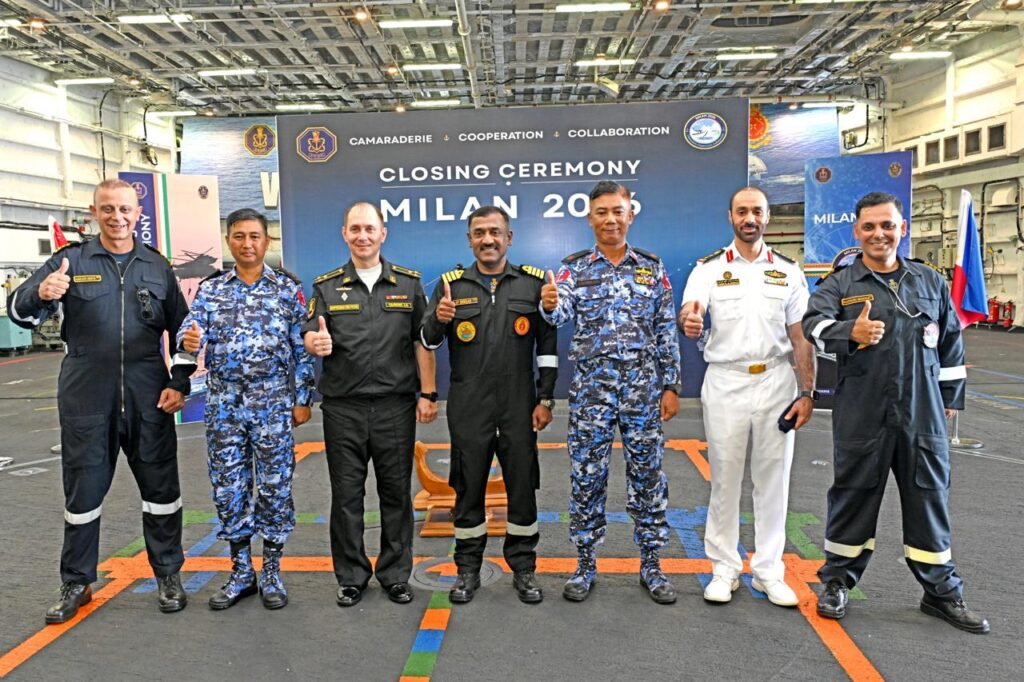
When 75 countries converge on a single maritime stage, sending warships, submarines and aircraft to operate together, the moment demands attention. MILAN 2026, hosted by India and presided over by Rear Admiral Alok Ananda, Flag Officer Commanding Eastern Fleet, was nothing short of a declaration: the seas that sustain global commerce and livelihoods require cooperation, not chaos. Centered on INS Vikrant, India’s indigenous aircraft carrier, and framed by the theme “Camaraderie, Cohesion and Collaboration,” MILAN 2026 showcased how naval diplomacy and operational interoperability can serve as pillars of regional stability and global economic security.
From Humble Origins to Global Reach
The MILAN initiative began in 1995 with just four regional navies—Indonesia, Singapore, Sri Lanka and Thailand. What was then a modest effort to build ties among neighbouring maritime forces has grown into a multilateral phenomenon. By 2026, MILAN had evolved into a platform that draws the world’s navies into a shared space of practice and policy. That expansion is no accident. The oceans are not only strategic arenas for states; they are the arteries of the global economy. Nearly 90 percent of global trade moves by sea, and the Indian Ocean alone carries a disproportionate share of oil, commodities and manufactured goods. Any disruption—whether from piracy, conflict, or degraded maritime governance—has ripple effects through fuel prices, supply chains, and the everyday prosperity of nations. MILAN’s growth reflects that reality: maritime security is a collective interest that benefits all.
Camaraderie Anchored in Real, Practical Engagement
MILAN 2026 unfurled in two complementary phases: a Harbour Phase dedicated to dialogue and trust-building, and a Sea Phase where multi-domain exercises tested and demonstrated capability. The Harbour Phase—often underrated in its importance—was where relationships were forged and trust matured. Cross-deck visits, expert exchanges, symposia, and interactions among young officers all reinforced the idea that navies are communities of practice. The value of those conversations cannot be overstated. Operational success at sea depends on predictable behaviour, shared procedures and the tacit understanding that comes from face-to-face engagement.
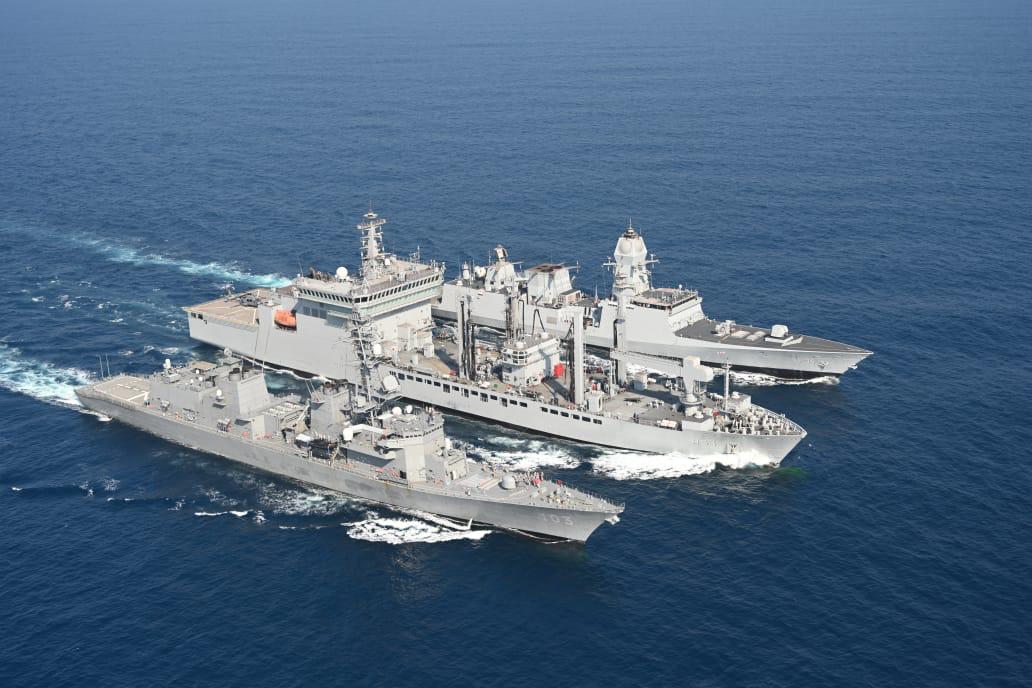
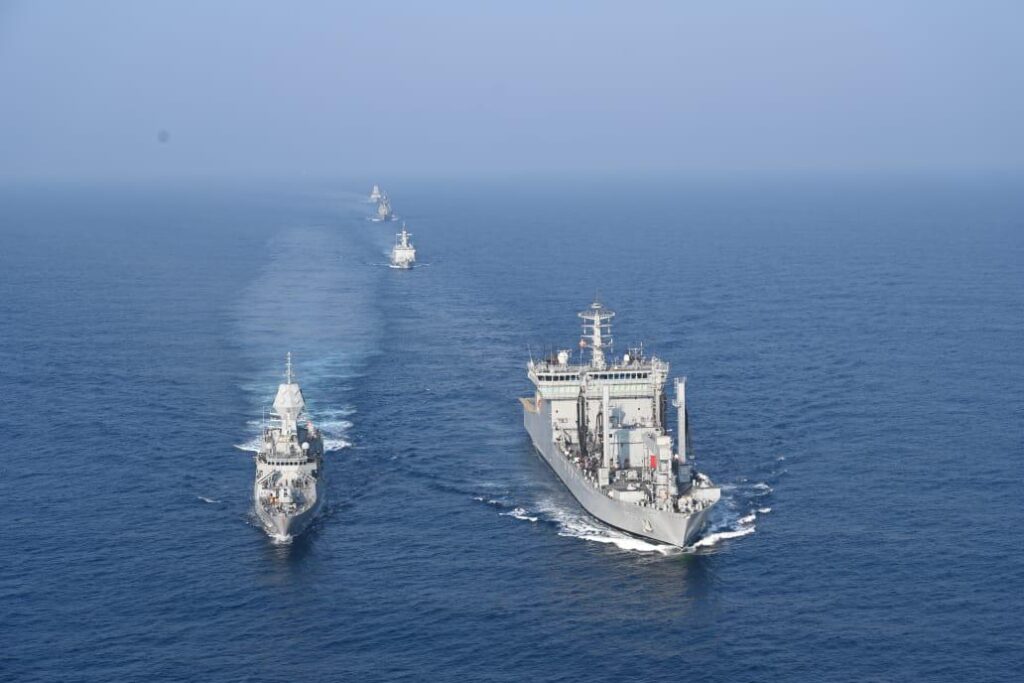
The Sea Phase translated that trust into action. Over four intense days, 42 ships, submarines, and 29 aircraft took part in complex exercises spanning the air, surface, and underwater domains. Anti-submarine warfare drills, air defence operations, coordinated targeting, tactical manoeuvres, and live gunnery became the theatre in which interoperability was stress-tested and refined. The inclusion of fighter jets operating from INS Vikrant in integrated air defence drills for the first time in MILAN signalled a maturation of Indian naval aviation and demonstrated a new level of sophistication in joint operations. Live surface gun shoots, force-protection measures, anti-air firings, and an emphasis on real-time coordination and joint mission planning underscored the event’s practical, mission-focused character.
Showcase, Signalling & Soft Power
MILAN is as much about demonstration as it is about dialogue. For India, hosting 75 countries and their assets aboard and around INS Vikrant was a showcase of indigenous capability and an exercise in strategic diplomacy. The carrier’s role in integrated exercises projected a message: New Delhi is committed to being a security provider in its region and has the operational competence to back that claim. But beyond native capability, MILAN’s true power lies in signalling—publicly and privately—that cooperation remains possible and productive, even as geopolitical competition intensifies in other theatres.
Complexity & Contradictions: The IRIS Dena Tragedy
The optimistic cadence of a cooperative maritime exercise was tempered by a recent grim event: the sinking of the Iranian frigate IRIS Dena off Sri Lanka’s southwestern coast after a torpedo attack attributed to a US Navy fast attack submarine, coming as the vessel was returning from the events in India. Sri Lanka’s rescue of 32 critically wounded sailors was a humanitarian response in a fraught moment. The incident starkly illustrated the complexity of contemporary maritime security: military engagement, regional cooperation and great-power competition can collide with tragic consequences. That this ship had been part of MILAN only days earlier underlines the fragile line between engagement and confrontation. It also emphasizes why trust, rules of the road, incident-management mechanisms and open lines of communication—exactly the kinds of things MILAN seeks to build—are indispensable.
Participation & Presence: A Diverse Assembly
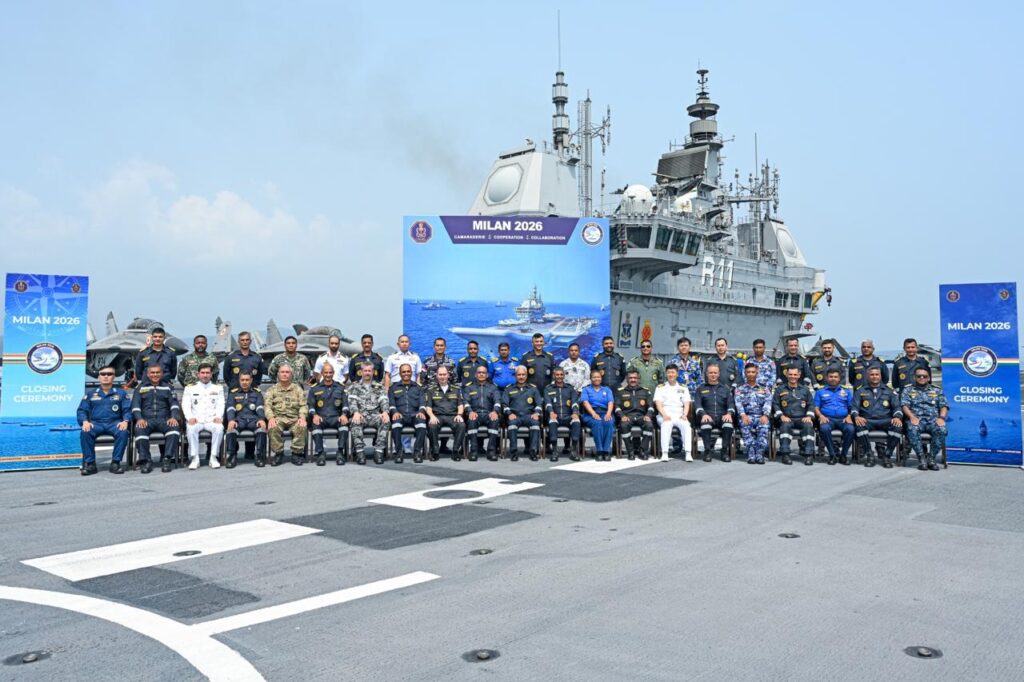
MILAN 2026’s roster was striking: 75 countries, 85 ships (including 19 foreign warships), and aircraft from many partners, with delegates from major and smaller navies alike. The diversity of participation—ranging from the United States, France and Australia to Iran and many others—gave the event a rare breadth. Even when assets such as the US destroyer USS Pinckney could not participate due to emergent requirements, cooperation still occurred: a US P-8 maritime patrol aircraft participated, contributing to the event’s multi-domain character. The presence of both Western and regional navies and the inclusion of countries with competing geopolitical interests transformed MILAN into a microcosm of contemporary maritime diplomacy.
Why MILAN Matters: Security, Economy & Stability
The stakes are simple and profound. Secure seas are not an abstract good reserved for strategists and sailors. They are the precondition for predictable energy flows, stable prices, reliable supply chains and functioning global markets. A disruption in maritime security quickly transmutes into economic pain for consumers and industries, destabilizing regions and amplifying geopolitical risks. MILAN’s theme—Camaraderie, Cohesion and Collaboration—captures this intersection of ethics and interest. In a world where unilateral action and confrontation can be tempting, pushing for cooperative frameworks across navies is a pragmatic strategy for preventing escalation and managing shared challenges such as piracy, trafficking, natural disaster response, and search-and-rescue.
Operational Lessons & Institutional Gains
Beyond symbolism, MILAN yields concrete benefits. Exercises refine tactics, techniques and procedures, and encourage standardisation—critical when disparate fleets must operate together. Logistics and sustainment at sea, joint mission planning, communications interoperability and combined training in anti-submarine warfare and air defence are capabilities with immediate operational value. Furthermore, MILAN’s investment in people—particularly through exchanges among young officers—builds a cadre of leaders with personal relationships and professional experiences that will inform future cooperation. Those interpersonal bonds are long-term force multipliers.
Looking Ahead: Cooperation as Strategy
MILAN 2026 is not a one-off spectacle; it is part of an enduring strategy to weave cooperative habits into maritime security. The rehabilitation from 1995 to 2026 reflects international recognition that threats at sea are often transnational and that collective action is more efficient and legitimate than unilateral force. The challenge ahead is to deepen institutional frameworks, ensure transparency, establish robust incident-response channels, and build predictable norms of engagement that reduce the risk that miscalculation spirals into conflict.
A Statement of Shared Interest
When 75 countries gathered under INS Vikrant’s shadow, they sent a message that transcendental strategic signals alone cannot: sustaining the global commons requires active care. MILAN 2026 was a celebration of capability, a rehearsal of interoperability, and above all, a reaffirmation that the sea is a shared space whose security undergirds global well-being. In an era of complex threats and competitive geopolitics, MILAN’s insistence on camaraderie, cohesion and collaboration is more than an aspirational slogan—it is an operational imperative. The exercises, the dialogues, and even the tragedies that punctuate maritime life together emphasize one unvarnished truth: secure seas mean secure economies, and secure economies mean stability for millions. MILAN 2026 both embodied that truth and pointed the way forward—toward a cooperative maritime order that keeps the lights on for global trade and human prosperity.