In the present global security environment, modern warfare is undergoing a profound transformation. Conflicts across different regions of the world are no longer fought solely through conventional military strength, but through advanced technologies, precision-guided systems, electronic warfare, unmanned platforms, cyber capabilities, and real-time intelligence networks. From high-intensity battlefield confrontations to asymmetric and hybrid warfare scenarios, the nature of combat is rapidly evolving, redefining how nations prepare, defend, and respond.
Amid ongoing global conflicts, the strategic importance of drones, missile defence systems, long-range precision-strike weapons, surveillance radars, underwater combat technologies, and network-centric warfare capabilities has become increasingly evident. Modern battlefields are now driven by speed, situational awareness, accuracy, and technological superiority. Nations are investing heavily in indigenous defence innovation to strengthen operational readiness, secure strategic interests, and reduce dependence on external supply chains.
In this evolving theatre of global defence, where technology shapes power and partnerships define stability, platforms like Eurosatory 2026 emerge as more than exhibitions. They become arenas where the future of warfare is envisioned, demonstrated, and negotiated among the world’s leading defence powers, innovators, and strategic stakeholders.
Set in Paris, France, from June 15 to 19, Eurosatory 2026 brings together some of the world’s most advanced defence ecosystems under one global platform. In this strategic convergence, the presence of the Defence Research and Development Organisation (DRDO) reflects the rise of a technologically confident India that is no longer on the periphery of global defence innovation, but firmly at its centre. Through indigenous systems developed under the vision of Aatmanirbhar Bharat, India is showcasing its growing capability to contribute meaningfully to future global security architectures and next-generation defence technologies.
India–France Defence Partnership: Built on Trust, Driven by Strategy
The India–France relationship remains one of the most stable and forward-looking strategic partnerships in the global defence landscape. Since its formalisation, it has evolved into a multi-dimensional collaboration anchored in trust, shared democratic values, and long-term strategic alignment.
In the defence sector, this partnership has translated into some of India’s most significant military modernisation programmes. A key example is the induction of the Dassault Rafale fighter aircraft into the Indian Air Force. Known for its advanced avionics, precision-strike capability, superior combat range, and multi-role operational flexibility, the Rafale has significantly strengthened India’s air power and strategic deterrence. Equipped with state-of-the-art weapon systems and advanced electronic warfare suites, the aircraft has enhanced India’s preparedness across multiple operational scenarios, particularly in high-threat environments.
Another landmark achievement of the India–France defence partnership is the development and induction of the Scorpene-class submarines under Project-75. Built in India through technology transfer and strategic collaboration, these submarines represent a major step in strengthening indigenous naval capabilities and underwater warfare preparedness. Designed for stealth, endurance, and advanced combat operations, the Scorpene-class submarines significantly enhance the Indian Navy’s maritime surveillance and sea-denial capabilities in the strategically critical Indian Ocean Region.
These collaborations reflect a partnership that extends far beyond defence procurement. They symbolise growing trust in joint development, technology sharing, industrial cooperation, and long-term capability building. Over the years, India and France have steadily expanded cooperation into maritime security, space, cybersecurity, artificial intelligence, and Indo-Pacific stability.
Regular high-level engagements, joint military exercises, and strategic dialogues continue to reinforce this partnership, ensuring that it remains resilient, future-oriented, and responsive to emerging global security challenges.
Paris: Where Legacy Meets the Future of Defence
For decades, Paris has symbolized the intersection of history and technological progress. From early aviation breakthroughs to today’s complex defence ecosystems, the city has served as a global stage where innovation is not only displayed but defined.
The legacy of international exhibitions hosted here carries a distinct significance. They are not merely platforms for showcasing capability but milestones in the evolution of global defence and aerospace. In this continuum, Eurosatory stands as a modern embodiment of that legacy, offering a backdrop where cutting-edge systems are presented against a city that has long witnessed the transformation of warfare and technology.
Key Indigenous Systems on Display: Engineering Power, Precision, and Preparedness
At Eurosatory 2026, DRDO’s pavilion unfolds as a narrative of India’s technological rise. It blends innovation with operational readiness and strategic foresight. Each system on display reflects a maturing defence ecosystem that is not only capable of meeting national requirements but is also ready for global engagement.
- MSS Radar: The Watchful Eye of the Battlefield
The MSS Radar stands as a silent sentinel, designed to detect, track, and classify multiple targets across varied terrains. By integrating radar with advanced sensor technologies, it creates a unified surveillance grid. It transforms data into decisive intelligence. In an era where information dominance defines battlefield outcomes, MSS Radar ensures clarity amidst complexity.
- Pinaka LRGR: Precision Beyond Distance
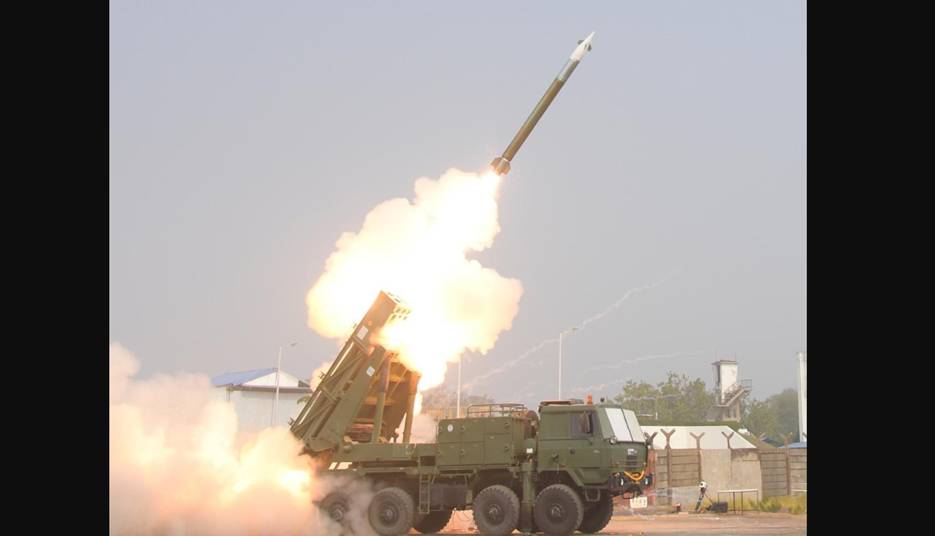
The Pinaka LRGR represents the evolution of India’s artillery systems into precision strike platforms. With extended range and guided accuracy, it delivers high-impact strikes with calculated efficiency. It is more than a weapon system and embodies a shift from volume-based firepower to precision-led engagement.
- Advanced Lightweight Torpedo (ALWT): Dominance Beneath the Surface
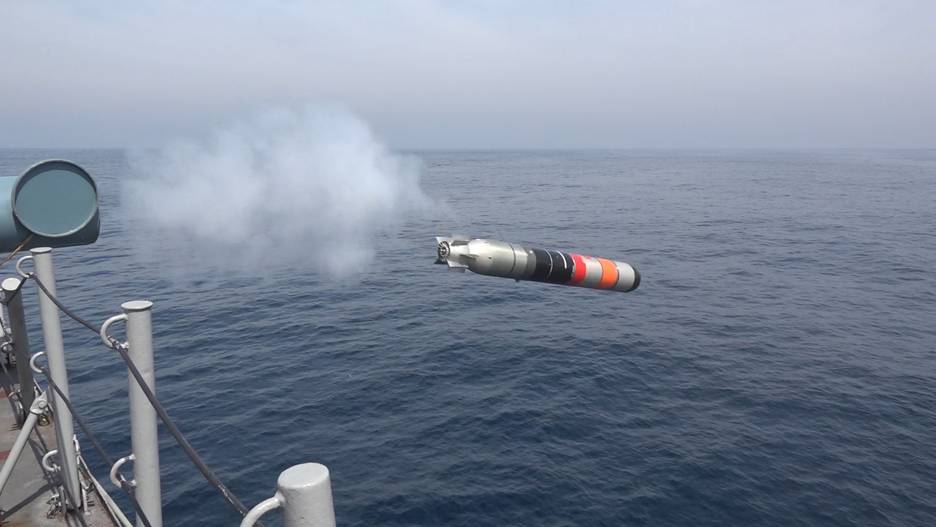
The Advanced Lightweight Torpedo reflects India’s growing command over underwater warfare. Engineered for anti-submarine operations, it combines advanced propulsion with acoustic homing capabilities. It can track and neutralize underwater threats with precision. In the silent depths of the ocean, it ensures that no adversary remains undetected.
- TTLS: Enabling Rapid Underwater Response
The Tactical Torpedo Launch System acts as the operational enabler of naval preparedness. Designed for rapid deployment, it ensures that lightweight torpedoes are launched with speed and accuracy. In high-stakes maritime environments, it bridges the gap between detection and response, ensuring readiness translates into action.
- Rudram-1: Silencing the Enemy’s Eyes and Ears
The Rudram-1 marks a significant leap in India’s offensive capabilities. By targeting enemy radar and communication systems, it disrupts the adversary’s ability to detect and respond. It creates a tactical advantage where control of the electromagnetic spectrum becomes a decisive factor.
- VSHORADS: The Last Line of Air Defence
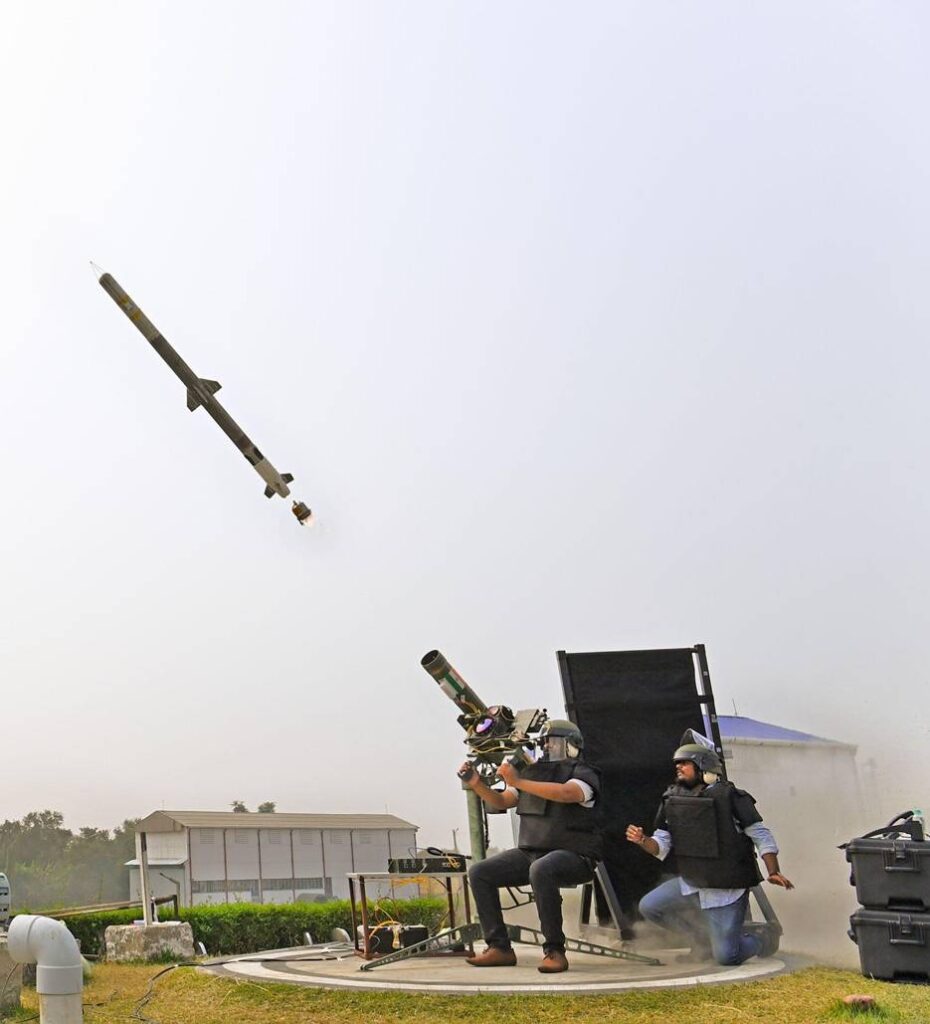
The VSHORADS stands at the frontline of protection. It is compact, agile, and precise, designed to counter low-altitude aerial threats, including drones and aircraft. As the final shield in layered air defence, it ensures that even the smallest vulnerabilities are secured with speed and accuracy.
Driving the Aatmanirbhar Bharat Vision Globally
At its core, DRDO’s presence reflects India’s transition from self-reliance to self-reliance with global relevance. The systems showcased are not merely technological achievements. They are strategic instruments of trust, capability, and collaboration.
Through platforms like Eurosatory, India is positioning itself as a reliable defence partner capable of delivering scalable, cost-effective, and advanced solutions aligned with global requirements. It signals a shift from being a participant in global supply chains to becoming a contributor to global security architectures.
From Collaboration to Co-Creation
Participation in Eurosatory 2026 is not just about visibility. It is about deepening engagement. As India strengthens its partnerships, particularly with France, the focus is increasingly moving towards co-development and co-innovation.
This transition reflects a broader strategic shift where partnerships are no longer transactional but transformational. DRDO’s presence embodies this evolution by showcasing not just systems but also the intent to collaborate, co-create, and contribute.
Conclusion: A Strategic Moment for India
Eurosatory 2026 is more than an exhibition. It is a moment of convergence. It is a moment where India’s technological ambition meets global opportunity.
From the watchful precision of surveillance systems to the silent dominance beneath the seas, from long-range strike capabilities to agile air defence, DRDO’s showcase weaves together a compelling narrative of preparedness and progress.
In a world seeking trusted partners and resilient technologies, India stands ready not just to defend but to lead, collaborate, and shape the future of global defence.