Chaitali Bag
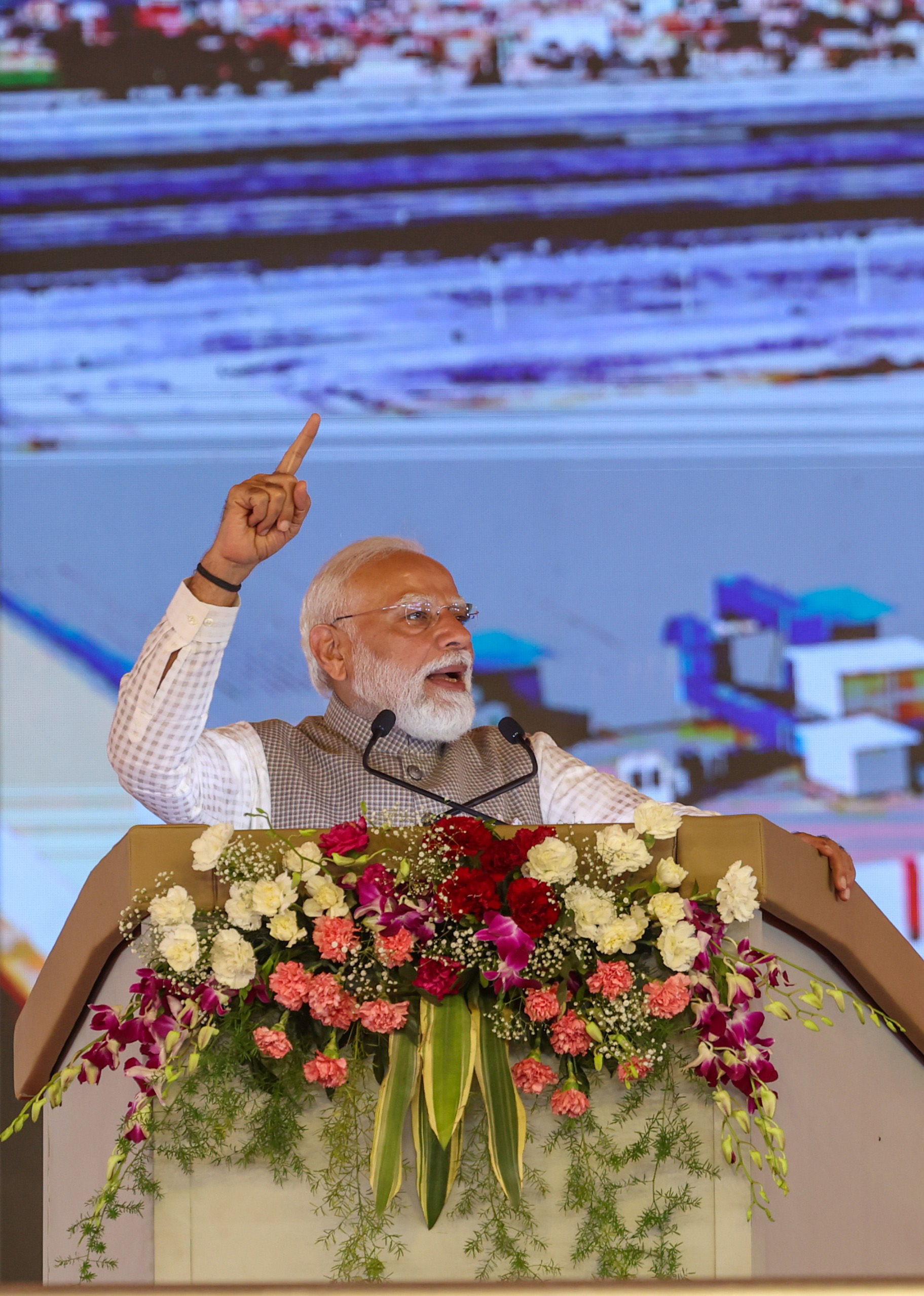
On a bright, momentous day for Uttar Pradesh and for India’s aviation horizon, Prime Minister Shri Narendra Modi inaugurated Phase I of the Noida International Airport at Jewar — a landmark that signals not just the arrival of a world-class aviation facility, but the acceleration of a vision: Viksit UP and Viksit Bharat. With an investment of around ₹11,200 crore, this airport embodies ambition translated into steel, concrete, runways and runways of opportunity. It stands as a vivid testament to what determined governance, strategic planning, and public-private partnership can accomplish when aligned behind a national development narrative.
From conception to inauguration, the journey of Jewar Airport has been emblematic of India’s broader developmental trajectory. Approved in 2003 and now realized with speed and scale, the airport is the physical manifestation of persistence — of policy continuity meeting administrative efficiency and engineering excellence. For Prime Minister Modi, the occasion was deeply personal as well as public: he recalled laying the foundation stone and reflected on the pride of inaugurating a project whose very name is linked to Uttar Pradesh, the state that entrusted him with representation in Parliament. That connection—between leader, land and people—adds an emotional resonance to what is already a strategic infrastructural milestone.
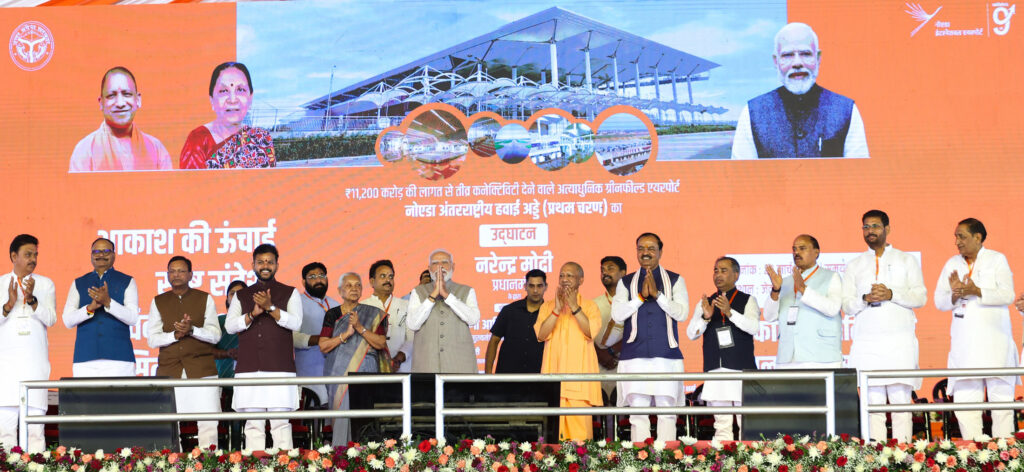
The significance of the Noida International Airport cannot be overstated. Geographically and economically, it is poised to serve a vast catchment area—Agra, Mathura, Aligarh, Ghaziabad, Meerut, Etawah, Bulandshahr, and Faridabad, among others—effectively knitting western Uttar Pradesh and adjacent regions into global air routes. Airports are more than terminals; they are catalysts. They catalyze trade, tourism, investment, technology transfer and cultural exchange. As Prime Minister Modi aptly put it, “airports are not just basic facilities in any country, they give wings to progress.” The Jewar airport will enable farmers to reach distant markets with perishables; it will help small and medium enterprises expand their horizons; it will open new corridors of employment and entrepreneurship for the youth. In short, it will translate regional potential into tangible prosperity.
Strategically, the inauguration underscores Uttar Pradesh’s emergence as one of India’s leading states in terms of international airport infrastructure. This development reframes the state’s logistics and connectivity advantage, positioning it as an attractive destination for domestic and foreign investment. Businesses now have faster, easier access to global markets; tourists can reach world-famous cultural and religious destinations with greater convenience; and the logistics networks that sustain manufacturing and agriculture can operate with greater efficiency. This is particularly consequential for hinterland economies where transport bottlenecks used to constrain growth. The Noida airport changes that calculus, signalling that the region is ready to compete on a global stage.
The inauguration also sits within a flurry of development activity in western Uttar Pradesh that collectively paints a picture of rapid modernization. The Prime Minister highlighted several concurrent projects — the foundation for a major semiconductor factory in Noida, expansion of the Meerut Metro, and the acceleration of the Delhi-Meerut Namo Bharat train — all playing complementary roles in transforming the region’s economic landscape. Together, these projects are building an ecosystem: semiconductor manufacturing drives high-value jobs and technological capability; modern urban transit improves daily life and productivity; high-speed rail links consolidate regional markets; and the new airport stitches international connectivity into this fabric. The synergy among these initiatives is what converts isolated investments into a sustained growth engine for the state and the nation.
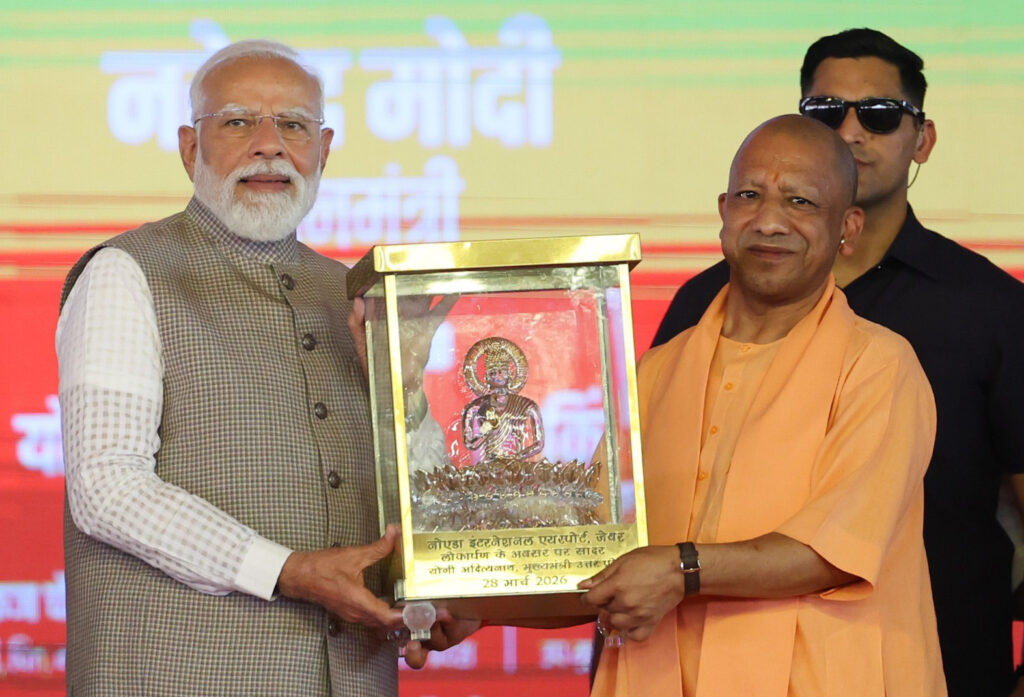
The inauguration also comes against a backdrop of global uncertainty. With geopolitical tensions disrupting supplies of energy, food, and critical commodities, India’s leadership faces a complex set of challenges. Prime Minister Modi underscored that despite external headwinds — including disruptions from conflicts in West Asia — the government has shielded ordinary families and farmers from the worst of these shocks through policy measures and strategic interventions. Yet, even in such turbulent times, the nation has continued its developmental march, demonstrating resilience and strategic foresight. Building major infrastructure during global upheaval is not merely an act of confidence; it is an investment in national security, economic sovereignty, and long-term stability.
Beyond immediate economic returns, Jewar Airport speaks to a larger civilizational aspiration—the idea of a Viksit Bharat. The government’s unprecedented investments in modern infrastructure are intended not just to fill gaps but to leapfrog capabilities: creating hubs of manufacturing excellence, transit-oriented urbanism, and global connectivity. Airports are the gateways through which ideas, capital, culture and innovation flow. By expanding and modernizing this gateway network, India is reimagining its place in the 21st-century global order, aiming for higher value chains, more diversified trade, and enhanced people-to-people connections.
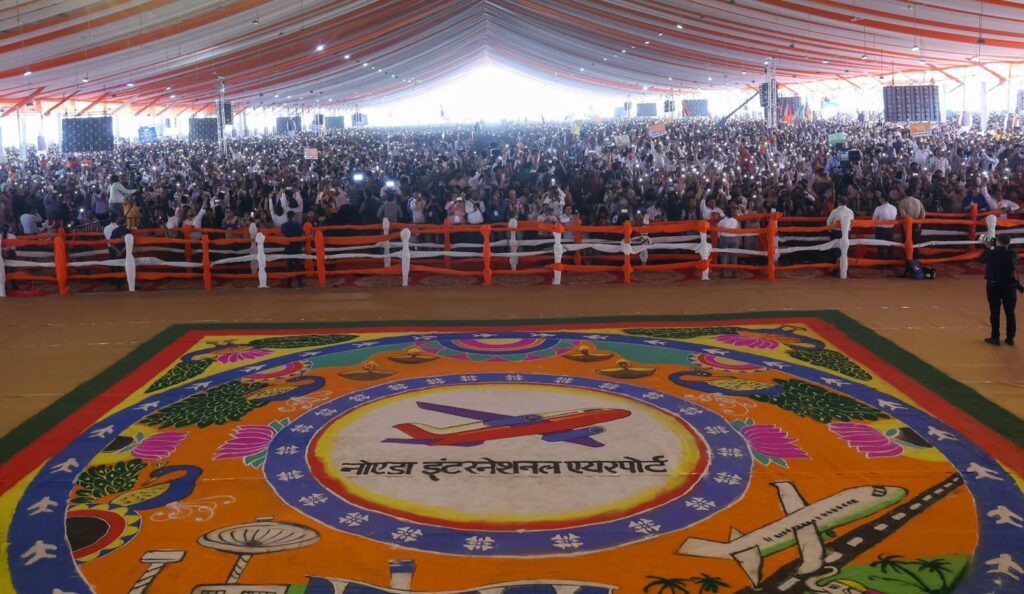
For Uttar Pradesh, the airport is both symbol and substance. It affirms the state’s commitment to modernization and offers an engine for inclusive growth. Farmers will find markets, entrepreneurs will find customers, workers will find jobs, and young minds will find exposure to global opportunities. The ripple effects—real estate development, ancillary industries, hospitality and tourism, logistics, and service sectors—will create a multiplier that benefits large swathes of the population. When infrastructure is built with foresight, its benefits compound over decades, making today’s inauguration a seed for generational change.
The project is also a study in leveraging public will and private capability. Such large-scale infrastructure demands meticulous planning, financing, and implementation. Its successful delivery demonstrates that India can mobilize resources, navigate complex land and regulatory challenges, and execute projects that meet international standards. That capability matters as the country charts more ambitious projects ahead, from greenfield industrial corridors to advanced research hubs and smart cities.
Moreover, the airport’s location in Jewar provides strategic relief to the National Capital Region’s aviation ecosystem. As air traffic grows, diversifying hubs becomes imperative to avoid congestion, reduce travel time, and enhance operational efficiency. Jewar adds much-needed capacity and will play a critical role in decongesting existing airports, improving passenger experience, and accommodating future growth in both passenger and cargo segments. With Phase I inaugurated, the runway of opportunity has opened; subsequent phases will only expand this capacity and the benefits that flow from it.
India is witnessing a transformational moment in its economic geography, and Uttar Pradesh stands at the center of this exciting shift. The Prime Minister’s recent observations highlight how the region is rapidly emerging as a logistics and connectivity powerhouse—an evolution that promises to reshape livelihoods, accelerate industry, and integrate local production with global markets.
At the heart of this transformation are two major freight corridors—dedicated railway tracks for goods—that now link North India directly to the seas of Bengal and Gujarat. Where these corridors meet at Dadri, a new logistical fulcrum has been created. This convergence means farmers’ crops and manufacturers’ goods can be moved faster, more reliably, and at lower cost to ports, airports, and markets worldwide. Multimodal connectivity—combining rail, road, and air—turns this part of Uttar Pradesh into a magnet for investment, attracting businesses seeking speed, scale, and supply chain resilience.
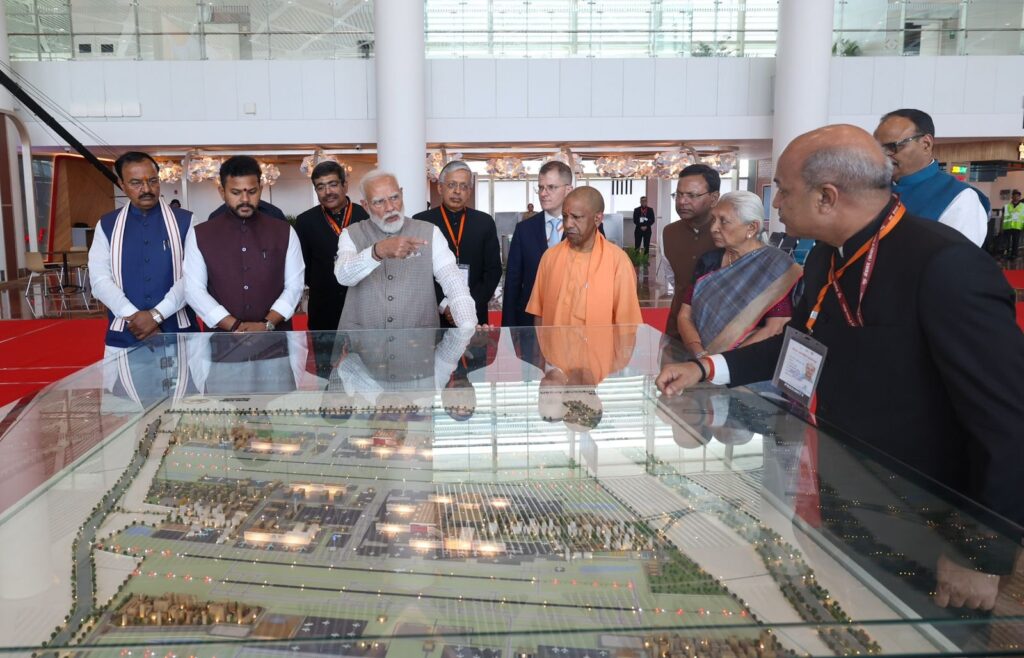
Noida and the surrounding region are emblematic of this change. Once seen mainly as satellite towns, they are now positioned as gateways to global commerce. The Prime Minister’s declaration that “Noida is ready to welcome the entire world” captures the optimism that infrastructure-led development can instill. As transport links multiply and modern logistics hubs expand, the area’s potential for manufacturing, services, and export-oriented industries grows dramatically, reinforcing the broader vision of Aatmanirbhar Bharat—self-reliant yet globally connected.
Crucially, this progress rests on the willingness of local communities—especially farmers—who made way for infrastructure projects by contributing land. The government’s emphasis on honoring agricultural stakeholders recognizes that rural economies must keep pace with industrial growth. Enhanced connectivity will directly benefit food processing and agribusiness in Western UP: perishable produce can reach distant markets more quickly, processing units can be supplied more reliably, and value-added agriculture can flourish. This creates higher incomes, new jobs, and diversified rural economies.
The Prime Minister also highlighted a compelling story of agricultural innovation impacting national energy security. Ethanol produced from sugarcane has meaningfully reduced India’s dependence on crude oil. By blending ethanol with petrol, the country avoided importing what would otherwise have been hundreds of crores of litres of crude annually, saving foreign exchange and cushioning the economy during volatile global oil markets. For sugarcane farmers, the shift toward ethanol production has opened new revenue streams and improved payment cycles, reversing past hardships. These gains show how policy, technology, and farmer engagement can together yield broad national and local benefits.
Air connectivity is another pillar of this new growth trajectory. Aviation is no longer the preserve of a few metros; it is reaching smaller towns and ordinary families. With over 160 airports nationwide, including 17 in Uttar Pradesh, air travel is becoming more accessible. The UDAN scheme’s success—making affordable airfares available to millions and extending flight services to previously underserved regions—exemplifies inclusive infrastructure policy. The recent infusion of nearly Rs 29,000 crore to expand UDAN, build 100 more airports, and construct 200 helipads promises to deepen regional integration and spur economic activity in smaller cities and towns across the country.
This aviation expansion also creates vast opportunities for India’s youth. Airlines’ large aircraft orders generate demand for pilots, cabin crew, engineers, and maintenance professionals, while the government’s push to scale up training facilities ensures that talent pipelines will be strengthened. As airports and allied services grow, so do careers in hospitality, logistics, ground handling, and technical services—sectoral ripple effects that can transform local employment landscapes.
The Prime Minister’s recent address struck a confident and forward-looking chord, placing India’s development trajectory squarely on the rise and underscoring decisive steps to close longstanding gaps in critical sectors. At the heart of his message was a clear commitment to convert strategic vulnerabilities into strengths—most notably in aviation, transport and infrastructure—while calling for unity and collective resolve as the nation navigates complex global challenges.
A striking admission set the tone: despite the rapid growth of Indian aviation, 85 percent of Indian aircraft still travel abroad for Maintenance, Repair, and Overhaul (MRO) services. Recognising this as both an economic leak and a missed employment opportunity, the Prime Minister announced a concerted push to make India self-reliant in MRO capabilities. The laying of the foundation stone for a major MRO facility at Jewar is a tangible symbol of that resolve. Once operational, the facility is expected to service aircraft from India and abroad, retain valuable revenue within the country, and generate numerous skilled jobs for India’s youth. This move is emblematic of a broader shift: turning dependency into domestic capability and making infrastructure a source of revenue, pride and employment.
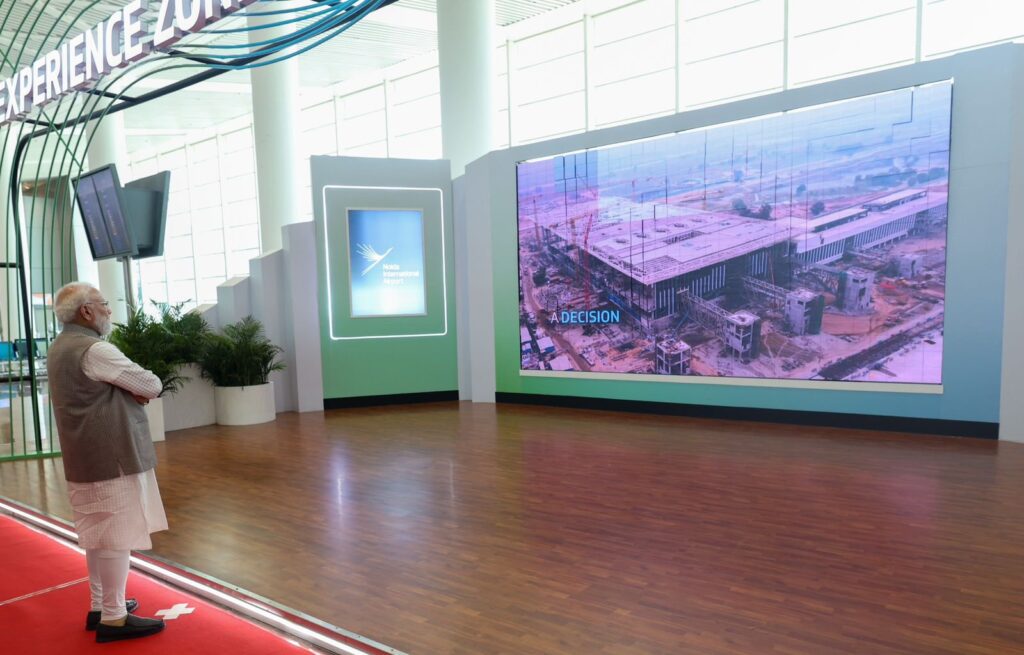
Complementing gains in aviation, the Prime Minister highlighted transformative advances in modern rail services designed to enhance citizens’ convenience and save time and money. The expansion of projects such as Metro systems and the Namo Bharat (Delhi–Meerut) rail line exemplifies how targeted investments yield immediate public benefits. With over two and a half crore passengers already using the Delhi–Meerut service, journeys that once consumed hours are now accomplished in minutes, demonstrating that modern transport is fundamentally about improving everyday life for people.
The speech also mapped out an ambitious infrastructure narrative for a Viksit Bharat. Over the past eleven years, infrastructure investment has scaled up dramatically—more than six-fold—backed by substantial spending on highways and expressways. The Prime Minister recounted Rs 17 lakh crore invested in roads and the construction of over one lakh kilometres of highways, while railway electrification surged from 20,000 kilometres before 2014 to over 40,000 kilometres thereafter. Nearly 100 percent electrification of the broad-gauge network, new rail links to the Kashmir Valley and the capitals of the North-East, a doubling of port capacity, and expanded inland waterways collectively paint a picture of integrated, multi-modal infrastructure that connects people, markets and opportunities across the nation. These achievements signal not just progress in physical terms, but a strategic strengthening of India’s economic backbone.
Beyond infrastructure, the Prime Minister’s appeal for unity and calm amid global turbulence was a steadying refrain. He communicated that policy is guided by the national interest alone and recounted discussions held in Parliament and with state leaders to address crises arising from international conflict. His appeal to citizens to confront challenges with patience and composure framed national resilience as a shared civic virtue. Invoking political consensus, he expressed confidence that all parties would support the country’s united efforts—an invitation to collective responsibility at a crucial juncture.
Taken together, the address was more than a progress report; it was a roadmap and a rallying call. By prioritising domestic capacity-building—exemplified by the MRO initiative at Jewar—alongside transformative transport and infrastructure projects, the government is signalling a decisive push to convert ambition into capability. The emphasis on citizen convenience, revenue retention, job creation and connectivity underscores a people-centered approach to development. And by urging national unity in the face of global uncertainty, the Prime Minister sought to harness India’s traditional strengths of resilience and collective resolve.
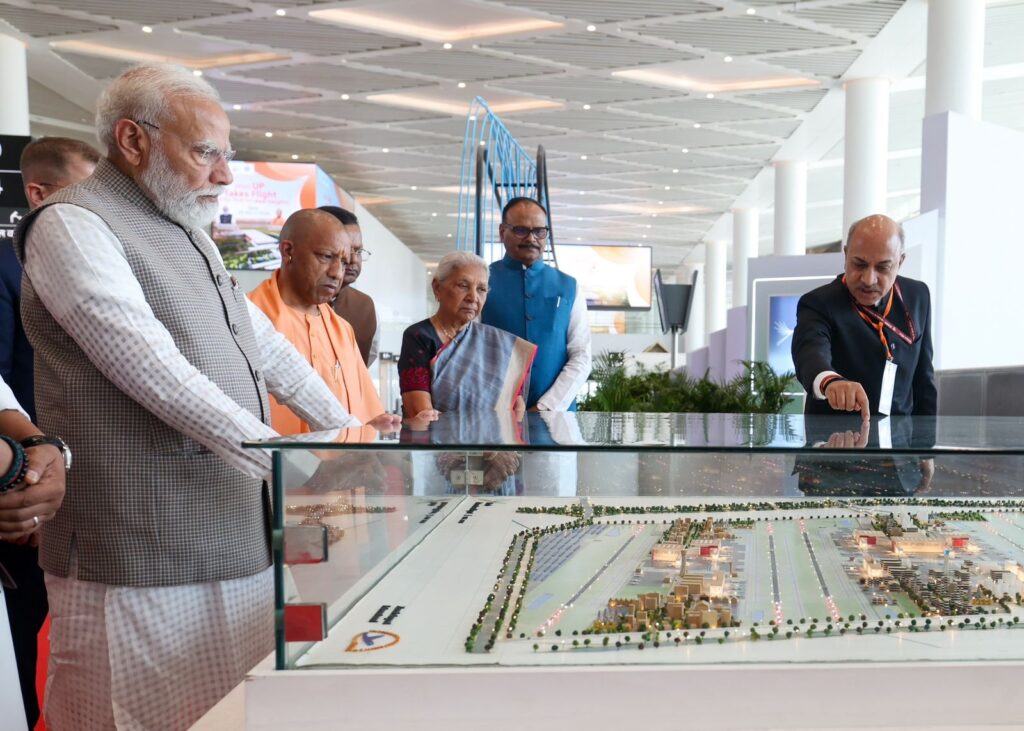
As the first aircraft takes off from Jewar, it will carry not only passengers and cargo but also the aspirations of millions. It will stand as a testament to India’s capacity to dream big and deliver bigger. The Noida International Airport is more than an airport: it is a runway to opportunity, progress and pride — a beacon that will help chart India’s course towards greater connectivity, prosperity and global prominence. Congratulations to Uttar Pradesh, congratulations to India — and here’s to the countless journeys, ventures and dreams that will now take flight.