How the Adani–Embraer Partnership Could Transform India’s Aviation Industry
Vijay Grover

In the shimmering heat of the Gulf of Khambhat, where the salt flats of Gujarat meet the ambitious blueprints of India’s first “smart city,” a transformation is underway that aims to alter the geography of global aviation permanently. India’s first Make in India Commercial Jet Liner could become a reality if Brazilian manufacturer Embraer agrees to go ahead with the Adani Group Deal.
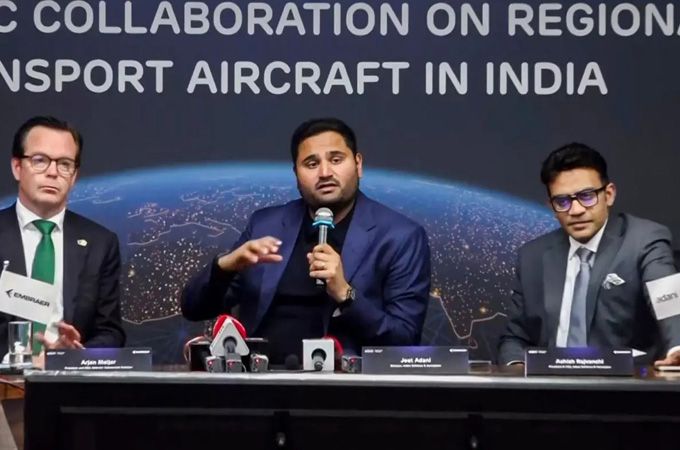
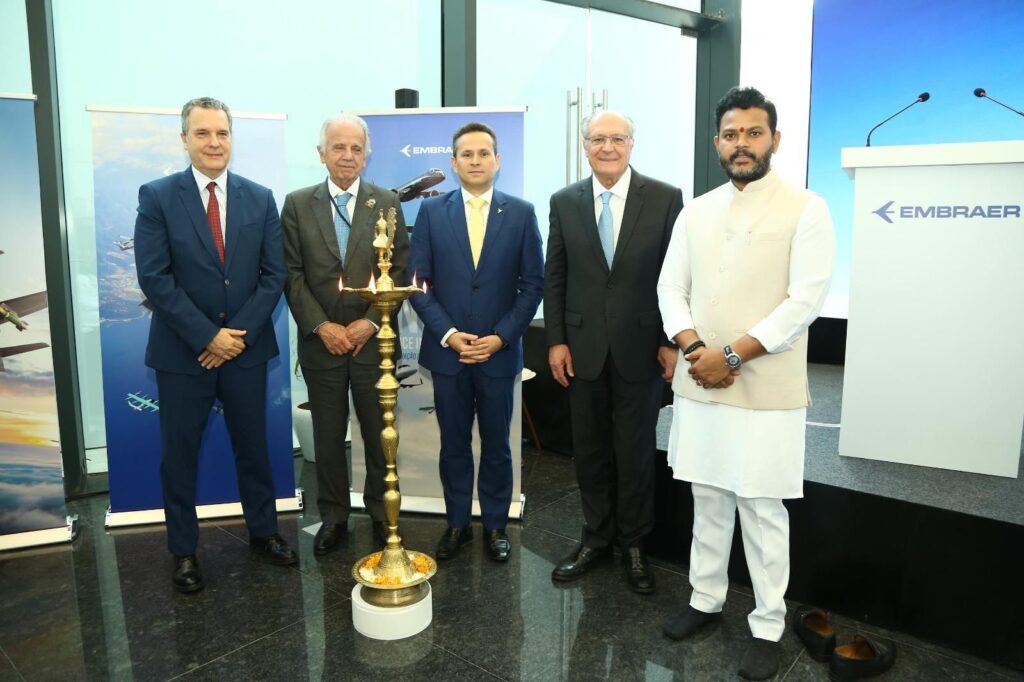
On February 21, 2026, against the backdrop of Hyderabad House in New Delhi, a pen stroke ended decades of Brazilian frustration and Indian hesitation and in the presence of Brazilian President Luiz Inácio Lula da Silva and Indian Commerce Minister Piyush Goyal, Adani Defence & Aerospace and Embraer SA exchanged an “enhanced” Memorandum of Understanding (MoU) with a goal to establish India’s first private Final Assembly Line (FAL) for commercial aircraft.
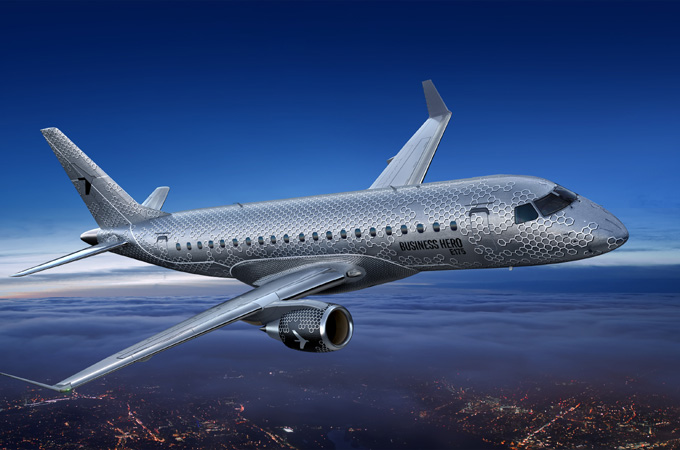
The aircraft being planned is the Embraer E175, a sleek, dual-class regional jet that has long been the darling of American regional carriers but a stranger to Indian skies. Now, through a calculated partnership with the Adani Group, India’s largest private airport operator. After struggling for decades, Embraer isn’t just looking for customers; it is looking for a home in the world’s fastest-growing aviation market.
For decades, Embraer has struggled to make inroads into the Indian skies, given the dominance of Airbus and Boeing, which Indian operators have relied on heavily. Several efforts by Embraer in the past found no success as most Indian operators were reluctant to add an aircraft from Embraer’s stable due to the additional cost burden of maintaining an Embraer fleet, which would warrant additional spare parts, a dedicated maintenance and service team, type-certified pilots, MROs, and a lot more. The airlines are still unsure about Embraer’s commitment to provide service support, which is a key element in successful operations.
With Adani gaining a toe hold in Indian markets, things seem to be finally changing for the Brazilian aircraft manufacturer. A reason why a deal with Adani Group has given Embraer a hope of getting off the starting blocks in the rapidly growing Indian skies. While Embraer operates a few aircraft in Indian skies with regional operators such as Star Air, Embraer believes the Adani deal could be the game-changer they have been waiting for.
The deal is a masterstroke of “piggybacking.” The challenge that the Brazilian manufacturer Embraer faces is its scarred history in India, notably the 2008 kickback scandal involving EMB-145 aircraft for the DRDO. Enforcement Department investigations indicated that Embraer paid a $5.76 million commission to NRI arms dealer Vipin Khanna through Singapore-based Interdev Aviation Services. Using the Money Laundering Route, around $3.275 million was transferred to KRBL DMCC (a Dubai-based subsidiary of Indian rice firm KRBL Ltd.) under a “sham agreement” to bring the money into India.
While the CBI and ED implicated arms dealer Vipin Khanna, advocate Gautam Khaitan, and KRBL Director Anoop Kumar Gupta, Embraer was not directly implicated. However, in the US, under an SEC investigation, Embraer reached a $205 million settlement with US and Brazilian authorities in 2016 to resolve corruption investigations.
The “middleman” controversy stalled Embraer’s progress for nearly a decade. By partnering with Adani Defence & Aerospace, Embraer has effectively bought itself a political and industrial shield. Not only that, but the deal also now transforms the E175 from a “foreign import” into a “National Regional Transport Aircraft (RTA).”
The Adani Advantage is the Airport Ecosystem that Adani controls in India. Experts feel that Key hubs, including Mumbai, Ahmedabad, and Jaipur, are important. By owning these destinations, Adani can create incentive structures, such as slashing landing fees or providing priority slots for airlines that operate the E175.
Some experts believe that India, which has spent decades developing an RTA (Regional Transport Aircraft), could give Embraer the Atmanirbhar Legitimacy. While aligning with the “Self-Reliant India” policy, which may allow the project to access state R&D funding and fast-tracked environmental clearances. More importantly, the Adani Group’s involvement will help the Make In India version secure the necessary clearances from DGCA and other regulatory authorities, which may otherwise have taken decades.
Another key aspect is the Capital Depth of the Adani Group, which will take the burden of investing away from Embraer. Building an FAL is an expensive gamble and Adani’s deep pockets provide the financial runway Embraer needs to wait for the orders to materialize.
For India, this could be a crucial thrust to the Make In India campaign. The economic heart of this deal is a brutal comparison between the fuel-sipping ATR 72-600 and the high-performance E175. While the ATR wins on pure fuel efficiency for 45-minute flights, the E175 wins on utilization. Because it is 30% faster, an E175 can fly more “turns” in a day, generating more revenue for the airline. Furthermore, as Indian passengers become more discerning, the “Jet Experience” is becoming a competitive necessity rather than a luxury.
While Hyderabad and Bengaluru were also being considered, the E-175 project was planned for Dholera, Gujarat, which is the dream project of Prime Minister Narendra Modi. Dholera has emerged as the clear frontrunner for the factory. Dholera offers something the crowded hubs of Bengaluru cannot: vast, contiguous land and a dedicated international cargo airport under construction. As a Special Investment Region (SIR), it provides “plug-and-play” infrastructure that mirrors the aerospace clusters of Toulouse or Seattle.
The Adani Embraer combined plan is ambitious.
Phase 1: A “Completion Center” where Brazilian-made airframes are flown in for painting and interior fitment.
Phase 2: Full Final Assembly, eventually creating 5,000 high-skill jobs.
Phase 3: A global export hub, supplying the E175 to markets in Southeast Asia and Africa.
The project still faces what is being called the “200-Jet” Hurdle.
Despite the diplomatic fanfare, the project faces a “Catch-22.” Situation. Embraer’s CEO, Francisco Gomes Neto, has been blunt in stating that a full assembly line in India is only viable with a firm order of 200+ aircraft. The question is: why is Embraer setting pre-conditions for entering a market it has desperately tried to enter for over 20 years? Why is it playing hard? The Adani group may have to work hard to accept Embraer’s demands and execute the FAL.
This places the onus on India to meet the terms and conditions set by Embraer. Will major Indian Operators support Embraer and alter their order books? Most major operators, such as Indigo, Air India, and SpiceJet, have long-pending orders with Boeing and Airbus. Will they be willing to buy Embraer E-175 in such uncertain times? Embraer and Adani may have to offer more than what is being offered, with several clauses. In comparison, the Russian United Aircraft Corporation (UAC) is getting set to produce the SJ-100 (Superjet 100) regional passenger aircraft in India. This twin-engine, narrow-body jet, designed for 100 passengers, is being produced to support India’s “Make in India” initiative and regional connectivity, with production expected to start in the next three years.
As of late February 2026, the sales pitch was at a fever pitch with Air India exploring the E175 to feed its international long-haul hubs.
All eyes will be on IndiGo, as some believe that if the low-cost giant pivots even 10% of its regional strategy toward Embraer, the 200-order threshold will be shattered.
Even Star Air, which already operates Embraer jets, could do with a few more, as they are proof of the aircraft’s reliability in the Indian heat.
But the Big question is Regulatory Synchronization.
The Indian DGCA is currently in “active synchronization” with Brazil’s ANAC. This isn’t just about safety; it’s about standards. For a “Made in India” jet to be exported, every bolt and wing-spar must meet FAA and EASA certifications.
The government, by pausing its own indigenous “SARAS” regional plane project, effectively crowned the Adani-Embraer E175 or the SJ 100 as the de facto national aircraft. Additionally, the Ministry of Civil Aviation’s recent cut to GST on aircraft parts and the liberalization of MRO (Maintenance, Repair, and Overhaul) policies have turned a difficult business case into a profitable one.
The Adani-Embraer deal is more than a business contract; it is a stress test for India’s industrial ambitions. If successful, it proves that India can move beyond being a consumer of aviation technology to becoming a creator of it.
The stakes are high, but hinge on one question: If the 200 orders don’t come in, the Dholera factory remains a mere “paint shop.” But if the “Big Two” IndiGo and Air India buy into the vision, the first “Made in India” E175 could take to the skies by 2028, carrying with it the hopes of a nation determined to fly on its own terms.
As one official in Bengaluru put it, “The sky isn’t the limit; it’s the marketplace.”
Vijay Grover is the Editor of Indian Aerospace & Defence. He is a veteran Indian journalist whose work has significantly influenced television newsrooms at outlets such as Zee News, NewsX, and TRT World. Renowned for shaping newsroom practices and ethical standards, he has critiqued the decline of field reporting and the rise of desk-driven propaganda.