Kamal Shah
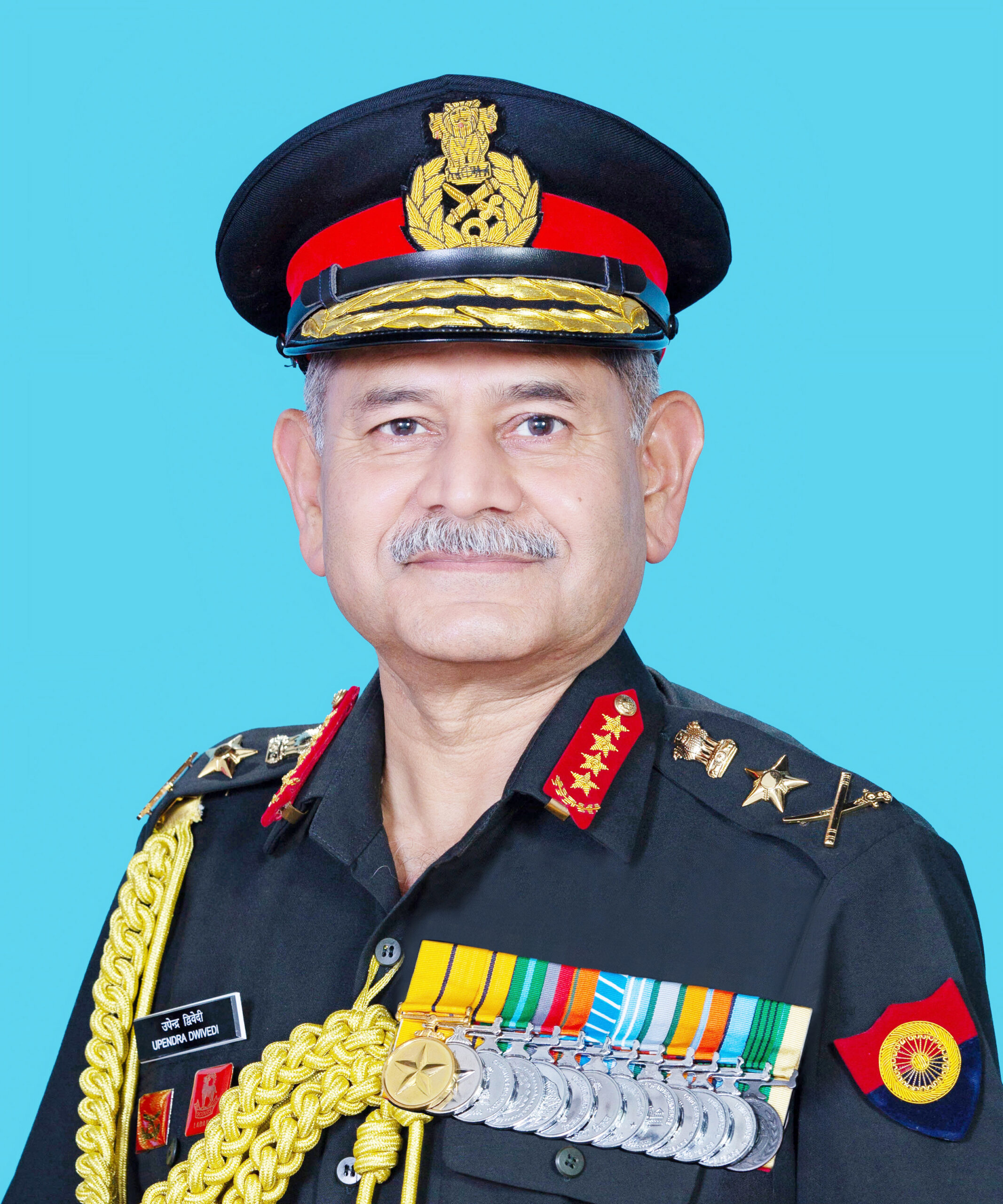
The Indian Army aligns with the Prime Minister’s ‘JAI’ vision—Jointness, Atmanirbharta (self-reliance), and Innovation—through its Decade of Transformation (2023–2032). This initiative rests on five pillars: Jointness and Integration; Force Structuring; Modernization and Technology Infusion; Systems, Processes and Functions; and Human Resource Management. Efforts prioritize multi-domain readiness via capability-driven modernization, organizational adjustments, and integration of niche technologies into operational units. In an exclusive interview with Indian Aerospace & Defence, the Chief of the Army Staff, General Upendra Dwivedi, PVSM, AVSM, stressed the need for force-structuring reforms—Integrated Battle Groups, All-Arms Brigades, Bhairav Battalions, Shaktibaan Regiments, Divyastra Batteries, and ASHNI Drone Platoons—to enhance precision, surveillance, and strike capability. Jointness extends across services, CAPFs, state agencies and other stakeholders. Atmanirbharta and innovation are pursued through partnerships with industry, MSMEs, start-ups, DRDO, academia, and government agencies, with a focus on AI/counter-AI, drones/counter-drone systems, additive manufacturing, and manned–unmanned teaming. Drone units are being integrated into existing infantry and combat structures (not as isolated entities) via tailored Unmanned Aircraft Systems, new sub‑unit formations (Ashni Platoons, Divyastra Batteries, Shaktibaan Regiments) and evolving operational concepts to ensure cohesive command relationships and combined-arms effectiveness.
Q. In what ways does the Indian Armed Forces’ strategic focus on Jointness, Atmanirbharta (self-reliance), and Innovation, while simultaneously advancing the Indian Army’s Decade of Transformation initiative aimed at modernization, force restructuring, and enhancing adaptive capabilities for future warfare?
A. The Army is fully aligned with the Hon’ble Prime Minister’s vision of ‘JAI’ – Jointness, Atmanirbharta, and innovation. The strategic focus is being advanced in a practical, capability-driven manner through the Indian Army’s Decade of Transformation. This pathway is anchored in the understanding that future wars will unfold across multiple domains simultaneously. Accordingly, the Army is progressing with a comprehensive transformation aligned with a Whole-of-Nation approach.
The Decade of Transformation (2023 to 2032) is structured around five foundational pillars: Jointness and Integration, Force Structuring, Modernization and Technology Infusion, Systems, Processes, Functions, and Human Resource Management. Together, these pillars provide the framework for modernising the force, restructuring formations, and building adaptive capability for future warfare.
Under Modernisation and Technology Infusion, the Army has inducted new weapons, equipment and technologies. However, induction is only a means to an end. The more critical requirement is absorption into operational structures. In this context, focused efforts are being taken to integrate niche technologies at the cutting edge of fighting units, supported by organisational adjustments and new structures.
Force structuring reforms through Integrated Battle Groups and All-Arms Brigades have strengthened multi-domain capability, while newer combat structures such as Bhairav Battalions, Shaktibaan Regiments, Divyastra Batteries, and ASHNI Drone Platoons enhance precision, surveillance, and strike capabilities.

Jointness remains central, not only with the Navy and Air Force, but also with CAPFs, state agencies, and wider stakeholders, including Drone Defence Committees informed by lessons from Operation Sindoor. Atmanirbharta and Innovation are being driven through structured collaboration with Indian industry, MSMEs, start-ups, DRDO, IITs, MeitY, and other institutions, enabling field trials, testing, and handholding for emerging technologies. Key thrust areas include AI and counter-AI, drones and counter-drone systems, additive manufacturing, and manned-unmanned teaming. Finally, the focus is on connecting well-equipped units through a unified, secure network to synthesise abundant data into actionable outcomes.
Q. How will the Indian Army ensure effective integration and operational efficiency of newly formed drone units within existing infantry structures?
A. The Indian Army is ensuring effective integration and operational efficiency of newly formed drone units by progressing the induction of Unmanned Aircraft Systems (UAS) with varied roles, capabilities and ranges in accordance with the envisaged operational roles of all arms. UAS are receiving strong impetus not only in the combat arms but also in the supporting arms to enhance aerial surveillance and target acquisition across the force.
Our endeavour is to achieve future capability in UAS warfare through the parallel introduction of new technologies and the evolution of operational philosophies to ensure the complementarity of operations. The focus is on embedding unmanned systems within existing structures to strengthen combined-arms effectiveness, rather than creating standalone capabilities that operate in isolation.
As part of the ongoing reorganisation of the Army, new structures are under formulation to include Ashni Platoons, Divyastra Batteries, and Shaktibaan Regiments, which will be active users of the air littoral. Significantly, these are being developed within existing combat forces and are currently in validation, ensuring that roles, command relationships, and employment concepts align with infantry and all-arms operational requirements.
These structures are being validated through simulated exercises to confirm organisational, equipment, and employment philosophies. In parallel, focused procurement and reorganisation, followed by structured training, are being undertaken to achieve the requisite equipment capability and operationally efficient, future-ready organisational structures. This approach is designed to ensure that drone units integrate smoothly into infantry formations, deliver reliable surveillance, target acquisition, and combat support capabilities, and strengthen readiness to overcome challenges on both fronts.
Q. With the increasing inclusion of women in various roles, what steps is the Army taking to advance gender integration, leadership development, and an enabling ecosystem?
A. Women have served in the Indian Army for over three decades and their roles, responsibilities and leadership appointments have expanded steadily over this period. Today, women officers are an integral part of the Army’s operational, staff and leadership framework, including command appointments. Women soldiers are already part of the Corps of Military Police and are now being recruited in small numbers, on a trial basis, in select Territorial Army battalions. This progression reflects an institutional commitment to a professional, progressive, and gender-neutral environment in which opportunities are driven by merit and suitability.
The Army’s promotion and leadership selection systems are fully gender-agnostic. Advancement is based solely on performance, professional competence, and suitability, through a rigorous selection process. Women officers are increasingly entrusted with key command, staff and United Nations assignments, reinforcing confidence in their leadership abilities and operational effectiveness.
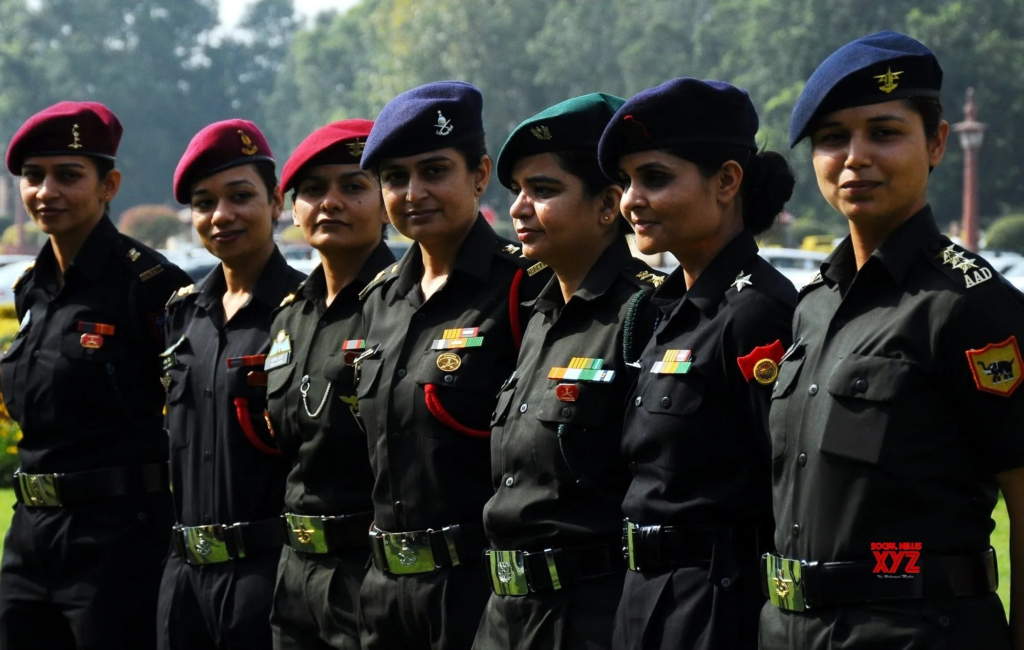
Women now enter the Army through multiple routes, including the National Defence Academy, Short Service Commission in both technical and non-technical streams, the Army Medical Corps, and the Military Nursing Service. In addition, the increasing number of women officers in the Territorial Army has expanded opportunities for leadership and contribution, enabling professionally qualified women to serve in uniform while continuing their civilian careers. A clear roadmap exists for their induction and progression. Approximately 144 women officers are selected annually through the NDA route and commissioned as Permanent Commission officers. In the Short Service stream, the Permanent Commission selection process is entirely merit-based and gender-neutral. If all women candidates on a selection board meet the prescribed benchmark, they are all eligible for Permanent Commission.
In leadership roles, promotions to the rank of Colonel and above follow the same gender-neutral principles. Women officers are also afforded equal opportunities for professional development, including opportunities to sit for the Defence Services Staff College entrance examination and consideration for Higher Command courses. Their growing participation in United Nations missions is significant, with women officers presently occupying about 22 percent of UN billets.
Overall, the Indian Army remains committed to strengthening a gender-neutral, merit-based ecosystem. The focus is on expanding leadership opportunities, building a supportive institutional framework and enabling women officers to realise their full potential across roles and responsibilities, while maintaining the highest standards of professionalism and operational excellence.
Q. With reports indicating significant Pakistani military losses during Operation Sindoor, how is the Indian Army ensuring that the current posture balances deterrence and readiness for a possible long-term standoff with Pakistan, especially in a hybrid and nuclear environment?
A. Operation Sindoor achieved its political and military aim in 88 hours and demonstrated the execution of a limited conflict with precision. In its aftermath, our posture is calibrated to balance cumulative deterrence with a consistently high state of operational readiness across domains. India has demonstrated the capability and the ability to deliver calibrated punitive military action below the nuclear threshold, while retaining the capacity to sustain a more prolonged duration standoff if required.
Doctrinally, India pursues layered conventional deterrence, resilience and strict strategic signalling. This preserves conventional superiority while sustaining mechanisms for escalation control and the stability of nuclear doctrine. The intent is to shift the adversary’s risk calculus by increasing the cost of any misadventure, even in a hybrid environment.
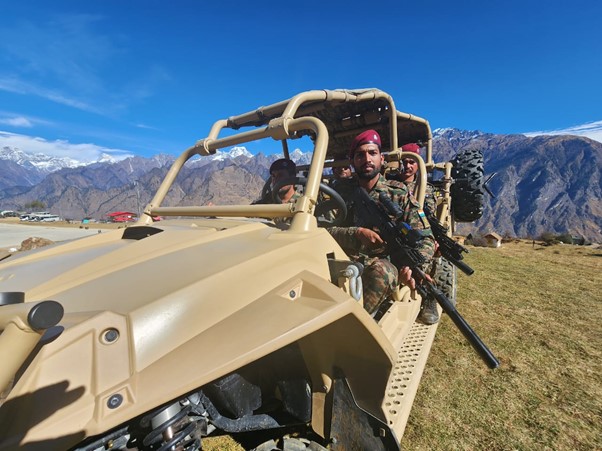
Operationally, we are undertaking continuous capability enhancement through technology infusion, proactive modernisation, and changes to tactics, techniques, and procedures. This is supported by force restructuring and focused training to ensure that our formations remain responsive, adaptive and ready for the full spectrum of conflict. We are strengthening multi-domain capability for a full-spectrum response, including within the broader DIME paradigm.
Capability development is being reinforced through improved surveillance and intelligence, development of border infrastructure and investment in advanced weaponry and missile defence systems. We are also progressing toward real-time, multi-domain, tri-service integration to enhance decision-making speed and unity of effort.
As the Hon’ble Prime Minister has stated, we have shattered the myth of the so-called nuclear shield for proxy war. Our force ratios and preparedness remain sufficient to ensure punitive deterrence against any Pakistani misadventures. Operational plans remain dynamic, aligned with the evolving situation and guided by continuous upgrades to our war machinery.
Q. The Indian Army has outlined a clear roadmap for India’s vision of Atmanirbhar Bharat. Could you elaborate on the key focus areas and indigenous initiatives being pursued to achieve self-reliance in critical defence technologies and systems?
A. Atmanirbharta in defence is key to building a secure, self-reliant, and future-ready Army that is stronger, more competent, and technology-enabled. Forward-looking policies, bold reforms, and innovative programmes are boosting our combat preparedness. This focused push for capability development is strengthening our defence posture and shaping our long-term vision of strategic autonomy and genuine self-reliance.
Our roadmap is centred on developing niche technologies indigenously, with special emphasis on armoured fighting vehicles, autonomous systems, counter-UAS, AI, and communications. Alongside this, we are adopting de novo approaches to accelerate the induction of new technologies in the Indian Army. These include fast-track mechanisms, special-purpose vehicles, and enabling initiatives such as the release of the Compendium of Problem Definition Statements and the Compendium of Technology Challenges, to convert operational needs into viable military use cases at speed.
We also recognise that disruptive technologies need to be owned. Accordingly, key niche technology domains are being targeted for indigenisation, including AI, quantum, space, communications, cyber, integrated networks, stealth, precision-guided munitions, and sensors. These areas are central to future warfighting and are therefore prioritised in our indigenisation effort.
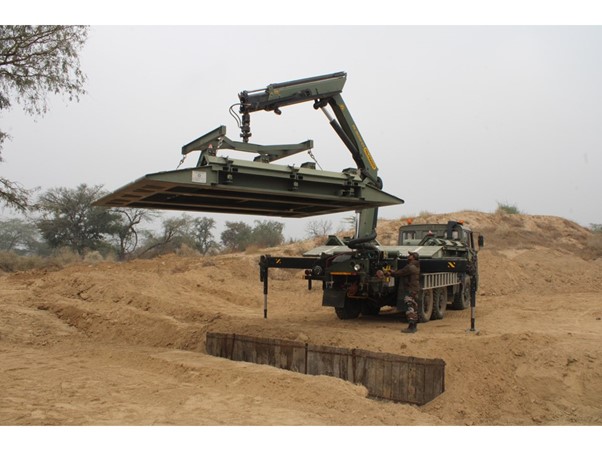
A further thrust is to replace vintage equipment with modern indigenous systems. This includes modern indigenous equipment such as FRCV, light tanks, ATAGs and recce and surveillance helicopters. Taken together, these focus areas and initiatives are driving self-reliance as an operational imperative, enabling the Army to field credible capability today while building enduring national capacity for tomorrow.
Q. What are the most significant lessons the Indian Army is drawing from the Russia-Ukraine and Israel-Gaza conflicts, particularly regarding drones, artillery, logistics, and civilian protection?
A. Both the Russia-Ukraine conflict and the ongoing war in the Middle East have been studied closely by the Indian Army. They have not altered our fundamentals, but they have sharpened our focus and accelerated doctrinal and operational refinements in several key areas.
First, these conflicts underline the decisive impact of drones and electronic warfare. The density of unmanned systems on today’s battlefield reinforces the need for persistent surveillance, rapid target acquisition, and credible counter-drone measures. At the same time, it highlights that survivability increasingly rests on signature management, dispersion, camouflage and redundancy. Control of airspace immediately above the land is crucial for land forces. This air littoral must be closely controlled by us. Resilient communications and hardened command and control are now as important as firepower in ensuring operational continuity under pressure.
Second, they reaffirm the centrality of artillery and precision effects at scale. Long-range fires, loitering munitions, and integrated air defence demonstrate that sensors, shooters, and shields must function as one integrated system. Our emphasis is therefore on integrated targeting, layered protection and faster decision cycles, rather than viewing capabilities as standalone platforms.
Third, logistics has emerged as a decisive factor in high-intensity conflict, indicating strong self-reliance capabilities. Sustained operations place relentless demands on ammunition, repair, maintenance and redundancy. The ability to protect supply chains, sustain tempo over time and rapidly restore combat power is as critical as frontline action.
Finally, civilian protection and the information environment have become inseparable from operations. Modern conflicts show that perceptions travel faster than firepower. We therefore place strong emphasis on disciplined conduct, calibrated application of force and minimising collateral damage, alongside coordinated communication that protects public trust while preserving operational security.