Air Marshal Anil Chopra (r)
India’s military aviation sector is shifting from heavy reliance on imports to a self-reliant global manufacturing hub. Driven by Make in India and local industry policies, the ecosystem is experiencing rapid growth in domestic defence production and AI-driven smart manufacturing. The industry is undergoing a massive transformation, highlighted by several key growth pillars and milestones.
The shift from a buyer-seller model to co-development (such as joint ventures with global aerospace powers) emphasizes the transfer of vital technology and the establishment of local assembly lines. By 2047, India aims to command a ₹8.8 trillion defence economy — six times its current size — and emerge as a true global military power capable of designing, developing, and exporting advanced weapons systems at scale.
Companies are widely adopting AI-powered design tools, smart manufacturing, and predictive maintenance to reduce lead times and optimize operational efficiency. Advanced materials, additive manufacturing, and a significant push toward indigenous carbon composites and 3D printing are enhancing the performance and efficiency of next-generation aerial platforms. Historically, nearly 90% of Maintenance, Repair, and Overhaul (MRO) activities have happened overseas. India is bridging this gap by aggressively developing local MRO capabilities and Defence Industrial Corridors (DICs) in states such as Uttar Pradesh and Tamil Nadu.
A Whole-of-Nation Approach
Modern wars begin at short notice, often through trigger incidents like those that happened in Op Sindoor. Ukraine saw drone attacks as routine as the sunrise. In fact, the war became a laboratory for drone warfare. In Op Sindoor, and later to a more elaborate extent in the Iran War, the focus was on targeting command-and-control networks, airbases, air defence systems, missile infrastructure, defence-industrial and manufacturing hubs, and R&D centres, which were once considered rear areas and were treated as frontline targets. The logic was that if a nation cannot produce, repair, or communicate, it cannot fight. Modern kill chains are AI-assisted, data-driven, and continuously adaptive.
The war is now a whole-of-nation approach, with industry capable of designing and producing weapons and platforms with surge capacity. Iran’s resilience has brought the US to the negotiation table. Operation Sindoor reflected India’s maturity in the application of power without escalation. Foreign dependence on platforms, sub-systems, semiconductors, special materials, and communications equipment is a strategic vulnerability.
India’s Current Defence Production
India’s defence manufacturing output is currently ₹1.54 lakh crore ($18.5 billion), and exports have surged by over 62 per cent to an unprecedented ₹38,424 crore ($4.6 billion) in one year, expanding the exporter base to over 145 firms and reaching more than 80 countries. Defence production is projected to surge to ₹8.8 trillion ($105 Billion) by 2047, with significant investments in indigenous platforms like the Tejas LCA, AMCA fifth Generation fighter, INS Vishal (Indigenous Aircraft Carrier 65,000 ton IAC-III), Project 75I (Conventional Stealth Submarines with Air-Independent Propulsion), Project 77 (Nuclear Attack Submarines – SSN), the Zorawar Light Tank (25-ton class for mountain warfare) slated for induction by 2027, and the Future Main Battle Tank (FMBT), among others. India is fast emerging as a global defence manufacturing hub, with exports set to increase ninefold to ₹2.8 trillion ($33.6 billion) by 2047.
Su-30 MKI Upgrade
India may one day have nearly 14 squadrons of Su-30 MKI aircraft upgraded to 4.5-generation. The upgrade will include next-generation indigenous Gallium Nitride (GaN)-based Virupaksha AESA radar; advanced weaponry including long-range indigenous missiles like the Astra Mk-2 and Astra Mk-3, as well as the BrahMos-A supersonic cruise missiles; upgraded AI-enabled cockpits, digital touchscreen multi-sensor fusion displays, and indigenous, anti-jamming navigation systems that can operate in GPS-denied environments; cutting-edge EW suites and radar-absorbent material coatings will be applied to reduce the aircraft’s radar signature and enhance survivability in contested airspace; and significantly extend the combat life. In late 2024, a ₹ 13,500-crore deal was cleared to acquire 12 brand-new Su-30MKI aircraft with over 62% indigenous content to replace jets lost in crashes. Deliveries for these newly built jets are set to begin in late 2026. India is also in talks with Russia to conduct a parallel upgrade program for part of the Su-30MKI fleet to avoid operational capability gaps.
Rafale Fleet
The IAF already operates 36 Rafales. The plans are to rapidly scale up its Rafale fleet, centered on the multi-role fighter aircraft (MRFA) program. India has issued a formal Letter of Request (LoR) to France for the procurement of 114 Rafale jets in a deal estimated at ₹3.25 lakh crore ($39 billion). Under this program, 90 to 94 jets will be jointly manufactured in India by Dassault Aviation and a local partner, making India the first country outside France to produce the Rafale. The remaining jets will be delivered in fly-away conditions. The new jets will address critical capability gaps and help the IAF meet its target of rebuilding its fighter squadron strength. Separately, the Indian Navy is procuring 26 Rafale Marine (Rafale-M) aircraft for carrier operations, which will bring significant cross-branch interoperability to the Indian military with 95% commonality between the two versions. French manufacturer Dassault Aviation, partnered with Tata Advanced Systems Limited (TASL), has already begun manufacturing complete Rafale fuselages in India. Dassault Aviation operates an established Maintenance, Repair, and Overhaul (MRO) facility in Noida, Uttar Pradesh, near the Jewar International Airport, for the Mirage 2000 and Rafale. Safran is developing the first MRO facility for the M88 engine (which powers the Rafale fighter jet) outside of France. Located in Hyderabad, India, the facility will process over 600 engine modules per year.
LCA Mk1A Program Status
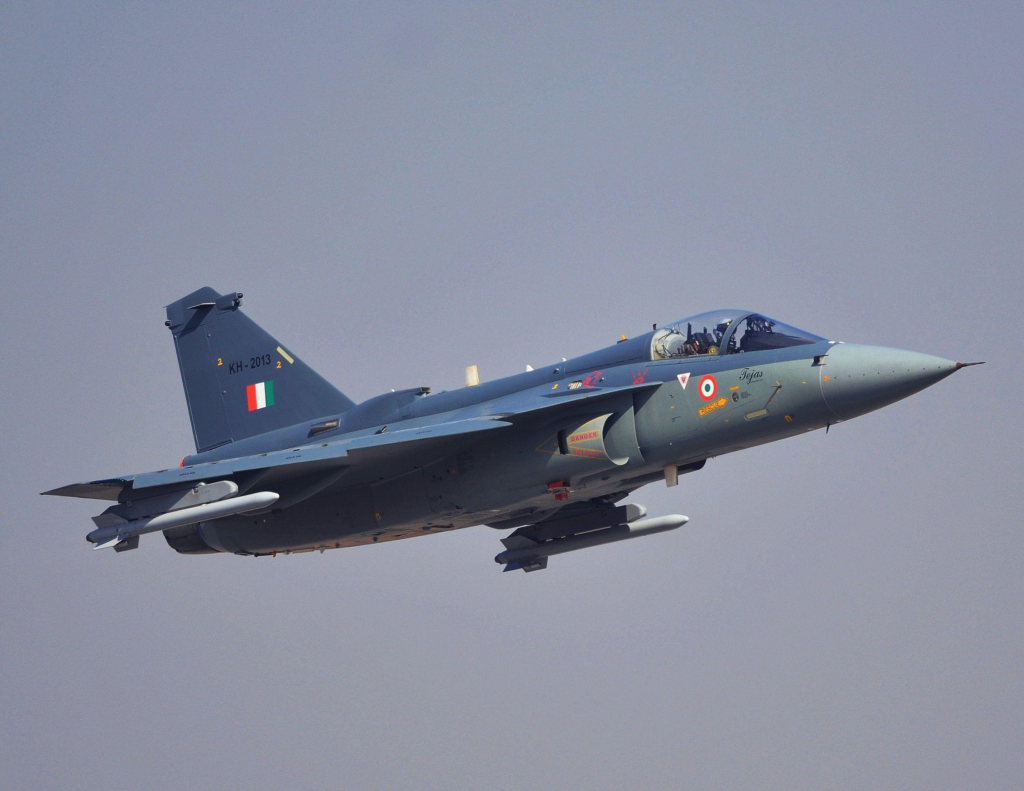
38 LCA Mk1 are flying in the IAF, of which two have crashed. The ₹48,000 crore contract for 83 Mk1A fighters and trainers was signed in February 2021. Deliveries were originally scheduled to begin in February 2024 and conclude by February 2028. The program faces delivery bottlenecks due to delayed shipments of the F404-IN20 engine from GE Aerospace and certain avionics integration issues. Official induction has been pushed to late 2026. A follow-on contract for an additional 97 Mk1A fighters was signed in September 2025, at a cost of over ₹62,370 crore. Deliveries for this tranche are scheduled to commence in 2027 and run over six years.
The Mk1A represents a major 4.5-generation upgrade over earlier baseline LCA variants, featuring advanced avionics, upgraded digital glass cockpit and smart displays, and state-of-the-art Electronic Warfare self-protection systems. The aircraft was to be equipped with the indigenous Uttam AESA radar, developed by the DRDO. However, its integration is still incomplete, and it will equip the second batch of 97 LCA Mk1As. Till then, the aircraft will have Israeli Elta EL/M-2052 AESA radar. The aircraft will have the Astra Mk-1 and ASRAAM missiles, among other weapons.
LCA Mk2 Status
The HAL Tejas Mark 2 Medium Weight Fighter (MWF) is a 4.5-generation, single-engine, canard delta wing, multirole combat aircraft designed by the Aeronautical Development Agency (ADA) in collaboration with the Aircraft Research and Design Centre (ARDC) of HAL. The aircraft is currently in its final stages of development. The airframe and structural assembly are complete, and the aircraft is undergoing pre-flight clearance by CEMILAC (Centre for Military Airworthiness and Certification), which includes ground-based tests, engine runs, and system validations. The maiden flight of the prototype is anticipated in late 2026. The IAF expects (optimistically) the first batch to be inducted around 2029. The aircraft is meant to replace the Mirage 2000, Jaguar, and MiG-29 fleets. The IAF is seeking 120 to 130 LCA Mk2, which will make up approximately six squadrons.
The aircraft will be powered by the General Electric (GE) F414-GE-INS6 turbofan engine. HAL and GE Aerospace are executing a landmark technical agreement to co-produce 99 GE F414-GE-INS6 turbofan engines domestically. The $1 billion pact includes 80% technology transfer, securing IP rights for critical localized components like crystal blades and specialized hot-end coatings. The engine will also power the first two squadrons of India’s advanced medium combat aircraft (AMCA). Therefore, many more engines will eventually be built.
India’s PPP AMCA Approach
The AMCA is currently in its prototype development phase. The design phase is complete, and the government has allocated over Rs 15,000 crore to build five flying prototypes and one structural test specimen. The prototype rollout is expected in 2028, with its maiden flight planned for 2029 and formal induction targeted for 2034–2035. The timelines seem very ambitious. In a historic shift in Indian military aviation, ADA opened the prototype manufacturing phase to private industry. The Ministry of Defence (MoD) shortlisted three private conglomerates to develop the prototypes. These are Tata Advanced Systems Limited, a consortium led by Larsen & Toubro (with BEL and Dynamatic Technologies), and a consortium led by Bharat Forge (with BML and Data Patterns). State-owned HAL was kept out of the prototype development stage to build competitive parallel manufacturing capacity, though HAL plans to bid for the eventual mass-production phases. GE F414 engines will power the first prototypes and the initial two operational squadrons. India is seeking to co-develop a more powerful 120 kN engine with foreign Original Equipment Manufacturers (OEMs) for future AMCA variants.
FRA and AEW&C Status
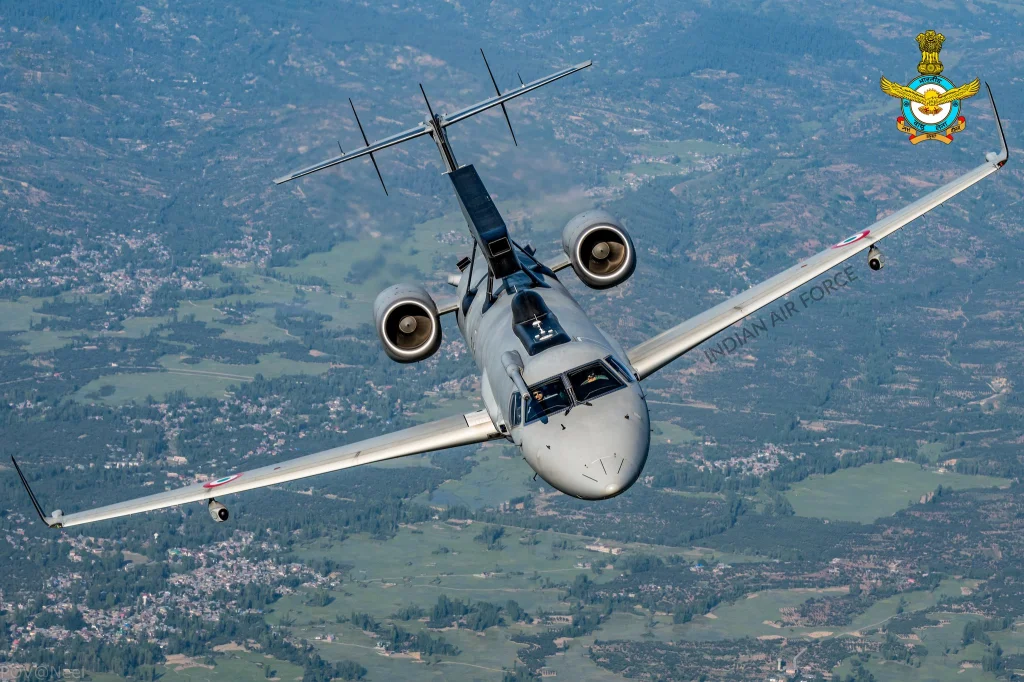
India is trying to expand its airborne surveillance and refuelling capabilities to bridge gaps with regional adversaries. The DRDO is managing multiple development tracks. Three Netra Mk 1 feature a radar mounted on a Brazilian Embraer ERJ-145 executive jet. The Defence Acquisition Council (DAC) approved six additional upgraded Mk 1A aircraft with gallium nitride-based transmitters. Netra Mk 2 will be a ₹20,000 crore program to develop six next-generation AEW&C systems. These will utilize converted Airbus A321 passenger jets, equipped with advanced 4D AESA radars offering 300- to 360-degree coverage.
The IAF’s FRA capability primarily relies on a fleet of six Russian-origin Ilyushin Il-78 tankers, which use a probe-and-drogue refuelling system. India now plans to convert six larger wide-body passenger/cargo aircraft (Airbus A330/Boeing 767) for FRA. These are central to extending regional combat reach. Given India’s continental size and Indian Ocean reach, the IAF should, in the long term, have around 15 FRAs.
Indigenous Autonomous Systems
The present and future of warfare is in autonomous military systems that operate across all warfare domains, air, land, sea, and space, and enhance speed, precision, and survivability while reducing risk to human lives. These systems are designed to operate with varying degrees of independence. Building unmanned aerial systems (UAS), unmanned surface and subsurface vehicles/vessels, integrating them with local control networks, and producing at scale is a strategic necessity. These platforms must be engineered for India’s challenging geospatial conditions (high altitude, heat, dust) and improved through rapid domestic iteration. India also needs Counter-UAS systems and loitering munitions.
Electronic Warfare, DEW and Cyber Capabilities Push
As conflict becomes increasingly digital, control of the electromagnetic spectrum will be as decisive as firepower. Cyber warfare will now be a year-round activity. India has capable missile defence systems, but using expensive munitions against small, cheap drones is economically unsustainable. Scaling protection requires electromagnetic capabilities embedded in radars, software-defined radios, mission computers, lasers, and edge-AI modules that can neutralise threats without a kinetic kill. Directed Energy Weapons (DEWs), using high-energy lasers and high-power microwaves, are the future of military engagement. They are transitioning from science fiction to critical defence systems, offering rapid response, virtually limitless ammunition, and low cost per shot to defeat asymmetric threats such as drone swarms and hypersonic missiles. Building these capabilities at home through a new generation of defence lead-contractors (primes) is crucial.
Aero Engine Development
India has a multipronged plan to develop and manufacture aero-engines. The key efforts include the 110kN Advanced Aero Turbofan Combat Engine (AATCE) and the Kaveri Derivative Engine (KDE) (48-52kN) for drones, aiming to reduce dependency on foreign suppliers. Through the AATCE project, the Gas Turbine Research Establishment (GTRE) is developing a 110 kN high-thrust engine, with plans for private industry partnership in design, manufacturing, and certification. KDE is a dry (non-afterburning) variant that has completed significant testing and is planned to power the DRDO’s Ghatak UCAV.
Currently, indigenous development without foreign expertise is difficult within the set timeframe. The deal with General Electric to co-produce F414 engines in India remains on track, with a focus on transferring critical technologies for the LCA Mk2. For the 5th-generation AMCA engine, India plans to collaborate with foreign partners (France’s Safran or UK’s Rolls-Royce) through a 10-year roadmap initiated for prototype development. India is negotiating for a total technology transfer of the 110 kN engine. Plans include a 120kN engine certified by the late 2030s, followed by a 6th-gen adaptive version by the mid-2040s.
The push aims to transition from assembling imported parts to achieving full technological sovereignty by addressing challenges in hot-section materials and design.
To Summarize
The nation confronts a complex two-front security challenge, which necessitates the development of credible deterrence capabilities and a robust defence industrial base.
India’s strategic approach is defined by a policy of multi-alignment and strategic autonomy, with the ambition of emerging as a significant pole in its own right, supported by military power commensurate with its growing economic strength.
Supply Chains and Strategic Resilience are the new imperatives for the defence industry. Understanding the evolving global landscape and its profound implications for India’s defence and industrial capabilities is important. Enhancing indigenous manufacturing prowess and establishing robust supply chains are critical to effectively navigating complex geopolitical challenges and fostering both national security and economic growth. All this is imperative for a “Strong India” to underpin the national vision of a “Developed India” by 2047.
Indian defence forces must transition towards a technologically advanced, fully integrated, and multi-domain military force by 2047. This ambitious roadmap includes a crucial period of consolidation between 2030 and 2040, ultimately leading to an era of unparalleled excellence by 2040.
India is fast transforming into a global defence manufacturing hub. The aim is to achieve a defence production output by 2047 that is a six-fold increase from current levels.
The overarching vision includes developing an ecosystem dominated by agile deep-tech unicorns that operate in synergy with established industry players.
A steadfast focus on improving quality, prioritising innovation through dedicated R&D efforts, and ensuring speed in delivery. A critical imperative is reducing dependence on China for base materials. Strategic partnerships are crucial for navigating global complexities.
Ensuring a level playing field for the private sector and facilitating the effective transfer of technologies developed by the DRDO to Indian industry. To date, over 2,200 technologies have been successfully transferred, generating significant production value.
The Defence Acquisition Procedure (DAP) 2020, under revision, is designed to accelerate modernisation efforts, propel Jointness across different defence services, and seamlessly integrate national security objectives with technological advancement. There is a strong emphasis on ownership of Indian technology, design, and Intellectual Property Rights (IPR). Priority is to “Buy Indian IDDM” (Indian Designed, Developed, and Manufactured) categories, with an enhanced indigenous content requirement, increased from 50 to 60 per cent.
Contracts valued at approximately ₹4.5 lakh crore ($54 billion) have been awarded in the last 1.5 to 2 years. Notably, over 90 per cent of the contracts (70 per cent by value) have been awarded to the domestic industry, even during periods of emergency procurement. The government is to fast-trackprocurement decisions for readily available equipment, with completion expected within 6 months.
Indian manufacturers must significantly enhance their capabilities to leverage Artificial Intelligence (AI) for planning, forecasting, and predictive analytics. Scaling up by MSMEs is a national imperative. Collaborative public-private partnerships are here to stay. Consistent and predictable government policies are deemed essential for attracting and sustaining long-term industry investment. A cohesive and integrated approach to skilling initiatives across the entire defence ecosystem is required to drive sustainable industry growth.
Operation Sindoor exemplified the integration of military, industry, and laboratories, emphasizing collaborative innovation and “Jointness” across air, sea, land, space, and cyber domains. Collaborations with nations like Russia, France, Israel, and Greece are being deepened to strengthen indigenous production capabilities. USA (GE, Honeywell) continues to be a significant source of aero-engines.
The nation has to prepare for rapidly scaling drone production, driven by necessity and collaborative efforts. The country must identify and focus on niche technologies and try to become a global leader. The unwavering emphasis is on indigenous design and development, and the resolute drive towards self-reliance. The focus is on building a “productive strategic shield” that supports rapid indigenisation, such as the Mission Sudarshan Chakra for layered missile defence, expected to mature between 2030 and 2040.
The message for India is to adapt early. India’s strategic imperative is to attain strategic autonomy through indigenisation and to build a credible, modern deterrent by developing advanced indigenous platforms and seamlessly integrating and adopting multi-domain operations to achieve regional dominance.
The key challenges remain high capital requirements, technology transfer bottlenecks, and the need for significant increases in R&D budgets (up to 15 per cent of the defence budget).
With modern warships, fighter jets, artillery systems, and cutting-edge weaponry being built domestically, India is now a key player in the global defence manufacturing landscape. Defence exports have surged from ₹686 crore in FY 2013-14 to an all-time high of ₹38,424 crore in FY 2025-26, marking a 56-fold increase over the 12 years.
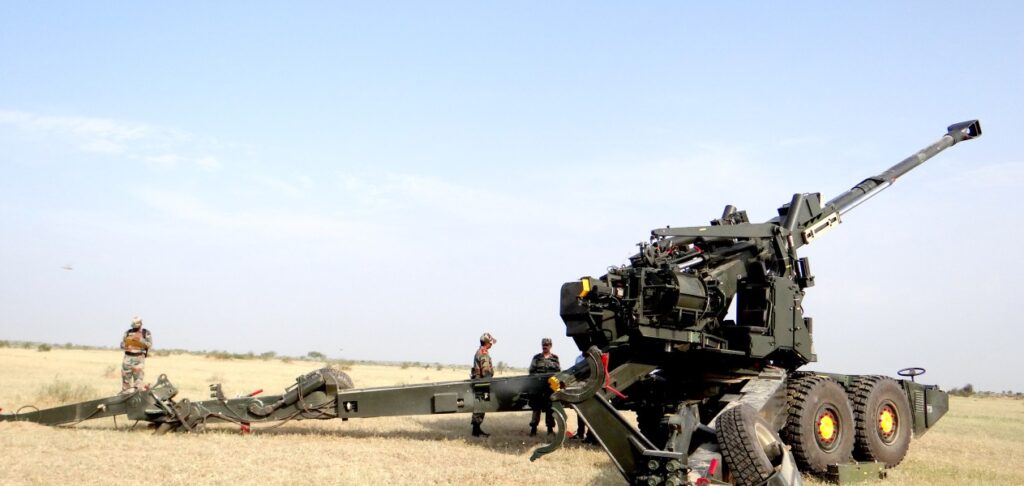
The success of “Make in India” has not only reinforced national security but also positioned India as a dependable exporter of defence equipment. This growing capability reflects India’s vision of achieving self-reliance while shaping the future of advanced military technology. This growth has been bolstered by the Make in India initiative, which has enabled the development of advanced military platforms including the Dhanush Artillery Gun System, Advanced Towed Artillery Gun System (ATAGS), Main Battle Tank (MBT) Arjun, Light Specialist Vehicles, High Mobility Vehicles, Light Combat Aircraft (LCA) Tejas, Advanced Light Helicopter (ALH), Light Utility Helicopter (LUH), Akash Missile System, Weapon Locating Radar, 3D Tactical Control Radar, and Software Defined Radio (SDR), as well as naval assets like destroyers, indigenous aircraft carriers, submarines, frigates, corvettes, fast patrol vessels, fast attack craft, and offshore patrol vessels.
By 2047, India aims to become a fully self-reliant, all-domain military power. The overarching vision is to forge an ‘Aatmanirbhar, Agrani, and Atuliya Bharat’ through strategic partnerships, the attainment of technological sovereignty, and the development of a robust, integrated defence industrial base.
Air Marshal Anil Chopra (r) PVSM AVSM VM VSM is an Indian Air Force veteran, fighter test pilot, and former Director-General of the Center for Air Power Studies in New Delhi. He has been decorated with gallantry and distinguished service medals during his 40 years of service in the IAF.