By Kamal Shah
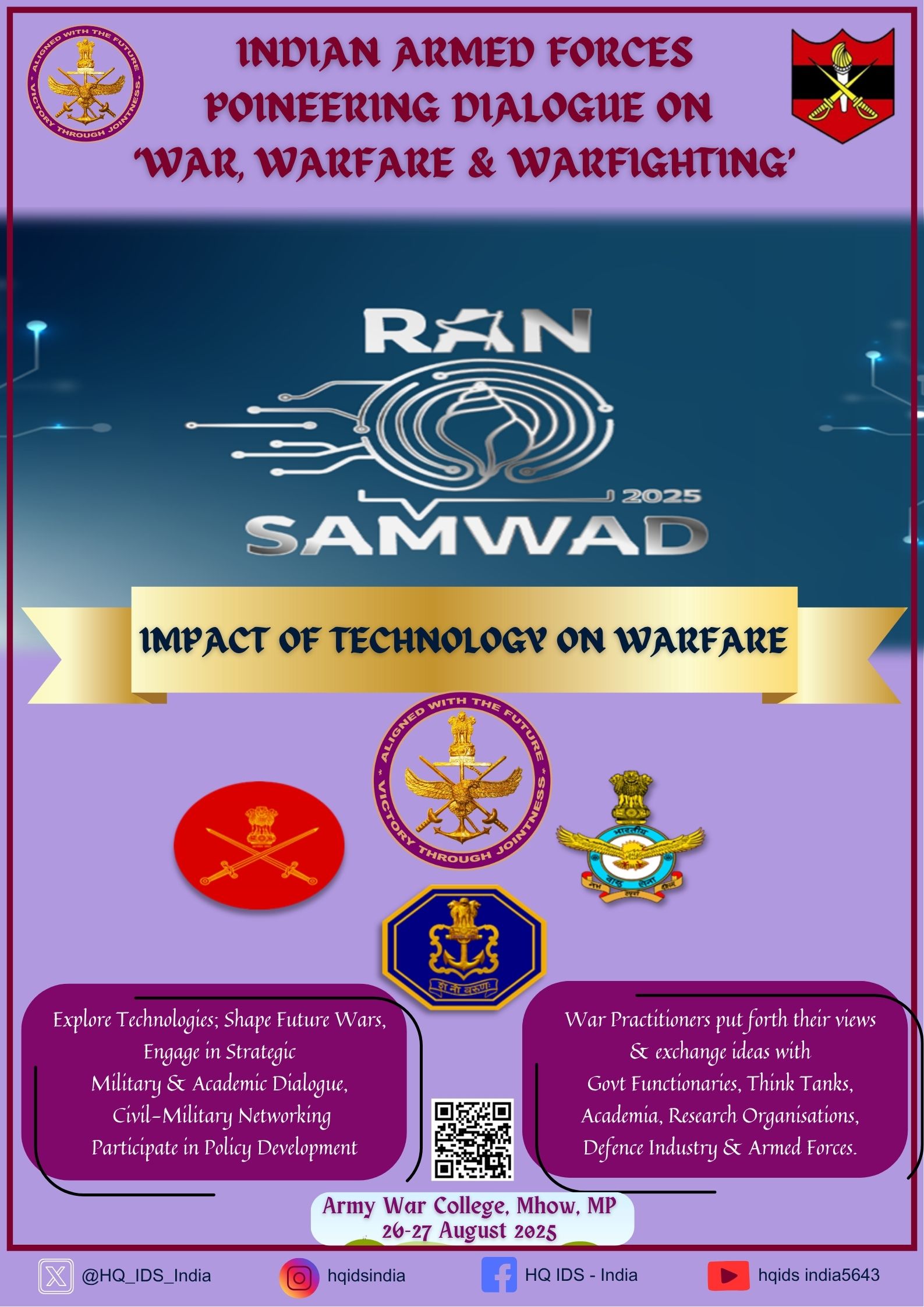
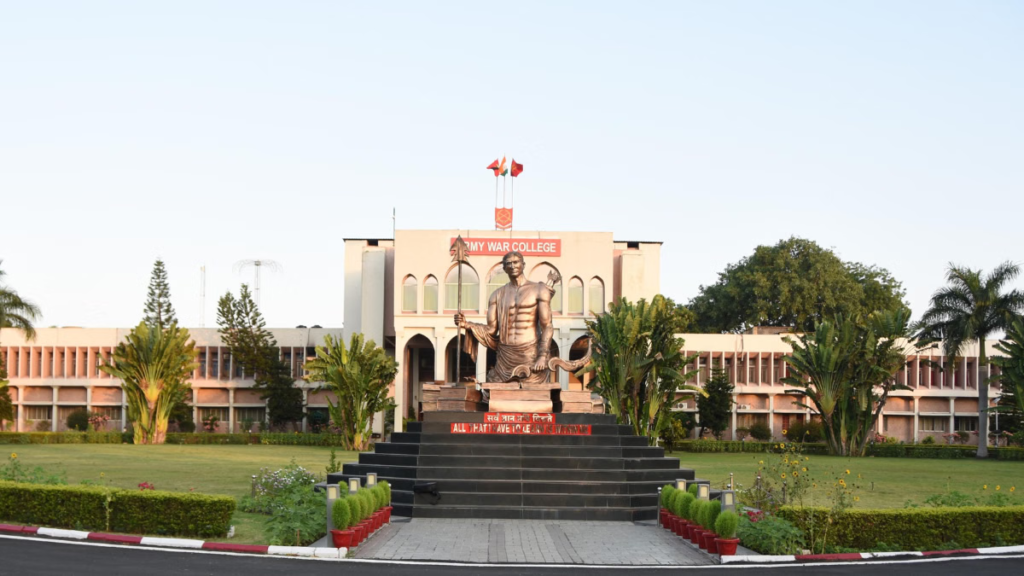
In a world where the character of conflict is shifting at the speed of technology, India’s armed forces are stepping forward with a bold, future-facing initiative: Ran Samwad-2025. Beginning tomorrow at the Army War College in Dr Ambedkar Nagar, Madhya Pradesh, this two-day, sui generis Tri-Service dialogue is more than a seminar—it is a living conversation among those who stand at the frontline of India’s defence, shaping the doctrines, technologies, and operational art that will define tomorrow’s battles.
A Forum Led by Practitioners, Fuelled by Experience
– First-of-its-kind format: Unlike traditional strategic dialogues that often lean heavily on academic frameworks, Ran Samwad-2025 is designed as a dynamic platform for in-uniform narratives. Each thematic session is led by serving officers, bringing first-hand operational insights from modern battlefields directly into the conversation.
– Ground-up learning: The emphasis is on experience-sculpted reflections—less theory, more truth from the trenches. This approach promises a clarity that only practitioners can provide, illuminating the complexities of grey-zone engagements, high-tempo integrated operations, and the accelerating fusion of kinetic and non-kinetic means.
Leadership at the Helm
– Opening momentum: Chief of Defence Staff (CDS) General Anil Chauhan will set the tone on Day 1, guiding the dialogue toward jointness, agility, and future-readiness.
-A strategic close: Defence Minister Rajnath Singh will deliver the plenary address on the final day, anchoring the forum’s outcomes within national vision, policy priorities, and capability development pathways.
This leadership scaffolding ensures that Ran Samwad-2025 is not just a discussion—it is a directive moment, connecting tactical insight to strategic decision-making.
Doctrines, Technology & the Roadmap Ahead
– Joint doctrines unveiled: The release of new joint doctrines signals a decisive step toward interoperability and unified warfighting concepts across the Army, Navy, and Air Force.
– Technology perspective and capability roadmap: By articulating where India’s military tech must go—across sensors, shooters, networks, and decision systems—Ran Samwad-2025 aligns innovation with operational needs. It bridges the defence industry, research ecosystems, and the Services with a shared, mission-oriented direction.
Themes that Matter in a Changing Battlespace
Ran Samwad-2025 will explore the most urgent and enduring themes in contemporary warfare:
– Information warfare: Shaping narratives, safeguarding cognition, and dominating the electromagnetic and cyber domains.
– Grey zone threat: Responding to coercion and sub-conventional challenges with calibrated, lawful, and practical tools.
– Integrated operations: Achieving jointness in planning, logistics, fires, and effects—where tri-service synergy becomes second nature.
– Future combat technologies: From AI-enabled decision support to autonomous systems, resilient networks, and advanced sensors—the engines of advantage in a contested future.
These are not abstract categories; they are mission threads that knit together strategy, capability, and training into a cohesive warfighting fabric.
Curated for Impact, Built for Continuity
Curated by Headquarters Integrated Defence Staff and the Centre for Joint Warfare Studies, in close coordination with Army Training Command and under the guidance of the CDS, the seminar exemplifies institutional coherence. It is hosted this year by the Indian Army, with an inspired vision for continuity: a **rotational conduct** across Services in subsequent years. This evolution ensures that jointness is not episodic but embedded—rehearsed, refined, and reinforced.
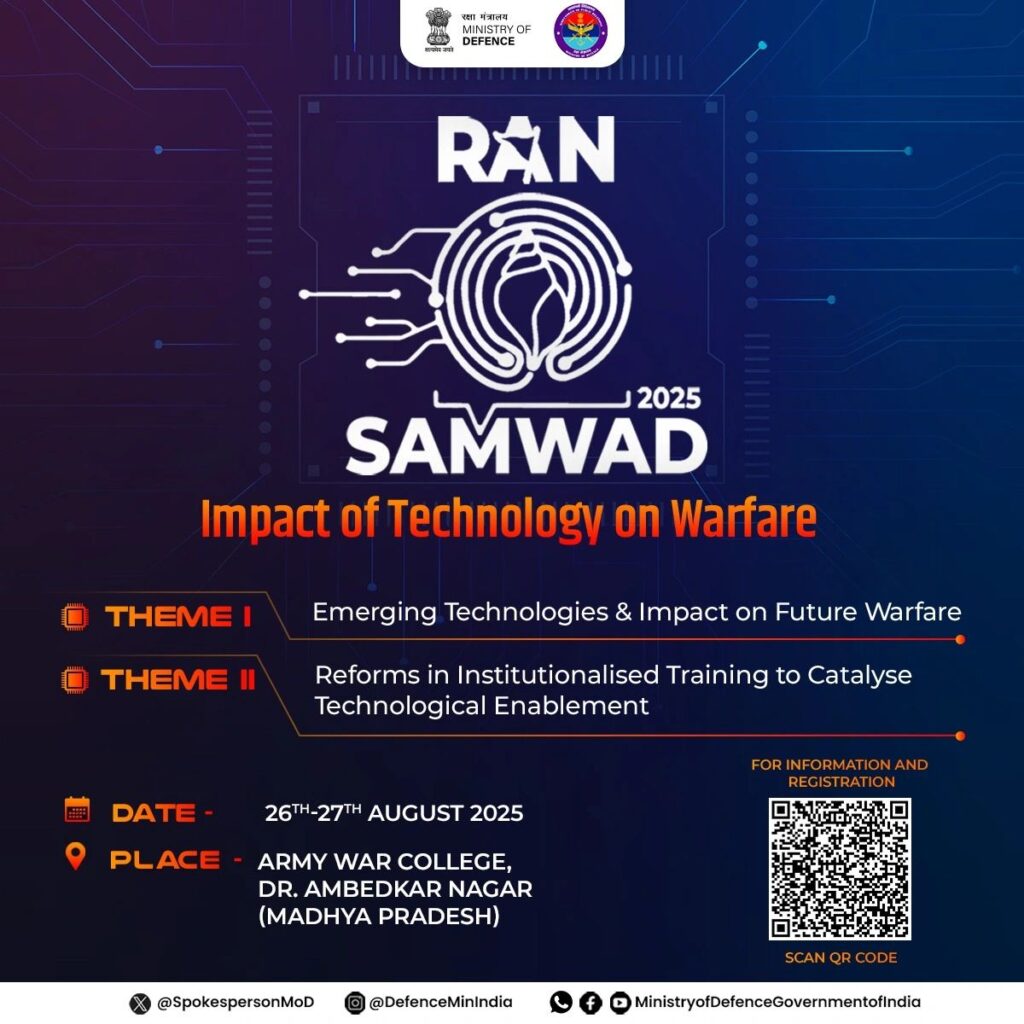
On Day One, witness autonomous swarm tactics powered by AI coordinating drone swarms across maritime multi-domain operations, along with bold strides in leveraging and actualizing technology across the Indian Armed Forces, capped by an engaging media interaction with the CDS. Day Two powers ahead with dynamic measures to integrate technology into warfighting through focused training initiatives; the rapid adoption of autonomous unmanned systems in land warfare to reimagine force structures and tactical operations by 2025; hard-hitting insights from contemporary conflicts and IAF exercises at integrated training areas; and a visionary framework for seamless C4ISR through space-based surveillance and SATCOM. Rounding it out, explore how disruptive technologies are reshaping future supply-chain warfare and transforming the advisory logistics backbone in the digital age—culminating in a clear way forward to align training with technological needs within the theaterization construct.
A Convergence of Minds & Missions
Top military leadership from all three Services will be joined by renowned defence experts, industry leaders, and international security professionals. This constellation of stakeholders ensures that strategy meets capability, doctrine meets industry, and ideas meet implementation. The result is a shared understanding that shortens the cycle from concept to combat credibility.
Why Ran Samwad-2025 Matters
– Operational realism: It prioritizes living experience over distant conjecture.
– Joint warfighting: It accelerates the shift from deconfliction to proper integration.
– Capability acceleration: It ties the technology roadmap to the edge of action.
– Institutional learning: It codifies lessons into doctrine, training, and force design.
In essence, Ran Samwad-2025 is a stride toward a confident, coherent, and capably modern Indian military—one that learns fast, adapts faster, and acts with unity of purpose.
As the opening session convenes and the closing address crystallizes the way forward, the message is unmistakable: India’s warfighters are not merely preparing for the future—they are shaping it.