Staff Correspondent
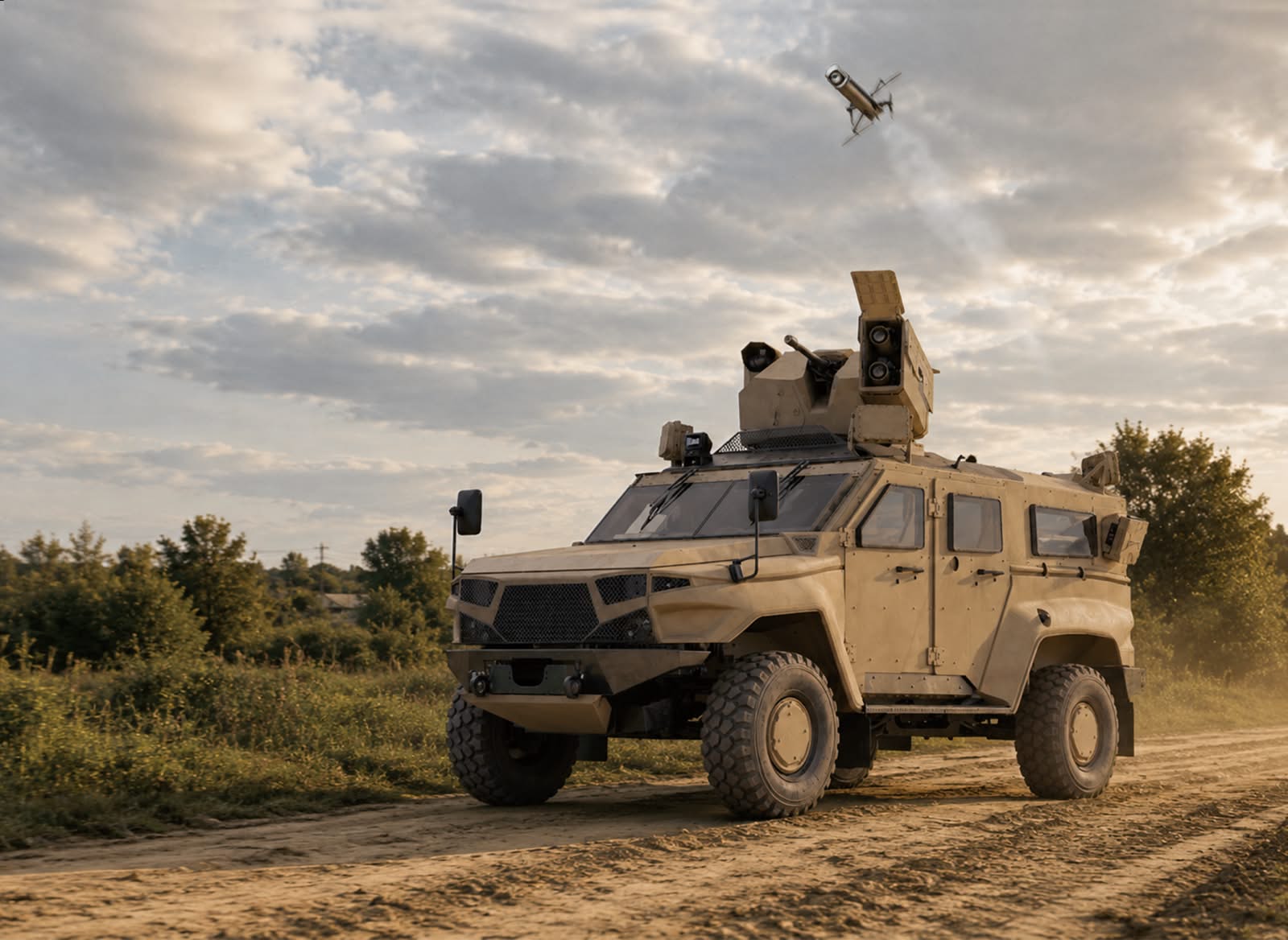
Rafael and SpearUAV have ignited a new chapter in battlefield protection with the unveiling of IRON WASP — a bold, forward-leaning response to one of the most consequential challenges of modern warfare: the rapid proliferation of airborne unmanned threats. This collaboration fuses Rafael’s decades-long mastery of layered, combat-proven force protection with SpearUAV’s cutting-edge encapsulated UAS interceptor technology to place a compact, lethal, and autonomous aerial-defeat capability directly on manoeuvring ground platforms. The result is more than a new product: it is a doctrinal extension of integrated defence that answers the evolving character of aerial threat with agility, immediacy, and technical sophistication.
At its heart, IRON WASP is an expression of two complementary strengths. Rafael brings a legacy of systems that have repeatedly redefined survivability for ground forces: the Trophy Active Protection System that transformed armoured vehicle defence against anti-tank threats, the Drone Dome family that provides all-weather, 360-degree counter-UAS detection and engagement, the SAMSON remote weapon stations that fuse lethality and awareness, and advanced directed-energy options such as the Lite Beam laser for cost-effective drone defeat. Those capabilities are not a scatter of one-off solutions, but a deliberate doctrinal tapestry of layered detection, classification, soft-kill and hard-kill responses. Into this tapestry SpearUAV contributes a proven lineage of autonomous, encapsulated loitering interceptors — the Viper family — reimagined and optimized to operate as a resident, on-demand aerial interceptor for ground platforms. Together they create a seamless, platform-level response that multiplies force protection effectiveness across the most demanding operational contexts.
The tactical problem driving IRON WASP is stark and contemporary. Small commercially derived drones, purpose-built loitering munitions, and novel top-attack aerial threats have democratized aerial lethality in ways that challenge traditional air defence postures. These threats are often small, fast, and sometimes purpose-built to exploit gaps between strategic air defences and platform-level protection. Conventional approaches — centralized interceptors, fixed-site defences, or single-mode countermeasures — can be slow, resource-intensive, or insufficiently flexible. The answer must be distributed, immediate, and tightly integrated with the manoeuvre element: a force-protection capability that is organic to the vehicle, ready when needed, and able to engage threats while the unit is on the move. IRON WASP was conceived precisely to fill that gap.
One of IRON WASP’s most compelling attributes is its on-demand readiness. Housed in a compact Multi-Canister Launcher (MCL) that integrates directly onto armoured fighting vehicles, APCs, and a variety of tactical platforms, each interceptor is ready to launch without pre-mission preparation. In the chaos of manoeuvre — when seconds matter, and the battlefield picture is fluid — the ability to execute time-critical intercepts against fast-moving or loitering low-signature threats can mean the difference between mission continuity and crippling loss. The encapsulated interceptor paradigm is particularly well-suited to that requirement: sealed, self-contained, and rapidly deployable, these systems minimize crew workload while maximizing defensive options available at platform level.
Designers focused relentlessly on a low SWaP (Size, Weight, and Power) footprint to ensure IRON WASP complements diverse vehicle fleets without imposing burdensome integration requirements. This design discipline preserves mobility and manoeuvrability, key attributes for frontline units, while enabling wide applicability across light, medium and heavy platforms. The open architecture approach further amplifies IRON WASP’s operational reach. By supporting compatibility with Rafael’s existing sensor and lethality suites, and by enabling integration with a broad spectrum of platform C2 systems, the interceptor becomes a versatile element in an operator’s layered defence ecosystem. Whether slotted alongside Drone Dome sensors for initial threat detection, cued by SAMSON or other vehicle-level systems, or deployed in concert with Trophy-style hard-kill measures and directed-energy weapons, IRON WASP adds a decisive interception layer that fills a critical engagement envelope.
Technically, IRON WASP stands on the shoulders of SpearUAV’s Viper family, inheriting autonomy, lethality, and flight dynamics optimized for interceptor missions. Autonomy reduces cognitive load on crews, enabling rapid, reliable intercept decisions within established rules of engagement. The integration with Rafael’s detection and tracking systems elevates target fidelity and response coordination: threats detected by distributed sensors can be rapidly classified and engaged by a resident interceptor without protracted sensor-to-shooter timelines. This seamless handoff from detection to interception is essential in an era when unmanned threats exploit fleeting windows of vulnerability.
Operationally, IRON WASP offers commanders and troops tangible advantages. First, it scales platform-level protection down to the small-unit level. Rather than relying solely on brigade- or theatre-level assets, units can carry organic interceptors that move with them, enhancing survivability during convoy operations, urban manoeuvre, or dispersed operations. Second, it provides layered redundancy. When larger systems are committed elsewhere or when soft-kill measures are insufficient, an on-board hard-kill interceptor affords a vital final option to neutralize imminent aerial threats. Third, its minimal logistical footprint simplifies sustainment: sealed canisters and modular launchers streamline reload and maintenance cycles, reducing downtime and enabling quick reconstitution of defensive readiness.
From a doctrinal perspective, IRON WASP is emblematic of modern defence thinking: distributed lethality, modular integration, and systems-of-systems interoperability. Rafael’s experience integrating disparate defensive technologies into coherent protection architectures has always been predicated on a pragmatic appreciation for battlefield realities; SpearUAV’s autonomy-focused engineering yields a compact, effective tool that is optimized for the tactical edge. Their collaboration thus dovetails operational need with technological capability, producing a product that does not merely add another weapon to the inventory but shifts the calculus of platform survivability and tactical decision-making.
“Rafael’s strength has always been our ability to bring the right technologies together into a protection architecture that is greater than the sum of its parts. We have built that architecture layer by layer, from active protection on the vehicle to directed energy in the air, from kinetic weapon stations to sophisticated detection and battle management systems. Iron Wasp represents exactly the kind of innovation that strengthens this architecture, adding an organic aerial interception capability that our customers increasingly need. SpearUAV has developed something genuinely impressive in the Viper family, and we are glad to bring it into the fold. Together, we are delivering a more complete answer to one of the most pressing challenges facing ground forces today.” Executive Vice President Tzvi Marmor, Head of Land and Naval Systems Division, RAFAEL
“Rafael is the innovation leader of the Israeli and global defence industry,” says Yiftach Kleinman, CEO of SpearUAV. “Its Active Protection Systems (Trophy and Iron Dome) are remarkable examples of this. We are proud that, after an extensive process, SpearUAV has been selected to be part of the family of systems that have saved and will save many lives all over the globe. This collaboration underscores our commitment to delivering state-of-the-art encapsulated solutions that address the evolving threats faced by manoeuvring forces.”
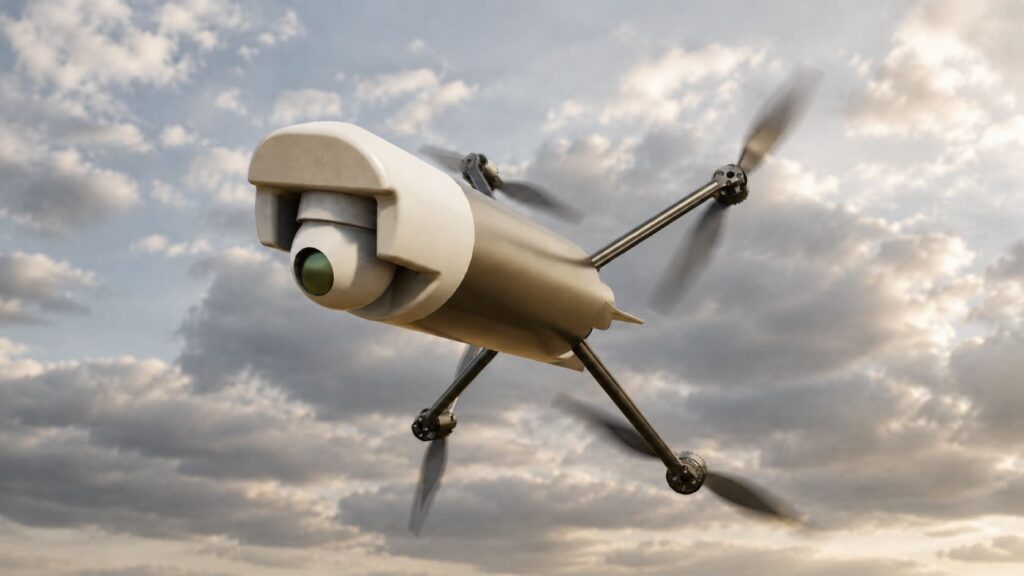
Critically, IRON WASP also addresses concerns about escalation and proportionality surrounding counter-UAS engagements. By operating at the platform level, with fine-grained sensors and localized engagement control, units can make more contextually informed intercept decisions. The interceptor’s design emphasizes precision engagement of hostile or high-risk aerial threats, reducing the likelihood of collateral damage associated with less discriminating area-effect responses. When combined with Rafael’s layered sensing and classification capabilities, this precision supports responsible and targeted use of force in complex operational environments.
Moreover, the open architecture of IRON WASP invites continual evolution. As enemy tactics and technologies shift, the interceptor’s software-defined elements can be updated, and its integration pathways can accommodate new sensors, command networks, and rules-of-engagement frameworks. This adaptability is essential; the battlefield changes quickly, and hardware that cannot evolve risks obsolescence. By prioritizing modularity and open interfaces, Rafael and SpearUAV have positioned IRON WASP to remain relevant across multiple threat generations.
The introduction of IRON WASP also signals a broader trend in defence: the mainstreaming of autonomous, encapsulated weapon systems into established force protection doctrines. What was once experimental or niche is now moving into operational reality, driven by urgent tactical necessity and the maturation of autonomy, sensors, and miniaturized lethality. Rafael’s involvement ensures these capabilities are not deployed in isolation but are instead harmonized within proven protective frameworks, preserving interoperability and ensuring doctrinal coherence.
IRON WASP represents a decisive leap in platform-level force protection. It translates the abstract need for immediate, organic aerial defence into a concrete, field-ready solution: a compact, low-SWaP interceptor that integrates with Rafael’s layered sensor and lethality suites, and that brings the autonomy and effectiveness of SpearUAV’s Viper lineage to the tactical vehicle. For ground manoeuvring forces operating in contested airspaces rife with small, agile aerial threats, IRON WASP offers an essential layer of defence — one that is ready on demand, adaptable in the face of changing threats, and designed to integrate seamlessly into the protective doctrine that has made Rafael a global leader in force survivability.