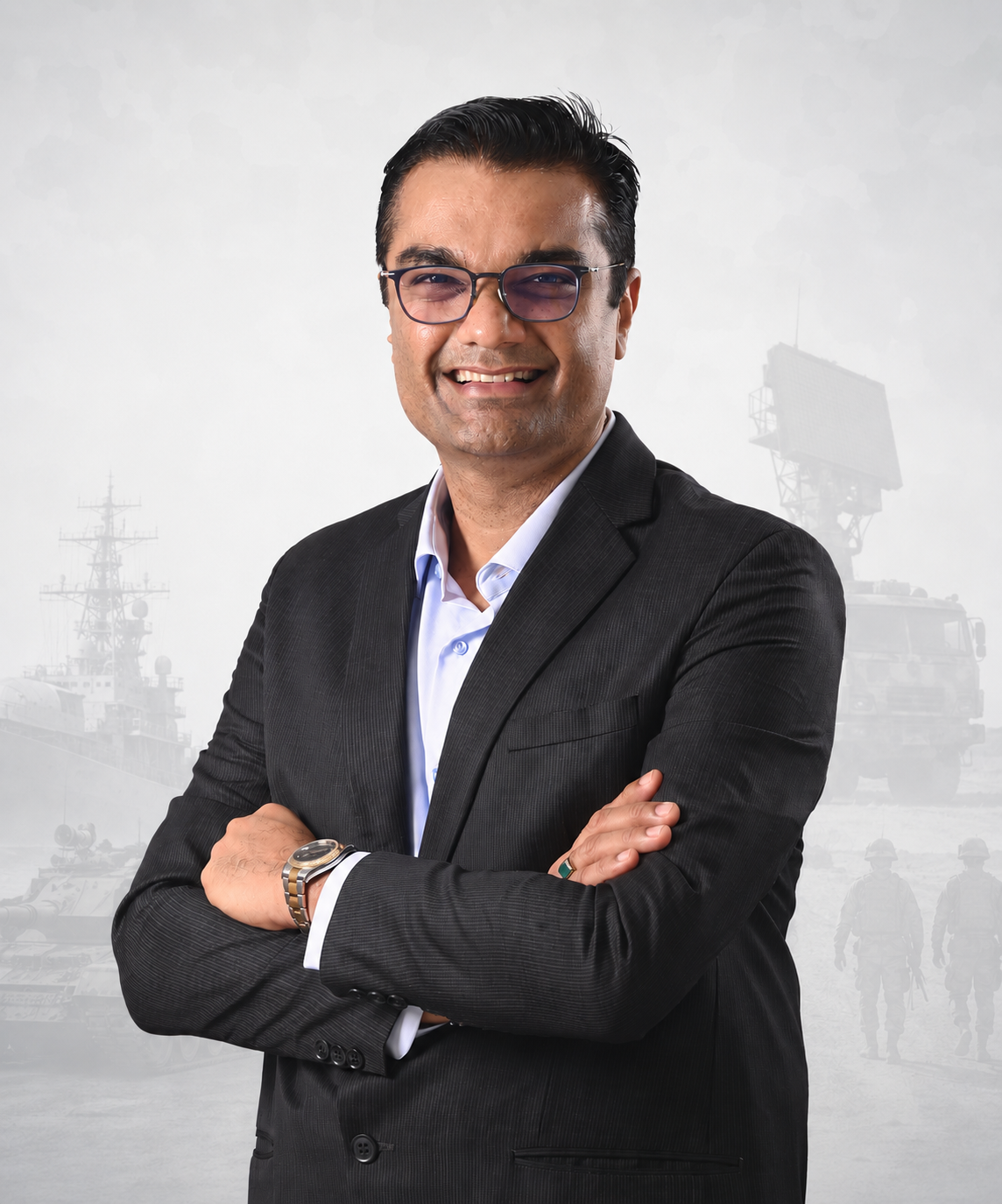
Kamal Shah
As India races toward its destiny as a global defence manufacturing powerhouse, a new generation of homegrown firms is rising to meet the strategic and technological demands of modern conflict and Paras Defence and Space Technologies stands at the forefront. Led by Managing Director Munjal Sharad Shah, Paras has grown into one of India’s most versatile defence-technology houses, fielding capabilities ranging from defence electronics and electro-optics to counter-UAS systems, directed-energy solutions, space technologies and advanced homeland-security platforms.
In this exclusive conversation with Indian Aerospace & Defence Magazine ahead of Eurosatory 2026, Mr Shah outlines a bold vision for how indigenous innovation under Atmanirbhar Bharat is reshaping the battlefield and unlocking export opportunities for Indian industry. He assesses the accelerating transformation of warfare, driven by autonomy, AI-enabled systems, directed energy and sophisticated counter-drone measures and explains how Paras is investing across these fronts to deliver operationally relevant, globally competitive solutions.
Beyond products, the discussion probes Paras Defence’s strategic roadmap to 2035: ambitions to participate in major international defence and space programmes, a focus on sustained R&D and systems integration, and a commitment to cultivate leadership continuity and next-generation innovators. Mr Shah also highlights the expanding role of Indian industry and young technology entrepreneurs in meeting complex security challenges while positioning India as a trusted partner for global defence collaboration.
This in-depth interview captures not only the technical and commercial imperatives driving Paras Defence’s growth, but the leadership ethos and national purpose that propel the company as it helps chart India’s ascent in the global defence and space arena.
Q. Paras Defence has steadily evolved into one of India’s most diversified defence technology companies. How would you define the company’s strategic vision as you head into Eurosatory 2026?
A. Paras Defence is on a bold international mission: to take our homegrown, indigenously designed, developed, and manufactured solutions well beyond India’s borders and establish a strong, sustained presence in markets around the world. We believe our products, engineered with precision, reliability, and a deep understanding of operational needs, are ready to compete on the global stage, and we are committed to forging lasting partnerships that bring our technologies to new theatres of operation.
Eurosatory, one of the planet’s premier defence exhibitions, represents a landmark opportunity in that mission. As a gathering point for leading defence manufacturers, cutting-edge technology providers, military decision-makers, and industry influencers from across the globe, Eurosatory offers an unequalled platform to present our innovations to an international audience. Participation in this distinguished event allows Paras Defence to demonstrate the breadth and depth of our capabilities, from advanced systems to integrated solutions to people who matter: potential customers, procurement authorities, strategic partners, and influential stakeholders who may not yet be acquainted with our brand.
For Paras Defence, Eurosatory is more than a showcase; it is a strategic launchpad. It enables direct engagement with prospective clients and collaborators, facilitates high-value conversations about mission requirements and interoperability, and opens pathways for joint development, licensing, and export opportunities. The exhibition also gives us a chance to gather market intelligence, understand evolving global requirements, and position our offerings to meet the specific needs of diverse users and environments.
By taking our indigenously designed and manufactured products to Eurosatory, we aim to underline our commitment to quality, self-reliance, and innovation. We want the world to see that Paras Defence stands for robust engineering, practical battlefield solutions, and a partner-first approach. Showcasing our portfolio at such a globally visible event will help amplify our reputation, attract new business inquiries, and create collaborative opportunities that accelerate our growth overseas.
Q. How do you see India’s defence manufacturing ecosystem changing over the next decade, particularly in the context of Atmanirbhar Bharat and global supply chain realignments?
A. India’s defence manufacturing ecosystem has matured significantly over the last decade. Today, the industry is both proactive and responsive in investing not only in manufacturing capabilities but also in defence research and technological innovation. Coupled with long-term business visibility in the domestic market, this provides the confidence industry players need to scale operations and serve both domestic and international markets. Recent geopolitical developments and conflicts have demonstrated that Indian technologies are not only field-proven but that India has emerged as a stable, dependable, and trusted manufacturing hub in the eyes of the world. This position can be leveraged to attract global business opportunities, strategic partnerships, advanced manufacturing technologies, and collaborative development programmes.
Q. Modern warfare is increasingly technology-driven. Which domains do you believe will dominate the next generation of defence systems—AI, autonomous platforms, directed energy, space-based ISR, EW, robotics, or something else?
A. In our view, modern warfare will witness an increasing dependence on aerial systems, unmanned platforms, and sophisticated air defence mechanisms across frontline, mid-line, and last-line defence layers. The future battlefield will require highly integrated and layered air defence systems, making the development of comprehensive solutions increasingly complex. Technologies related to aerial vehicles and their role in modern combat are evolving at an unprecedented pace, with significant advancements occurring every three to six months. These developments are also creating new challenges for traditional defence platforms such as tanks and other legacy systems. Counter-UAS technologies, supported by Artificial Intelligence (AI) and Machine Learning (ML), will become a critical component of modern warfare. Autonomous platforms, directed energy weapons, and space-based ISR capabilities will also emerge as highly significant pillars of national defence. We believe future warfare will be far more technology-intensive, dynamic, and sophisticated than ever before.
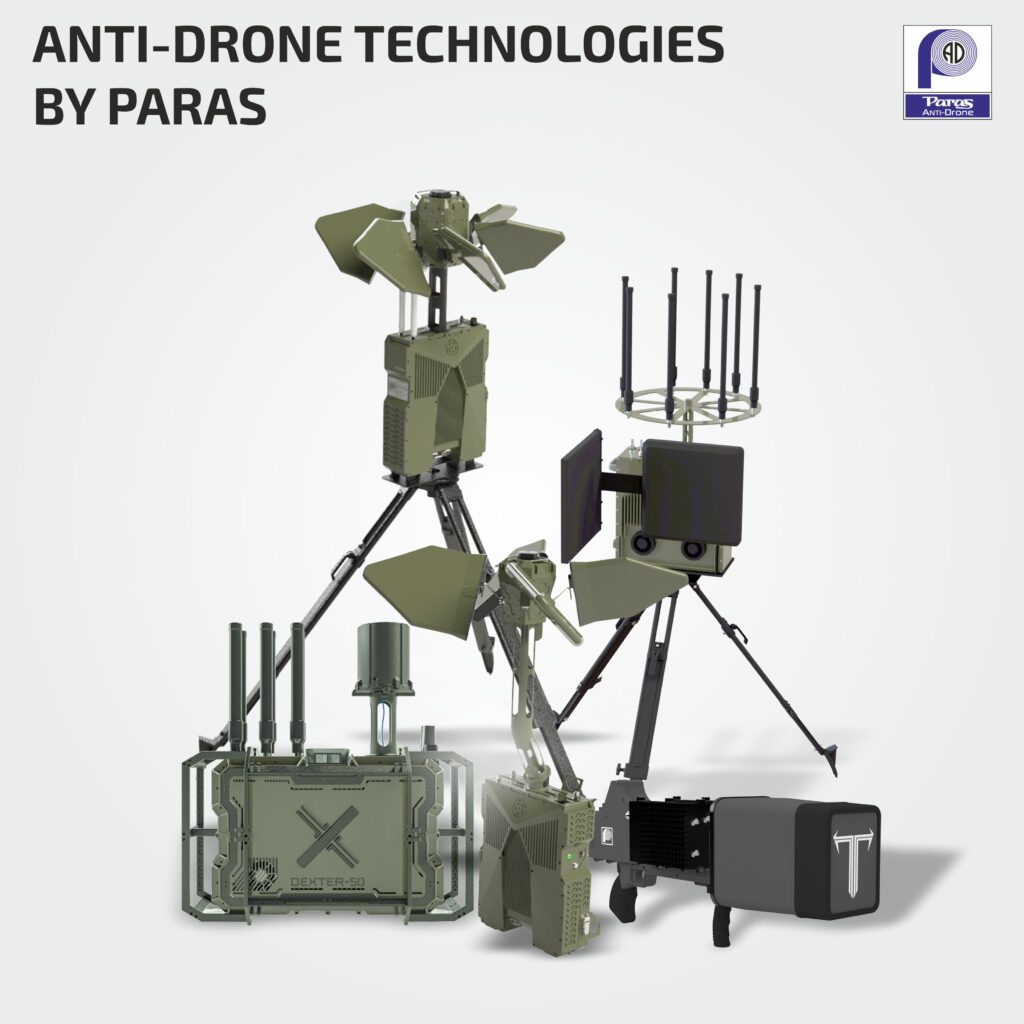
Q. There is growing focus on counter-drone and anti-drone systems globally. How do you see this segment evolving, and what opportunities does it present for Indian industry?
A. The future battlefield will increasingly depend on aerial systems and layered air defence mechanisms spanning frontline, mid-line, and last-line defence. As drone technologies continue to evolve rapidly, the complexity of developing effective counter-drone solutions will also increase. Advancements in aerial vehicles are occurring at a remarkable pace, creating both opportunities and challenges for conventional defence systems. Counter-UAS technologies, particularly those powered by AI and ML, will become an essential component of modern defence architectures. For Indian industry, this presents a significant opportunity to develop indigenous technologies, establish global partnerships, and position itself as a leading provider of advanced counter-drone solutions. As modern warfare becomes increasingly technology-driven, Indian companies have the potential to play a major role in addressing emerging global security requirements.
Q. Directed energy weapons and advanced electro-optics are becoming increasingly relevant. Is India ready to emerge as a serious player in these domains?
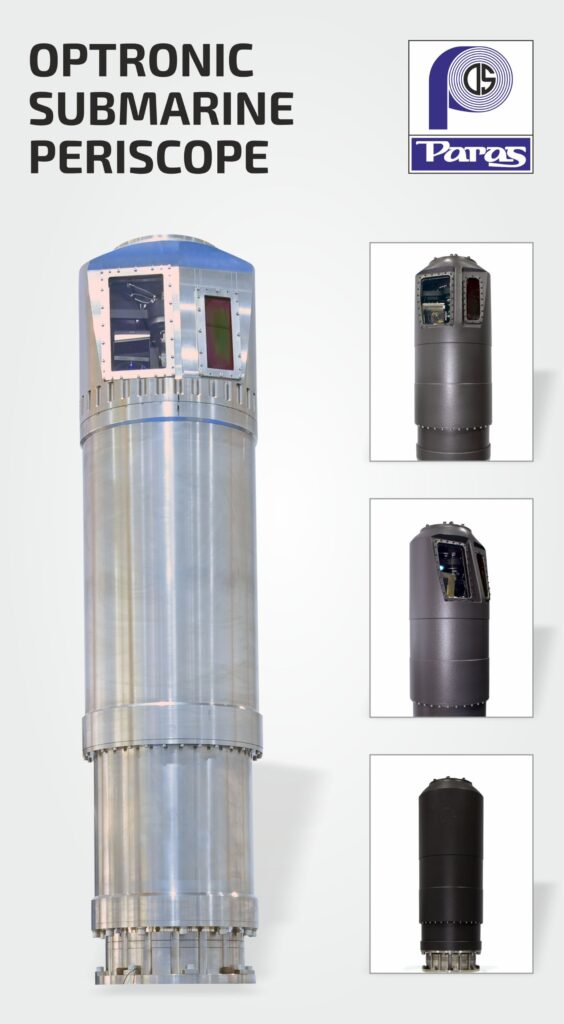
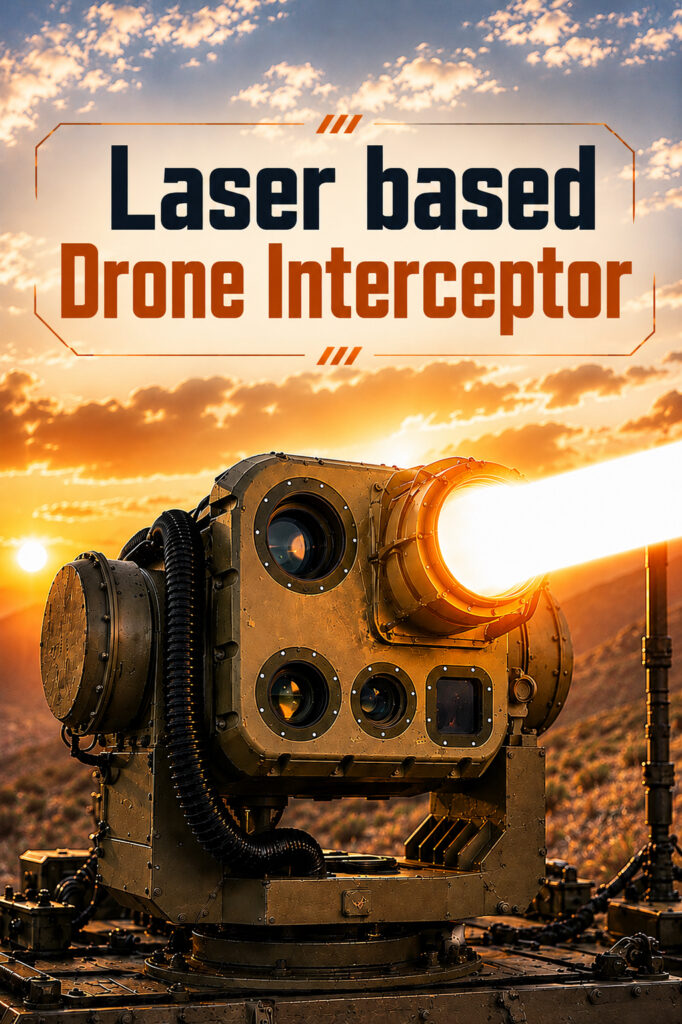
A. India is placing significant emphasis on the development of directed energy weapons and advanced electro-optic systems. Through indigenous innovation and strategic technology collaborations with friendly nations, the country is steadily building capabilities in these critical domains. India is actively working to establish itself as a significant force in layered directed-energy weapon systems and highly advanced electro-optic technologies. With continued investment and technological advancement, the nation is well positioned to emerge as a major global player in these strategically important areas.
Q. What gaps still exist between policy ambition and on-ground execution in India’s defence innovation ecosystem?
A. From our perspective, policy ambition and on-ground execution are largely aligned today, and we do not see any major gaps from an industry standpoint. The responsibility now lies with the industry to complement government reforms and policy initiatives through proactive execution. This requires sustained investments in financial resources, skilled manpower, and technological capabilities. By doing so, the industry can contribute meaningfully to building the future of India’s defence ecosystem while simultaneously serving domestic requirements and addressing growing global demand.
Q. What advice would you give to young Indian engineers and deep-tech startups aspiring to enter the defence and space sector?
A. To all aspiring engineers: throw yourselves wholeheartedly into applying the knowledge and skills you’ve built through your studies to research and development in defence and space technologies. These fields reward depth and discipline — the deeper your understanding of your chosen domain, the more indispensable and impactful you will become. In the early years of your career, invest deliberately in building technical expertise, cultivating creativity, and mastering the fundamentals; when you prioritize innovation and excellence, financial rewards and career opportunities will follow naturally.
For entrepreneurs and startups in this space, resist the temptation to fixate on headline valuations or to chase investment prematurely. Fundraising can be important, but when it becomes the primary goal, it pulls energy away from what truly matters: developing core technologies, solving hard technical problems, and contributing real, lasting value to the research ecosystem. Keep your focus on advancing capabilities, iterating rapidly, and proving out your science and engineering. A technology-first mindset will attract the right investors at the right time and create a far more sustainable foundation for growth than a short-term obsession with numbers on a cap table.
In short: make deep technical competence and meaningful innovation your north star. Nurture expertise, take pride in rigorous R&D, and let tangible accomplishments drive your trajectory. If you stay committed to building exceptional technology rather than chasing valuation optics, both impact and financial success will follow.
Q. Which international markets do you see as strategically important for Paras Defence over the coming years?
A. The European and Middle Eastern markets represent a pivotal strategic frontier for Paras Defence, brimming with opportunity and potential for meaningful, long-term growth. We view these regions not merely as new sales territories but as vibrant ecosystems for partnership, innovation, and collaboration, places where our capabilities can align with local needs to create powerful, sustainable value.
In Europe, the confluence of advanced defence technologies, rigorous standards, and collaborative procurement models presents fertile ground for Paras Defence to deepen technological exchange, co-development, and joint ventures. We aim to leverage our engineering strengths and quality-driven processes to integrate with European supply chains, participate in multinational programs, and offer interoperable solutions that meet stringent regulatory and operational requirements.
Across the Middle East, rapidly modernizing armed forces and ambitious national security initiatives create strong demand for trusted, adaptable defence solutions. Paras Defence plans to cultivate close relationships with government and industry, tailor offerings to regional operational environments, and establish enduring partnerships that support capability enhancement, training, and local industry development.
Our strategy for both regions will emphasize long-term engagement: building local presence, forging strategic alliances, investing in research and development collaborations, and delivering cost-effective, reliable solutions aligned with partner priorities. By prioritizing mutually beneficial collaborations, we aim to expand our market footprint while contributing to the security, technological advancement, and industrial self-reliance of our partners in Europe and the Middle East.
Over the coming years, Paras Defence is committed to accelerating business expansion across Europe and the Middle East—pursuing joint programs, strengthening distributor and OEM relationships, and exploring co-production opportunities. We are excited about the prospects these markets offer and confident that focused investment and partnership-driven strategies will unlock substantial growth for Paras Defence while delivering tangible value to our regional partners.
Q. Looking ahead to 2035, what kind of company do you envision Paras Defence becoming?
A. Looking ahead to 2035, Paras Defence envisions itself as a key contributor to global defence and space platforms through the delivery of cutting-edge technologies, developed either indigenously or in collaboration with our joint venture and technology partners worldwide. Our focus areas will continue to include space technologies, situational awareness systems, Earth observation, and interplanetary missions. In defence, we will remain committed to advancing air defence systems, counter-UAS technologies, directed-energy weapons, electromagnetic-pulse protection solutions, and a range of ground control and ground-based space programmes.
Q. Every successful institution eventually faces the question of leadership transition. How are you preparing Paras Defence for the next generation of leadership?
From Legacy To Leadership: The Next Chapter Of Paras Defence

A. Paras Defence was founded by my father, Mr Sharad Shah, Chairman of Paras Defence, nearly five decades ago. His vision, values, perseverance, and entrepreneurial spirit have been the cornerstone of the company’s growth and continue to inspire us every day. The culture of innovation, integrity, and nation-building that he established remains deeply embedded in the organization. Today, the company is led by the second generation, with my fellow directors and me actively driving its growth and transformation. We are still relatively young and have many productive years ahead of us to further strengthen the organization and build on the strong foundation laid by my father. At the same time, we are consciously preparing the next generation to take the company forward. My daughters, along with the children of the other directors, are gradually becoming involved in the business as they complete their education and gain professional exposure. This ensures a smooth and well-planned transition from one generation to the next while preserving the values, culture, and long-term vision established by our Chairman, Mr Sharad Shah. One of my daughters, Anushka, completed her Mechanical Engineering degree at the University of Southern California (USC) in the USA. Since joining the organization, she has worked across multiple functions, including finance, optics, electronics, electromagnetics, and other advanced technology domains, enabling her to develop a holistic understanding of the business. She is currently involved in our 9-kilowatt laser system programme and is keen to contribute to the growth of our laser technologies vertical before taking on broader responsibilities. Beyond family succession, we strongly believe in building institutional leadership. We are developing capable teams across all levels of the organization and empowering professional leaders to drive future growth. Our objective is to ensure that Paras Defence continues to thrive for generations to come, guided by the vision of our founder and Chairman, Mr Sharad Shah, while embracing new opportunities and innovations.
Q. In a highly strategic sector like defence and space, how important is continuity of vision across generations?
A. Continuity of vision across generations is extremely important in the defence and space sector, given its highly specialized, technology-intensive, and relationship-driven nature. The long-term vision established by one generation must be effectively passed on to the next to ensure continuity in business strategy and growth. Preserving the rich legacy built by earlier generations while enabling future generations to innovate is critical for sustained success. Paras Defence has been meticulous in transferring its vision across generations while simultaneously providing sufficient freedom for younger leaders to develop and nurture their own ideas. If these ideas prove disruptive and transformative, they can play a significant role in shaping the business’s future growth and competitiveness.