
Chaitali Bag
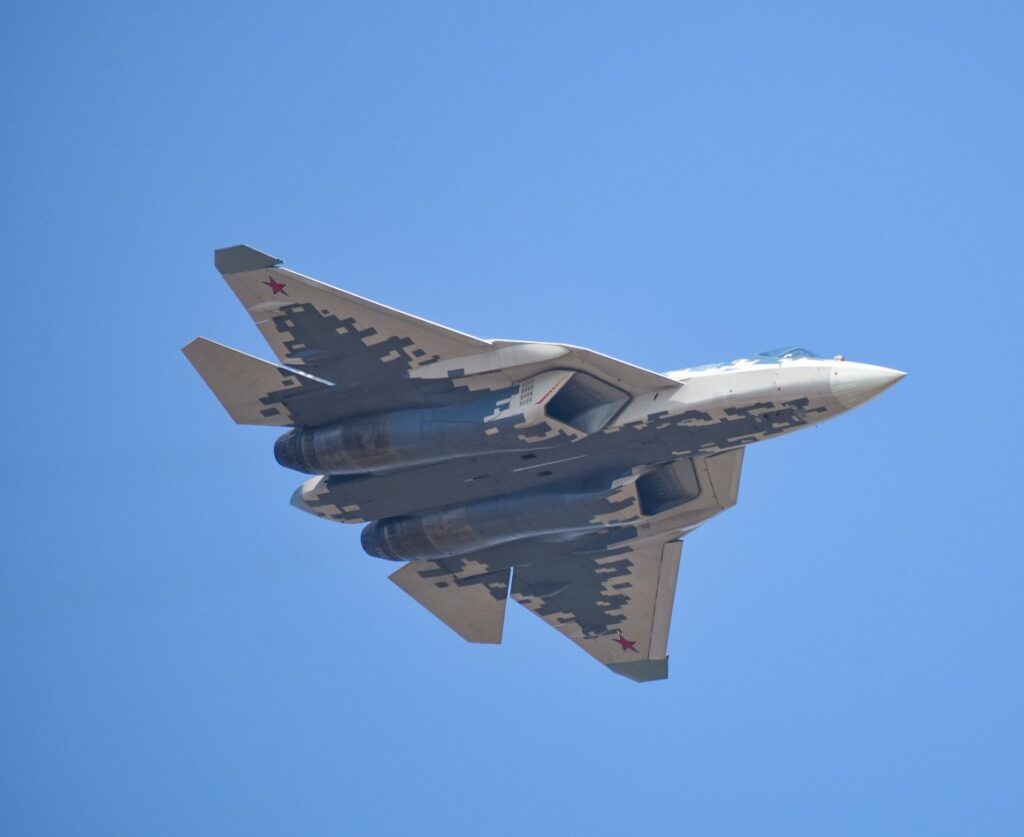
In the evolving 21st-century geopolitical landscape, the defence partnership between Russia and India has stood as one of the most enduring and strategically significant relationships in global arms history. Yet, even among decades of cooperation that have shaped India’s modern air power—from the legendary MiG series to the Su-30MKI—Russia’s latest proposal marks a truly transformative milestone. Offering India the Su-57E, the export variant of Russia’s cutting-edge fifth-generation aircraft, with full source code access and local production rights, Moscow appears ready to rewrite the rules of international defence collaboration.
This unprecedented proposal—anchored by Russia’s United Aircraft Corporation (UAC)—is not merely about selling jets; it is about sharing sovereignty in technology. The ramifications of this initiative reach far beyond immediate defence procurement needs. It holds profound potential to propel India’s indigenous defence ecosystem into an era of genuine self-reliance, technological innovation, and global competitiveness.
A Revolutionary Leap in Defence Cooperation
The cornerstone of this remarkable offer lies in what can only be described as a radical gesture—Russia’s willingness to grant India complete access to the Su-57E’s source code. In the world of defence exports, such transparency is virtually unheard of. Traditionally, even the most trusted allies are excluded from deep-level software access, with Western defence majors such as the U.S. and France zealously guarding their core technologies. Hence, Russia’s decision to open its digital and technological architecture to India marks not just an engineering concession but a symbolic and strategic act of trust.
By granting this privilege, Russia is effectively saying: “We see India not as a customer, but as a partner.” This shift in perception—from transactional buyer-seller dynamics to strategic co-developers of next-generation technology—has the potential to transform how India engages with global defence ecosystems.
The implications are enormous. With source code access, Indian engineers could tune mission systems, integrate indigenous avionics, and embed homegrown weapons systems directly into the aircraft’s combat architecture. This ensures interoperability with India’s existing arsenal—such as the Astra Mk-1/2 beyond-visual-range missiles, Rudram anti-radiation missiles, and an array of indigenous smart and precision-guided munitions. The ability to independently modify, update, and enhance the aircraft provides India with a new level of strategic autonomy previously unattainable under restrictive foreign technology-transfer conditions.
Technological Sovereignty and Strategic Confidence
For decades, India’s defence procurement philosophy has wrestled with the dilemma of dependency. Whether it was the Mirage 2000 upgrade saga or negotiations around the Rafale’s ToT (Transfer of Technology), New Delhi has repeatedly faced the frustration of dealing with opaque systems and limited access to key technological components.
The Su-57E proposal changes everything. It directly addresses India’s long-standing demand for actual technology ownership. By offering such unprecedented access, Russia is effectively empowering India not just to operate, but to innovate. The open-source model within a defence framework is an extraordinary proposition—it turns the receiving country into a co-designer rather than a passive operator.
Additionally, this move aligns with India’s “Atmanirbhar Bharat” (Self-Reliant India) initiative, a national drive to strengthen domestic manufacturing and reduce reliance on imports. Integrating critical technologies from the Su-57E into India’s future Advanced Medium Combat Aircraft (AMCA) project could dramatically shorten development timelines and increase technological sophistication.
Russia’s openness could thus act as a force multiplier for India’s entire aerospace ecosystem, benefiting both public-sector giants like Hindustan Aeronautics Limited (HAL) and private innovators poised to join India’s burgeoning defence start-up ecosystem.
Leveraging Existing Infrastructure: HAL’s Nasik Advantage
The manufacturing dimension of Russia’s offer carries an equally thrilling promise. The proposal envisions production of the Su-57E within India—specifically at HAL’s Nasik facility, which has already demonstrated exceptional competence in license-producing the Su-30MKI fleet. Over 220 of these formidable jets have rolled out from Nasik, forging a legacy of experience and infrastructure that Russia now seeks to build upon.
ROSTEC’s engineers have confirmed that much of the existing tooling and machinery at Nasik could be repurposed for Su-57 production, a revelation that could save enormous setup costs and time. In an era when industrial capability is measured not only by technological prowess but also by manufacturing speed and scalability, such an advantage is priceless.
Local production would mean more than job creation—it would mean deep capability creation. With Russian guidance, Indian technicians, software developers, metallurgists, and design engineers would gain hands-on experience with next-generation stealth composite materials, Gallium Nitride-based AESA radars, and advanced sensor-fusion technologies. This transfer of knowledge would ripple through India’s defence manufacturing base, injecting both confidence and competence into the country’s domestic programs.
Mutual Interests and Global Recalibration
From Russia’s perspective, the proposal also reflects pragmatic foresight. Facing international sanctions and an evolving strategic environment, Moscow seeks to reinforce its long-standing defence partnership with India, one of its most reliable and influential partners in the Global South. This cooperation offers Russia a stable and lucrative export avenue while allowing it to retain global credibility as a provider of cutting-edge military innovation.
For India, the timing is equally fortuitous. As global power structures shift, New Delhi’s ambition to position itself as a defence exporter rather than importer aligns perfectly with this cooperative vision. The Su-57E deal, if realized, could serve as a blueprint for next-generation defence alliances—ones built not on dependence but on mutual empowerment.
India’s Choice of Su-57E: A Historic Partnership Takes Flight
The recent remarks by Igor Korotchenko, head of Russia’s Centre for Analysis of World Arms Trade (CAWAT), resonate with an unmistakable sense of historical continuity and strategic logic. In his view, India’s potential decision to adopt the Russian Su-57E fifth-generation fighter aircraft is not merely a matter of procurement—it is a reaffirmation of decades of deep-rooted trust, technological collaboration, and shared defence priorities between New Delhi and Moscow. Indeed, one could argue that such a choice is “historically predetermined,” as Korotchenko himself confidently states.
For more than half a century, India and Russia have woven a formidable fabric of defence and technological cooperation. From the early days of the MiG series aircraft to the indigenous production of the Su-30MKI at HAL facilities, the two nations have consistently achieved what others considered improbable—transferring advanced technologies, co-developing systems, and ensuring operational sovereignty for India’s armed forces. Against this rich backdrop, the Su-57E proposal appears as the natural next chapter in a story defined by mutual respect, trust, and a shared vision of self-reliant defence excellence.
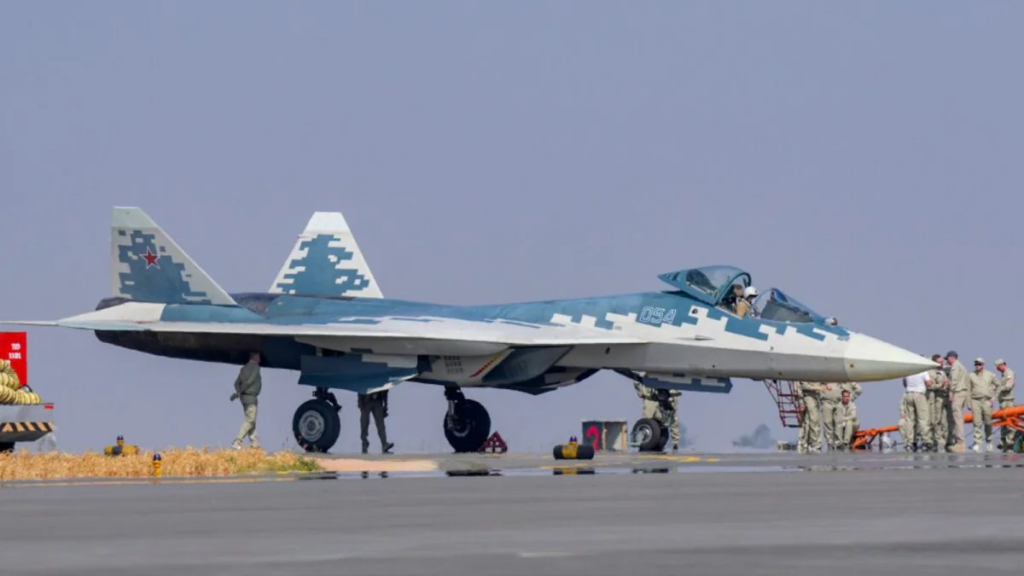
The Su-57E—Russia’s most advanced fifth-generation fighter—embodies cutting-edge stealth capabilities, supermanoeuvrability, and integration with modern weapon systems. Its public debut flight at Aero India, piloted by the celebrated Russian test pilot Sergei Bogdan, captured the imagination of defence experts and aviation enthusiasts alike. For India, which seeks not just to buy but to build and master the technologies of the future, the Russian offer includes collaborative production at HAL facilities and a promise of technology transfer—precisely the kind of partnership India values most as part of its “Atmanirbhar Bharat” (self-reliant India) initiative.
Beyond aircraft acquisition, Korotchenko underscores another crucial dimension: the evolution of India’s air and missile defence architecture. Russia’s willingness to assist in developing a comprehensive aerospace defence network dovetails neatly with India’s ongoing programs to strengthen its security environment in a complex global landscape. The participation of Indian personnel in the upcoming Zapad-2025 strategic drills further indicates a widening scope of operational alignment between the two militaries—proof that this is more than a transactional relationship; it is an evolving strategic partnership.
By contrast, the CAWAT report’s caution about reliance on American platforms such as the F-35 underscores why New Delhi continues to pursue diversified, secure technology alliances. Concerns about “bugged” avionics or restricted sovereignty over software control reinforce India’s preference for partnerships that emphasize transparency, shared development, and control over end-use technology—all hallmarks of Indo-Russian projects over the decades.
As the world’s geopolitical balances shift, India’s defence choices must align with its long-term strategic autonomy and technological independence. The Su-57E program, therefore, represents not just a new aircraft, but a reaffirmation of India’s foreign policy ethos—balancing modernization with sovereignty, collaboration with independence.
With Russian President Vladimir Putin’s forthcoming visit to India and negotiations over the Su-57E reportedly advancing, optimism abounds in both capitals. Should India proceed with local production and induction of the Su-57E, it will mark yet another milestone in a storied alliance—one that continues to redefine what it means to collaborate in the 21st-century defence arena.
In every sense, the sky seems to be calling again for a joint Indo-Russian flight into the future—a future powered by trust, technology, and timeless partnership.
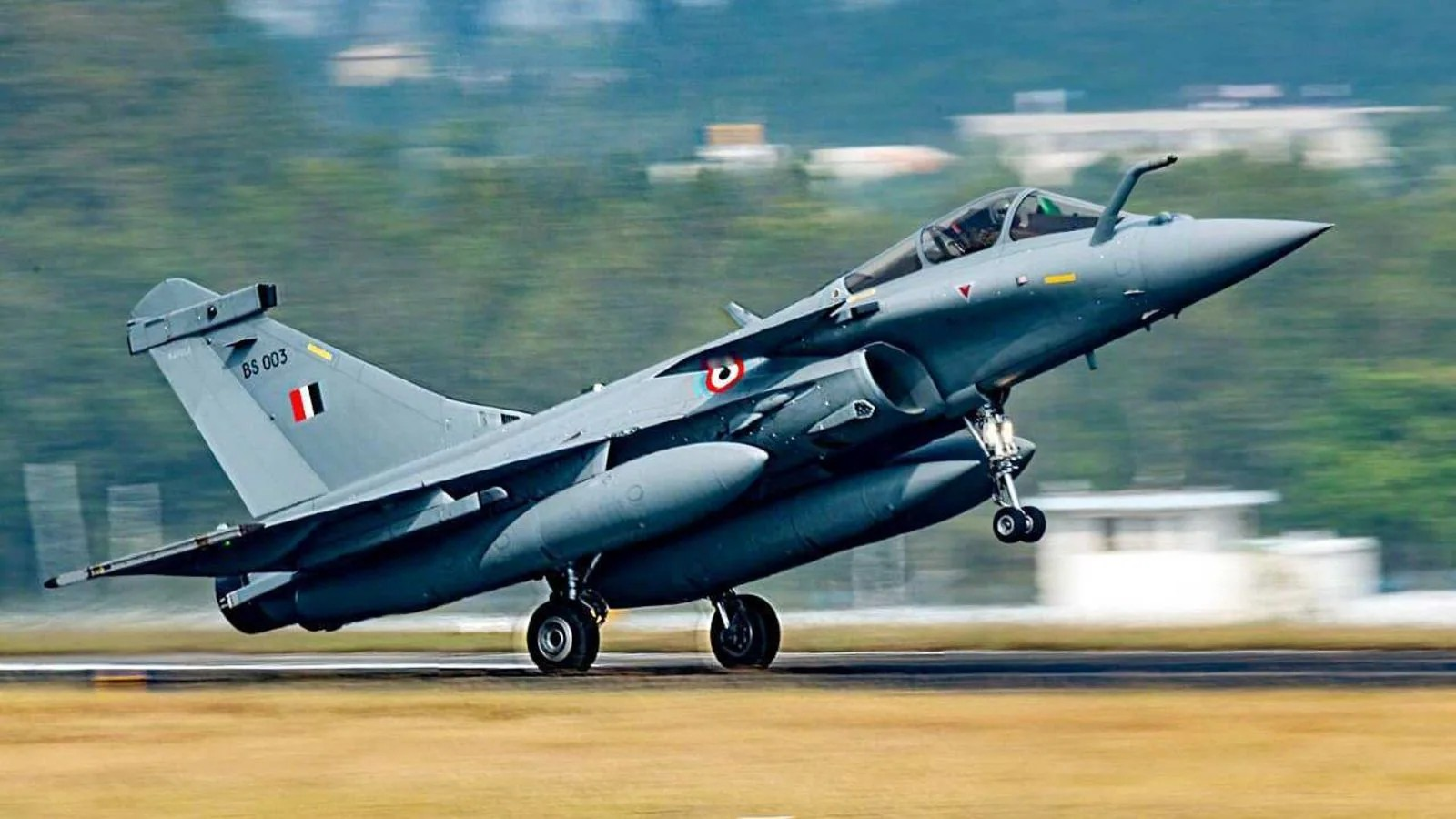
Su-57E: Its stealth is better than the Rafale due to shaping, internal bays, and selective radar-absorbent materials, but it is not the most stealthy of fifth-gen fighters; design trade-offs were made for agility and wider sensor fields.
AMCA: Designed from the outset for low observability, with more extensive radar-absorbent materials, more optimized shaping, and all-aspect stealth, potentially surpassing Su-57E in signature reduction.
Rafale: Incorporates limited stealth measures, mainly through shaping and coatings, but lacks the features (internal bays, all-aspect shaping) seen in true stealth designs, making it the least stealthy of the three.
| Feature | Su-57E | AMCA (Projected) | Rafale |
| Generation | 5th | 5th | 4.5th |
| Stealth shaping | Advanced (but with compromises for agility and IRST) | Advanced, designed for a minimal radar signature | Moderate, not the main focus |
| Radar Absorbent Materials | Present | Advanced (planned) | Limited |
| Internal Weapons Bay | Yes | Yes (planned) | No |
| Radar Cross Section (RCS) | Low but not F-22 grade; larger than F-35; possibly higher than AMCA | Targeting lower than Su-57E; close to F-35 | Higher than both AMCA and Su-57E |
| IR Signature | Designed for reduction but less than AMCA | Projected better management | Conventional |
| Avionics Integration | Russian; open to Indian systems if exported | Indigenous, cutting-edge | French, advanced but not stealth-optimized |
In summary, AMCA (when developed) is expected to surpass the Su-57E in stealth, while both will outperform the Rafale in reducing detectability by modern radars and sensors.
The Road Ahead: Opportunities & Challenges
Yet, while the enthusiasm surrounding this proposal is well-justified, one must not overlook the complexities ahead. Negotiating full source code access will involve painstaking detail, balancing operational secrecy with practical usability. Russia’s export control mechanisms may still impose modest operational caps—limiting certain radar modes or engine thrust parameters, for instance. Additionally, integrating such advanced technology into India’s defence architecture will demand significant investments in data security, cybersecurity infrastructure, and testing ecosystems.
Nonetheless, these challenges are surmountable, provided the political will and industrial commitment remain unwavering. Both nations stand to gain immensely—not just in defence capability, but also in global perception. If successful, this venture would catapult India into an elite tier of nations capable of locally producing and customising fifth-generation fighters. This achievement would echo not only across South Asia but across the entire Indo-Pacific region.
Conclusion: A Partnership Poised to Shape the Future
In essence, Russia’s sweeping offer is more than an arms deal—it is a strategic invitation to co-create the technologies that will define the next era of air warfare. For India, it represents an opportunity to leapfrog decades of incremental progress and assert itself as a true aerospace power. For Russia, it underscores both its enduring commitment to India’s rise and its own adaptability in a rapidly changing world order.
If navigated wisely, this partnership could become the cornerstone of a new industrial and technological alliance, fusing Russian innovation with Indian ingenuity. The Su-57E, therefore, is not just a plane—it is a symbol of transformation, a herald of sovereignty, and perhaps the most inspiring chapter yet in the storied Russia–India defence relationship.
The skies over Nasik may soon echo with the sound of stealth and the spirit of collaboration—ushering India into an era where the dream of self-reliance finally takes flight.


