Staff Correspondent
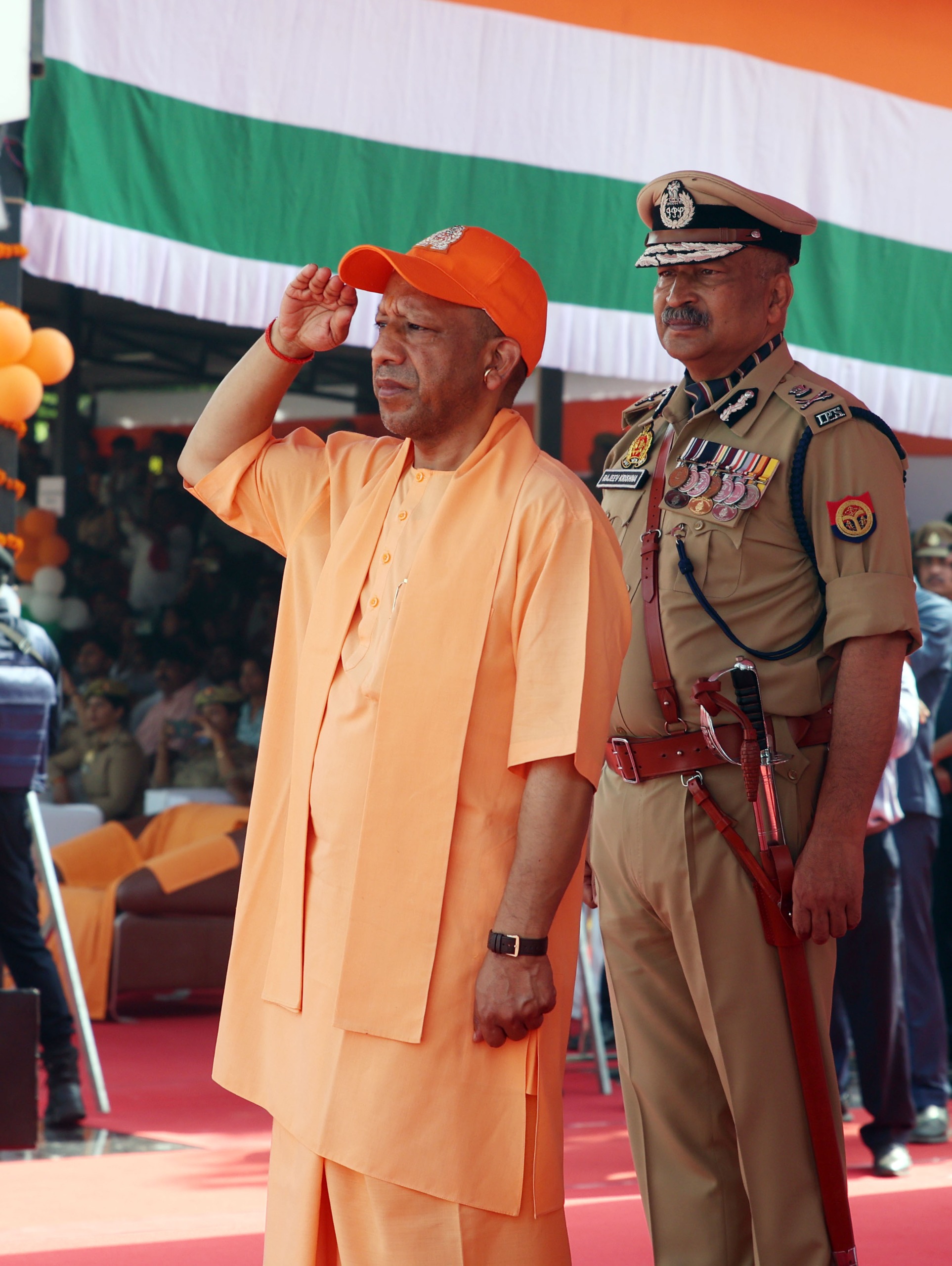
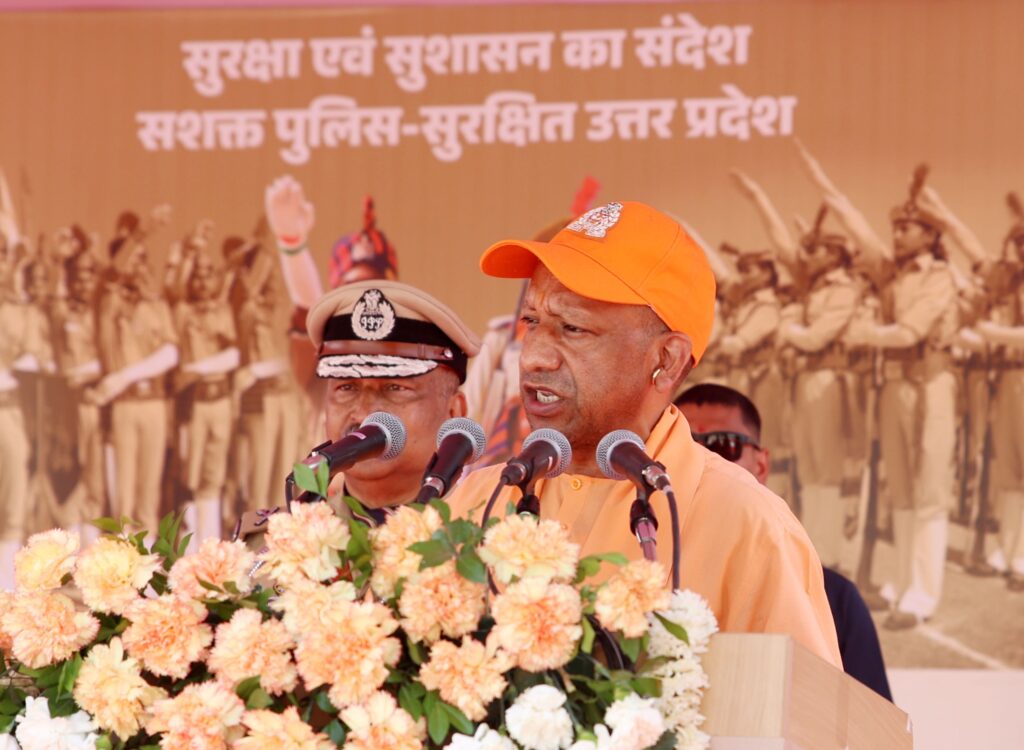
“The more you sweat now, the less blood will be shed later.” Those words, spoken by Chief Minister Yogi Adityanath at the passing-out parade of the 2025 batch of Civil Police constables, resonate as both a call to rigorous preparation and a promise of a safer, more orderly future. The ceremony in Lucknow, marking the culmination of training for 60,244 newly recruited constables, many of them women, was not merely a formal parade. It was a vivid manifestation of a sweeping transformation in Uttar Pradesh’s policing culture: one that emphasizes discipline, professionalism, modernization, gender inclusion, and a clear commitment to public safety and rule of law.
A parade is theatre and symbol as much as it is an inspection of skill. Standing at the Reserve Police Lines and taking the salute, the Chief Minister highlighted the striking virtues he had observed in the trainees: readiness, dedication, and discipline. These are the bedrock qualities that distinguish a capable police force from a nominal one. In those marching columns, in the precision of drill and the steadiness of bearing, one could see how meticulous, arduous training turns civilians into guardians of public order. The adage about sweat and blood encapsulates a sober logic: rigorous, realistic training reduces mistakes, hesitation, and misjudgment in the field—thereby lowering the likelihood of lethal encounters and protecting both citizens and officers.
The scale of this graduating cohort, 60,244 constables trained simultaneously across the state, is in itself remarkable. It signals a leap in state capacity: where training throughput in 2017 barely touched 3,000, by 2025, Uttar Pradesh was graduating cohorts measured in the tens of thousands. This is not merely an administrative achievement but a structural recalibration. Mass recruitment, when coupled with quality training and principled leadership, redefines the relationship between the state and society. It replenishes ranks, widens representation, and embeds new standards across the bureaucracy. The story told at the passing-out parade is one of accelerated institutional learning: upgraded facilities, modern weaponry, smarter physical training, and digital training platforms all combine to produce a force attuned to contemporary security challenges.
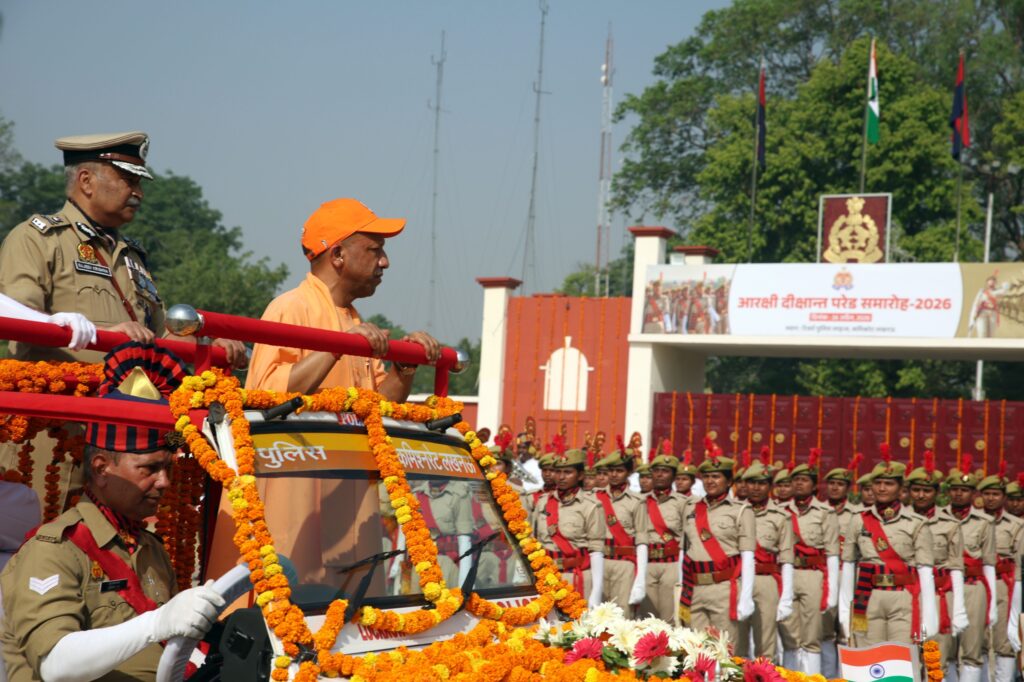
Chief Minister Yogi’s remarks underscored that transformation in concrete terms. He recalled the condition of barracks and training infrastructure before 2017, make-shift accommodations, tin roofs, and inadequate training resources. He contrasted that past with the present: high-rise barracks in 55 districts, upgraded training centres, and structured professional curricula. The shift from obsolete .303 rifles to modern INSAS and SLR rifles is emblematic: it is both a literal and a symbolic modernization, a move from ad hoc to professionalized capability. The introduction of the UP Police Training Portal, the Smart PT program, and Integrated Government Online Training modules reinforces this shift: officers today receive instruction that blends physical rigour with technical competence and soft skills.
In practical terms, modern police work demands more than physical strength and marksmanship. Chief Minister Yogi’s emphasis on cyber police stations, forensic training, and specialized ATS proficiency reflects an appreciation of evolving crime patterns. Cybercrime, digital fraud, and sophisticated criminal networks require forensic acumen, intelligence-led operations, and rapid technological responses. The establishment of the Uttar Pradesh State Institute of Forensic Sciences, the deployment of mobile forensic labs to districts, and the creation of cyber units across all 75 districts are investments that reposition policing as a science-based endeavour. They also signal a preventive orientation: better evidence collection, faster investigations, and targeted accountability can deter crime before it escalates.
Equally consequential has been the deliberate elevation of women within the police. The proportion of women in the force rising from 13% to over 36% is not merely a numerical gain; it reshapes institutional culture and public engagement. Women constables bring sensitivity, approachability, and a critical perspective to community policing, victim support, and gender-sensitive handling of delicate cases. The launch of Mission Shakti initiatives, women PAC battalions, and women-focused infrastructure such as pink police booths and Mission Shakti centres at every station underscores a twofold goal: to make policing more inclusive and to make the public, especially women, safer. When more women serve as visible, empowered protectors, communities feel reassured, and the police force itself becomes more representative of the society it serves.
Chief Minister Yogi framed these internal reforms within a broader narrative of law and order that emphasizes firmness toward crime and sensitivity toward citizens. That balance is essential. A capable state protects its people by deterring criminal enterprises and dismantling parallel power structures, while also ensuring that enforcement is just, proportionate, and rights-respecting. The claim that riots have been curtailed, parallel power structures have ended, and illegal extortion has been reduced points to a restored monopoly of legitimate force — a precondition for stable governance and economic growth. Indeed, the Chief Minister linked better policing to increased investor confidence and economic opportunity. Public safety, after all, is a prerequisite for commerce, tourism, and investment; the investor who finds a reliable rule of law is likelier to commit capital and create jobs.
The logistical and financial commitments behind this policing renaissance are noteworthy. A more than threefold increase in police budgets since 2017, the creation of seven police commissionerates, and the establishment of the UP Special Security Force signal sustained political priority and resource alignment. Rapid response improvements, exemplified by UP-112’s response time falling from 65 minutes to 6–7 minutes, shift policing from reactive to proactive. Shorter response times save lives, prevent escalation, and build citizen trust. Meanwhile, recruitment drives with mandatory reservations — including 20% for women — ensure that the force grows not only in size but also in diversity and legitimacy.
Training quality is the hinge on which these outcomes pivot. The Chief Minister’s pride in hands-on inspections and improvements across training centers reflects an understanding that infrastructure alone is not enough; curricula, instructors, and evaluation systems must match ambition with discipline. The “Sadhana Week” statistics — in which government employees completed an enormous number of courses and the UP Police completed 28 lakh courses — indicate a culture of continuous learning. Specialized modules developed with the guidance of national leadership and in alignment with the standards of the National Investigation Agency (NIA) and international bodies for ATS ensure that the UP Police is not insular but oriented toward national and global best practices.
But the success of a police force does not rest only on technology, buildings, and numbers. It rests on ethics: sincerity, honesty, duty, and a commitment to civil liberties. The Chief Minister’s expectation that the new constables will uphold the proud traditions of UP Police in these terms is an aspirational standard that must be institutionalized through leadership, accountability mechanisms, and community engagement. Embedding human rights principles, transparent complaint mechanisms, and community policing strategies will ensure that the larger gains do not come at the cost of civil trust.
There is also a narrative of redemption in the Chief Minister’s account: a state that once struggled with instability and curfews has moved toward predictable governance and proactive policing. That story matters politically and socially because stability enables aspiration. When children can study without fear, when markets operate without extortion, and when neighbourhoods are safe after dusk, people’s lives are transformed. The Chief Minister’s enumeration of improvements, from barracks to forensic labs, from mission-driven women’s initiatives to reduced response times, is thus more than a list; it is a portrait of a government intent on converting security into development and dignity.
Yet the path ahead requires vigilance. Large-scale recruitment must be matched by sustained supervision. Modern equipment needs maintenance, cyber units need continual skill updates, and forensic facilities require accreditation and rigorous protocols. Community relations must be nurtured in local languages and through local leaders. And the instinct to use force must always be tempered with de-escalation, legal safeguards, and respect for constitutional rights. The memorable maxim about sweating now to avoid bloodshed later is not a license for harshness; it is a counsel to preparedness, discipline, and professionalism so that force is used sparingly and effectively.
The presence of union-level engagement, as when the Union Home Minister earlier handed out appointment letters, and the rollout of national training modules on platforms like Karmayogi, suggest a cooperative federal dynamic. Sharing best practices across states and integrating national standards can raise the bar for policing nationwide. Similarly, specialized initiatives such as Safe City projects in key urban centres can be scaled and adapted to local needs, marrying urban planning, surveillance, community outreach, and victim services.
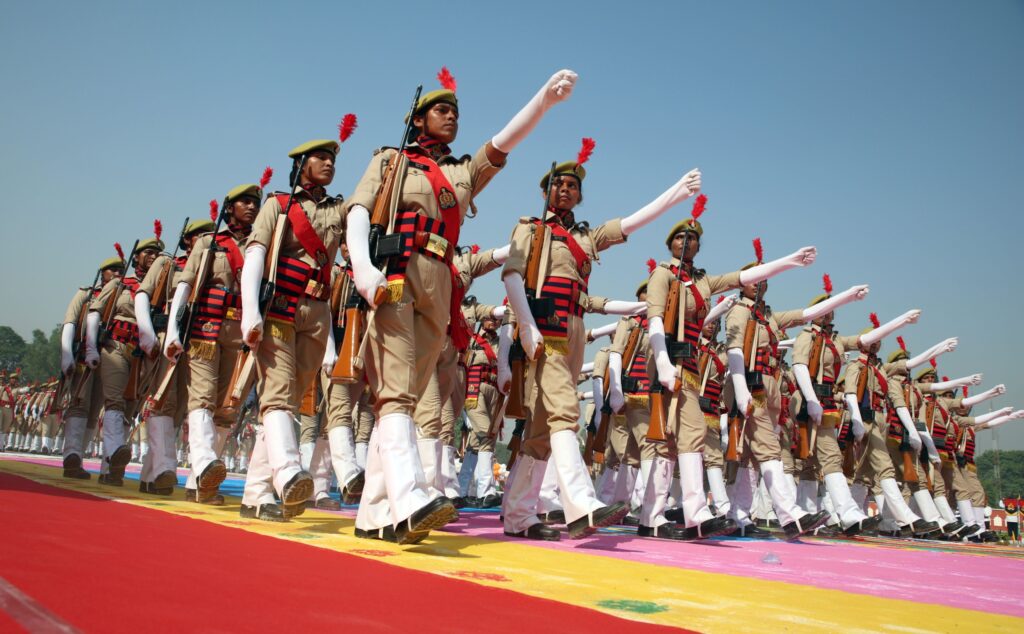
Finally, the human story at the core of the passing-out parade deserves emphasis. Each of the 60,244 constables is an individual with hopes, fears, families, and futures. For many women, this recruitment is an avenue to economic independence, social respect, and public service. For families in small towns and villages, a relative’s uniform symbolizes stability and civic contribution. The morale boost that comes from visible investment in training, accommodation, and technology is immense. The parade salute and the chief minister’s recognition are tokens of societal gratitude; they signal that the state values those who put themselves between the citizenry and harm.
The passing-out parade in Lucknow was more than a ceremonial milestone; it marked a turning point in Uttar Pradesh’s journey toward a more modern, inclusive, and effective policing model. The Chief Minister’s exhortation that sweat in training will reduce bloodshed in the future captures a deeper truth: disciplined preparation, professionalization, and institutional renewal are the surest antidotes to violence and disorder. When the state invests in training, forensic science, cyber readiness, women’s participation, and rapid response, it builds a force capable not only of confronting crime but of preventing it. That is good governance, plain and simple: the hard, patient work now to secure lives, liberties, and livelihoods for the future.