Staff Correspondent
The seven-year agreement between Sigma Advanced Systems and Rolls-Royce represents a significant milestone for both companies’ strategic trajectories and the evolving structure of the global aerospace supply chain. Valued at nearly £300 million (roughly Rs 3,800 crore), the contract secures a durable revenue stream for Sigma and positions the company more centrally within critical aerospace programs. This development is noteworthy not only for its immediate commercial implications but also for what it reveals about industrial strategy, cross-border manufacturing integration, and the maturation of India-headquartered suppliers into program-level partners for world-class original equipment manufacturers (OEMs).
Strategic significance of the agreement
At its core, the agreement is an affirmation of Sigma Advanced Systems’ capacity to meet the exacting technical, quality, and programme-management standards of one of the world’s most respected engine manufacturers. For Rolls-Royce, extending a multi-year programme-level partnership with Sigma reduces supplier risk while securing access to high-precision, safety-critical components and assemblies necessary for long-duration aerospace programmes. For Sigma, the contract delivers predictable revenue and enhanced visibility, enabling more confident investment in capacity, skills, and technologies. The scale and duration of the agreement also reflect a deepening strategic relationship rather than a transactional supply arrangement; it is a vote of confidence that can catalyse further collaboration and incremental scope over time.
Integrated global delivery: India–UK Dual‑Source model
A defining characteristic of the partnership is its reliance on Sigma’s India–UK dual‑source manufacturing network. This integrated model marries India’s cost‑efficient, talent-rich manufacturing base with the engineering proximity, regulatory familiarity, and programme alignment offered by UK operations. This configuration yields several advantages: flexible capacity management across time zones and facilities; resilience through geographic diversification; localized engineering support for Western customers; and the ability to scale work packages as programmes evolve. By delivering a program-level partnership through facilities in both India and the UK, Sigma exemplifies a broader shift among suppliers toward platform-based operations that transcend national boundaries while preserving the benefits of localized engagement and compliance.
Operational & technological implications
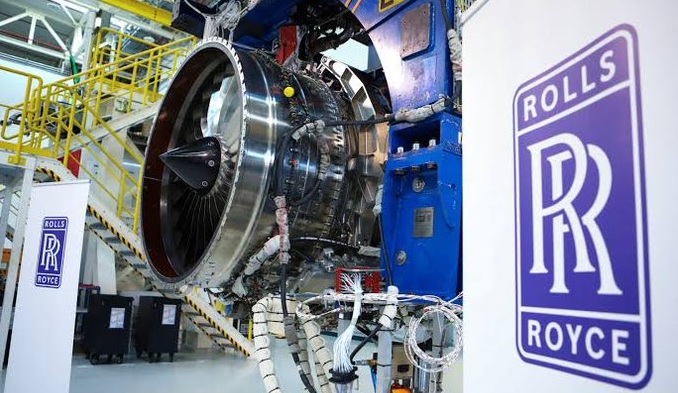
Supplying safety‑critical aero‑engine components and assemblies requires rigorous process control, certification, and traceability. The agreement implies that Sigma has satisfied stringent expectations for quality management systems, supply chain assurance, and risk‑management, and possesses the manufacturing technologies—precision machining, assembly, inspection, and metrology—necessary for high-value aero-engine parts. Over a seven-year horizon, such a contract will drive sustained investments in automation, digital thread integration, materials expertise (including advanced alloys and surface treatments), and workforce development. The long-term nature of the work also enables Sigma and Rolls-Royce to pursue continuous improvement initiatives, cost-reduction programs, and collaborative engineering solutions that optimize life-cycle value for the OEM and its operators.
Economic & financial impact
The contract’s monetary value affords Sigma greater predictability in cash flows and project planning, improving its capacity to secure financing for capital projects and to undertake strategic hires. For stakeholders—employees, customers, and investors—the long-term order pipeline reduces revenue volatility typical of project-based aerospace work and enhances the company’s growth narrative. At a macro level, such agreements contribute to the competitiveness of the aerospace manufacturing ecosystems in the UK and India, supporting high-technology employment, skill development, and ancillary supplier networks.
Supply‑chain dynamics& risk management
The elevation of Sigma into larger work packages and program-level responsibilities changes the dynamics of the supply chain. It shifts some degree of programme risk, integration complexity, and accountability to the supplier, necessitating robust governance mechanisms: clear contractual interfaces, performance metrics, quality governance, and contingency planning. For Rolls‑Royce, delegating responsibilities to a trusted partner like Sigma can compress development timelines and leverage cost arbitrage; for Sigma, it entails accepting heightened obligations for delivery, certification, and sustaining engineering support over the aircraft lifecycle. Both parties must therefore maintain transparent communication channels, invest in joint risk assessments, and align incentives to ensure long-term success.
Strategic implications for Sigma’s corporate evolution
This agreement marks a stage in Sigma’s evolution—from a location-specific supplier to an integrated, global manufacturing platform capable of handling complex, high-value work packages. It validates prior investments in a connected India–UK footprint and signals the firm’s readiness to expand its role within the core of aerospace programmes. The contract may also serve as a foundation for Sigma’s broader ambitions, including deeper engagements with other major OEMs, expanded systems integration capabilities, and accelerated entry into Western markets such as the United States. With the company already extending its reach, the Rolls-Royce partnership reinforces Sigma’s credibility as a long-duration partner rather than a short-term contractor.
Broader industry context
The aerospace industry has been undergoing sustained change—driven by cost pressures, technological complexity, and the need for globalized, resilient supply networks. OEMs increasingly prefer long-term, programme-level partnerships with suppliers that can not only produce parts but also contribute to design for manufacturability, lifecycle support, and aftermarket services. Sigma’s agreement with Rolls‑Royce reflects these trends: the consolidation of supplier roles, the premium on integrated cross-border platforms, and the importance of strategic alignment across the product lifecycle. For the industry, such partnerships can accelerate innovation, improve total-cost outcomes, and support continuity in critical supply chains.
Leadership perspective & organizational readiness
The public remarks by Sunil Kumar Kalidindi, CEO and Executive Director of Sigma Advanced Systems, underscore the company’s strategic intent and organizational readiness. His emphasis on quality, reliability, and the India–UK platform signals that the firm has not only achieved operational benchmarks but also cultivated the governance, cultural alignment, and customer‑centric orientation necessary for sustained collaboration at the programme level. Leadership commitment will be instrumental in translating the contract into tangible, long-term value—for both partners—by ensuring disciplined execution, continuous capability upgrades, and alignment of organizational incentives with programme objectives.
The seven-year agreement between Sigma Advanced Systems and Rolls‑Royce is more than a significant commercial contract; it is an inflection point in Sigma’s global aerospace journey and a concrete example of how suppliers are assuming deeper, more strategic roles within the aerospace ecosystem. The arrangement affords Sigma long-term revenue visibility, operational impetus for capability investment, and strengthened industry standing. For Rolls‑Royce, the partnership secures a reliable source of high-precision components within a program-level framework. Collectively, the deal illustrates the advantages of an integrated India–UK manufacturing model, the maturation of India‑headquartered suppliers into program partners, and the broader industrial trend toward collaborative, resilient, and high-value supply-chain architectures in global aerospace.