Cdr Rahul Verma (r)

“A loitering munition is only as good as the network that feeds it.”
The age of the lone hunter is ending. Modern maritime conflicts will be decided not by a single ship, aircraft, or missile, but by how quickly and reliably a distributed web of sensors, human judgment, and autonomous effectors can see, decide, and strike as one. Loitering munitions, halfway between the long-endurance UAV and the precision guided weapon, are the first widely fielded class of systems that make that capability real. Yet they will only be militarily useful when tested and certified as networked nodes in an operational kill-web, not as isolated platforms.
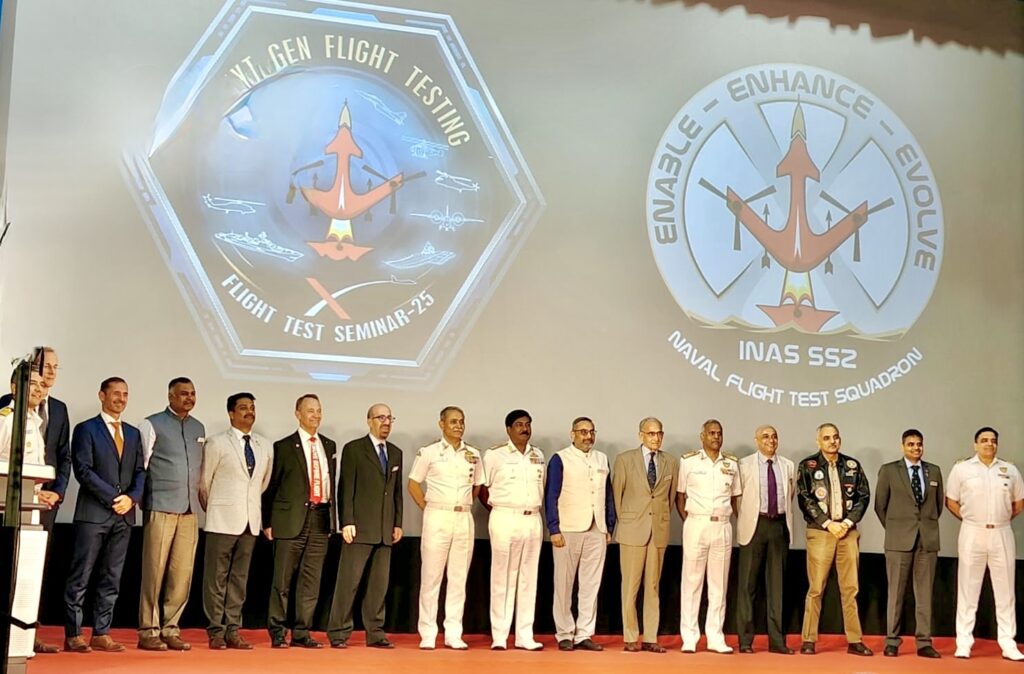
This article is adapted from my presentation at the Third Naval Flight Test Seminar of the Indian Navy under the aegis of Flag Officer Naval Aviation, “Integrating Loitering Munitions into Kill-Webs: Flight Test Methodologies for Distributed Targeting.” The seminar discussion drew significant interest from senior officers and test professionals who requested wider circulation. This piece carries that dialogue forward to the broader defence community. This article sets out a practical, test-centric roadmap for moving from prototype to combat-credible capability: the flight-test methodologies, infrastructure, metrics, and institutional changes required to bake loitering munitions (LMs) into the naval kill web. The evolution from the familiar, sequential kill-chain to the adaptive, networked kill-web is one of the most consequential doctrinal shifts of our era. Where the kill-chain follows a single thread —from sensor to shooter to effect — the kill-web is a lattice of sensors, decision nodes, and shooters operating across domains, time, and authorities. Loitering munitions (LMs) occupy a pivotal place in this transformation: they can serve as sensors, decision-makers, and kinetic effectors simultaneously.
The thesis at the Third Naval Flight Test Seminar was direct: we must stop validating platforms in isolation. If the future is a web, our testing must validate the web. The rest of this article lays out a practical, outcome-oriented flight-test framework for that purpose, designed to deliver combat-credible, fieldable LM kill webs for naval operations.
“The kill-chain was linear; the kill-web is evolutionary. Test the web, not the wire.”
From Kill-Chain to Kill-Web: The Evolution of Combat Logic
The classic kill-chain—detect → track → decide → engage—served earlier eras where single platforms could close the loop. But this linear model is slow, brittle, and often constrained within a single domain or command. The kill-web, by contrast, is dynamic, distributed and resilient. It ties satellites, UAVs, ships, shore sensors, and even munitions together into a mesh that can reroute, retask and reassign in real time.
Consider a practical flow: a satellite flags a radar emission; a forward UAV refines the track; a ship’s command cell decides; a loitering munition is cued and strikes—all in seconds. On the web, decision-making happens in parallel, often aided by AI for speed, while humans retain strategic authority. Loitering munitions epitomize this evolution through a triad capability they can see, decide (within programmed bounds), and strike, blurring stovepipes and increasing operational tempo.
“In the kill-chain, you wait for the baton; in the kill-web, everyone moves at once.”
Why loitering munitions matter and why testing must change
LMs combine persistence, on-board sensors, and terminal guidance in an affordable, expendable package. Deployed smartly, they let commanders hold fleeting threats at risk, provide persistent overwatch, and mass effects through cooperative swarms. But these advantages are conditional: they depend on fast, secure handovers from ISR assets, reliable autonomy under degradation, and resilient mesh communications that preserve mission integrity in cluttered electromagnetic battlespaces.
Traditional flight testing of flight envelopes, handling qualities, and single-platform weapon accuracy is necessary but not sufficient. The naval problem is multi-domain and multi-node: LMs must interoperate with maritime patrol aircraft, ship combat systems, shore-based sensors and allied links. The test program must therefore shift from platform validation to ecosystem validation, a theme that underpins the methodology proposed here.
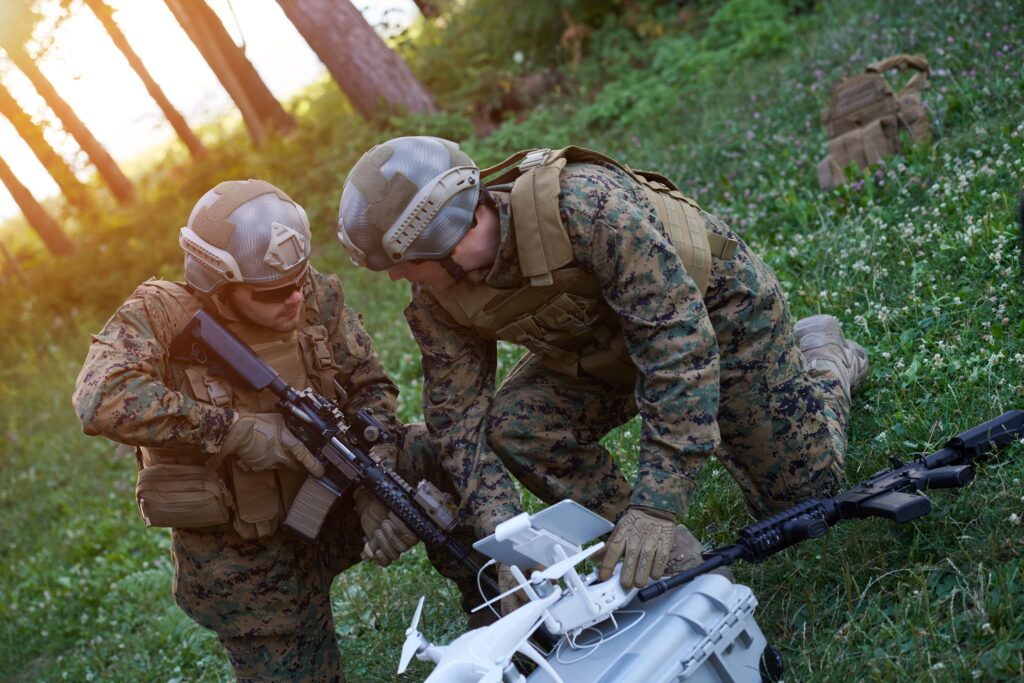
To realize this potential in operational kill-webs, we cannot rely on conventional platform-centric test methods. The shift from single-platform validation to ecosystem validation demands a structured approach, one that proves not just what an LM can do in isolation, but what the network can deliver under stress. Four interlocking test pillars must guide this transformation. Each pillar addresses a distinct operational requirement; together, they form a comprehensive framework for certifying loitering munitions as combat-credible nodes in distributed targeting architectures. These pillars are not theoretical—they reflect hard-won lessons from recent conflicts and allied testing programs, translated into measurable metrics and actionable test protocols.
Core Test Pillars: what to prove and how to measure it
A rigorous test regime must validate four interlocking domains.
1. ISR-to-Strike Handover. Demonstrate that any ISR node can rapidly and reliably hand target data to an LM and that the LM will correct course and engage. Tests should cover static and dynamic targets, cross-service handovers (air-to-navy, navy-to-shore), and handovers under degraded comms. Key metrics: sensor-to-shooter latency <2s for moving targets; terminal accuracy ≤2 m CEP; data-link survival ≥95% under representative jamming. These are demanding but achievable targets that prove operational utility.
2. Autonomy Under Denial. Verify that LMs can transition from supervised to autonomous operation when GNSS or comms are degraded. Tests should include progressive GPS degradation, complete comms denial and sensor-fusion navigation (EO/IR, radar altimetry, INS). Validation metrics: maintain <5 m CEP for ≥10 minutes of GNSS denial; autonomous target ID >95%; absolute ROE compliance (zero tolerance for unlawful engagement). Equally important: verify abort and safe-fail behaviours when target certainty falls below the threshold.
3. Live-Virtual-Constructive (LVC) Integration. Scale testing to realistic kill-web scenarios without risking fleets. Live LMs and ISR assets operate alongside virtual manned platforms and constructive threats, yielding high-fidelity validation of coordination, timing and human-machine workflows. LVC enables replicable, instrumented test events at scale and is essential for validating doctrines and TTPs.
4. Swarm & Mesh Operations. Demonstrate coordinated multi-LM effects and robust mesh communication under node loss and EW. Tests should validate dynamic retasking, temporal synchronization (strikes within seconds), and allocation efficiency (>80% successful target allocation across swarm elements) while maintaining mesh connectivity despite significant node attrition.
Infrastructure, People and Governance
None of this happens on a shoestring. A mature test ecosystem requires a multi-domain integration centre (ample ops floor with panoramic tactical displays and 20+ operator stations), distributed compute for real-time fusion, high-fidelity EW ranges capable of 30 MHz–40 GHz scenarios, a swarm testing complex with dedicated airspace and recovery/termination safety, and an LVC backbone that can interoperate with national and allied simulations. The scale is significant; estimates in recent studies point to multi-hundred-million-dollar investments, but the capability payoff is asymmetric. A relatively modest test investment yields orders-of-magnitude operational leverage across fleets.
Equally critical are people. Test pilots, flight-test engineers, and support technicians require new curricula that combine classical aerospace disciplines with autonomy validation, network-centric operations, EW tradecraft, and big-data analytics. An 18-month specialist course for naval test pilots, dedicated engineering specialization tracks, and international exchange programs will accelerate institutional competence.
Finally, governance and legal guardrails must be embedded into test plans. Human-in-the-loop checkpoints, mission-abort protocols, IHL and ROE compliance testing, and strict data-integrity and cyber controls are non-negotiable.
International and Dual-Use Considerations
While the analysis here is naval, the implications are broader; the technical issues it addresses —resilient data links, mesh networking, sensor fusion, and LVC integration —have direct civilian relevance. SESAR/NextGen roadmaps and urban air mobility certification will demand the same robustness in command, control, and sense-making as military kill webs. The tools we refine for contested maritime operations, high-fidelity LVC environments, sensor-fusion middleware, and hardened telemetry standards shorten the path from prototype to certified eVTOL services and enable safer, more scalable unmanned corridors in congested airspace.
On the allied and coalition front, shared testing standards are operational enablers, not mere conveniences. When nations adopt common protocols (STANAG-4586-style link standards, agreed LVC interfaces, and auditable telemetry formats), they build mutual trust that turns joint planning into joint effect. Recent conflicts have underlined this reality; partners that could rapidly mesh ISR and fires at the coalition level were consistently able to synchronize the impact more reliably than those forced to rely on bilateral ad-hoc workarounds. In short, investing in interoperable test methods pays dividends for both civil aviation modernization and coalition readiness.
The Operational Payoff
Validate the web and you change the rules of engagement. When loitering munitions are proven as reliable nodes within a distributed sensor-shooter fabric, forward ISR and escorts cease to be isolated assets and become dispersed reach for the fleet. That translates into rapid prosecution of fleeting threats, compressed sensor-to-shooter timelines, and the tactical option to employ cost-effective expendables to shape a battlespace layered denial, distributed deterrence and swarm-based curtain defences without exposing high-value crewed platforms to disproportionate risk.
Real-world events have already shown the multiplier effect of such approaches, where forces integrated persistent ISR with small, networked strike elements, adversary freedom of action shrank and decision cycles hardened. The operational prize is clear: more decision space for our commanders, more targets denied to the enemy, and a force posture that scales with modest cost and acceptable risk. That is the strategic edge a validated kill-web delivers: the ability to punch above weight by orchestrating many modest effects into decisive outcomes.
The Future of Distributed Target Strikes
Integrating loitering munitions into a distributed kill-web is not an incremental upgrade; it is a doctrinal and operational paradigm shift. It compels us to transform testing, training, and command processes so that our forces can fight reliably as a coherent network rather than as disconnected platforms. The shift from platform-centric verification to ecosystem-centric validation aligns our test methods with the way we intend to fight. By proving that a system-of-systems works together across ISR, C2, autonomy, and effects, we build operational credibility rather than just technical conformity.
For India, the strategic stakes are substantial. A validated LM kill-web gives us a faster, more resilient and more lethal force, providing asymmetric advantage across littorals and regional seas. This is a Make-in-India transformation. By investing in infrastructure, human capital, and indigenous testing doctrines (an estimated ₹2,000–3,000 crore investment over the build-out period), we position Naval Aviation as a global leader in autonomous and networked systems testing. That leadership is both practical and prestigious. It lets us set standards, control technology pathways, and create exportable capabilities that shape regional security architectures in our favour.
Operationally, the payoff is clear. A fully validated kill-web means commanders can prosecute fleeting threats, distribute risk, and compress decision timelines, turning seconds into decisive advantage. Technologically, it means we can iterate rapidly, test an algorithm, field it, validate it, and re-deploy within the same ecosystem. Institutionally, it forges a new test culture —quicker, more integrated, and unapologetically network-centric. The journey is challenging but achievable. We are not simply buying a new weapon; we are building a new mode of warfighting. The Indian Navy’s Flight Test School and its partners are already on that path, moving from concept to testbed to doctrine. The sea rewards readiness; let us make sure we are ready in the way the next fight will demand.
A Final Word from the Cockpit
As a Naval Aviator, I think in timelines of seconds that decide survival and minutes that decide campaigns. Loitering munitions won’t be a silver bullet; they’re an instrument. Tested and certified as nodes in a resilient kill-web, they are an instrument for restoring options in contested littorals. The technical journey is tractable; it requires focused investment, rigorous metrics, and institutional humility to re-engineer test culture. The alternative, sticking to platform checklists, will leave commanders with systems that look impressive on paper but fail in the crucible of joint maritime combat. Suppose navies and defence institutions want to field credible distributed lethality. In that case, the question is not whether to test loitering munitions but how quickly and deliberately we can build the testbed, train the people, and codify the standards to make kill-webs dependable. The sea does not wait for paperwork. It rewards readiness.
“Networks win the minute game; doctrine wins the campaign.”
Cdr Rahul Verma (r), former Cdr (TDAC) at the Indian Navy, boasts 21 years as a Naval Aviator with diverse aircraft experience. Seaking Pilot, RPAS Flying Instructor, and more, his core competencies span Product and Innovation Management, Aerospace Law, UAS, and Flight Safety. The author is an Emerging Technology and Prioritization Scout for a leading Indian Multi-National Corporation, focusing on advancing force modernization through innovative technological applications and operational concepts. Holding an MBA and Professional certificates from institutions such as Olin Business School, NALSAR, Axelos, and IIFT, he’s passionate about contributing to aviation, unmanned technology, and policy discussions. Through writing for various platforms, he aims to leverage his domain knowledge to propel unmanned and autonomous systems and create value for Aatmannirbhar Bharat and the Indian Aviation industry.