
By Air Marshal Anil Chopra (r)
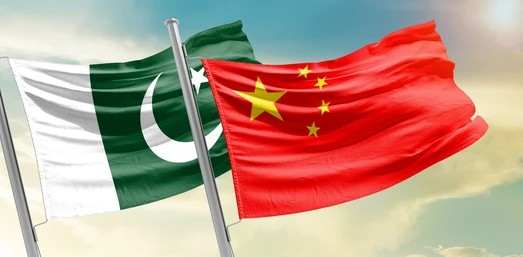
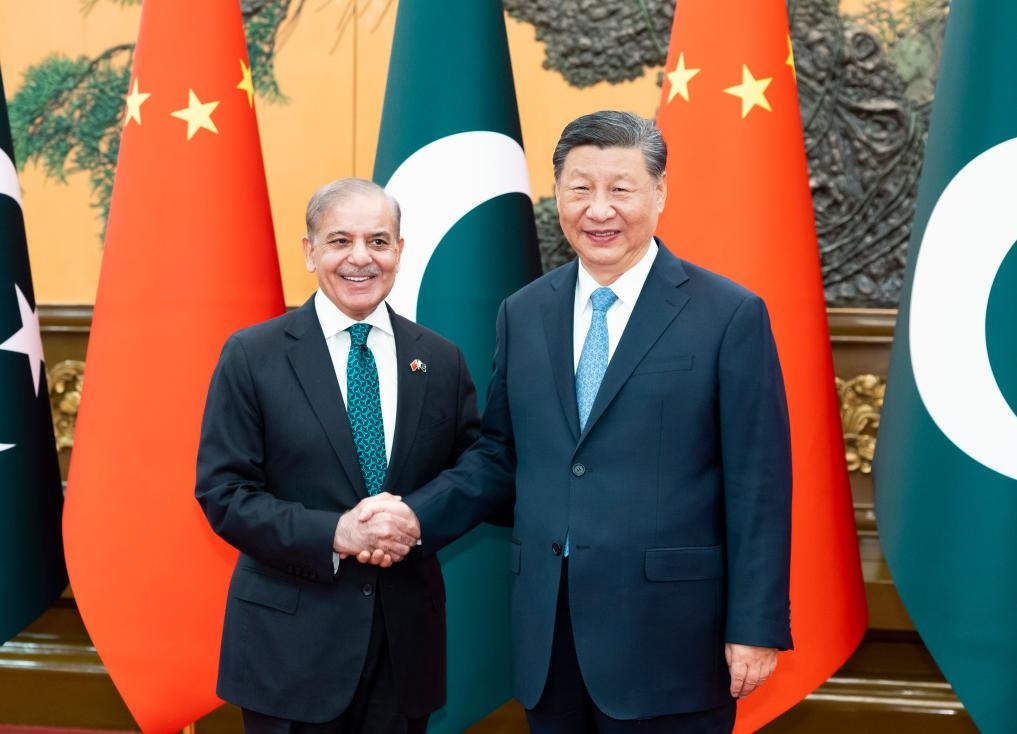
China-Pakistan cooperation was very visible during the “Op Sindoor”. Nearly 80 percent of Pakistani military hardware is of Chinese origin. Pakistan is the leading recipient and showcase of Chinese armaments. Over the years, China has supplied nearly $20 billion worth of arms to Pakistan. China supplies aircraft, ships, submarines, tanks, missiles, drones and many other things. China has a footprint in Pakistan’s ballistic missile and nuclear programs. The greatest cooperation is in aviation systems. For all newer systems, Chinese technicians and operational teams were in Pakistan, and reportedly guiding and supporting combat engagements.
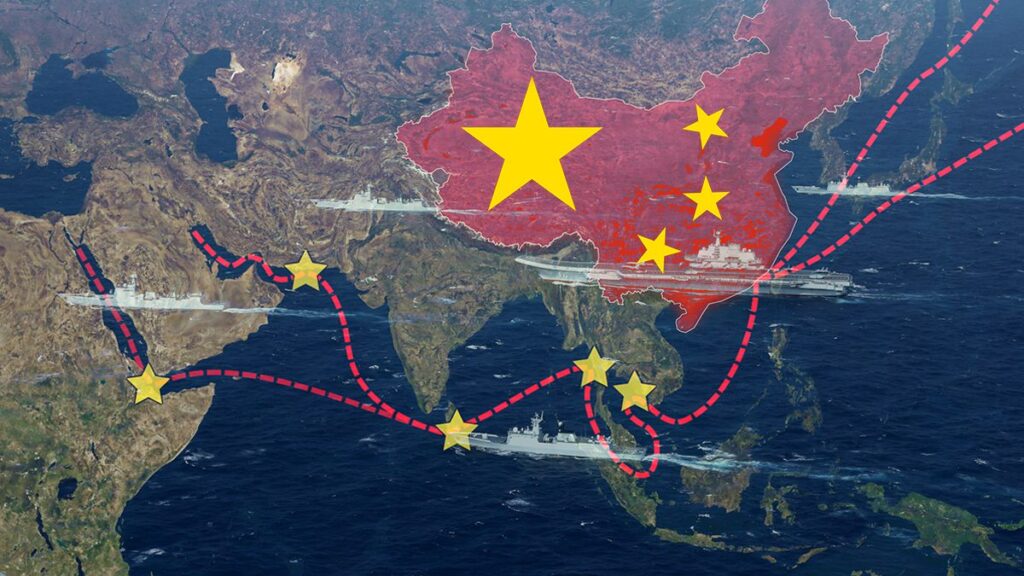
China’s flagship Belt and Road Initiative (BRI) project, China-Pakistan Economic Corridor (CPEC), traverses the length and breadth of Pakistan. With an investment of close to $62 billion, it gives China significant leverage over the Pakistani leadership. The debt-ridden and improvised Pakistan’s interest burden is huge. The International Monetary Fund (IMF) estimates that interest payments on debt will consume nearly 60 percent of government revenues in 2025. The high debt-to-GDP ratio, which is over 70 percent, exacerbates this problem. Earlier, Saudi Arabia, and now China, are whom Pakistan looks up to for bailouts. Nothing comes for free. Significant parts of the Gwadar port and SEZ have been leased to China as compensation. Also, in view of repeated terror attacks, China has brought its security forces to guard the CPEC projects, thus increasing its foothold.
In 1963, Pakistan illegally ceded the 5,180-kilometer Shaksgam valley to China when it signed a border agreement with Beijing. This gave China a foothold in the geo-strategically important Indian territory in Pakistan-occupied Jammu and Kashmir (PoJK). The China-Pakistan friendship began being described by Pakistani politicians as “higher than the Himalayas, deeper than the ocean, sweeter than honey, and stronger than steel”.
Evolution of Military Production Relations
In the early 1980s, China was looking for partners and markets to sell its still low-end products and platforms. Pakistan needed an ally to balance the strong dominance of the USA in their relationship. China initially helped Pakistan to upgrade the ordnance factory at Wah near Rawalpindi. China also allowed licensed production of the MBT-2000 (Al Khalid) tank, which was essentially a poorer Chinese variant of the Russian T-90. China built a turnkey ballistic missile manufacturing facility near Rawalpindi. It is building advanced naval warships for Pakistan. China has also committed to supplying Pakistan with eight new stealth attack submarines by 2028, four of which are being constructed in Pakistan. Some level of transfer of technology is involved. China reportedly supplied Pakistan with nuclear technology, including, perhaps, the blueprint for Pakistan’s nuclear bomb. After India signed the 123 civil nuclear agreement with the USA, China agreed to set up two nuclear power stations in Pakistan.
Sino-Pak Aerospace Cooperation
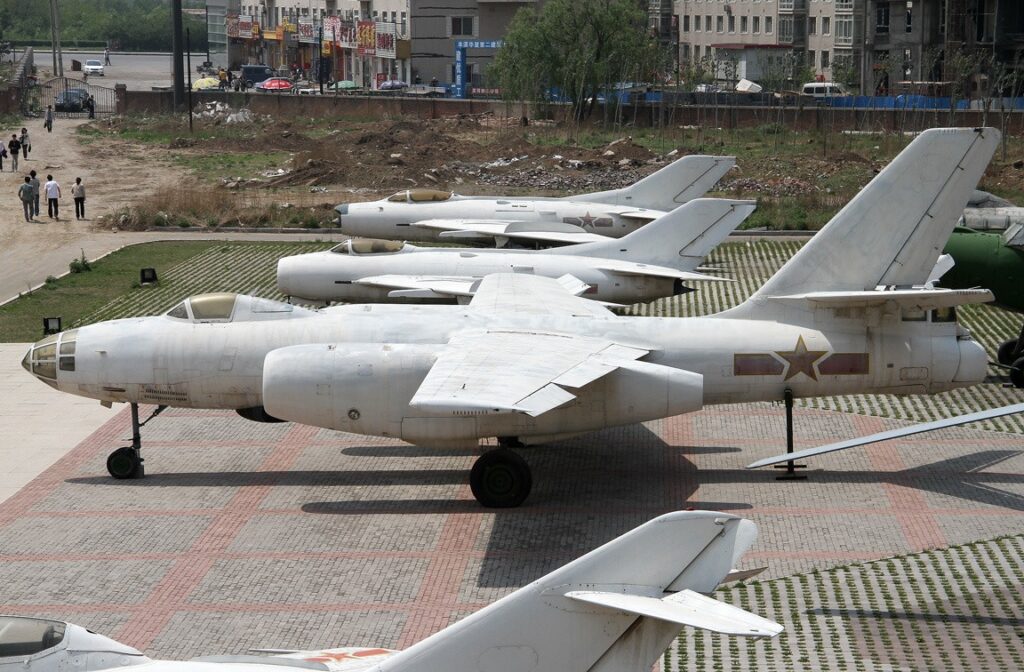
The PAF is the 7th largest Air Force in the world and the largest in the Islamic world, with around 450 combat aircraft. China started supplying PAF F-6 aircraft (air defence version of MiG-19) in 1965. A squadron of Harbin H-5, a Chinese version of the Russian Illyshin IL-28, was formed in the early 70s. China helped establish the Pakistan Aeronautical Complex at Kamra in 1973. The complex is wholly owned by PAF, with all appointments controlled by the PAF Chief. In mid 1980s PAF received A-5Cs (Chinese MiG-19 ground attack variants) and Chengdu F-7s (Chinese MiG-21). The Pressler Amendment, 1990, banned most economic and military assistance to Pakistan after nuclear tests. The USA froze F-16 deliveries and stopped the supply of spares for many years. Thereafter, Pakistan went whole hog to China for all its aerospace needs. In 2007, as a part of a joint-venture project, China rolled out a ‘designed for Pakistan’ fighter, JF-17 ‘Thunder’. The same was inducted into the PAF in 2010. PAF later ordered 36 Chengdu J-10CE ‘Vigorous Dragon’ fighters, the tail-less delta wing with canards, which the Chinese claim as comparable to JAS 39 and Dassault Rafale. Pakistan got ZDK-03 Chinese AWACS. 60 Chinese-designed K-8 Karakorum intermediate jet trainers are currently in service and more are on order. K-8s have been exported to many African countries and also to Turkey. PAF has also received Chinese UAVs, drones, and munitions.
China has transferred 34 M-11, road-mobile, short-range ballistic missiles (SRBM) with related technology and manufacturing capability to Pakistan. Despite Chinese pledges to the contrary, it has continued to provide Pakistan with specialty steels, guidance systems and technical expertise in the latter’s effort to develop long-range ballistic missiles. Hatf, Shaheen and Anza series of missiles have been built using Chinese assistance. China helped Pakistan develop nuclear warheads that directly contributed to Pakistan having nearly 160 nuclear warheads as of today.
Current Fighter Aircraft
PAF began inducting the J-10CE multirole jets in March 2022. 20 J-10CE have been delivered, 16 more are on order. PAF has 156 Pakistan Aeronautical Complex (PAC) JF-17. Of these are 50 JF-17A Block I, 62 JF-17A Block II, 26 JF-17B Block II, and 23 JF-17C Block III. 27 more Block III are on order. All Block I and II JF-17s will be upgraded to Block III standard one day. PAF has 75 Lockheed Martin (earlier General Dynamics) F-16 Fighting Falcon multirole fighters of different upgrade standards. Small numbers are of the Block 52+ standard. Even the Block 52+ at best is inferior in standard to the Mirage-2000 upgrade.
The remaining 58 ageing Dassault Mirage III multirole aircraft that are of 1968 vintage (three decades older than MiG-21 Bison) are being replaced by Chinese fighters. The same is true of 1970s vintage 78 Dassault Mirage 5 attack/reconnaissance fighters. Some of them can carry the Iranian-Pakistani Raad cruise missile, a reverse-engineered version of China’s Silkworm anti-ship missile. The world saw the performance and accuracy of these bombs in February 2019 when they hit a few kilometres away from the actual target. PAF also has around 50 Chinese F-7. As Mirages retire, PAF will mostly be of Chinese origin. The quality of Chinese products is well known and PAF was forced to insist on Russian engines for their Chinese fighters. Also, for a long JF-17s were grounded in Myanmar due to wing cracks.
Meanwhile, PAF is talking to China about getting J-35 fifth-generation fighters. The deal is still to be signed. The earliest timelines could be the early 2030s. They are also working with Turkey for the still under development Turkish KAI KAAN, of which only one prototype has been built and even Turkey will induct in the early 2030s.
Chinese Aerial Weapons
Pakistan has the PL-5EII close combat missile (range 16 Km), the PL-11 medium-range semi-active radar homing (75 km), the PL-12 BVR missile (70-100 km), and the PL-15E BVR (145 km) on J-10s and also JF-17 Block III. The air-to-surface missiles include LD-10, an anti-radiation missile based on SD-Pl-12. AG-300/M anti-tank guided missile (ATGM) with a range of 9.3 km. Pakistan also has Chinese C-802AK (180 km) anti-ship missiles. The H-2 and H-4 are SOW (Stand-Off Weapon) precision-guided glide bombs with a range of around 60 km. Pakistan uses mostly Western aerial Electro-Optical pods, as the Chinese are of very poor quality.
Chinese Air Defence Systems
Pakistan has the HQ-9P, a customised downgraded variant of the Chinese HQ-9 B. The HQ-9 is a derivative of the Russian S-300. HQ-9P has a range of 125 km for interception against aircraft and around 25 km against cruise missiles. The HQ-16FE SAM is the export variant for Pakistan. It is derived from earlier versions of the Russian Buk missile system, and has a range of 160 km. They also have the FN-16 man-portable AD systems (MANPADS).
Pakistan also has many Chinese ground radars. The Chinese YLC-8E anti-stealth radar (500 km range) was acquired in 2024 and placed at Pakistan’s Chunian Air Base. It was destroyed by the Indian Air Force (IAF) during Op Sindoor. The YLC-2 radar is an old L-Band, three-dimensional main missile guidance and surveillance radar, also operated by Sri Lanka and Myanmar. YLC-6 is a two-dimensional radar for mobile and static medium- and low-altitude surveillance and is operated by countries like Bangladesh. The YLC-18A is a high-mobility, medium-range, low-altitude 3D radar. Pakistan has acquired six. It is designed for detecting various air targets, especially low-flying ones like helicopters, drones, and cruise missiles.
Force Multipliers and Airborne Troops
PAF has 9 Saab 2000 Erieye airborne early warning and control (AEW&C) equipped with the Saab Erieye system. In August 2012, during a terrorist attack on the PAF Base Minhas in Pakistan, a Saab 2000 was destroyed beyond repair, and two others were damaged by shrapnel. The four Chinese ZDK-03 Shaanxi turboprop AEW&C have now been redesigned for EW, ESM, ECM roles since 2024 after the removal of AESA radar dome and AEW&C equipment due to compatibility issues and standardization of PAF’s AEW&C platforms with additional Saab 2000 AEW&C aircraft. PAF operates 4 Russian Il-78 Ilyushin Cargo-cum aerial refuelling aircraft. PAF is negotiating for a Chinese KJ-500 turboprop AEW&C based on the Chinese Y-9 platform (essentially reverse-engineered Russian An-12).
ELINT and EW Aircraft
PAF has three Dassault Falcon DA-20s and one Bombardier Global 6000 dedicated EW aircraft. Adding the four Shaanxi aircraft, they have a total of eight. PAF has an edge in dedicated EW aircraft. PAF’s edge in encrypted Radio and R/T jamming facilities has since been neutralised by better Indian systems.
Network-Centric Warfare and Space Domain
While the PAF has had its own Link-17 datalink for some time, the IAF now has its own indigenously developed datalink and Software Defined Radio (SDR). These are combined with a very advanced Integrated Air Command & Control System (IACCS) for air defence operations. IACCS uses secure AFNET to link all the airborne sensors and ground radars and share meaningful data with the different command & control nodes. India also uses its satellites for encrypted radio signals. India is a leading space power and also has a very significant Cyber capability. Pakistan is dependent on China in both these counts. Indian satellites played a great role in Op Sindoor.
Unmanned Systems
Pakistan has a substantial fleet of Chinese, Turkish and home-grown UAVs. Close to 80 HALE/MALE platforms, including around two dozen UCAVs. These include the Wing Loong II and CH-4 Rainbow. India has an as large fleet of HALE/MALE and much larger numbers of surveillance and attack drones. India has a large inventory of loitering munitions, including Harop and Harpy class. India’s private sector is huge in drone manufacturing now. Conflict in Ukraine and West Asia has shown that HALE/MALE could be sitting ducks in a contested environment. Sides with larger numbers of loitering munitions will have the edge. These may be required in 100s of thousands. The side with a better economy will be able to sustain such production or purchases.
Exercise and Combat Exposure
IAF is high on pilot training. IAF has one of the best exercise exposures with over 20 multilateral air exercises in the last two years. Despite superior F-86 Sabres and the F104s in the 1965 and 1971 wars, Indian Gnats and MiG-21s hammered the PAF in air combat. PAF is essentially a defensive force, whereas India goes deep inside to hit strategic and tactical targets. Notwithstanding the denial and the DG ISPR’s fake narrative, IAF hit a major terrorist camp at Jaba Top near Balakot and a MiG-21 Bison shot down a PAF F-16.
Comprehensive National Power (CNP)
The global CNP index depends on factors such as military capabilities, economic capabilities, economic relationships, future resources, cultural influence, diplomatic influence, resilience, and defence networks. The Lowy Institute’s Asia Power Index puts the USA, China, India, Japan, Australia, and Russia as the top six in Asia in that order. Pakistan is in 16th position.
According to the IMF’s World Economic Outlook, India’s nominal Gross Domestic Product (GDP) is expected to surpass Japan’s in 2025, making India the fourth-largest economy globally. Specifically, India’s GDP is projected to be $4,187.017 billion. In 2025, Pakistan’s GDP is projected to be around $357.0 billion.
Pakistan’s defence budget in 2024-25 was equivalent to $7 billion. India’s is $78. 3 billion for 2025-26. India’s domestic defence production reached Rs 1,26,887 crore in 2023-24. India has set an ambitious annual defence production outlay of Rs 1.75 lakh crore for FY25, which is expected to grow at a CAGR of around 20 per cent to Rs 3 lakh crore (as per the Ministry of Defence) by FY29. Defence exports surged to Rs 23,622 crore (approx. US$ 2.76 billion) in Financial Year 2024-25. The bulk of the exports were by the private sector. In 2023, Pakistan’s defence exports were $338,000. Pakistan faces critical shortages of artillery and has ammunition worth four days of war. They are highly dependent on China and Turkey for defence supplies. Unlike in the past, most Arab States like Saudi Arabia and the UAE are much closer to India. Amid simmering geopolitical tensions with Pakistan, global ratings agency Moody’s says India’s economy is unlikely to face major disruptions, even in the event of a sustained flare-up.
Pakistan Master at Double Crossing
While wooing China, Pakistan joined the anti-communist America-led SEATO and CENTO military alliances. It started taking military hardware from China in the 1960s, and simultaneously getting American F-86 Sabres, F-104 Starfighters, and Patton tanks to fight terror and communism. It supported the USA during its anti-Soviet operations in Afghanistan, and then often went to Russia for help and hardware such as helicopters and aeroengines. Pakistan supported its brother Muslims Uyghurs, in Xinjiang against China. Pakistan had a direct connection with the 9/11 WTC attacks. Pakistan gave safe haven to the USA’s most-wanted Osama Bin Laden in the Army Cantonment in Abbottabad. Pakistan supported the Taliban in Afghanistan to make the USA fail and leave after 20 years of near-occupation. It can thus be seen that Pakistan has no morals and can double-cross anyone, including China.
Pakistan: A Country in Denial
Pakistan is a country in denial since its formation in 1947. They refused to acknowledge the Pakistan military being part of incursions in Kashmir in 1947-48 and termed them as tribesmen. Pakistan attacked India in 1965, led by military dictator General Ayub Khan. The country was disintegrated in 1971 under General Yahya Khan, and the army faced the humiliation of 93,000 prisoners of war. During the Kargil War of 1999, Pakistan refused to acknowledge the soldiers as their own and the Indian Army performed the last rites for Pakistani soldiers whose bodies Pakistan refused to accept. Pakistan refused its role in the 26/11 Mumbai terror attacks till Kasab was caught and he blabbered out the Pakistan Army links. Pakistan military dictators have not only formally ruled the nation for 34 years but have also exercised physical control for all the remaining years since independence. The Punjabis dominate the Army, and they not only loot the country in connivance with the politicians but also treat the Sindhs, Baloch, Pashtuns, Baltis and others as lower beings. Pakistan Army has had a direct fingerprint in all terror incidents in India and elsewhere but has been in denial. Pakistan has underplayed or denied losses of its aircraft and other equipment in all the conflicts to avoid embarrassment to its Army.
Turkey’s Military Support
Pakistan and Turkey enjoy close military relations. Turkey supports Pakistan on Kashmir and Pakistan’s membership of the Nuclear Suppliers Group. Both were part of the USA-led Central Treaty Organization (CENTO). Turkey helped Pakistan upgrade its F-16 fleet to Block 52+ and also supports it with spare parts. Turkey is currently a major arms seller to Pakistan. Turkey continues to purchase minor aerial weapons and components from Pakistan. Turkey has signed to purchase 52 Super Mushak trainer turboprops and has asked PAF to train its pilots. Nearly 200 Pakistani technicians and engineers are working with Turkey on its fifth-generation TAI TF Kaan fighter. They are also considering co-production of the same. The PAF participates in the international Anatolian Eagle exercise in Turkey. In July 2018, Pakistan’s navy signed a contract for the acquisition of four MILGEM-class ships from Turkey. The two are already collaborating on drone production. Bayraktar Akıncı, Bayraktar TB2, and Anka drones are in PAF inventory. PAF has Turkish smart munitions. A few ship and aircraft loads of Turkish drones and smart munitions were transferred to Pakistan just before and during Op Sindoor.
To Summarise
The May 2025 hostilities between India and Pakistan were short but sharp. It was a confrontation between Chinese, Russian, Indian, and Western weapons. Pakistan fields many Chinese-designed or manufactured weapons, whereas India fields an array of Russian and Western equipment, in addition to indigenous ones. Operation Sindoor was a testing ground for opposing weapons in a contemporary, real-world conflict. Lessons and performances will be scrutinized by the two participants, as well as suppliers like China and France.
China has sold Pakistan $8.2 billion in arms since 2015. China was the world’s fourth-largest arms exporter from 2020-24, and Pakistan was China’s top customer. Islamabad imported 63 percent (nearly two-thirds) of Chinese weapon sales in that period. While there are reports of planes being shot down on both sides, it is hard to confirm the veracity. The Indian security establishment has denied any losses. Meanwhile, China has been strongly supporting Pakistan’s Narrative and Information Warfare (IW).
Both sides launched drones and cruise missiles against enemy infrastructure, bringing air-defence systems into play. The Chinese long-range HQ-9, medium-range and HQ-16 were no match for India’s Russian S-400 and India’s indigenous Akash. But China began the IW and was swift to trumpet the superiority of its kits and tech prowess. It did not mention the two massive strikes against a large number of terror and military targets, and that not a single strike weapon was intercepted. Nor did the mention of the very high accuracy and destructive power of Indian strikes.
China has been far from neutral in this conflict. It did not utter a word about stopping the conflict. It is still far from being a global statesman. Its satellites were supporting targeting and communications, but were of little use as Pakistan failed on all counts. Chinese SSMs and drones were neither accurate nor could they inflict any damage. Chinese HQ-9 failed miserably, and Pakistan did not even make one claim in its favour.
The Sino-Pak Shaheen, Aman, and Mir Series of military exercises increase interoperability and military integration against India. China’s support to Pakistan on its Space program, especially the launch of many military satellites, is well known. The detection of a banned Huawei satellite phone, with messaging services connected to China’s Beidou satellite navigation system in Pahalgam after the terror attack, shows China’s direct support for terror. China has been providing complete diplomatic support to Pakistan at the UN Security Council, coordinating with Turkey and Bangladesh, and, more crucially, providing arms to Pakistan. China blocked any mention of The Resistance Force (TRF), an offshoot of the Lashkar-e-Tayiba that initially took responsibility for the Pahalgam terror attacks. Questions have also been raised about why China took the route of waging a proxy war by supporting Pakistan’s military attacks on India.
China wants a bipolar world, but a unipolar Asia. It cannot stomach India’s economic and military rise. Some Chinese argue, though, that an economically messed-up Pakistan, which needs constant bailouts, could be like a burning tyre around China’s neck. Why would China want to antagonise the huge Indian market for Chinese goods? What if New Delhi were to openly support Tibet, Taiwan and Southeast Asian countries who are aggrieved with China? What if India were to support the militarization of QUAD? How come no Pakistani General or Politician has invested even a penny in autocratic China but parked all their wealth in the democratic West? Like it has done to many others, Pakistan could double-cross China. India, too, can impose economic and strategic costs on China.
The most strategically significant evolution of India’s actions, from Uri to Balakot to Sindoor, is the nature of the effects that India attempted to create at each restatement. In each case, it tested and pushed the boundaries without triggering a war and achieving its aims. India’s new strategy is based on exacting a direct cost on the Pakistani military-terrorist complex. Henceforth, vulnerable to direct military action, Pakistan-based terrorists will have to work on defensive options. Notwithstanding the above, India must further build its conventional military capability as a priority. That is the only deterrence.
Air Marshal Anil Chopra (r) PVSM AVSM VM VSM is an Indian Air Force veteran fighter test pilot and former Director-General of the Center for Air Power Studies in New Delhi. He has been decorated with gallantry and distinguished service medals while serving in the IAF for 40 years.

