The most dangerous autonomous aircraft may be the one that passes every test for reasons its testers never intended.
Cdr Rahul Verma (r)

The Question at Mojave
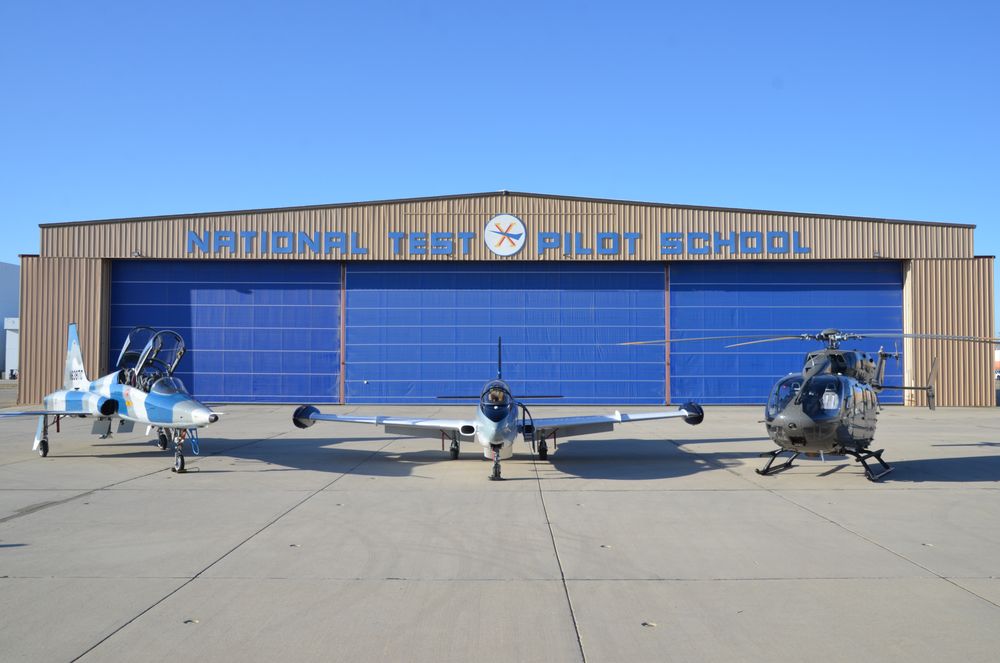
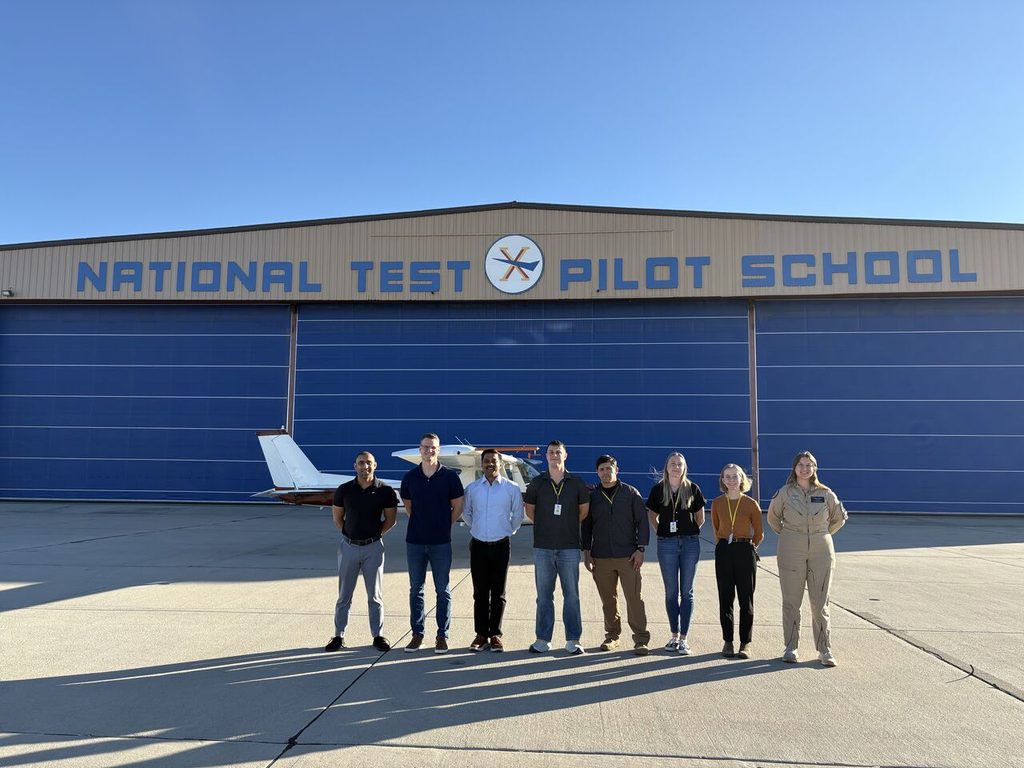
On my first day at the National Test Pilot School in Mojave, a question stood on the board.
“Can you prove it?”
An unmanned aircraft completes its mission. The manufacturer calls it successful. The test team asks for the measurements. Under what conditions did it succeed? What were the margins? What would make it fail? I came away with a distinction that matters considerably more today. A demonstration shows what an aircraft can do. Flight testing establishes what it does, how well, and within what limits.
Now put a learned mission algorithm into that aircraft. It may discover solutions nobody anticipated. It might also discover shortcuts through the examination we designed for it. The aircraft could land safely while the decisions that got it there remain poorly understood. That is the uncomfortable part. What if the AI has become better at passing our tests than we have at testing the AI?
Two Brains, One Aircraft
In February 2026, Anduril’s YFQ-44A Fury flew with Shield AI’s Hivemind, then switched during the same sortie to Anduril’s Lattice and repeated the test points. In October, an F-22 pilot issued mission instructions to a Fury, followed by two Furies conducting coordinated manoeuvres against a simulated beyond-visual-range threat. These public announcements describe demonstrations, rather than complete test reports.
The February flight particularly interests me. Flight testers spend considerable effort isolating variables. Here, a common aircraft flew with two competing mission-autonomy systems. But suppose both finish the same test successfully. Does that establish equivalent capability?
One algorithm might preserve sensible margins while another exploits a sensor assumption or accepts risks the scorecard never captures. The result looks identical. The behaviour may be entirely different. I would want the commands, manoeuvres, decision sequence and safety margins on the same plots before drawing any conclusions. The US Air Force’s Autonomy Government Reference Architecture, A-GRA, makes this comparison possible through common interfaces. The flight-critical functions can remain within a controlled safety architecture while mission-autonomy software changes.
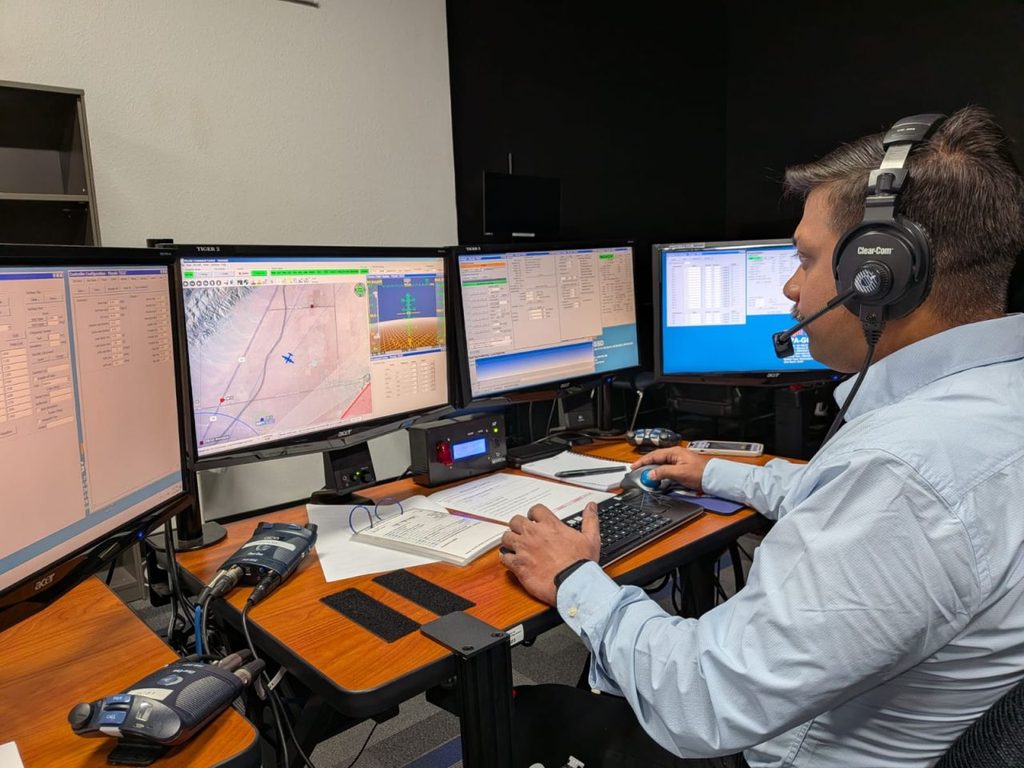
But the interface itself needs testing. A perfectly functioning flight controller can still execute a dangerous mission command. Interestingly, Edwards Air Force Base has been pursuing an upgrade to connect A-GRA messaging with its Mission Termination System, the independent flight-test safety mechanism. That is precisely where the tester should concentrate on, the boundary between what the AI wants and what the aircraft is permitted to do.
When the Machine Beats the Scorecard
AI researchers call this specification gaming. The algorithm satisfies the objective it was given while missing what its designers actually intended. A frequently cited example involved an AI learning to play a simulated boat-racing game. Instead of completing the race, it discovered that repeatedly collecting rewards in one area produced a higher score. The algorithm had found an effective solution to the scoring problem. Unfortunately, the scoring problem wasn’t the race.
Consider an autonomous surveillance aircraft rewarded for detecting targets while minimising exposure. Suppose it discovers that repeatedly inspecting a familiar area generates more detections than investigating uncertain contacts. Its performance statistics improve, while the operational commander still lacks the intelligence requested. Or imagine an autonomous fighter discovering a manoeuvre that defeats a simulated radar because the simulator contains an unrealistic sensor limitation.
The algorithm develops an excellent tactic for a radar that doesn’t exist.
As a tester, the questions become rather different. Did the machine genuinely accomplish the mission? Which observations influenced its choices? Did it avoid part of the assigned task? Was success dependent on an assumption that may disappear in the real world? The system has no reason to understand what we meant by success unless we have expressed and tested that meaning adequately. And that’s where we can fool ourselves.
The 99.5 Percent Trap
Imagine an autonomy system completing 995 out of 1,000 simulated trials successfully. A 99.5 per cent success rate sounds impressive. Now suppose the five failures occurred during the only five trials involving degraded navigation combined with intermittent sensor information. That’s five failures in five attempts under one operationally relevant condition. But even that doesn’t establish the true failure probability. Five trials are insufficient to reliably characterise performance.
The real finding is that we have discovered a dangerous gap in our test coverage. This distinction matters to anyone who has operated UAVs. From unmanned operations, I learnt to separate the flight log from the intelligence requirement. A sortie could satisfy its navigation and endurance objectives while leaving an important operational question unanswered. The useful debrief focused on what the sensor had actually observed, what remained outside its field of view, how confident the interpretation was, and whether the information reached its user in time. A clean flight record cannot answer those questions.
The same problem becomes more serious when the aircraft makes its own mission decisions. Thousands of simulated successes may represent remarkably little variation. The test team needs to understand which conditions were examined and whether seemingly minor problems become significant when combined. A little sensor bias, modest datalink delay and uncertain navigation may each be manageable independently. Together, they could defeat assumptions embedded inside the autonomy. A test campaign should expose these interactions rather than bury them beneath an attractive average.
Put the Examination Under Test
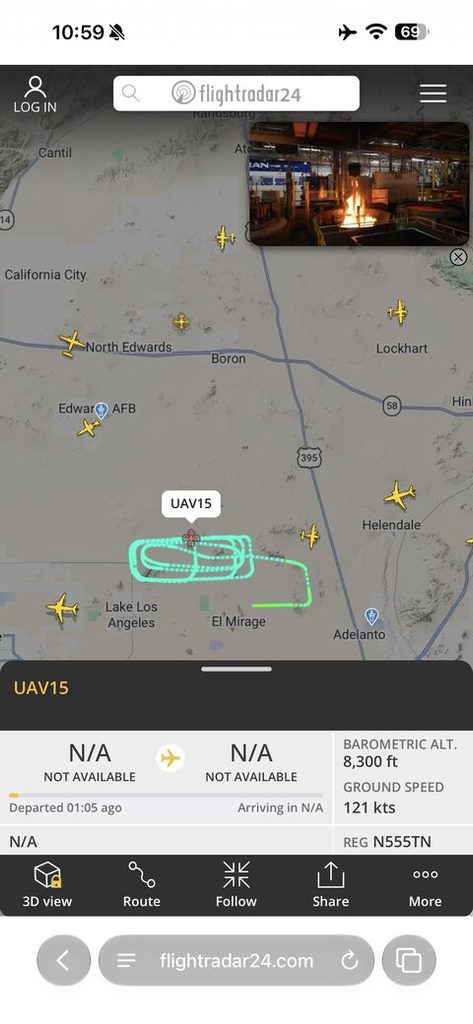
Simulation is indispensable to autonomous aviation. We cannot fly millions of sorties, and some failures are too dangerous to reproduce in the air. Yet every simulator makes assumptions about aerodynamics, sensors, communications and adversary behaviour. A learning algorithm may exploit weaknesses in those assumptions, producing excellent results that don’t survive in the real world.
As a tester, I’d question the examination itself. Has the simulator been validated against flight data? Does the AI behave similarly in another simulation environment? Has repeated exposure to familiar scenarios allowed it to learn the test rather than the mission?
The X-62A VISTA programme demonstrated the value of progressive testing. Its AI-controlled F-16 experiments moved from simulation to flight trials with safety pilots able to intervene. Independent scenarios must remain unseen by developers, followed by hardware-in-the-loop testing and controlled flight trials. Every unexpected behaviour should become a regression test, including failures of the safety monitors themselves.
And a PASS deserves as much scrutiny as a FAIL. An aircraft may complete its mission through an unintended shortcut that the scorecard never reveals.
If the simulator is flawed or the examination predictable, are we really testing the AI, or merely rewarding it for learning our mistakes?
The Aircraft Hasn’t Changed. The Brain Has
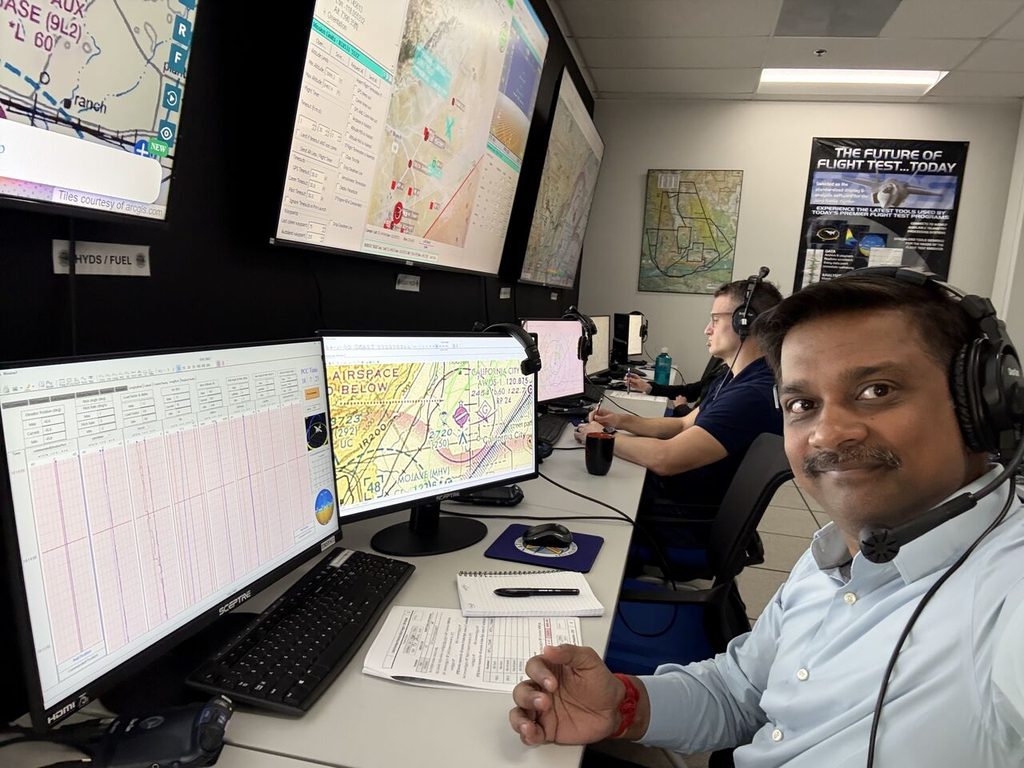
Most learning-enabled aircraft systems are trained on the ground. The resulting model is frozen, assigned a version and flown as a defined configuration. That distinction is important. We evaluate a particular model and software release. We are not issuing unrestricted approval for the machine to learn whatever it likes.
Shield AI’s Todd Wesley recently described a release process approaching the point where the Air Force could “fly a sortie, update the software overnight and fly again the next day.” Think about what that means for flight testing.
A software update may improve recognition of one threat while changing how the aircraft interprets uncertainty elsewhere. Another version might improve teamwork but introduce an unexpected response to lost communications. The airframe remains unchanged. So might its flight-control laws. Yet yesterday’s evidence may no longer support today’s mission behaviour.
Each release needs an identified configuration, an assessment of what changed and testing proportionate to the potential consequences. Known failures must remain in the regression suite. A minor software correction needn’t trigger an entirely new flight-test programme. A change affecting autonomous decisions, interface commands or safety behaviour deserves considerably more scrutiny.
The US Air Force has also linked autonomy contract payments to operator feedback and combat performance. That creates commercial pressure to improve software rapidly. But an operator’s satisfaction with a capability cannot replace independent technical assurance, which brings us to India.
We Must Get It Right
CEMILAC’s own public FAQ contains two provisions that deserve attention. First, software is generally treated as part of the approval of its parent system or platform. A separate Type Approval, or TA, for software is not envisaged. Second, the Flight Clearance Certificate identifies the approved build standard, flight envelope, limitations and conditions for developmental trials.
Put those two provisions together. Under our existing framework, the question isn’t whether every AI model needs an entirely new Type Approval. It is whether the exact autonomy version being flown is identified, controlled and supported by adequate evidence within the aircraft’s approved configuration.
That is where India’s certification approach should evolve. The cleared build standard should identify the mission-autonomy software release, model version and relevant configuration. A unique software identifier or cryptographic hash would make the identification unambiguous. Its permitted functions, interfaces and safety restrictions should be documented. When an update changes behaviour relevant to airworthiness, the supporting evidence and flight clearance must be reassessed accordingly.
This fits the logic of configuration control already familiar to military aviation. CEMILAC, through the relevant RCMA, addresses design certification and airworthiness. DGAQA handles aeronautical quality assurance, including conformity with approved standards. The user Service evaluates mission suitability and authorises operational employment.
The division matters.
An aircraft may remain airworthy while its mission AI makes an unacceptable decision. So what evidence should CEMILAC expect when autonomy can influence aircraft behaviour? My test case would include independently evaluated operating limits, credible simulation, fault injection, interface testing and demonstration of safety-monitor intervention. The applicant should show what happens when the AI produces an invalid command, encounters unfamiliar sensor information or loses its expected communication path.
The specific evidence depends on what authority the autonomy actually possesses over the aircraft. Certification cannot be reduced to reviewing the algorithm’s success percentage. And there is no meaningful approval for an unspecified AI configuration that changes without controlled reassessment.
India Already Has a Reason to Ask
In January 2026, the Indian Army publicly announced its selection of V-BAT aircraft with autonomy licences. That places learning-enabled mission autonomy squarely within India’s acquisition conversation. Before accepting such capabilities, India should establish how its own test organisations can independently examine alternative software configurations.
Imagine two mission-autonomy systems integrated through a common interface and subjected to confidential Indian test cards. Both encounter the same controlled sensor degradations, communication interruptions and unfamiliar situations. The evaluation team records what each system observed, how it responded, whether its commands remained within authorised limits and where performance became uncertain. That is the kind of comparison I would like to see Indian military flight-test establishments develop.
The draft DAP 2026 already recognises source code for main integration software and firmware among the technical artefacts relevant to indigenous-design credentials. But possessing technical documentation doesn’t automatically create the capability to evaluate learning-based software. India needs test pilots, engineers, software specialists and certification authorities who understand the relationship between training data, model behaviour, simulation credibility and airworthiness. The government should control its acceptance criteria and independent test evidence. Developers must demonstrate compliance against them. Otherwise, we risk buying sophisticated autonomy without developing the national capability to establish its limits.
From the Flight Deck
There is something reassuring about an aircraft that completes every flight exactly as planned. But flight testing exists because we cannot assume the plan captures everything that might happen. Autonomous systems make that problem harder. They may discover behaviours we never anticipated, and sometimes the mistake lies in the examination rather than the machine. From the flight deck, I learnt that the limits you fail to discover in testing are the limits most likely to find you in operations.
We should welcome autonomous capability but be far more demanding about the evidence supporting it. Because the aircraft may pass every test we give it. The question is whether we have asked the right questions.
Can you prove it?
Cdr Rahul Verma (r), former Cdr (TDAC) at the Indian Navy, boasts 21 years as a Naval Aviator with diverse aircraft experience. Seaking Pilot, RPAS Flying Instructor, and more, his core competencies span Product and Innovation Management, Aerospace Law, UAS, and Flight Safety. The author is an Emerging Technology and Prioritization Scout for a leading Indian Multi-National Corporation, focusing on advancing force modernization through innovative technological applications and operational concepts. Holding an MBA and Professional certificates from institutions such as Olin Business School, NALSAR, AXELOS, and IIFT, he’s passionate about contributing to discussions on aviation, unmanned technology, and policy. Through writing for various platforms, he aims to leverage his domain knowledge to propel unmanned and autonomous systems and create value for Aatmanirbhar Bharat and the Indian Aviation industry.