Capt. Anoop Govindan

Introduction: A Maritime Moment Arrives
When India released its Vision of New India by 2030, a few phrases captured the nation’s strategic aspirations more evocatively than the declaration of the Blue Economy as one of the six pillars of long-term growth. It was a quiet yet profound shift; a recognition that the country’s economic future would be shaped as much by the waters surrounding it as by the land it occupies. Today, a decade after the first wave of maritime reforms began to take shape, India stands on the threshold of a dramatic transformation—one in which ports, shipping, fisheries, deep-sea technology, logistics, coastal tourism, and green energy are converging into a coherent national maritime strategy.
The numbers tell their own story, but the narrative behind them tells an even more compelling one. India’s blue economy—valued at just ₹3.7 lakh crore in 2015—has more than tripled to about ₹13.2 lakh crore in 2025 and, under current trajectories, could reach ₹24–30 lakh crore by 2035, with accelerated projections pushing it as high as ₹50–60 lakh crore. This growth is not accidental but the product of a decade of deliberate investment, reform, and recalibration—an ambitious attempt to modernise a maritime sector that had long underperformed despite its potential.
This article traces the evolution of that transformation. It is not merely a catalogue of policies or a collection of economic data, but a story of how India’s maritime awakening is reshaping its economy, coastal communities, industrial ecosystem, and strategic posture in the Indo-Pacific. It examines how the Blue Economy is gradually becoming a blue engine.
A Decade of Change: From Underperformance to Momentum
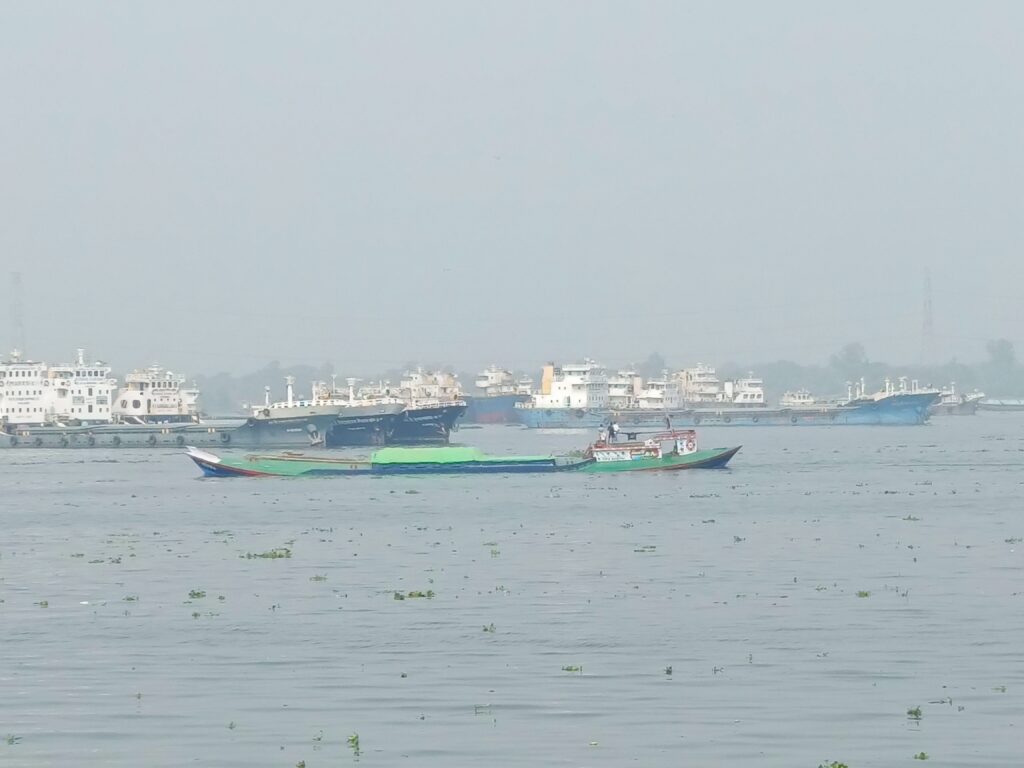
In 2015, the idea of a maritime-led growth story seemed distant. Inland waterways were moving barely 18 million tonnes of cargo, cruise tourism was a niche activity and India’s ports, though functional, were far from world-class benchmarks. Shipbuilding was a marginal global player, and the country’s deep-sea technologies were still largely experimental.
Yet beneath this quiet surface, the first wave of reform was beginning to build. Sagarmala, launched that year, represented a significant shift in mindset. Instead of viewing ports as stand-alone gateways, the government began treating them as centres of industrial and logistics ecosystems. The aim was to use India’s natural maritime geography—over 11,000 km of coastline and 14,500 km of navigable potential waterways—as a strategic economic asset. The programme brought unprecedented capital to port modernisation, coastal infrastructure, and waterway development. By 2025, 839 projects valued at ₹5.79 lakh crore had been identified, of which 272 projects had been completed with ₹1.41 lakh crore already invested.
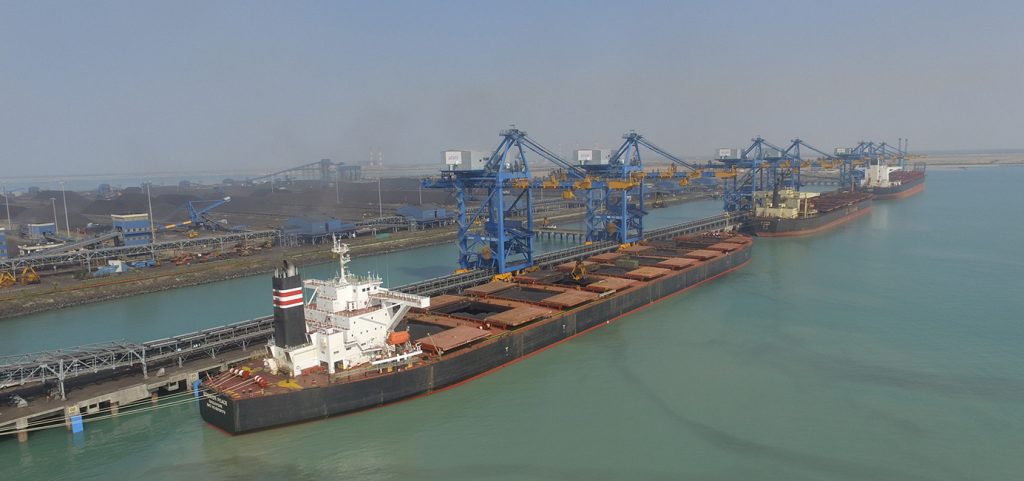
The effect has been nothing short of transformative. Major port cargo increased from 581 MT in 2014–15 to 855 MT in 2024–25, while total port capacity has nearly doubled. Inland waterway cargo has grown eightfold, reaching 145.5 MMT in 2024–25 and projected to hit 300–350 MMT by 2035. In global maritime economics, very few countries have witnessed such a rapid modal shift in such a short period.
What changed was not only physical infrastructure but also the broader architecture of maritime governance. The Major Port Authorities Act 2021 replaced an outdated trust-based model with a more commercialized approach, granting ports commercial autonomy, tariff flexibility, and the ability to attract private-sector investment. Meanwhile, the National Waterways Act, the Inland Vessels Act, and the Jal Marg Vikas Project established a legal and operational foundation for a modern waterborne logistics grid.
If the first half of the decade was about building hardware, the second half has been about building systems. The Port Community System 1x (PCS1xB), the National Logistics Portal – Marine (NLP Marine), the Logistics Data Bank, and the Unified Logistics Interface Platform are enhancing digital transparency and coordination in port and EXIM (Export-Import) operations. This digitalisation, far from being a mere technological embellishment, is reducing dwell times, eliminating paperwork bottlenecks, and strengthening India’s case for global trade integration.
The Economics Beneath the Waves: How Growth is Being Generated
What makes India’s maritime resurgence particularly interesting is that its benefits extend far beyond port terminals or shipping corridors. The economic linkages ripple across sectors, such as:-
- Logistics Efficiency and Industrial Competitiveness. India’s logistics costs have long hovered at 13–14% of GDP, significantly higher than peer economies. Maritime interventions are reducing that number. As inland waterways and coastal shipping expand, bulk cargo can shift from road to significantly cheaper waterborne modes, generating savings of up to 0.5–1% of GDP by 2035. Port-proximate industrial clusters such as petrochemicals, steel, food processing, and automotive are emerging as cost-efficient alternatives to inland manufacturing, owing to lower inventory costs and faster access to trade routes. The result is a powerful multiplier effect; every rupee spent on maritime infrastructure generates between 1.8× and 2.5× in economic gains across supply chains.
- The Quiet Revolution in Waterways. If one had to pick the most underrated story of India’s maritime decade, it would be the resurgence of inland water transport. National Waterway-1 alone—stretching from Haldia to Varanasi—has begun to demonstrate not only economic viability but environmental superiority. Moving cargo by river reduces carbon emissions by 60–80% compared to road transport, a crucial factor as India commits to greener freight pathways.
- Coastal Communities and the Fisheries Dividend. India’s fisheries sector is often perceived as an agrarian adjunct, but it is, in reality, a strategic component of the blue economy, supporting 28 million livelihoods and contributing 1% of national GVA (Gross Value Added). Pradhan Mantri Matsya Sampada Yojana (PMMSY), deep-sea fishing reforms, harbour modernisation, and cold-chain upgrades have pushed India to the position of the third-largest fish producer globally, with over 16.25 MMT produced in 2022–23 and seafood exports touching ₹60,523 crore. Future projections are even stronger: by 2035, India could produce 25–30 MMT with exports rising to US$12–15 billion, especially if the country scales up mariculture, seaweed farming, and high-value processing.
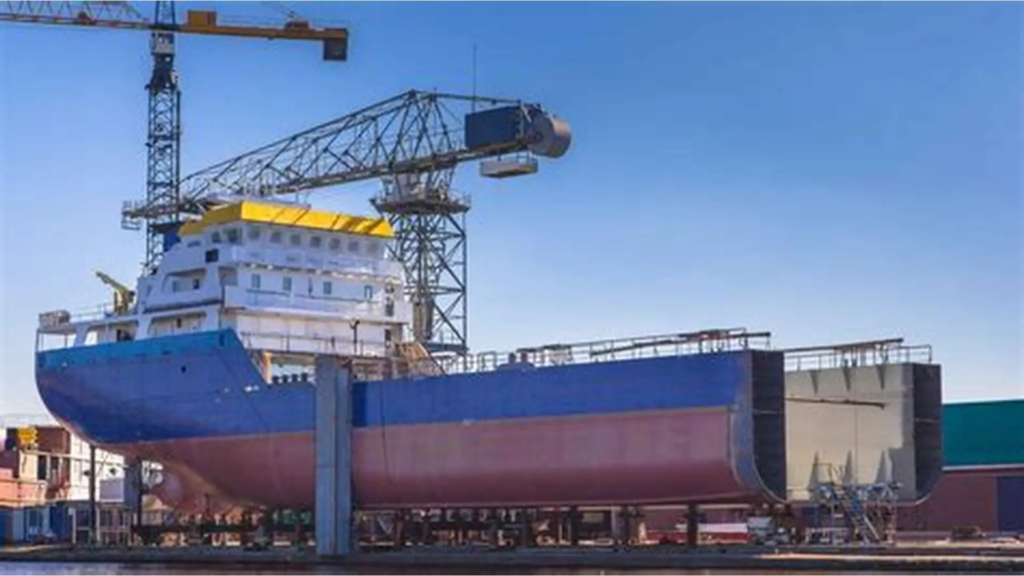
- The Shipbuilding Reawakening. Once a marginal maritime manufacturer, India is now resurfacing in the global shipbuilding map. In 2022, the Indian shipbuilding industry was valued at just USD 90 million; by 2024, it exceeded USD 1.12 billion. Government incentives, including an expanded ₹24,000 crore Shipbuilding Financial Assistance Policy, the ₹2.5 lakh crore Maritime Development Fund, and planned shipbuilding clusters, are aligning Indian yards for higher value orders. If India captures even 2–3% of global shipbuilding, as projected, annual revenues could exceed US$4–5 billion by 2035, creating thousands of skilled jobs in design, engineering, ancillary manufacturing and repair.
Tourism, Technology and the Green Transition: New Pillars of Blue Growth
Maritime development is not limited to traditional complex infrastructure. Several softer, high-value sectors are emerging as critical drivers of the next decade. Listed below are several key sectors transforming India’s Blue Economy.
- Cruise, Coastal and Island Tourism. India’s cruise tourism is transitioning from infancy to adolescence. Market value has doubled since 2022, currently exceeding USD 138 million, and is projected to reach USD 322.6 million by 2030, according to MIV 2030, which estimates an eightfold increase in cruise traffic. Cruise terminals in Mumbai, Goa, Kochi, Chennai, and Visakhapatnam; lighthouse tourism circuits and island development initiatives in Lakshadweep and the Andaman & Nicobar Islands are collectively positioning India as a major cruise destination in the Indo-Pacific. By the mid-2030s, coastal and marine tourism could contribute up to one-quarter of total Blue Economy GVA—a transformational jump for coastal states.
- Deep Ocean Mission and Blue Biotechnology. India’s ambitions now extend far below the surface of the oceans. Under the ₹4,077 crore Deep Ocean Mission, the country is developing technologies to explore and potentially extract polymetallic nodules, cobalt-rich crusts, and marine genetic resources.
The establishment of a deep-sea microbial repository signals a new era of marine biotech research with applications in pharmaceuticals, enzymes and environmental remediation. Though commercialisation will likely occur only after 2030, the long-term strategic payoff—in critical minerals, R&D ecosystems and technological sovereignty—is immense. - The Green Maritime Transition. Both climate and competitive logic drive India’s maritime decarbonisation push. The Harit Sagar Guidelines mandate that major ports move to 60% renewable energy by 2030 and 90% by 2047. LNG bunkering, shore-to-ship power, electric cargo handling, and green hydrogen pilots at VOC Port indicate that India is preparing for a world in which green shipping corridors become the backbone of sustainable trade. This transition is not just about emissions; it is about positioning Indian ports as future-ready destinations for global shipping lines that must meet decarbonisation mandates.
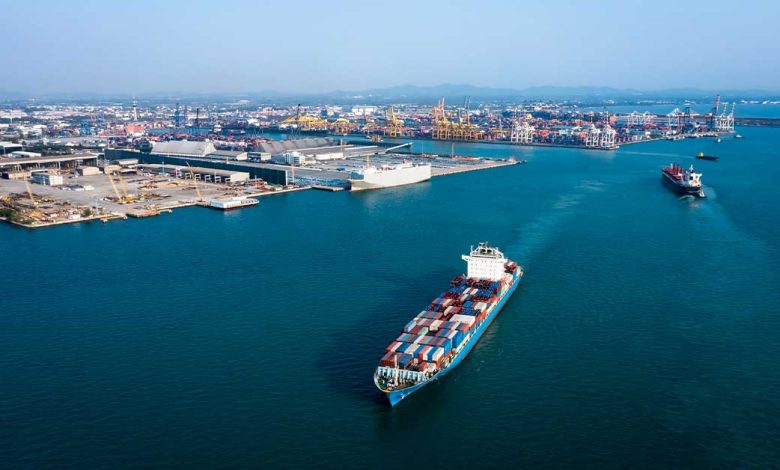
A Snapshot of Transformation (2015 → 2025 → 2035). The table below summarises/ illustrates India’s maritime transition.
| Indicator | 2015 | 2025 | 2035 (Projected) |
| Blue Economy Value | ₹3.7 lakh Crs | ₹13.2 lakh Crs | ₹24–30 lakh Crs (up to ₹60 lakh Crs) |
| Major Port Cargo | 581 MT | 855 MT | ~1.25 BT |
| Inland Waterway Cargo | 18 MMT | 145.5 MMT | 300–350 MMT |
| Fish Production | 10.26 MMT | 16.25 MMT | 25–30 MMT |
| Shipbuilding Output | Marginal | USD 1.12 bn | USD 4–5 bn |
| Cruise Tourism Value | Small | USD 138 mn | USD 600–700 mn |
| Investment | Rising | ₹5.79 lakh Crs identified (Sagarmala) | ~₹80 lakh Crs by 2047 (cumulative) |
Table 1: The Blue Economy’s Evolution and Trajectory
Drivers for the Next Decade of Growth
- Multimodal Logistics Integration. As Gati Shakti integrates ports, rail corridors, inland waterways, airports and highways into a unified grid, logistics costs will fall and industrial clusters will become more competitive.
- Domestic Demand for Shipbuilding & Repair. The renewal of India’s coastal fleet, the expansion of offshore wind, and the potential for regional repair hubs will create reliable domestic order books.
- Aquaculture, Seaweed and High-Value Fisheries. Sustainable mariculture could become a billion-dollar industry, elevating rural incomes and strengthening India’s food security profile.
- Digitalisation of Trade. PCS1x and NLP Marine will reduce transaction frictions and bring India closer to global single-window standards.
- Blue Finance and Maritime NBFCs. Specialised lending instruments will lower the cost of capital for shipyards, port-logistics operators and green maritime startups.
- Coastal Tourism & Island Development. A growing middle class, better cruise terminals and eco-tourism hubs will create a thriving leisure maritime economy.
India’s Maritime Future Is Being Written Now
Standing at the intersection of tradition and transformation, India’s maritime sector today feels like a story still in its opening chapters. The last decade has built momentum; the next decade will determine direction. What makes this moment particularly consequential is not only the scale of investment but the clarity of national intent. For the first time in the history of independent India, the maritime domain is being treated not as an adjunct sector but as a strategic driver of economic, technological, and geopolitical strength.
The Blue Economy forces us to think in long horizons—about resource sustainability, climate resilience, innovative financing, coastal livelihoods and scientific discovery. It demands that growth be inclusive, that technology be adaptive, and that ecosystems be respected. It also demands confidence. Confidence that India can be more than a maritime nation by geography; it can be a maritime power by design.
If India’s economic rise in the 2000s was built on services and the increase in the 2010s was fuelled by digital transformation, the rise in the 2030s may very well be anchored in the oceans. The seas that have shaped India’s past are now shaping its future. And the future, as it unfolds across ports, shipyards, fishing harbours, cruise terminals, laboratories and ocean floors, is undeniably blue.
Captain Anoop Govindan, an expert in communication and electronic warfare, has served on naval ships, Command HQ, and Naval HQ. A seasoned Naval Air Operations Officer, he is qualified on Dornier and TU-142M aircraft and is a certified UAV flying instructor. An avid reader and writer, he contributes extensively to defence-related topics, showcasing his expertise.