Staff Correspondent
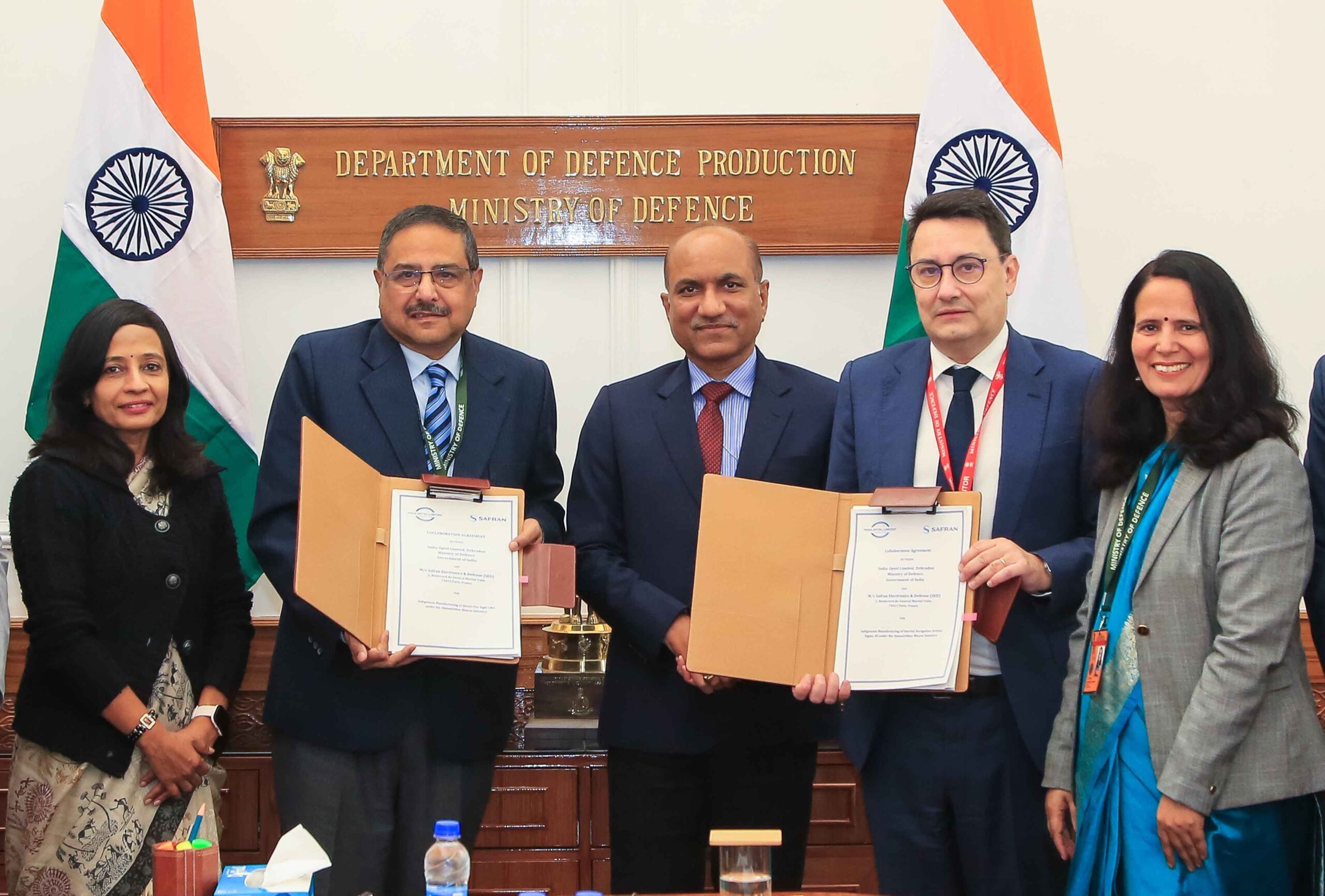
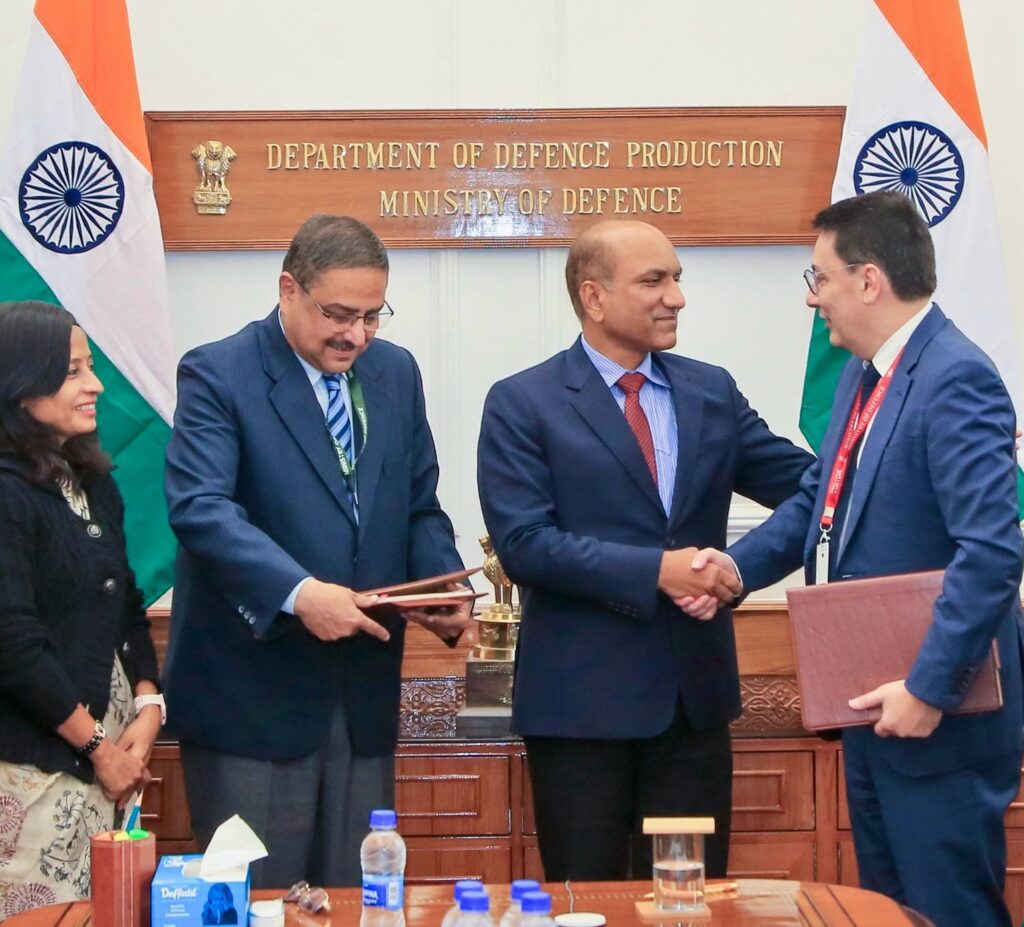
The signing of a collaboration agreement between India Optel Limited (IOL) and Safran Electronics & Defense marks a significant stride in India’s defence indigenisation efforts under the Make-in-India initiative. Concluded on 22 December 2025 in New Delhi, and witnessed by the Secretary (Defence Production), Shri Sanjeev Kumar, the agreement formalises the transfer of production for two high-precision, combat-proven systems: the SIGMA 30N Digital Ring Laser Gyro Inertial Navigation System and the CM3-MR Direct Firing Sight. This partnership, executed by IOL’s Chairman and Managing Director, Shri Tushar Tripathi, and Safran’s Head of the Defence Global Business Unit, Alexandre Ziegler, builds upon a memorandum of understanding signed in January 2024 and signifies a deeper commitment to domestic defence manufacturing and technological collaboration.
The SIGMA 30N and CM3-MR systems address the critical operational needs of modern land forces. The SIGMA 30N, a digital ring-laser gyro inertial navigation system, is used in artillery guns, air-defence platforms, missile systems, and radars. Its high precision and robustness underpin accurate positioning and orientation in demanding combat environments, reducing reliance on external navigation aids and enhancing weapon-system autonomy. The CM3-MR direct-firing sight, developed for artillery and anti-drone applications, enhances target acquisition and engagement capabilities across diverse battlefield conditions. Together, these systems materially contribute to the lethality, responsiveness, and situational awareness of Indian Army formations.
Under the terms of the collaboration, IOL assumes responsibility for manufacturing, final assembly, testing, quality control and full life-cycle support in India. This arrangement leverages Safran’s established expertise in inertial navigation and fire-control technologies while capitalising on IOL’s industrial infrastructure and status as a Mini Navratna defence public sector undertaking. Local production and sustained maintenance support are expected to shorten supply chains, enhance logistical readiness, and enable faster fielding and repair cycles—factors of increasing importance in contemporary high-tempo operations.
Strategically, the agreement reinforces multiple objectives of India’s defence-industrial policy. First, it advances technology transfer and skill development, creating opportunities for knowledge assimilation within the domestic workforce and associated supplier networks. Second, it strengthens the country’s self-reliance in critical defence capabilities by producing combat-proven systems on Indian soil rather than depending solely on imports. Third, it stimulates the broader defence manufacturing ecosystem—encouraging ancillary industries, quality-assurance practices, and standards that can raise India’s capacity to design, produce and sustain sophisticated military equipment.
Operationally, the availability of indigenously manufactured SIGMA 30N and CM3-MR systems will directly support the Indian Army’s modernization priorities. Precise inertial navigation improves the accuracy of indirect fire and integrated weapon systems, while advanced direct-fire sights enhance both conventional artillery effectiveness and counter-drone responses. Full life-cycle support commitments promise sustained readiness and optimized total cost of ownership, enabling commanders to plan and operate with greater confidence in equipment availability and performance.

The collaboration also carries geopolitical and economic dimensions. Partnering with a leading international defence firm like Safran underscores India’s willingness to pursue selective technology partnerships that preserve strategic autonomy while gaining access to advanced capabilities. Economically, local manufacturing can create jobs, foster supplier development and potentially position India as a supplier of such systems to friendly nations, subject to export controls and strategic considerations.
The IOL–Safran collaboration to manufacture the SIGMA 30N and CM3-MR systems in India exemplifies a pragmatic and consequential step in the nation’s Make in India defence agenda. By marrying foreign technological expertise with domestic production and lifecycle support, the agreement enhances operational capability, strengthens industrial self-reliance, and contributes to the maturation of India’s defence manufacturing base—outcomes of enduring significance for national security and strategic capacity.