Staff Correspondent
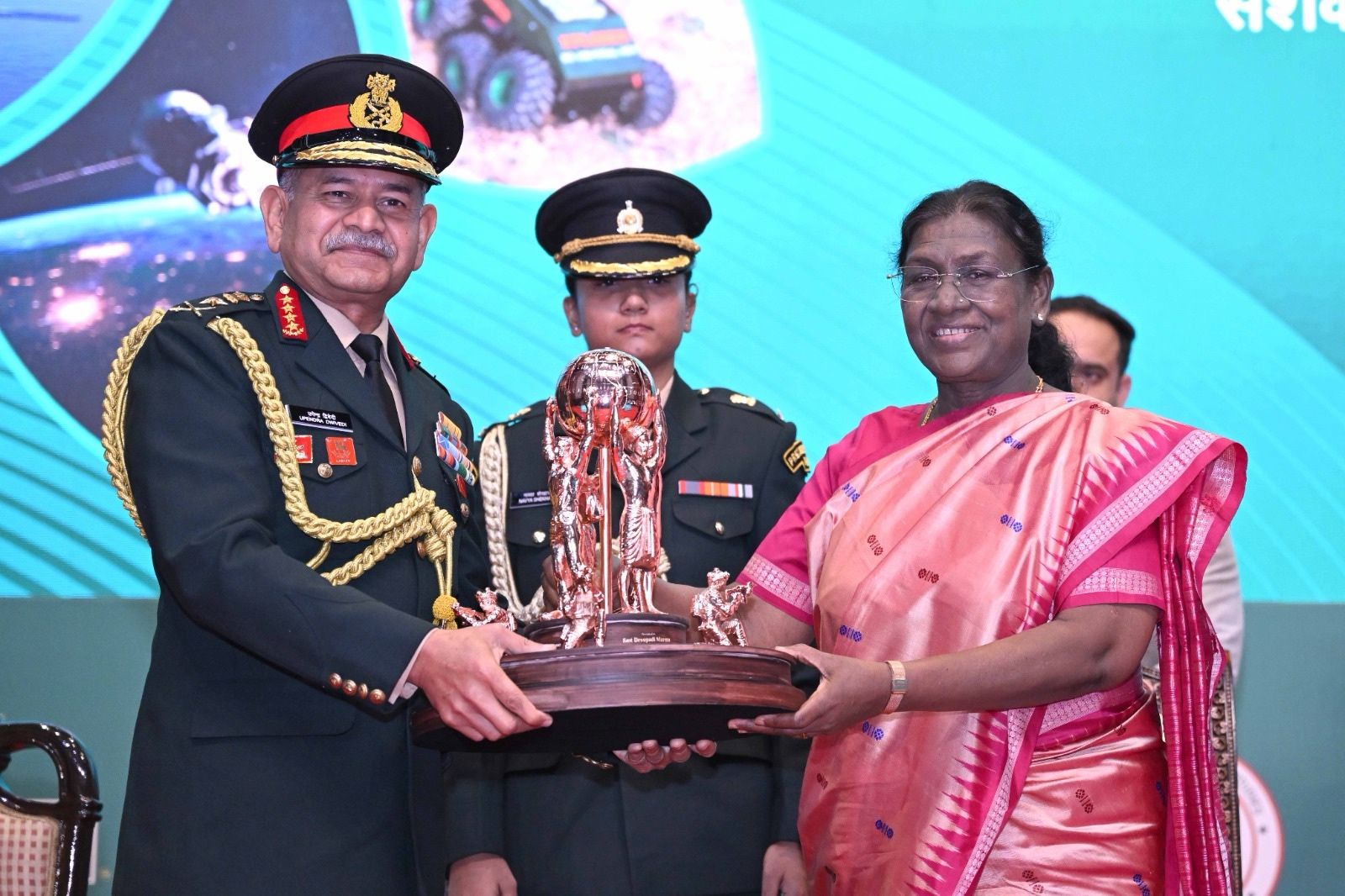
The Chanakya Defence Dialogue 2025 stands as a shining example of India’s strategic confidence and intellectual strength in an era of dynamic global transformation. Organised by the Indian Army in collaboration with the Centre for Land Warfare Studies (CLAWS), this landmark conclave has rapidly evolved into one of the most important platforms for discussing the future of national security, technology, and strategic foresight. The 2025 edition witnessed the gracious presence of the Hon’ble President of India, Smt Droupadi Murmu, who inaugurated the event, and the Chief of the Army Staff, General Upendra Dwivedi, who delivered a stirring keynote address. Together, they set the tone for a Dialogue that embodies India’s national vision—Sashakt (Empowered), Surakshit (Secure), and Viksit (Developed) Bharat.
From the outset, the Dialogue radiated an infectious sense of optimism and purpose. In her special address, President Murmu lauded the Indian Army not only for safeguarding the nation’s borders but also for contributing immensely to development in remote frontiers and fostering inclusive growth. She emphasised that India’s deterrence is not rooted in aggression but in moral clarity, guided by the civilisational ethos of Vasudhaiva Kutumbakam—the timeless belief that the world is one family. The President also highlighted the need for the armed forces to be technologically agile across domains such as cyber, space, and cognitive warfare. Her words inspired confidence in India’s ongoing transformation—where modernisation, inclusivity, and innovation walk hand in hand toward the goal of a Viksit Bharat by 2047.
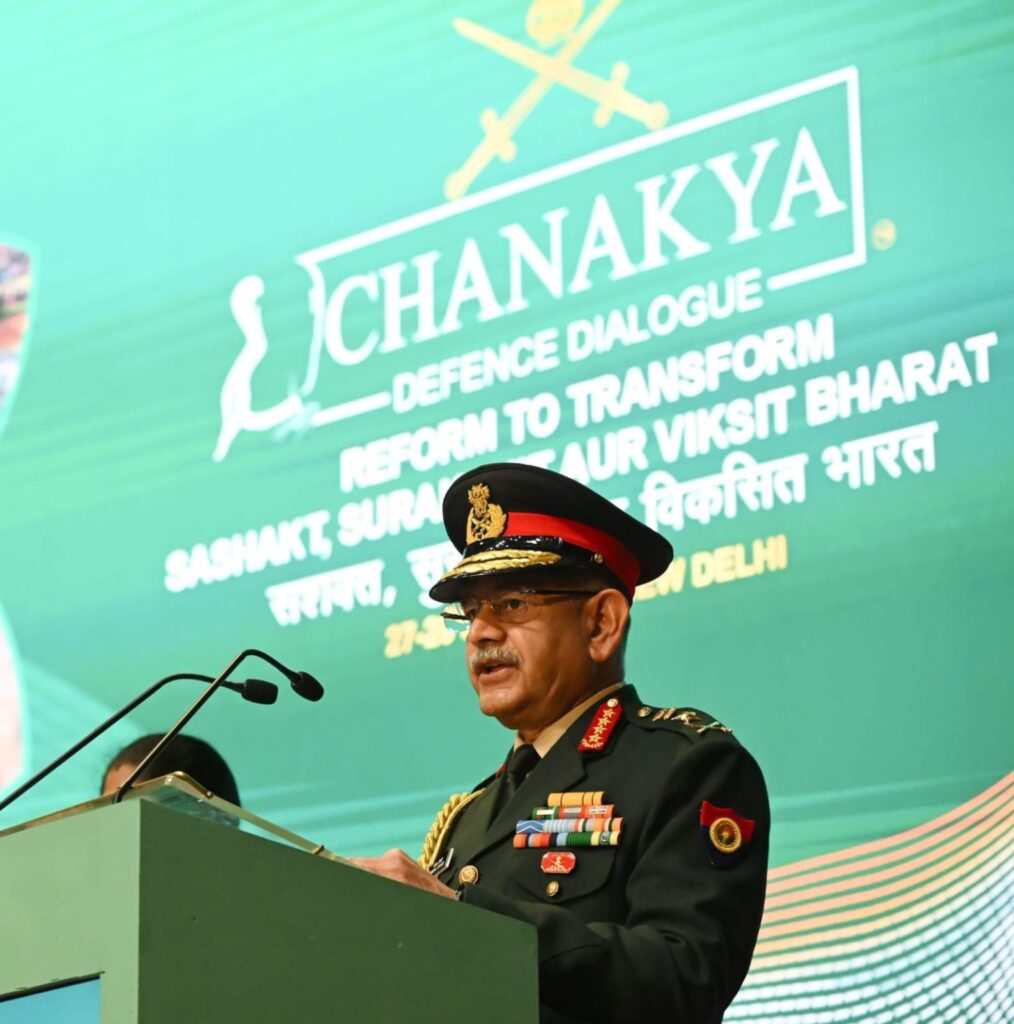
General Upendra Dwivedi’s keynote further reinforced the transformative spirit of the Dialogue. Describing the Chanakya Defence Dialogue as a vital intellectual anchor since its inception in 2023, the Army Chief detailed the Army’s visionary roadmap—HOP 2032, STEP 2037, and JUMP 2047—a structured pathway toward becoming a fully integrated, next-generation force. Guided by the Prime Minister’s 5S vision—Sammaan, Samvad, Sahayog, Samridhi, and Suraksha—he outlined four strategic drivers for future transformation: deeper self-reliance, faster innovation, systemic adaptation, and stronger integration among the military, industry, and academia. His call for decisive transformation echoed the conviction that India’s armed forces must remain future-ready in an increasingly turbulent and multipolar world.
The Ministry of Defence, too, is charting an equally bold course. Defence Secretary Shri Rajesh Kumar Singh declared 2025 as the “Year of Reforms,” positioning self-reliance as the bedrock of India’s defence policy. With 75% of capital procurement devoted to the domestic industry, India’s defence ecosystem is now surging toward indigenisation on an unprecedented scale. Shri Singh’s address resonated with confidence that India’s expanding defence base will not only strengthen security but will also act as a powerful economic multiplier—fuelling innovation, exports, and national pride.
Adding a broader developmental perspective, Shri B.V.R. Subrahmanyam, CEO of NITI Aayog, reminded the gathering that India’s strategic vision must align with global transitions—demographic, technological, and climatic. As the world faces shifting economic powers and emerging innovations like artificial intelligence, India has the unique advantage of a youthful demographic, a vibrant democracy, and a strong technological foundation. His message was clear: for India’s rise to be benign, inclusive, and lasting, it must marry economic strength with strategic foresight and resilience.
Science and technology remain the critical enablers of this journey, as underscored by Prof. K. Vijay Raghavan, former Principal Scientific Adviser to the Government of India. He proposed a three-tier approach to defence innovation—short-term agility through startups and AI integration, medium-term control over critical value chains, and long-term investments in fundamental science, such as biotechnology and advanced materials. His call for a Defence Technology Council epitomised the Dialogue’s focus on mission-driven acceleration and technological sovereignty.
The inaugural day also featured three thought-provoking thematic sessions—Op SINDOOR: A Sovereign Strategic Victory, Changing Status Quo: Vitalising Defence Reforms, and Civil–Military Fusion: Drivers for Change. Each session blended scholarly depth with pragmatic insight, addressing contemporary challenges in strategic policy, reform imperatives, and innovation-driven growth.
Culminating the day’s deliberations, Chief of Defence Staff General Anil Chauhan offered a powerful reflection steeped in Chanakya’s timeless wisdom. He underlined how technology—AI, robotics, hypersonics, and autonomous systems—is redefining the nature of warfare and eroding traditional geographic boundaries. In his thought-provoking address, he urged military leaders to cultivate intellectual honesty, self-awareness, and strategic adaptability to dominate multi-domain operations. His message carried a profound truth: victory belongs to those who prepare not for yesterday’s battles, but for tomorrow’s unpredictable conflicts.
India: A Voice of Balance, Responsibility, and Transformation in a Changing World
In an era of shifting geopolitics, economic turbulence, and rapid technological change, India stands tall as a beacon of balance, responsibility, and resilience. The words of Raksha Mantri Shri Rajnath Singh at the Chanakya Defence Dialogue 2025 beautifully capture this spirit of transformation. His assertion that India’s economic strength, technological prowess, and principled foreign policy have made it a trusted voice across the Indo-Pacific and the Global South is not only accurate—it embodies the story of a nation confidently shaping its destiny.
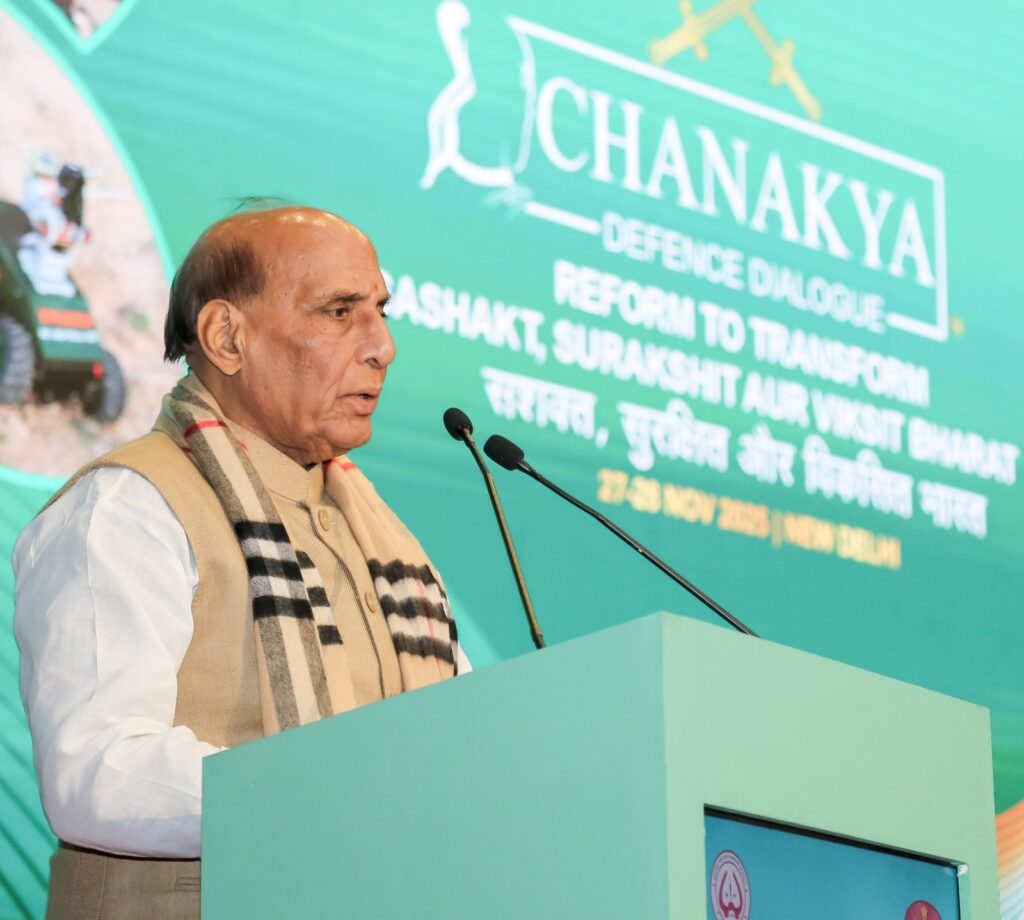
India’s trajectory over the past decade has been remarkable. It has evolved from a developing nation to a global influencer that contributes to peace, progress, and stability. The Modi government’s focus on building a Sashakt (Empowered), Surakshit (Secure), and Viksit (Developed) Bharat has placed reform at the very heart of national advancement. These reforms are not limited to policy adjustments—they are reshaping institutions, modernizing the Armed Forces, and revitalizing India’s innovation ecosystem.
One of the most visionary aspects of India’s journey has been its emphasis on Aatmanirbharta—self-reliance. From indigenous defence production and cutting-edge R&D to nurturing start-ups and deep-tech industries, India is forging an ecosystem that encourages innovation while reducing external dependency. This approach is not just about strengthening security; it is about building enduring resilience. As Shri Rajnath Singh rightly stated, a resilient India can absorb shocks and continue advancing, come what may.
The Defence Minister’s emphasis on constant vigilance amid global uncertainties resonates deeply with India’s geopolitical reality. Terrorism, cross-border extremism, maritime challenges, and the weaponization of information are complex threats that demand both capability and character. India’s Armed Forces, with their unmatched professionalism and sense of duty, embody these values. They not only defend territorial integrity but also project India’s image as a peace-loving and responsible power. Their contributions extend far beyond the battlefield—to humanitarian aid, disaster relief, peacekeeping, and international cooperation.
Furthermore, India’s principled foreign policy—grounded in civilisational wisdom, strategic autonomy, and respect for sovereignty—sets it apart in the global landscape. At a time when power politics often overshadows ethics, India’s adherence to a rules-based international order has earned it the world’s respect. Nations across the Indo-Pacific and the Global South increasingly view India as a steadfast and reliable partner, one that seeks not dominance but balance.
India’s rise also holds global significance. A stable and secure India contributes to a balanced global economy. Its pioneering digital public infrastructure offers a model for inclusive governance. Its ethical approach to emerging technologies like artificial intelligence, cyber systems, and space exploration sets international standards. And its unwavering commitment to peace, sustainable development, and climate responsibility underscores the belief that India’s progress is humanity’s progress.
Forging the Future: Digitalisation and Green Advancements in India’s Defence Ecosystem
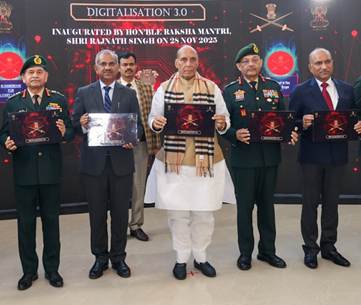
A new era has dawned for India’s Armed Forces—one that harmoniously blends cutting-edge digitalisation, artificial intelligence, and sustainable energy. In a landmark event, Shri Rajnath Singh launched key initiatives that exemplify the synergy of innovation and national security: Project EKAM: AI as a Service – iDEX ADITI 2.0, Prakshepan, the AI Handbook for Military Leaders, the visionary book Digitalisation 3.0 – From Boots to Bytes & Towards AI Readiness, and the pioneering Green Hydrogen Microgrid Project at Chushul, Ladakh. Together, these initiatives signal an inspiring leap towards an intelligent, self-reliant, and eco-conscious fighting force.
Among the most empowering of these projects is EKAM, a homegrown artificial intelligence framework designed exclusively for the Indian defence ecosystem. More than just a technological platform, it represents the spirit of Aatmanirbhar Bharat in its purest form—where India’s defence data, models, and operational logic remain completely secure and indigenous. By offering customised AI services aligned with military doctrines and data patterns, Project EKAM ensures that our soldiers and commanders can rely on AI systems that speak their language, understand their challenges, and augment their decision-making in real time. This isn’t just digitalisation—it’s digital empowerment at a strategic level.
Complementing this AI revolution is Prakshepan, an extraordinary in-house climatology application for the Indian Army. Developed collaboratively with premier scientific bodies like IMD, NCMRWF, and DGRE, Prakshepan embodies scientific precision and foresight. With its predictive modules for landslides, floods, and avalanches, it seamlessly integrates climate science with national security. Looking beyond the battlefield, Prakshepan’s capabilities also extend to aiding civil administrations during natural disasters in remote regions—an example of defence technology serving humanity at large.
Driving this transformation further is the AI Handbook for Military Leaders, a timely and essential knowledge resource. As AI begins to define modern warfare, it becomes imperative that military leaders not only understand technology but also harness it with wisdom and strategy. The handbook equips decision-makers with the cognitive tools to integrate AI into Command, Control, Communication, and Combat Systems, ensuring informed leadership in an era of digital combat readiness.
The publication of Digitalisation 3.0 – From Boots to Bytes & Towards AI Readiness marks yet another milestone in this transformation journey. The book chronicles the Indian Army’s technological evolution through over a hundred applications that capture the spirit of innovation and adaptation. It stands as a testament to our armed forces’ unwavering determination to evolve from traditional systems to a digital-first force, ready to meet the complex challenges of modern warfare with intelligence, agility, and vision.
And as we look to the skies of Ladakh, another marvel of innovation takes shape—the Green Hydrogen Microgrid Project. Set up by NTPC at a staggering 4,500 meters above sea level, this eco-conscious initiative replaces fossil-fuel generators with clean hydrogen power. Beyond demonstrating India’s commitment to sustainability, it reduces carbon emissions by an astonishing 1,500 tonnes annually, showing that even in the most challenging terrains, green energy can fuel national defence.
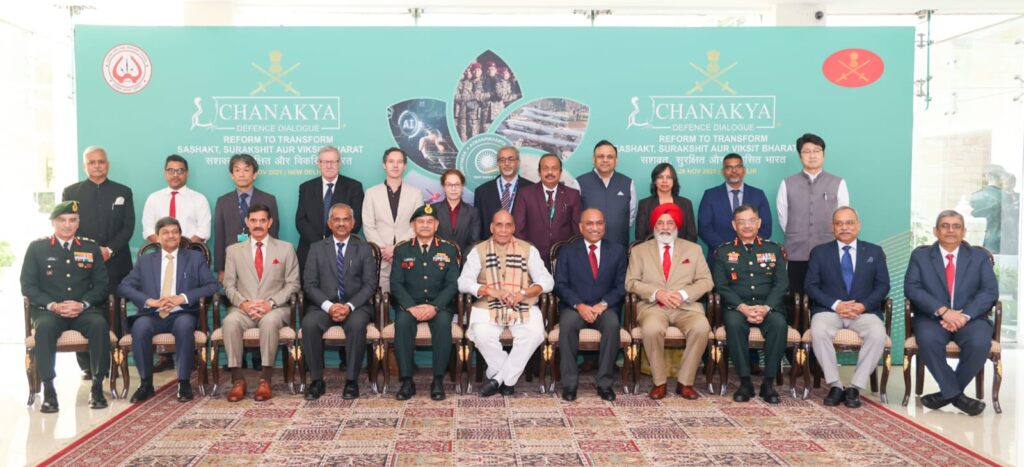
Graced by the presence of top leadership from the Armed Forces, ministries, research institutions, and academia, this event was more than a ceremonial launch—it was a powerful declaration of India’s technological resolve. It showcased the vision of a future-ready military force that is as environmentally responsible as it is strategically advanced.
In essence, these initiatives underscore a single, inspiring truth: the Indian Armed Forces are not just adapting to the digital age—they are defining it. With AI-driven capabilities and a green conscience, they are safeguarding the nation while pioneering a sustainable, intelligent future. India’s march from boots to bytes is not just progress—it’s a revolution in readiness, resilience, and responsibility.
Resilient National Security and the Technology-Driven Future: Reflections from the Chanakya Defence Dialogue 2025
The Chanakya Defence Dialogue 2025 stood out as a milestone in India’s strategic thought, presenting a compelling vision for a strong, self-reliant, and technology-driven national security architecture. Over two days of dynamic discussions, thought leaders, diplomats, and military officers presented powerful insights into the nation’s path toward Resilient National Security @2047 — the centenary of India’s independence. The event captured the essence of India’s evolving security priorities: autonomy, innovation, and integration.
Ambassador D. B. Venkatesh Verma, Member of the National Security Advisory Board, delivered a thought‑provoking address that resonated deeply with India’s strategic ambitions. He defined strategic autonomy not merely as a slogan but as a tangible blend of capability and will — the ability to think, act, and fight independently. His vision of autonomy is holistic: an India that guards against external vulnerabilities, crafts its own military doctrine, and builds the industrial and technological backbone to sustain it. Ambassador Verma’s remarks were especially energising because they linked military readiness with national confidence. Strategic autonomy, he asserted, requires not just weapons or systems, but the psychological and societal strength to stand firm in a complex world. His call for faster reforms, stronger R&D, and consistent defence spending reflected an urgency for institutional transformation and enduring resilience.
Ambassador Pankaj Saran, Former Deputy NSA, further invigorated the dialogue with his thematic address on Redefining Strategies in Conventional Wars through Technology. He highlighted how the relentless march of technology is rewriting the character of warfare. Drawing on his deep experience in strategic affairs, he traced India’s journey toward tech‑centric defence planning, particularly the establishment of a dedicated technology division in the National Security Council Secretariat in 2018 — a turning point that placed technology squarely at the heart of national security. Ambassador Saran’s optimism was contagious. He argued that India must now leverage this technological momentum, reform institutions, and adopt a forward-looking mindset. His remarks underscored how professional excellence, technological integration, and doctrinal innovation together define a nation ready for the future battlefield.
A particularly stimulating part of the Dialogue was the set of sessions on Battlefield Equalisers. Global experts offered fascinating insights into emerging technologies — artificial intelligence, autonomous systems, hypersonics, and cyber capabilities — that are transforming warfare itself. These discussions illuminated how technology acts as both a great leveller and a great differentiator. The experts urged India’s defence ecosystem to embrace adaptive structures and jointness, ensuring that all branches of the armed forces evolve as a cohesive, agile, and modern fighting entity. Concepts such as cognitive security and information warfare were also highlighted, recognizing that modern conflicts will be fought as much in the digital and psychological spaces as on land, sea, and air.
Rounding off the Dialogue with authority and inspiration, Lt Gen Pushpendra Pal Singh, Vice Chief of the Army Staff, delivered the closing address. His remarks powerfully reaffirmed the Army’s commitment to agility, technological empowerment, and integration. He distilled the essence of the two-day event: that the future of national defence lies in innovation, reform, and relentless pursuit of self-reliance. His emphasis on a mission-oriented approach and future-ready force structures echoed the optimism and determination that marked every session. Lt Gen Singh’s acknowledgment of the President of India, the Raksha Mantri, senior leaders, and global partners reflected the collaborative spirit that drives this evolving ecosystem.
The Chanakya Defence Dialogue 2025, under the guidance of the nation’s highest leadership, thus emerged as much more than a conference — it was a blueprint for India’s security trajectory. It celebrated the convergence of policy, technology, and national will, envisioning an India that stands tall, resilient, and self-assured in 2047. With every thoughtful address and every bold idea, the Dialogue reinforced one message loud and clear: India’s march toward strategic autonomy and technological excellence is unstoppable, and its security vision is as dynamic as its people.